Listen on Apple Podcasts, Spotify or Simplecast


Have you ever felt the g-forces of an electric car with its accelerator pressed all the way to the floor? Or maybe even more exhilarating — the realization that you’ll never pay for another tank of gas again? After decades as a cornerstone of Canada’s economy, the automotive industry is in the midst of transformational change as carmakers and consumers around the globe pivot to electric vehicles.

On this episode of Disruptors, an RBC podcast, host John Stackhouse takes a deep dive into the rapidly-evolving world of EVs and the supply chains Canada needs to create to be a player in the growing, global market. For the first part of the conversation, John is joined by Sarah Houde, the CEO of Propulsion Quebec, and Kostyantyn Khomutov, the CEO of Ottawa-based GBatteries, to discuss the current state of play, the opportunities ahead, and what needs to happen to take advantage of them. Then for part two, David Paterson from General Motors Canada slides into the passenger seat to give us a big-picture perspective, and share his company’s vision for a fully electrified future.

From government policies and our country’s abundant supply of raw minerals to range anxiety, charging infrastructure, and battery technology — no topic is off-limits, as our guests lay out a compelling roadmap to help Canada and Canadian companies plot a path forward into a cleaner, greener future.


[00:00:02] Hi, is John here, I have a question for you, do you drive an electric vehicle? Yeah, probably not.

[00:00:12] You know, rarely a week goes by without another big announcement about the switch to EVs, GM, Jaguar, Volvo, they’re all aiming to be largely or entirely electric by the mid 30s. And more and more cities like Tokyo and Montreal say they’re not going to allow anything else on their roads. And here in Canada and EV battery supply chain just moved one step closer to reality thanks to a partnership between Ottawa, Quebec and Lille or Lyon Electric. To build a one hundred and eighty five dollars million battery factory north of Montreal is centered around. A new report from RBC Leadership Group predicts EVs will make up one quarter of all new vehicle sales by the end of this decade. But right now, when it comes to drivers, the U-turn lane is awfully empty, with global sales sitting at just four percent. So what do we need to change that? And what role can Canada play? It’s one of the biggest opportunities and challenges in the decade ahead. Here’s why. Joe Biden has already declared he wants to reengineer North America’s supply chains, and he’s promising the whole federal fleet will be made up of zero emission vehicles. If we get game, we can build more factories of the future and all the technology that goes into a supply chain, especially the beating heart of an SUV, the battery.

[00:01:46] This is Disruptors and RBC podcast, I’m your host, John Stackhouse. We’re going to speak with one of the big three automakers, General Motors, in the second half of today’s episode, so I hope you’ll stick around for that. But my first guests have spent a lot of time thinking about the opportunities the EV revolution represents for Canada and about the speed bumps we might run into on the road to a fully electrified future. It’s my pleasure to introduce Sarah, the CEO of Propulsion Quebec, and Konstantin Amitav, the CEO of Ottawa based G Batteries. Welcome, both of you to disruptors. Thank you. Pleasure to be here, Jim. Maybe we can start with your back story.

[00:02:35] Sarah, let’s let’s start with you. What is propulsion Quebec all about? How did it begin and what are its goals?

[00:02:42] Well, it all started in 2017. That was really at the initiative of the government of Quebec. We thought that there was such great potential for the development of the electric and smart transportation industry in Quebec that we should be investing in a nonprofit organization whose mission would really only be to accelerate the growth of the industry in the form of a cluster where you have the companies that are manufacturing products, working with the clients, the fleet operators, for example, the whole ecosystem coming together to really grow the industry and make it a larger contributor to the province GDP and province economy. So that all started about four years ago. Since then, we gathered two hundred and fourteen members that are mostly companies working in five different subsector. So we have companies that are manufacturing electric vehicles in Quebec. We do not manufacture passenger cars. We manufacture everything else electric bikes, electric trucks, electric and specialized vehicles for garbage, for example. Then we have companies that are manufacturing, charging infrastructures or operating networks. We have manufacturers of components for connected, smart, autonomous vehicles. Same thing for smart infrastructure. And finally, we have members that are offering services in the new economy for mobility. So car sharing, car pooling, bike sharing, that kind of thing.

[00:04:15] I can see why you call it propulsion, because it’s it’s not about the vehicles. It’s about getting people and things from one place to another, which requires propulsion and propulsion, requires energy. And one of the best sources of energy we have in this country is electricity, and that’s stored in batteries. Konstantin, give us a bit of background on batteries. What what’s it all about?

[00:04:39] Yeah, absolutely. So we developed a solution that enables us to charge lithium ion batteries much faster than any conventional way, publicly known today without damaging the bathrooms. So in other words, we have developed a software based solution powered by machine learning that enables us to improve performance of lithium ion batteries that already exists on the market today.

[00:05:02] By means of software and our story, we have thought hard of what would be the simplest way we as a society can change but have a huge impact on greenhouse gas emissions. And we determined that. We realized that the simplest way for us is to switch from internal combustion engines to electrical vehicles. First of all, from the driver or user perspective, nothing really changes. You still go from point A to point B, you still perhaps may be enjoying the electrical car more than internal combustion vehicle. While you’re not changing your diet, your exercise routine, you don’t need to do anything special. You just get into your car and you’re still driving while you’re able to reduce greenhouse gas emissions by a third around the planet. So that’s what’s driving us. What’s driving us, still driving us. And that’s what we want to do, is to accelerate the adoption of electric vehicles by enabling them to charge as fast as it takes to fill up a tank of gas.

[00:06:01] I feel like I’ve heard about electric vehicles all of all of my life. And yet, as I said in the introduction, we’re still feels like an early days, four percent of global fleets. If that’s so, I wonder if you can give us your sense of how advanced we are. What’s the what’s the reality versus the hope in this field?

[00:06:20] Well, there’s really two different answers to your question. There’s personal transportation with cars and there’s all other types of vehicles for cars. We have gone from a early adopter emerging market to the more mature, I would say, market where all manufacturers have announced and EV model. So really we have access to different kinds of models. And I’m really talking about Québec here. We have great access to a public charging network. I myself almost answered your question at the beginning, like. A person who drives an electric vehicle, I’ve tried all different kinds of models, I’ve traveled in all types of climatic conditions, have done pretty much all types of journey that you can think of.

[00:07:12] And really, it’s it’s exactly, as I said mentioned, it’s just more fun. And it’s the same. I mean, you just have to take a break sometimes to charge. But the technology is evolving very fast for fast charging. And so really, we are we are now in a very mature, much more mature market and other types of vehicles. We are still in the R&D trial state. Some of them are already on our roads. Like busses, for example, are much more advanced than transportation of goods, types of products. So it’s we are getting there. We’re sort of following the same track that we are seeing for cars, but with a little lag.

[00:07:50] But that’s very common in innovation, that industrial applications tend to be much more advanced and consumer applications. There’s all sorts of economic reasons for that. So maybe that logic is just plain playing out here and we’ll see that curve accelerate with time.

[00:08:06] And I would add that because I think the podcast is probably followed by a lot of people that are interested in investing and things like that. I think this is a very sweet spot for investment in industrial applications for EVs because it’s at an early stage. But we are really seeing the same type of adoption that we are seeing in the B2C market. I think it’s a great spot for investment.

[00:08:27] Well, it’s a bit like the computer industrial computers were fairly well advanced. They seem ancient now, but in the 60s and 70s and then the personal computer took off in the 80s in a whole new opportunity emerged with that because one of one of the barriers to that application is, is battery and battery storage, as you explained in your introduction to batteries. And it feels like we’ve been wrestling with the battery question in this country also for four decades. Where are we at on that journey? Are we closer to the end of in terms of having great battery experiences for consumers or are we still in the early days?

[00:09:10] I think just like Sara mentioned, the number of applications between industrial and the personal usage of the vehicles. So I feel that Vikas the consumer cars, we are already at the level of comfort zone, especially if you start looking at Tesla like vehicles, the amount of range that you can get there, a number of kilometers that you can get out of the car on the fuel charge, on a Tesla car. It’s probably already more than what we had as a family when we arrived at Kennedy. Ninety nine, when we bought a brand new Toyota Corolla on a full tank of gas. So you already have a pretty good range of, let’s say, three to four hundred kilometers from a charge that’s more than enough to get you around town, as one of my investors often jokes, because it takes me seconds to charge my car. I says, how do you do it? So when I drive into my garage, it takes about twenty seconds to plug in my car and I go home and I sleep. When I wake up in the morning, it’s charged. So from that perspective, 90 percent of electrical vehicle car owners have a luxury of charging their cars at home. They don’t even want to think about charging stations or gas stations. They charge at home and they go in there. Are they? There’s a range of sight in their head. But once you get into electrical vehicle, once you get around the dynamics of charging and the schedule, most of the time you are OK.

[00:11:58] It’s an amazing race, if I can use that expression in terms of these technologies and of course, every country in the world seems to be in the race and number of countries with terrific tech ecosystems, including the U.S., right next door. What do you both think we have as Canadians that’s going to help us stay at the front of the pack in that race to the next generation of technology?

[00:12:21] Maybe. Maybe I can go first. I’ll speak for Quebec, because this is really my level of expertize. First, we have a long tradition of inventing new types of vehicles. And we also have had Hydro-Quebec for seventy five years. We have deposited lots of patents for batteries, for example.

[00:12:39] So really we have this expertize and this is also present in other in Nova Scotia for batteries in Ontario as well. I mean, there is lots of expertize in this country very specialized and highly targeted on innovation. The other thing that’s super important is that we have these strategic and critical minerals for batteries in Quebec. We have lithium, graphite, a little bit of nickel and cobalt, and there’s a lot of nickel as well in Ontario. So these are very strategic, I would even say geopolitically in terms of energy security, because just like Asia and Europe, North America will have to build some kind of continental autonomy for the supply of batteries for electric vehicles.

[00:13:26] We’ve just published a really interesting report, it RBC on the supply chain revolution that’s just starting in North America. It extends across a number of advanced technologies. But everything you say rings true because we have almost historic opportunity to create new elements of those new supply chains for the vehicles of the future and our rare minerals, our natural resources, as well as our our technology and our ability to manufacture and assemble really strong assets for the country. One of the things we’ve discovered in our research is the important ESG value on the rare minerals side that we need to, I think, advocate more as a country, the way we extract and develop and process those minerals that you mentioned, including indigenous ownership, including environmental standards that can and will continue to be improved but are better than most jurisdictions in the same business are important assets for us.

[00:14:31] Absolutely. And I would add that not only is it sustainable, but it is secure and it is stable. We are working at the Boston Globe with the Global Battery Alliance to develop a traceability pilot project so that you could literally scan bar code on your batteries and see where everything is coming from. So really, we could not only sort of claim that it is an easy product, but we could even trace it and prove it.

[00:15:00] In a way, that’s a great sales pitch. But you’re in some ways the customer or the intermediary, you have to put those inputs to to work through through batteries. And presumably you could do that in a number of jurisdictions. Why? Why Canada?

[00:15:15] Canada is one of the leaders in the mining industry for oil and gas, which can be translated over to mining any other rare earth metals or minerals. But on top, if you talk specifically about batteries, it takes roughly about seven to eight units of energy to build one unit of energy of Bathory. So for one kilowatt hour of battery, you need roughly about seven or eight kilowatts of energy.

[00:15:42] And a big question that the world usually asks is where is the energy coming from? Are you burning coal? Like, what are you doing is renewable or if it’s not, is the batteries actually what Sara was talking about versus coming from like is the battery is actually as green as we’re talking about. So Canada has this fantastic resource, which is hydro electricity, which is as green as it gets. We have an excess of this electricity in Canada, so we are able to build a lot of the greenest batteries. Is the local supply of materials at potentially lower cost? Canada is absolutely phenomenal place for. I might be a bit biased because our company and what we can do with the technology, but there is Hydro-Quebec, there’s our companies, there’s many battery companies in Canada that are taking the technology to the next level. It’s not just about taking the minerals, relatively inexpensive electricity, combining them together. If we can spice it up, because the technologies that we have, the technologies that Canadians have developed, Canada can become a leader in battery production and manufacturing.

[00:16:47] But that’s a great vision for what we can be. Konstantine, what’s holding us back? Because when we look at the investment landscape, Canada does have a lot of an enormous number of strengths. But we also don’t win as much investment, especially in emerging sectors, as we might like. What are some of the challenges we need to come to grips with to up our game?

[00:17:10] To be honest about this. You’re having this discussion quite often and we can’t quite pinpoint why don’t we have Gigafactory in Canada? We feel that it’s just a matter of months or years to come before a big player is going to enter this market.

[00:17:26] You mean like a Tesla Gigafactory, like Tesla Gigafactory or maybe a large body manufacturer? You’ll see what I have just said. This opportunity, maybe they haven’t seen it. Maybe there’s a better economics elsewhere. For now. I cannot pinpoint why they’re not doing this yet, but I feel that the economic packages that are coming in from the government with the growth and interest in electrification is hopefully better trade agreements between Canada and the US and the rest of the world. I believe it’s a no brainer and I believe in the next coming months, maybe years of the longest, we will see this happening here.

[00:18:02] Sarah, what do you think we need to come to grips with to up our game?

[00:18:06] Well, you mentioned it. I think that to attract an international player like that, we will have to play in the field of fiscal incentives. I know the government of Quebec is really on the ball, completely aware and looking for partners. And we need to make a concerted effort to really go after them and present a lot of those assets and make the pitch. So we need to be proactive. You know, all of us are trying. So we need to do to be very proactive.

[00:18:40] Yeah. And I don’t think we as Canadians quite appreciate how aggressive a lot of those states are in terms of soliciting, to use your word. Right. The opportunities, they don’t wait for the door to the door, bell to ring.

[00:18:52] You’re right. But we have the natural resources at the end of the day. So I think that we are very well positioned.

[00:18:58] Do we need to play hardball with those resources?

[00:19:02] The potential outcome is so great. You said almost historic.

[00:19:07] I would remove that almost and would go all in with historic. So, yes, we we really need to be aggressive. I think we we cannot miss this chance.

[00:19:17] Sara, how quickly is this moving? Because we’re all so consumed with the pandemic. Governments are consumed with vaccines and bio manufacturing, understandably. But there’s this this other shift that’s going on. How quickly is it moving?

[00:19:32] Super fast. This is a window of opportunity that won’t last forever. I think in Canada, Canada’s economy has done well during the pandemic compared to others. And I think that this might help us in the race because it might have slowed down everybody else and we exactly at the moment where we were accelerating. So my intuition would be that it was a good thing for us constantly.

[00:19:56] And Sarah looks at this from an ecosystem point of view, certainly from a public policy point of view, and has shared how governments may be viewing this. You come from the perspective of an entrepreneur and a startup. How much time do you think we have? Is this a matter of of months or years in terms of getting this right?

[00:20:16] As Sarah has mentioned, everything moves super fast. As soon as the guards of condemning borders, everything is going to go down. I feel the urgency in the growth and the demand for batteries that we hear all over the world. Battery manufacturer giga factories are going up everywhere. Europe, states, Asia. They’re just growing like mushrooms to be I feel down touch land of Canada is going to be flooded because the offers I don’t have a crystal ball, but I feel we are right at the inflection point, if I can call it where I believe it’s it’s about to get big.

[00:20:51] And if all this comes to pass, what in your mind does Canada look like in 20, 30 or 20, 40, maybe share with us your vision of where we can where we can get to?

[00:21:03] Well, this is a really good question because I’m obsessed with this question every day. So the first thing that I thought would be great is that if we would implement public policies, incentives to really help the transition to electric, we really wanted to boost these kinds of. Policy so that in 20, 30, 20, 30, five, with parity of price, you will really have an extreme boost in the market on the demand side. Now, what we need to do is to make sure that we seize this opportunity to produce enough vehicles and infrastructure to meet this demand and not import from abroad. Not so in 2030. We are not only able to meet our own local demand, but we are a major exporter of solutions for everybody who would like to transition to two electric fleets.

[00:21:55] This is such a fascinating conversation and a really, really important one. Sarah and Konstantin, thank you both for sharing your time and your perspectives. Pleasure. Thank you, John. It was fun. Sarah is the CEO of Propulsion Kobuk and Konstantin Commutative is the CEO of G Batteries after a quick break. I’ll be back with David Paterson from GM Canada.

[00:22:22] You’re listening to Disruptors and RBC podcast. My name is Sam Phillips, senior director of Economic Thought Leadership, behind that report on TV that John mentioned a few minutes ago. It really shows the urgency of this conversation among our findings. Tens of thousands of jobs could be at risk if Canada’s auto sector doesn’t pivot to any specific components. But the opportunity is also huge. A new continental trade strategy boost exports by a cumulative one trillion dollars by 20 30. You can find the full report at RBC dot com slash trading places now on with the show.

[00:23:01] Welcome back. Today, we’re talking about the road ahead for electric vehicles and how Canada and Canadian companies can play a huge role in the EV revolution. For Part two of the conversation. I’m joined by the vice president of corporate and environmental affairs at GM Canada, David Paterson. David, welcome to disruptors. Thanks, John. David, I don’t want to adjust, but I will. We’ve both been around long enough to have seen this movie or versions of it and probably feels a few times just harking back to. It’s been twenty five years since we were asking who killed the electric car? And now we’re seeing announcements like one hundred million dollar investment from the federal and state governments in a new battery factory that I mentioned earlier. In your mind, what’s different this time?

[00:23:46] Well, I think we are at an inflection point at last where a lot of the the big disruptions that we’ve been planning for many years in shifting to electric vehicles and all kinds of other technology that range from self-driving cars to flying cars are sort of on the horizon. And that sounds wild, but you don’t get there unless you take some pretty bold leaps. Technology is now at the stage where we can start to make this big change. And we’ve come out from General Motors and indicated that our intention is to effectively have all of our light duty vehicles, the electric vehicles, by twenty, thirty five. And that means everything from small city cars up to pickup trucks being fully battery electric.

[00:24:34] We’re not talking hybrids and sort of half gasoline, half battery. We’re talking about full battery vehicles. That’s a big leap. That’s a pretty ambitious change. We’re not the only ones. Lots of companies in the auto industry are now starting to to map out that trajectory of change, which is really the largest technology shift since we moved away from orses. But we’re finally at the inflection point where we can see over the horizon and it’s going to mean a lot of change right through a huge industry.

[00:25:04] And it’s interesting, you mentioned horses. We went from horses to the Model T without a lot of state involvement. What does that tell you about the state of play now in the EV sector that we’re seeing governments like ours and the Biden administration kind of leaning into this revolution, as you call it?

[00:25:21] Well, since the shift to the initial automobile world, we also have an incredible thicket of regulations that come with the incredible economic benefits we get from manufacturing automobiles. And so I tend to think of those in three big clusters. First of all, there is a very long list of safety regulations, everything from your seat belts to your warning signals. And it’s quite something to design a vehicle to meet all of those. Secondly, you have the traditional fuel economy regulations and the actually the auto industry has done extremely well there, where one of the few industries that’s actually meeting its targets for making sure that the internal combustion engine vehicles we produce are getting better and better. And then the third one we forgot about, which was NAFTA. And lo and behold, as we brought on the U.S.A., we’ve now adopted an incredible set of challenges in terms of meeting the local content requirements. So any engineer that’s going to develop a vehicle and put it on the road in three or five years has got to know that they can deliver that vehicle and meet all those regulations. And so it’s challenging. And and so government is deeply involved from a regulatory point of view. But they also see the opportunities that come from being involved from an economic point of view. And this is one of our top two industries in Canada when it comes to jobs. And it’s not just the jobs in the factories, it’s the jobs in the supply chain. And and more and more in the technology development side of it, too.

[00:26:51] You talk about the race. Many see it as a race against time. And we do have only a matter of years and certainly not many decades to get this right. How is GM going about innovation and beyond GM?

[00:27:05] The whole supply chain of creating almost a new industry is the same industry, but in many ways it’s very different in a very short span of time. That’s got to be a different innovation challenge from anything you’ve seen before.

[00:27:18] Yeah, it seems to be accelerating at an incredible pace. And really the shift in one area, which is the shift to electrification, is getting a lot of the attention. But we sort of start off at General Motors with our North Star, which is to kind of get everybody up in the morning saying, what are we trying to achieve? And for us, it is a world with zero emissions. In other words, moving to electric vehicles, but also a world with zero crashes and zero congestion in our cities so that we don’t spend all our time sitting in traffic. Those are pretty audacious goals to get to zero. But now we can see zero. And the technological challenge for that is batteries. It’s all about batteries. And so the future of electric vehicles and getting there and getting people. Who adopt these vehicles, which is a big, big challenge, getting consumers to make the switch comes down to the cost and the range of the batteries. So our future is about chemistry.

[00:28:12] Walk us through, David, especially for people. I’m not a gearhead, so I’ll be in that in that camp. What exactly the battery challenges. I just finished Bill Gates book on how to avoid a climate disaster, and he’s got a really good take on the battery challenge. And just that simple picture of the more you need from a vehicle.

[00:28:32] And he includes airplanes in this, the bigger the battery is. And you get to kind of a point on the curve where the battery is too big for the vehicle if you want to go far distances. So that’s one of the challenges that you’re up against. But how how should we be thinking through the battery revolution and what needs to be accomplished?

[00:28:51] Well, in its simplest sense, for a fully electric, battery driven car, what we want is batteries that give us more range and lower cost. What we are searching for on the horizon is something a lot of people refer to as price parity. Wouldn’t it be amazing if we could produce an electric vehicle that is not only the same cost as an internal combustion engine, but maybe even cheaper, and then all of a sudden you as a consumer are going to be delighted because you’re going to have something that’s more affordable to maintain and run. You’re not going to be doing all the same things you did with your transmission and with your engine. You can just plug it in when you come home and you’re going to have a full tank in the morning and you will be able to really enjoy a battery driven experience because you’re going to have, for example, instant talk to the wheels, the acceleration in these vehicles from the smaller vehicles like the Chevrolet Volt to the pickup trucks that we have coming out later this year.

[00:29:50] I mean, we have a Hummer EV, I think very appropriate that it’s a Hummer that’s coming back is the first big pickup truck into the market. Is it still going to be called the Hummer? That’s such an iconic name. It’s going to be called the Hummer EV. It’s got a beautiful grill on the front of it, but is fully battery electric. This is a 1000 horsepower equivalent vehicle. And we had General Motors, we know pickups, we know the large SUV market.

[00:30:15] I’m fascinated by the power of SUV and truck sales. It is the vast majority of vehicle sales in the country, as you know.

[00:30:22] And even though people say they’re committed to the battle against climate change, we continue to buy SUVs and and trucks in extraordinary numbers. So if we’re going to bend the curve significantly, it’s got to be through that path of those larger vehicles, many of them used by people who need them for terrain, for distance, for the geography that we love in this country, but is not necessarily friendly to that kind of volt vehicle that you mentioned. Is it that simple that rolling out this new generation of SUVs and Hummers is in a matter of years, going to flip the switch, if I can put it that way, to mass adoption of EVs?

[00:31:06] Adoption is a is a really interesting challenge. We’re going to need bigger batteries that have lots of range and will support the size of vehicles. People are looking for large families of four and several hockey bags. You’re not going to fit in small cars and they’re not going to work in terms of real work done across Canada, especially in rural areas. And so we can’t be providing mobility for just one portion of the population. It’s got to be for everybody and therefore you’ve got to continue to develop batteries. So for us at General Motors, we’ve made some very big bets. We’re building a three billion dollar battery plant in Ohio. We have an existing one in Michigan, and we’re going to be building more of them. But we’re changing the technology as we go. So we’ve set out with some pretty audacious goals to move, for example, from the battery range that you get on the Chevrolet Volt, which is about four hundred kilometers up to a range of a thousand kilometers. But you also need to do it in a way that doesn’t just make it twice as expensive. So over the next decade, we’re going to need to help incentivize consumers to be able to get into more expensive electric vehicles. We need to educate people. We’re just launching a major national television and online campaign called EV for everybody. But we’ve got a task to educate. We’ve got a task to make sure there’s a charging network. That’s a big challenge. And condos, people don’t have proper charging. So these are big challenges. We’ve got a decade to get it solved, but we can do it.

[00:32:38] You mentioned the education challenge. What is what is the biggest education challenge? What don’t most of us get that you’re hoping will will better understand?

[00:32:46] Well, I think there is a lot of apprehension about any technology that is different, although I’d like to think that Canadians are usually very early adopters. So people are wanting to know about the range of the vehicle range anxiety. And so that’s part of the. Challenge on us to get batteries that will give you the same kind of range as you can get with your current vehicle, so we have a big job to do, but then come back to the governments. They’re saying, oh, boy, we’re going to see a big change here. We’re going to be seeing some our engine and transmission plants starting to be less busy. And we’re going to need to think about battery plants. Well, what’s it take to create a battery plant? And we’ve got all these minerals here in Canada. Is that going to be something that’s helpful? And so there’s a bit of a I think a battery. Klondyke, happening right now. Everybody is kind of running as fast as they can to make sure that they’re going to be part of the development of jobs for the creation of batteries.

[00:33:38] I love that expression of battery. Klondyke panning for Ion’s. You mentioned a couple of the big investments GM is making in the battery space and those facilities were in the in the US. Same is true for other companies. Tesla comes to mind.

[00:33:57] What does Canada need to do to get a bigger share of that battery? Klondyke?

[00:34:02] Well, I think, first of all, it needs to have the long term confidence that it’s going to come anyway because this change to battery electric vehicles and all battery electric vehicles is going to take place right across North America. And batteries are big, heavy things. And so you’re generally going to want to produce them fairly close to the place that you’re going to manufacture them. We certainly intend to be here in Canada manufacturing for a long time. Got some very interesting investments that are taking place in the industry right now, not just General Motors. We happen to have one at our Kamei facility, which is sort of Tripoli. Interesting. I think, first of all, it’s a technology or a new vehicle called Bright Drop. So this is a cargo van and it’ll be a fully electric cargo van. When we did the innovation work on that, we actually tested this in Toronto with FedEx. And what they found is that it helped them cut their delivery time by 20 percent or more. So bright drop is a new technology for us. It’s going to be made in Canada. And I would think over time, as we make more and more battery electric vehicles, that we’re going to see more opportunity for battery plants to be here in Canada as well. The main thing is to think through the supply chain and think about the pieces that you’re missing, because a lot of us in the Klondyke kind of go right to I want to have the factory and the jobs, but we need to think through as well, not just the mining, but the mineral processing. Then we need the intellectual property to be able to develop the chemistry and put the cells together, or else we’re going to be dependent on Asian countries. It’s all that development that happens up front that we need to think through and understand and then pick our niches. What would be the niches that you think Canada could excel most? If you think of how many years we have been experts at mining, you think of, for instance, the technology center at McMaster on Minerals. You think of some of the expertize that Hydro-Quebec has developed in terms of the aluminum industry and using low GHG, low cost electricity to process iron ore to turn it into aluminum. So mineral processing is nothing new to us. We just should be doing more of it.

[00:36:07] People may listen to what you’ve said, which all makes sense and say, OK, that sounds like our opportunity is going to be at the the front end of the supply chain, more at the the raw materials and the processing and less at the final assembly, plus perhaps the Gigafactory level, if you will. How do we have a shot for those other parts of the supply chain?

[00:36:30] Well, I think we do have a shot and I think they will come. It’s just that like all new technologies, we need to make sure that we have the right intellectual property and the right development of intellectual property to be able to get there. And so we really need to continue to double down on our Canadian universities and our Canadian research and development capability. We need to see Canadians own their intellectual property and be able to develop companies that can be part of this incredible Klondyke of supply chain that’s going forward.

[00:37:04] You’ve mentioned IP a couple of times and I don’t want to take too much of a detour down that down that road. But but it but it’s critical. Yes. We need to spend more on basic research. And in the areas that you mentioned, we had your old friend, Jim Balsillie on an earlier episode of disruptors, and you’re well familiar with his passionate point of view on IP.

[00:37:27] I wonder what you think we need to do apart from being more ambitious in that space on patenting and owning our patents, what are the one or two things we could do as a country to get better game on IP as we take on this this rapidly emerging sector?

[00:37:44] Not surprisingly, I agree with Jim worked with Jim for a number of years and learned an immense amount from him and the intangibles. Economy is going to be the determinant of future wealth on our planet. You need to not just have intellectual property. You need to have an intellectual. Property strategy, it’s more a mindset of being able to own your ideas and not sell out your company when you get to 100 million dollars. Let’s keep going so that we get more companies that are Canadian domestic, they own their intellectual property, and then they grow to be 20 billion dollar companies like BlackBerry. So, you know, there are a limited number of international OEMs that are going to be making millions of vehicles per year. If you develop whatever your widget is and it goes into over a million vehicles a year, you’re probably talking about real success. We need to invent the ideas here so we know how close to a thousand people working at General Motors in our software and engineering facilities in Oshawa and in Markham. And we have some very cool things, like a new test track that we just put on the property at Ossur, where it’s a place to put code on the road. It’s a test track for software.

[00:38:57] We’ve been talking a lot about widgets, which is probably what people think about when they think about cars. But GM is, too, to your point, becoming more of an intangible company. You’re creating ideas. I love that expression code to the road and the test track that you’re developing in Oshawa, what’s the goal there?

[00:39:16] Well, because we now have such a production line of technology development, we would need to put that in a physical vehicle to make sure it’s going to work and integrate properly with all the other things that go on in a vehicle. So normally we would have to take those vehicles at a development stage down to our proving grounds and our test tracks in the United States. It would cost time and it would be inefficient. And we’re now of a critical mass in General Motors, Canada, that having our own test track here, we can use it. Twenty seven. We also have a huge cold weather testing facility in Wisconsin where we just had a virtual tour for people to to see what it’s like to test out an electric vehicle when it’s thirty one degrees below zero in the morning. And it still worked to the start. It certainly did.

[00:40:03] David, as we move towards close, I want to get your perspective and maybe GM’s perspective again on Canada’s competitiveness opportunities, as well as challenges we had from propulsion Quebec back on the first part of the show, making a very passionate argument for what Quebec is doing in the propulsion space, not just with vehicles, but with anything that moves. They want to electrify the power that that moves us capex doing some interesting things. Ontario’s got got some interesting, interesting things on the go as well. But it’s a competitive landscape. US states are all over this with their advantages as well.

[00:40:45] What are the big questions you think we as Canadians need to come to grips with as we get deeper into this very exciting space, but also disruptive space?

[00:40:55] Yeah, I mean, I think we need to figure out how we’re going to incentivize consumers to make the switch to electric vehicles over the next decade, because I don’t think we can take that for granted. In all our research, we found that once people buy an electric vehicle, they don’t want anything but for the rest of their lives, they love it. But like anything that’s new, we’re going to need to create incentives. We had some fun in a Super Bowl ad with this recently with Will Ferrell pointing out that Norway has a fifty percent electric vehicle sales rate or more, and they do some very strategic, smart policy things to make sure that people buy electric vehicles. And so it’s things like, can you imagine if because you’re going to buy an electric vehicle, you get a free ride on the ETR for seven or you got free parking when you go downtown or you didn’t have to pay for your license renewal. So I think we can be a lot more effective from a policy point of view, from an economic point of view, I think we should not forget that the auto industry is much, much more than just putting the pieces together. It’s actually inventing the future and then make sure that you own it in Canada as best you can and get your domestic companies to step forward and and see that they don’t need to just serve the Canadian market. They can serve a global market.

[00:42:10] That’s a great view of the enormous opportunity. David, before I let you go, one last question about that. Will Ferrell and Country of Lucius, great, great line. And those of us of a certain age will remember Will Ferrell and kicking and screaming, mocking the coffee shop lady about her electric bill. I thought, how far how far we’ve come. Just give us a quick sense. Where did that I come from? What did what what inspired?

[00:42:38] Well, I think it comes from a spirit of, you know, a company, General Motors, that’s been pretty conservative for a long period of time. But we’re making one of the biggest changes that is imaginable. And when we make that change, when we say that we’re going all electric, people tend to stand up and notice that, you know, I think that’s poking a little fun at our. Pointing out that we’ve got to really be all in on this stuff and we are we’re totally all in on this and somehow, you know, when you make a proclamation like we have some changes in your organization and in the way you look at problems, you’re not being held back by the past. And, boy, is it fun. It’s exciting. And so, you know, if you pick your North Star and you make some real targets and you have the confidence that you’re going to solve the problems and we do, you can change the world with a great message while kicking and screaming or otherwise.

[00:43:31] It’s great to see so many people on this journey to the battery. Klondyke.

[00:43:38] My guest has been David Paterson, the VP of corporate and environmental affairs at GM Canada. David, thanks for riding shotgun with me on disruptors. Great seeing. John, thanks so much. I’d also like to thank Constantine Almatov, the CEO of G.E. Batteries, and Sarah ued the CEO of Propulsion Quebec, who joined me for part one of this episode. I’m John Stackhouse and this is Disruptors and RBK podcast. I hope you’ll listen again next time for the first half of our special series on creativity. In the meantime, I’d encourage you to catch up on any past episodes, including that conversation with Jim Balsillie on your favorite podcast platform. Talk to you soon.

[00:44:25] Disruptors and RBC podcast is created by the RBC Thought Leadership Group and does not constitute a recommendation for any organization, product or service, it’s produced and recorded by Jar Audio for more disruptors, content like or subscribe wherever you get your podcasts and visit RBC Dotcom Slash Disrupters.

Thinking back over the past year, were there changes in how you got your food? Delivery platforms including Instacart, Uber Eats and DoorDash saw a huge surge in demand, and U.S. meal-delivery sales in January were up 164% year-over-year. DoorDash has been an especially big winner from the trend, and now boasts a 50% share of the U.S. market.

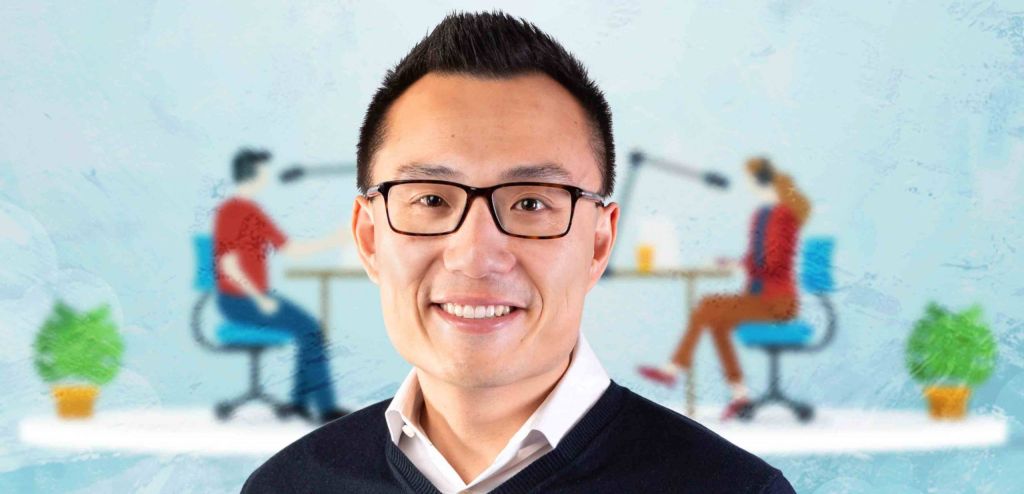
Like its peers, DoorDash has enabled many businesses to connect with home-bound consumers in new ways. But its mission, according to CEO Tony Xu, goes beyond getting tasty meals to more doors. Xu joined our Disruptors podcast for a special one-on-one conversation in which he outlined the company’s bold ambitions. Here’s some of what he had to say:


Listen on Apple Podcasts, Spotify or Simplecast


Delivery platforms empower smaller businesses to participate in the convenience economy

DoorDash’s mantra is to grow and empower local economies by creating logistics networks within communities to get things to people who need them, efficiently. The company’s platform also provides the delivery-fulfillment tools that allow small and mid-sized firms to scale their digital businesses.

“The majority of GDP and economic growth is still inside the city and neighborhood that you live in, and I think we sometimes forget that,” said Xu.

Demand is broadly similar, access varies greatly

When it comes to access, those living away from urban hubs want the same as their big-city neighbours. DoorDash feels this “democratization of convenience” is more important now than ever. Xu believes wants are similar, but access differs. That’s because the last-mile economy is still out of reach for many smaller businesses.

DoorDash has embraced a “seize the suburbs” strategy, which now represent 58% of its customer base.

“The goal was always to create two things: the biggest local commerce marketplace where we can bring you everything inside your city, and give people tools so that they can build their own digital business,” said Xu. “For merchants, what the last mile enabled them to do is actually build deeper relationships with these consumers, because now they get to add a family of products called convenience into what they offer.”

Build technology that solves real problems and forms connections

Xu believes that building technology for technology’s sake is usually not that useful. He says DoorDash has built a logistics network that ultimately benefits cities’ GDP.

Three years ago, the company launched “Project Dash” to connect like-minded grocers and restaurants that want to donate excess food to those who need it most.

“We’re a company that wants to marry technology and operations. We sit at the intersection of solving a math problem and a human problem. I view them as not ones that oppose one another, but ones that come together,” he said.

“In our business, technology, if it helps solve a problem, that’s one marker of success. But the other marker of success is making sure that it’s married into the human operations of what we do and making sure that, again, works for all audiences.”


[00:00:02] Hi, it’s John here. I don’t know about you, but I had a few gigs as a kid delivering stuff in my neighborhood, newspapers, of course, some groceries. Can I say cigarets on the show? Hey, it was the 70s. Can you believe how far we’ve come from groceries and clothing to electronics, booze, even prescriptions? It’s now a parade of delivery people to our front doors. And that parade got a whole lot bigger during the pandemic. In particular, the restaurant industry’s pivot to delivery may well end up being one of the biggest storylines to emerge from the covid crisis. I still like the smell of my local pizzeria and to chat to the chef, but it’s hard to beat a full grocery order coming to the front door. The relationship between bricks and clicks hasn’t been without challenges, though. Fair wages, data privacy, the environmental footprint of all that packaging, and, of course, the viability of neighborhood businesses. So what do the current trends tell us about the future of delivery? What if the platform’s learned from the challenges of the pandemic? And how could they play a critical role in the last mile ecosystem as the economy moves into recovery mode?

[00:01:23] This is Disruptors and RBK podcast, I’m your host, John Stackhouse.

[00:01:35] It’s hard to overstate what the past 12 months have done to food delivery. I have not resorted to midnight donut deliveries, but everything else. Yeah, and I’m not alone. Food delivery tripled last year, and the past year has been even more significant for one platform in particular. Last spring, Dorda expanded its offerings in the US beyond food to other essentials like toiletries and pet products. And in December it raised three point four billion dollars in one of the largest IPOs of twenty twenty. Just last month, it acquired the robotics company Chao Baltic’s. It’s all part of that really interesting idea in the new economy called The Last Mile. And how many of the world’s biggest companies, as well as your favorite local pub or antique shop, are trying to pave a new path to your door. Today, we’re lucky to be sitting down for a special one on one with one of the pioneers of the last mile, the CEO of Dorda, Tony Shiu.

[00:02:35] Tony, welcome to Disruptors. Thanks, John, for having me. It’s good to be here.

[00:02:39] It’s great to have you and really excited to learn not only about Jordache, but about where you see this last mile going, because it’s, I think, going to reshape the economy and all sorts of interesting ways. But maybe I can start by just getting you to look a bit in the rearview mirror. I don’t think anyone could have predicted the level of disruption covid caused to all of us, but to the food service industry in particular. What stood out for you most of the past, the past year?

[00:03:06] I think the past 12 months was in many ways a reflection of some of the things that were happening probably for the last couple of decades. And I’ll try to narrow my comments just to the commerce sector. But really, this is true across a variety of industries and frankly, even all throughout society. But when it comes to commerce, ever since the advent of the Internet, conveniences has kind of only moved in one direction, which is we only seek more convenience as consumers. And I think we saw that in the last 12 months in some ways because we were compelled or forced to because stores had to shut down. And as a result, every store, every brick and mortar business had to become omnichannel. And that was true in restaurants. That was true in retail. That was true in grocery. That was true and convenience. On the flipside of that, though, one of the things that hasn’t changed, in addition to just this move towards conveniences, we all want to support what’s inside our local neighborhoods. We all want to support the local restaurant. Maybe it’s the burger priest. We all want to support the local flower shop. We all want to support the local convenience store or grocer. And I think in some ways, if there is a silver lining from this pandemic, it’s that it reminded us that sometimes the best things are closest to us. And really, that’s been the mission for Jordache since day one, which is to grow and to empower local economies and to transform every brick and mortar store. And we were lucky enough to see that mission realized every hour during this pandemic.

[00:04:39] I love that you seize on that word convenience because that really underscores so much of the economy. Now, the other night, I had a craving for something and thought I can run to the convenience store, but it’s no longer that convenient. I could just have it sent to my door. And it was tough weather outside and that was much, much more convenient. I wonder if I can take you back to the origins of Jordache. Did you see this battle for convenience, if I can put it that way, as what you were wanting to take on? Or did you just have a crazy idea in your head it evolved into this?

[00:05:12] No, I don’t think it was either a crazy idea in my head, nor was it maybe observations about convenience. It really started a long time ago, over thirty years ago when I was a five year old, when I came to this country with my family, you know, I grew up working alongside my mom inside a restaurant that she worked at, sometimes moonlighting as a dishwasher. Where was her family from, Tony? My family immigrated to the US from China. And so I moved to the US when I was five. And, you know, my mom was working three jobs a day to put food on the table. My dad was getting his PhD at the University of Illinois, and that’s pretty much how I grew up. And as a kid, as well as a product of really a local business, I got to see at a very, very young age all the hustle and bustle inside different local businesses. And that motivation kind of stayed with me as I grew up into adulthood and started making the observation that for every amazing change in the world, whether it’s technology driven or something else, it’s still the physical businesses, the small, medium and large businesses that produce the majority of GDP and job growth in pretty much every city around the world. So in twenty thirteen, when my co-founders and I got together, the motivation was helping people like my mom. And so we actually spoke with a group of business owners, some of. I’m more like my mom, they sold food, others sold flowers or retail items, and what we learned was that seven and a half years ago or eight years ago at this point, these businesses were not ready to make this jump into offering that convenience. And that’s really what started the founding journey for Dornbusch.

[00:06:52] When did you know you were onto a hot idea?

[00:06:56] I don’t know if it ever feels this way as an entrepreneur. I don’t know if there was ever like one aha moment. But I’ll give you a story that maybe illustrates some of what we had learned. I remember meeting a macaroon store owner. The store managers name was Chloe and she would show me this notebook of orders, customer information that she had written down of orders that she wanted to receive and actually deliver because they were all delivery orders. But she could not fulfill them because she was a one person shop. She was running the store. She was handling every part of business and operations. And there’s no way to actually fulfill the deliveries. And while that wasn’t an AHA moment, what I would say was that kind of gave us the sense that a huge transformation needs to happen in order in order to allow these businesses, business owners like Chloe, to compete in the convenience economy. And in fact, you have to build lots of things. You have to build delivery. You have to build marketing. You have to build customer service, analytics, customer support and operations and all of these things. But obviously, as just a few people inside my apartment, which is how Doris got started, we couldn’t start everywhere. So we kind of decided to narrow in on this idea of delivery. The goal was always to create two things the biggest local commerce marketplace where we can bring you everything inside your city. But the other thing we wanted to do was we wanted to give people like Chloe tools so that she can build her own digital business. That was way too big of an idea to tackle on the first go. So we narrowed to delivery and then even within delivery, we decided to narrow to serve restaurants because we thought if we wanted to deliver everything, it would behoove us to start in the category that had the highest frequency.

[00:08:41] You’re also starting in a category that is competitive. If you’ve got some pretty good players that you’re going up against. What competitive advantage did you feel you had over those other players to allow you to grow so quickly?

[00:08:52] Every space has lots of competitors, and to me, the way I’ve always thought about it is what is it that the customer wants versus what it is that the market offers and where we are on that journey. And if you think about it, most of the physical world is not yet online, believe it or not. Even during the pandemic, we saw, I think, a glimpse of what that looked like. But still, most of it is in online.

[00:09:18] There isn’t a digital repository, for example, of where can you find every menu item description or every price of every grocery store item or whether it’s in stock or not. All of these things still are becoming digitized for the first instance. So when you look at something like penetration, even today, even during or after, I should say, kind of hopefully the worst parts of the pandemic behind us, the total sales and something like takeout and delivery is still a mere fraction of the amount of total restaurant sales. And if you looked at other categories, it’s still very, very, very early. And so for us, it was never a focus on what quote unquote advantages we had. It was what is it that we’re going to bring the customers that they don’t have today? What selection of restaurants can we bring? How can we bring in the highest quality way? And how do we do it at an affordable price point and get that combination right so we can offer the best experience?

[00:10:14] That’s a fascinating way to describe it. Wonder why that is, Tony, that I can find the world history through Google. I can find an almost infinite selection of music and film, but I can’t find a quick and easy list of where potato chips are in my neighborhood or who’s got the best picture frame in my neighborhood.

[00:10:35] And yet that’s where the majority of GDP and your economy is in the majority of GDP and economic growth is still inside the city and the neighborhood that you live in.

[00:10:48] And I think we sometimes forget that part of that is because the Internet has really opened our eyes and our access. On the flip side, sometimes we forget the very things right in front of our eyes and just how big they really are in terms of sustaining all of us.

[00:11:04] You had a seize the suburbs strategy. Can you give us a bit of insight into what what led you to the suburbs?

[00:11:11] Well, so when Dora started, you know, we started in a pocket of the Bay Area that was fairly suburban. There is San Francisco, a city, but there are a lot of suburbs that kind of surround it. And I always had the belief that there’s no difference between customers in terms of geography. When I think of people that I grew up with in the middle of the. Or in the Bay Area, we’re very similar. We eat three times a day, maybe sometimes more during this pandemic, we all seek convenience. We all sometimes wish we had more time, especially if some of us have growing families. And so we’re always looking for ways to make our lives easier. It’s not that there’s anything special per say about suburbs or cities because we all tend to want the same things. However, access to these same things are not evenly distributed in America, for example, or frankly, in most cities across Canada or the world, a lot of that access tends to go inside the cities first. But that doesn’t mean that people in other places who live elsewhere don’t want those same things. And so for us, one of the ideas early on was can we actually bring our service to customers where does not exist? And we found a lot of that, frankly, in most parts that that was true, frankly, in cities as well as suburbs. But that certainly was more true outside of the New York cities of the world than inside New York City.

[00:12:35] Doesn’t geography change the economics, though? I’m thinking of sprawling suburbs and just the distance and you’re in the distance business of getting things to people who are more widely distributed.

[00:12:46] Yeah, a lot of things actually affect the ability to create a highly efficient network. Distance is one of those things. But so are things like parking. So are things like how busy or not busy traffic is on the roads. I know we’re in a pandemic, so this is a bit muted right now. But if you think pre and post pandemic, imagine how fast you can drive a kilometer inside downtown Toronto versus maybe the suburbs. Sometimes it might be faster walking inside downtown Toronto than necessarily driving or cycling inside the downtown area. And so as a result, you’re right, geography certainly are different from place to place. But really, when you think about constructing a logistics network, what you really care about is creating the most amount of nodes and achieving the most amount of information inside that network. And distance is just one of those factors.

[00:13:45] You see, the other explosion over the last year has been in data and we’re all we’re all part of that and we’re beneficiaries of that. It’s extraordinary how much more data the big tech platforms are thinking of. Facebook and Netflix and Google, of course, have even more now than a year ago. Much of that can be for for good. There’s much debate about some of the downsides there. Wonder what your thoughts are about the kind of the long game when it comes to data and how that is going to continue to evolve in terms of addressing that convenience question that you spoke to earlier?

[00:14:22] Well, having studied math by training, I can tell you that sometimes you’re only as good as your data. And before we apply techniques, whether it be machine learning or other methods to data, you really need large volumes of structured information. So what I would argue with respect to trying to change and transform the physical world is we’re still in the data collection phase, whereas every last parking spot, when there’s a busy commute day, for example, how many apples are left in aisle six? What’s the price of Pad Thai today versus the promotion a month ago? These things are all pieces of information that foster the majority of GDP in all of our lives and all of our communities. And so we’re still in that collection phase. I think a lot of times there’s been, to your point in the question, a lot of the technology, especially consumer technologies that have been built in the last decade or two, have really centered on the consumer or the individual, you know, our professional lives, our social lives, our interactions with one another.

[00:15:34] There still isn’t much around the city and collecting information about what makes that city tick, what makes that city grow, what is the economic engine of that city? And and that’s the world that we’re playing in Ed cash or trying to collect the data around the ATMs, convert them into bits and actually distribute them in a way so that business can continue to grow.

[00:15:57] And you’re up against, obviously, some pretty big players, like an Amazon that has data on a lot more than probably you have access to. How much of a competitive challenge is that at this point and how much more will it matter a few years down the road?

[00:16:13] Well, I’d actually argue that no one really has information about cities. And the reason is because none of these services were designed to grow and to serve these local businesses and these physical businesses. Most of the businesses that have come in the last couple of decades were designed again around serving for the consumer with. Is great, right, they brought us all this technology around, making our lives easier and again collecting information around the individual, but not a lot of information has been collected around what’s the right entryway into an apartment complex, for example, which is not that important if you’re just moving from point A to point B on a map. But it’s pretty important if you’re thinking about shaving minutes off for delivery or something like that. Right. There hasn’t really been a need for that until recently or in the past seven or eight years that Dorotea has been doing this. And so for us, our goal is to grow and to empower these local economies. And if we can do our job, I think what will happen is, one, we can bring the best of your city to in minutes, not hours or days, but on the other side, maybe even more important than our marketplaces, we can give that information back to the business owners, people like my mom, so that they can transform their businesses into offering both experiences inside their stores as well as convenience in the form of digital products.

[00:17:36] We’re going to take a quick break, but don’t type stuff on your device. Still ahead, we’re going to find out how Dauda is approaching the last mile or one point six kilometers, if you prefer.

[00:17:51] You’re listening to Disruptors and RBC podcast, I’m your host, John Stackhouse. If you’ve been enjoying this conversation, there’s some relevant RBK research you might also find of interest. In Twenty Twenty. We dug into the pandemic crisis for small business and tried to lay out solutions for a digital transformation. The report’s called Small Business Big Pivot. We’ve also just released a report on the big trends coming out of covid, including this one. Small business is the next data frontier you can find both at thought leadership. RBC dot com.

[00:18:33] Today, it’s my pleasure to sit down for a special one on one conversation with the CEO of Dorda, Tony Shiu, Tony, I’d like to talk about the payment structure, the fees that both customers and restaurants pay to use platforms like yours. I think we’ve seen a lot of evolution through the pandemic, but it’s still kind of nascent in terms of the kind of the economic breakdown of this new part of the economy. Tony, I’m wondering where you see the economics of food delivery going. Is there going to be a dominant revenue model, be it subscriptions or fees or commissions or a blend of all that and more?

[00:19:09] Yeah, I don’t know if I think that way. I mean, we really think about pricing to the value that we bring. It’s really about offering choice. At the end of the day, some merchants, they actually have really strong brands and they want to invest in their own marketing and in their own digital channels. And actually what they really need is they need help with fulfillment and customer support. And that’s what we do for certain companies. We do that actually in both instances. For Tim Hortons, for example, we support and empower their channel as well as having Timmy sell on the door. And it really depends on what the needs and the problems that the merchants are trying to solve are. If you think about it, it’s the same cost for everyone. There’s always going to be a delivery person. Someone has to make sure that that person is appropriately paid. And so that’s on our marketplace. We’re happy to do that. If the merchants want to deliver that themselves, we allow that to or if the merchants just want to use our logistics, we’re OK with that as well. And so really a door, it’s about creating the widest suite of products to allow the merchants to pick and choose what makes sense for them. And that’s going to evolve. So I don’t necessarily think of this as what’s going to be the dominant model, because it really depends on what the merchant wants.

[00:20:25] It’s remarkable to see so much experimentation and innovation going on. And we’re seeing some of the platforms expand well beyond their traditional lanes, creating new competition. Amazon getting into groceries is is an obvious example. How do you see that playing out?

[00:20:43] Well, I guess most of my time is spent thinking about how we’re going to best serve customers who lost convenience as a category, really in response to the pandemic. You know, we accelerated the launch of that category by a few quarters, mainly because customers were telling us and searching for in our app, how can they get some of their household essentials and pantry items delivered very, very quickly. So we launched nationwide with 7-Eleven and Circle K and Canada. Really, what we’re trying to do is we’re trying to provide access to the entire city in minutes, not hours or days.

[00:21:18] And and that’s what we’re focused on. I think we’re a long ways away from achieving that. But I think some of the early progress that we’re seeing in Canada really suggests that consumers really like going to one place to be able to shop their entire neighborhood.

[00:21:34] I don’t know if you have concierges in apartments in San Francisco, but it makes me think of the classic concierge in Manhattan apartment to kind of get everything and know what’s coming and when from where for all the all the occupants. Is that kind of what the what the last mile is going to evolve to be that sort of concierge service?

[00:21:57] Well, I think it depends on who you ask. I think if you ask the consumer, I think a consumer certainly would say, boy, wouldn’t it be great that I can actually shop locally and support all the businesses inside my neighborhood. I think for merchants, what the last mile will represent is a transformation into really serving two families of products. I think people will continue to want to go back inside stores, whether they’re restaurants or retail stores or grocery stores, especially as we get out of this pandemic. But on the flip side, I do think that people also want more convenience. I think the good news here is that the pie is a lot bigger than we may think because we eat three times a day, which is almost one hundred times a month. And if you add other shopping occasions on top of that, I mean, it’s a large opportunity per person, not just based on how many people live in a certain population, but even on a per person basis. There’s a lot of commerce happening. Most of that is happening locally, but most of that is happening in an offline way. So I think for merchants, what the last mile and enabled them to do is actually build deeper relationships with these consumers, because now they get to add a family of products called convenience into what they offer consumers.

[00:23:16] In addition to the experience, is the last mile going to be a winner takes all competition?

[00:23:20] Well, I guess I’ve never thought of things that way. I think at the end of the day, the consumer is going to make the decision to to that question. But I think there will be many players, because if you just think about how.

[00:23:32] Large GDP is and how how big it’s happening already. Maybe we don’t even understand it, even though it’s right in front of our eyes, you know, it’s happening for large stores. It’s happening for small stores like Mom and Pops, like the one I grew up in with my mom. And it’s happening everywhere. And so for me, it’s not necessarily thinking about what part of that we will own. It’s about thinking what part of that we will enable.

[00:23:59] You know, how will we grow this marketplace to be a source of incremental demand for all these businesses? But also, how do we equally give the same tools to these businesses so that they can transform into the next century of commerce for them and continuously be the largest driver of GDP growth in every city?

[00:24:18] Can they be cost competitive against the mass play? I’m thinking of the ghost kitchens or the warehouse model that we’re seeing emerge and for different product lines, how does the local small scale supplier survive against the massive efficiencies of that other model?

[00:24:38] Well, I think one of the things that we underappreciated sometimes about say something like food is that food is actually not a commodity, know. Otherwise, there would not exist hundreds of thousands of pizza shops or burger places or Chinese restaurants. Right. And the reason why it exists is for something that we consume three times a day, meals. We don’t want the same things, you know, like even if it’s our favorite meal. Can you imagine eating that twenty one times a week? I can’t. And I don’t think most people can. I think most people actually want variety. And so I think sometimes there is a desire as just normal people to want to oversimplify the world into thinking about what gets commodities, what doesn’t get commodities. I don’t think that’s how local commerce works, though. Otherwise cities shouldn’t exist at some point. Right. Like like they should just all be replaced by mass mainstream commoditization effects. But instead, cities, if we study history. Right. Have been arguably the most resilient organization, far more resilient than companies. And so I think what it suggests is that we as consumers have a strong desire to support those in our neighborhood. Now, people come and go, things come and change. And I think that those will continue to be successful for those who adapt. But one of the things I like to study is also what causes things to not change. And I think one of them is that we as humans, to your point of why that local mom and pop stores survives, is we want to support them. We want to go inside those stores. We want to dine with our friends and our families. I think that’s something that is very difficult to replicate with something like just technology.

[00:26:24] There’s been so much speculation about the demise of cities through the pandemic. What do you think will not change about cities?

[00:26:31] Well, one of the things I think we have to remember when we take a step back is life in cities. And when I say cities, I mean that in a very generic sense. I don’t mean urban areas versus suburban areas or even rural areas. I mean cities across the board have very much improved. If you looked at education rates, health rates, crime rates, if we study that over the last couple of centuries, virtually across the board and the vast, vast majority of countries, that has been a number moving in the right direction, depending on the metric. And I predict more of that in the future. Now, I think one of the things that we have to do as we kind of think about how we continue that resilience is there are moments where we have to come together. I think you saw some of the best of that during this pandemic. You also saw some of the worst of that. And I think when there has been the best of it, you see, again, things moving in the right direction. So what I think needs to happen is I think businesses and cities need to work together in order to solve big issues, whether those issues are inequity issues, climate change issues, issues to support local commerce. All of these things, I think, will be challenges that will evolve in the years and decades to come. But they’re all things that get solved when we come together.

[00:27:53] When I think about the last mile, I’m concerned about the amount of labor that’s needed for it. And I wonder how much of a role automation is going to play over, let’s say, the next decade. You’ve just invested in a interesting sounding company called Baltic’s. More broadly, where do you see technology and automation going in terms of how we how we manage our neighborhoods and local commerce?

[00:28:18] I’ve always believed that a couple of things. One, that technology, for technology’s sake, is usually not that useful. The technology that solves problems, I think can be very productive towards progress. You know, for example, building a logistics now. That allows you to deliver all of your city, I think, has benefits to the city’s GDP, but it also has benefits to the community, for example, where we launched Project Dash about three years ago. Now, on one side, we’re connecting organizations that want to donate excess food like grocers and restaurants. And then on the other side, we’re using our logistics network to connect them to those that need that food. So I think technology that solves problems can be very, very, very useful. The second thing I’ve always believed is that companies like Doordarshan and certainly this is how I view Dorridge today, we’re a company that wants to marry technology and operations, and we sit at this intersection of solving a math problem and a human problem. And so I view them as not trying to oppose one another, but as ones that kind of come together. And that’s and that’s really I think even if you studied history, that tends to be what happens when technology comes in, whether it’s electricity or the semiconductor industry or the computing industry in the 80s or the Internet revolution in the late 90s and the mobile revolution in the first decade of the 2000s, it introduces one shockwave. But but the job growth continues overall and morphs in terms of how it shifts, how those jobs change. If you think about the auto industry, for example, maybe you have fewer people making some of those cars because there are safer ways and more consistent ways to produce them in certain factories. But those humans are now service professionals and they actually are either engineers creating the next lines of products or the assembly line technologies to actually drive some of this production, or they’re literally creating services to actually maintain those vehicles. You know, think of electric cars, for example, and what’s happening in that industry. That’s what I think will happen, frankly, in all industries of technology when it works well. And that’s kind of how I think about it for us. Like in our business technology, if it helps solve a problem, that’s one marker of success. But the other marker of success is making sure that it’s married into the human operations of what we do and making sure that, again, works for all audiences.

[00:30:48] We did a big study before the pandemic called Humans Wanted. That kind of demonstrated how much of a demand there is for exactly that. More more humans, but more human skills as well in all aspects of the the economy. And as we get back to what will be a very different normal but hopefully a robust economy in the months and years ahead, we’re going to see new technologies like 5G rolling out something. Many people see it as the electricity of of the twenty twenties and thirties. Maybe that’s a bit of hype, but it could be transformative. I wonder as we wrap up, Tony, if you can give us a sense of your grand vision and especially with respect to the last mile, is this going to be I don’t know if you are Jetsons fan growing up, but is this going to be like a Jetsons world where food and packages are delivered by drones to my to my stoop? Or is there going to be a different kind of community evolving with all this technology?

[00:31:46] Yeah, well, I think hopefully if we do our jobs right, a few things will happen. I think for consumers they will be able to get everything inside their cities brought to them in minutes, not hours or days. Sometimes it might be them getting the products in terms of walking back inside these stores to to do some of this, because it’s really if technology is doing its job, it ought to serve as a way to connect consumers to the best of what’s inside their neighborhoods. At least that’s how we think about it. For the consumers on our platform for merchants, it really should empower them to grow their business in more ways. Whether that means opening up more stores, whether that means opening up extensions of their store, whether it’s in other brands from the same kitchens or opening up new kitchens and new places, or considering how they can take their content into a lot of different areas and giving them the ability to compete, just like so many other marketplaces have been able to compete on their own. And then I think for dashers, it means a world in which they can have a lot more opportunities to work. Maybe some of that is in delivery, maybe some of it isn’t. If you think about the dashers in our platform, 90 plus percent of them work fewer than 10 hours a week. Really, what they’re saying literally with their time, their money and their feeds, that they actually like the idea of being able to do different things in the times that they want. And that’s really how they view the relationship with us. And so how do we create more of those opportunities, especially as we were talking about earlier? Technology kinds of comes in and evolves the landscape. So that’s that’s how I see it.

[00:33:21] I wonder if I can ask one last question, Tony. I love how you describe yourself as a problem solver. So many great entrepreneurs are exactly that. Their problem solvers when you look. The post pandemic world, what’s the biggest problem you hope to solve?

[00:33:37] It’s allowing these local businesses to transform their business models and whether they’re small, medium or large ones, helping them. I think they saw a big part of what that can look like during the pandemic.

[00:33:49] And I think if there’s any case for optimism there, I mean, if you looked at the year 20, 20, there was a lot of hardship for everyone. But it was actually the first time that physical retail actually gained share in e-commerce. You know why? Because they all had to do and participate in e-commerce. And so I think it’s a case where as businesses realized that they can transform their own business model into better serving their customers, that we can be a part of their journey and doing that. And I think if we can do that, cities will get stronger. And I think local economies will continue to produce the vast majority of jobs and GDP. By the way, that’s been a stat that’s been true for the last seven or eight decades when governments have measured this. And so I’m confident that this could be something true in the future as well.

[00:34:36] We need so much of that optimism. Tony, thanks so much for joining us on disruptors. Thanks, John. When I invited Tony to be on our podcast, I was thinking a bit selfishly as a food delivery user, I hadn’t appreciated the transformation for every business in my neighborhood that companies like Dorda are connecting me with. The economy of communities across the country is being disrupted, but also transformed through this crisis. Over the past year, the platforms have allowed many of them to connect to customers in entirely new ways. Data has given them new consumer insights and allowed them to scale. But connecting the shopkeeper or the restaurateur with all of us as consumers is still an epic challenge. That’s the last mile economy. And who owns that economy? Who develops it, who innovates in that last mile is going to play a much bigger role in the 20s and as Tony laid out, may even help us reimagine our communities wherever they may be. I’m John Stackhouse and this is Disruptors and RBC podcast. I hope you’ll join me again next time. We have an electrifying conversation lined up about Canada’s place in the rapidly growing EV industry. Talk to you that.

[00:36:10] Disruptors and RBC podcast is created by the RBC Thought Leadership Group and does not constitute a recommendation for any organization, product or service, it’s produced and recorded by Jar Audio for more disruptors, content like or subscribe or ever you get your podcasts and visit RBC Dotcom Slash Disruptors.


We’ve all witnessed the power of technology in battling systemic racism. Social media helped spread eyewitness accounts of police brutality—such as the tragic murder of George Floyd—and build support for the Black Lives Matter movement. It’s fueled broad calls for justice and attracted policymakers’ attention; President Joe Biden has made racial equity one of his four key priorities. The business sector is paying attention, with large companies announcing new diversity pledges, partnerships and initiatives.

While the tech sector has helped spread the message that we need to be more inclusive, its own record on the issue is decidedly mixed. Despite publicly disclosing their diversity scorecards, big U.S. tech companies are adding Black employees at a snail’s pace. Facebook, for one, expanded its Black workforce from 3% to 3.8% over a six-year period, according to a June 2020 report from CNBC.

Two leaders pushing for change are Michael Carter, Global Head of Technology Investment Banking at RBC Capital Markets, and Dax Dasilva, founder and CEO of Montreal-based point-of-sale software company Lightspeed. Both spoke on the latest Disruptors podcast, dedicated to Black History Month. Here’s some of what we learned:


Listen on Apple Podcasts, Spotify or Simplecast


Diversity is an employee satisfaction and retention tool

Lightspeed was built on diversity. Its core founding members were all part of the LGBTQ+ community, and their diversity ethos has remained intact over the company’s 15-plus years. With customers in 100 countries, diversity is literally reflected in Lightspeed’s vast customer base. Dasilva believes it should also be reflected in its vision, workforce and operations.

It’s also crucial for employee retention and satisfaction. Lightspeed’s most recent diversity and inclusion survey showed that 83% of its workers feel they could be their authentic selves at work, and nine out of ten felt comfortable talking about their culture and background with colleagues. “I realized a lot of people worked at Lightspeed because of what it believed in, what it represented and what it stood for,” said Dasilva.

A lack of diverse talent can no longer be blamed on geography

Carter said the pandemic has proven that the tech sector can work remotely, and location should no longer be a barrier for finding Black talent.

“That’s where innovation, higher employment, and greater wealth could be built in communities. But first you’ve got to go with an intention to where the talent is, so that you can start that train moving,” he said.

Appoint leaders who believe in diversity

Dasilva believes a commitment to inclusion starts at the top. “You create leaders that believe in this as much as you do, and you create diversity in your leadership team and on your board,” he said.

“It’s a journey and it’s almost never completed; it’s a drive towards more representation,” he said. “Once you have that, you have to actually create the seats at the table where the decisions are made.”

Lack of investment in Black businesses is a challenge

Many funding announcements to support Black entrepreneurs were made last spring, but wage disparities persist, noted Carter, citing McKinsey’s estimate that the racial wealth gap will cost the U.S. economy at least US$1 trillion by 2028.

“I think that Canada can be a model. And I think it should start with things like investing in diverse communities. That’s a place where we can really shine,” said Dasilva.

The digital shift presents an opportunity for Black entrepreneurs

The pandemic has created completely new business models and ways of approaching business that excite Dasilva. “It would be an amazing moment to capitalize on these opportunities for fresh thinking and to bring value in such a unique way,” he said. “I think this is the time.”

Carter feels optimistic on the direction this issue is headed. “We have the talent, and especially on the back of a more digital economy,” he said. “It’s open to us.”


[00:00:09] Hi, it’s John here. Over the last year, the calls for black inclusion across society reached a remarkable pitch. And while we saw some remarkable change, it wasn’t enough. One sector that was particularly challenged was tech, not just from a representation point of view, but in terms of how technology both drove and stifled progress.

[00:00:33] One reason the murder of George Floyd shook the world the way it did was technology. Passers by were able to live stream police brutality for the whole planet to watch. That wasn’t possible a decade ago. And yet those same platforms that allow us to listen to the world can also silence too many voices.

[00:00:54] The worst thing that someone ever said to me was that no one would take me seriously because I was trying to help black people and no one would take me seriously because I was black, because I was young, because I was a woman.

[00:01:06] That’s Tamar Huggins Grant. She’s the founder and executive director of Tech Spark Canada. We’ll hear more from her later on. But before we get going, I want to put some key questions to you. How can black men and women, and especially youth, see a compelling future in tech, whether it’s in a big company or starting their own?

[00:01:25] How can we ensure tech doesn’t appropriate black culture? How can we ensure innovation is driven by and accountable to all parts of our society? And what are you doing to ensure the change we’re in the midst of is positive.

[00:01:40] It’s Black History Month. And yes, that’s an opportunity to honor the past, but it’s also an opportunity to look ahead, to think deeply about how to ensure a good share of what some people call the fourth industrial revolution is black led. This is Disruptors and RBK podcast. I’m John Stackhouse.

[00:02:10] In order to tackle these big issues, I’m honored to have Michael Carter here as my co-host. Michael is global head of technology investment banking at RBC Capital Markets in New York. He’s a 25 year veteran of Wall Street with leadership stints at Barclays and Lehman Brothers. And he serves on a range of boards encompassing both tech and leadership opportunities for young people, including the Executive Leadership Council, which is a major body in the US, a black business leaders. Michael thought deeply about many of these issues for much of his life, and it’s always a pleasure to speak with him. Michael, welcome to Disruptors. Thanks, John. Glad to be here, Michael.

[00:02:49] The last time you and I spoke on a podcast was last summer, soon after the murder of George Floyd. Sometimes that feels like last week. Sometimes it feels like a decade ago. And I wonder, when you look back over the last six or eight months, what do you think has changed in the larger conversation around black issues?

[00:03:07] Oh, I think one thing that has definitely changed is that people are more engaged. I think business leaders are making some progress and creating equitable work environments.

[00:03:18] It certainly seems there is definitely more interest in doing that. And that you have we have all witnessed many more investments in trying to get progress or moving toward progress. The other area that I see fairly substantial movement is rethinking leadership and what kind of emotional intelligence is required to understand employees and where they are and where folks need to be as a leader around big issues that are impacting society. I think we all know that the millennial generation, a very large part of millennials, make decisions about whether they’re going to work for a company or not. I think the number was something in Washington Post, about 83 percent of gen Zs. As an example, consider what the commitment is to diversity before they join a company. I think the other area is the commitment to being or allowing employees to be more human at work and to bring their whole selves. I’m not sure we’ve met the frontier yet on that on that point, John, but I think certainly there seems to be a greater embrace of the idea. I think the notion of having more diverse teams for innovation, that concept has been out there for a while, but I think we’re seeing a greater commitment to that as people prioritize change. And then lastly, a greater emphasis on focusing on the gaps both in hiring and pay and to some degree position, although we haven’t seen huge movements there. So that’s where I would see some of the conversations have moved in that direction. And I think there’s been some progress.

[00:05:09] I try to think of tech as both a sector and a platform. It’s a sector like any sector employees. Lots of people produces great companies, big companies. But it’s also a platform on which pretty much the whole economy and society now operates. It creates the operating system of our communities as well as our organizations and individual lives. As I’ve been reflecting on tech over the last six or eight months, I’ve been trying to appreciate the differences in progress between tech as a sector and tech as a platform. And there’s lots of talk about what big tech especially is doing as a sector, especially on the employment and leadership front. You know, there’s been some bold ambitions and reality may be a little bit different, but as a platform, I don’t think we’ve been adequately addressing the hidden biases of of tech. I don’t think we understand them. What have you been learning over the last while in terms of tech as a platform and its role in the diversity conversation across society?

[00:06:17] Well, I don’t think tech in particular big tech, has until recently prioritized change in regards to the voices that are heard on these platforms and even the intention of moving things toward a more equitable society, if you will. But I think, as I said earlier, the conversations have begun to take on a slightly different tone. You see it from the top, whether it’s Microsoft, you see it from Google and Apple, et cetera, where there’s a greater commitment toward using their platform for some of that change. And so I think that’s number one is a greater effort to prioritize change because you’re certainly not going to get it if you don’t prioritize it. The thing that tech. Has not really figured out, though, because if you look at the results, it hasn’t been a substantial change in the results. I still believe there’s about black Americans, as an example, represent 14 percent of the economy and most tech companies have. I’ve seen numbers range from less than five to maybe less than seven, depending on what you’re looking at in tech. And so there hasn’t been a huge movement in regards to the outcomes, in terms of employment, in terms of even senior management, the amount of venture capital that is going into black and other minority businesses. But again, the prioritization around doing more is where I see tech moving to what I’d like to see and not so much the technology itself. John, I think technology itself is important, but what I think the CIS tech is one of the higher paying employment sectors. It would be good to see big tech in particular begin to cultivate places that black talent exist for a very, very long time. If you think about where a lot of the technology centers are taking to Silicon Valley, for one, it’s sort of come to Silicon Valley and, you know, you can get involved in some really creative and interesting things. Well, you know, most black Americans live east of the Mississippi, and so perhaps more thought should go into going where the talent is, as opposed to pronouncements about what could happen if the talent came. And so I think of areas like Atlanta, obviously, which is a very large tech entrepreneurship hub. It’s the entrepreneurship hub for black talent that’s just now beginning to see the kind of rapid development that I would expect from technology companies that were truly prioritizing growth and change, particularly as it relates to black employment. We are seeing more engagement in Miami. As an example, there’s been quite a few announcements, which I think is both good for the black community, but definitely for the Latino community as well. So I think that’s a that’s where I’d like to see more. That’s where innovation, higher employment, greater wealth could be built in the communities. And then that kind of builds upon itself. And change begets change at that point in time. But first, you got to go with an attention to where the talent is so that you can start that train moving.

[00:09:53] That’s a really interesting idea, Michael, to take opportunity to where people are rather than expect market forces to draw them to the opportunity. But it was more than creating a Google office in Miami. As you know, there’s a whole ecosystem that needs to be built, including research centers, great learning centers, universities, venture capital and customers. That’s in some ways why Silicon Valley is Silicon Valley. How do you create that kind of ecosystem in Atlanta or Miami or here in Toronto or let’s say, Montreal?

[00:10:29] Well, first of all, I think we’ve learned that nearly 60 percent I think it’s a little short of that of US citizens as an example, can work remotely. And so the pandemic, you know, suggests that geography is not necessarily the challenge for creating the type of centers that we’re talking about.

[00:10:49] I mean, we’ve now been able to advance vaccines within two years. I think we can figure out how to advance technology by using remote capability and other technologies to involve people and to incorporate more activity outside of Silicon Valley. But to be very specific with what you were saying in regards to more of the physical side of infrastructure, creating sort of that DNA of creativity and innovation, which I think is really what Silicon Valley is about. I mean, to some extent, Silicon Valley is less of a place than it is sort of an ecosystem or an idea of how innovation gets permeated with throughout the economy. Geography should not be a barrier for expanding the tech ethos. It should not be a barrier for moving into geographies where you find greater African-American talent. As an example, I actually believe that the pandemic for all of the horrible things that the pandemic has has brought upon us. I do believe that it has taught us all that we can live in other places and still offer up great opportunity and innovation. And I think that’s. Rate for the black community, majority of the black community does live east of the Mississippi.

[00:12:16] Michael, I love that idea of thinking beyond geography and that concept of expanding the tech ethos, whatever the barriers may be, it’s not unlike what Tamar Huggins Grant, who we heard from at the start of the episode, has been trying to do since she founded Tech Smart Canada in 2015.

[00:12:34] My focus was really about how can we get students of color? How can we get young girls involved in technology at a younger age? How can we present, you know, coding and UX design, robotics, A.I., VR gaming to them in a space that’s that’s fun. But that’s also intentional in the sense that we are giving them opportunities and opening up their minds to thinking, hey, you know what? I can be a developer. I can, you know, be a coder, I can be a game developer. I can be anything. I really wanted young people to see reflections of themselves in the space. And so we worked really hard to bring educators and technical mentors that looked like and come from the communities that we serve, not about excluding others because of race. It’s about making those who have felt excluded because of race being included in a space that has excluded them for so long. That is that is what I’m here to do, is to make the tech sector equitable. It’s not going to be a comfortable journey. It hasn’t been comfortable. And that’s fine, because whenever we expect change, there has to be some level of discomfort.

[00:13:57] Coming up, we’ll welcome another voice to the conversation, a man on a mission to promote diversity in tech.

[00:14:15] You’re listening to Disrupters, an ABC podcast. I’m John Stackhouse. What in the world is going on when it comes to disruption and what does it mean for you? That’s what we try to tackle in every episode. We break things down to the bottom line so that you can respond quickly to a quickly changing world. Listen back to our episode about EA Sports to get truly game changing insights. And while you’re at it, subscribe so that you don’t miss out on our upcoming two part series on creativity as a key tool in business. And we want to hear from you about topics you want to hear about. So please email us at disruptors at Wrbican.

[00:14:56] Michael Carter from RBC Capital Markets in the U.S. is my co-host today. Michael, let’s bring DAX DaSilva into this. He’s the CEO of Light Speed, a terrific Montreal company which sets up seamless retail point of sale systems using cloud technology. The company has more than a thousand employees in offices around the world and light speeds clientele now spans 100 countries. DAX, welcome back to Disruptors. Thanks for having me, John. It’s always great to speak to you about tech as well as diversity and inclusion, because you are such a leader in so many conversations and doing really interesting things at light speed as an employer.

[00:15:37] And you’ve also got an incredible background on your own. And we really wanted you to be part of this conversation because of the stand you took on Black Lives Matter last year. We’re keen to get your thoughts on how things have evolved since then, especially with respect to representation in tech. But maybe we can start with your own story. Your family is, I believe, South Asian and immigrated to Canada from Uganda in East Africa.

[00:16:05] Was there one specific thing that sparked your interest in diversity, particularly when it comes to black representation in tech?

[00:16:13] Yes, as you mentioned, South Asian background. Also, I’m a member of the LGBTQ community. So there’s there’s some intersectionality with my own personal identity, the origins of the company Lightspeed. You know, a lot of our original team were all members of the LGBTQ community. So light skinned has has roots in believing that our differences can really be a teacher being a member of the BIPAC community. Also, it’s important that we’re an engaged company in in these communities because, you know, one hundred and fifteen thousand customers all around the world that are that are retail and hospitality diversity is represented in our customer base. And that should be reflected in our company and should be reflected in how we operate and how we envision the company growing.

[00:16:58] Can you tell us a bit about how diversity has helped you through the crisis? Because when this hit, I remember hearing people asking questions about all sorts of firms. But, you know, lightspeed seemed deeply challenged, given that you are principally dealing with a lot of retailers and restaurateurs who are clobbered by this. And yet you’ve you’ve you’ve excelled through the crisis. You’re growing incredibly internationally. What role did diversity and inclusion play in your transition strategically through the past year?

[00:17:29] Yeah, I think it has had some intersections with how we’ve been able to weather this pandemic. You know, around the around the same time as the pandemic set in, we did do a diversity inclusion survey across the company and we began a new way of communicating with the company because everybody was working virtually and working remotes. You know, some of the things that really struck me as we looked at the statistics and the company was that 83 percent of viewers felt that they could be their authentic selves in the workplace. You know, nine out of 10 felt comfortable talking about their culture and background with their with their colleagues and nearly 17 percent identified as LGBTQ plus globally. And as I spoke to many employees across the company, it kind of surprised by some of these these numbers. I realized a lot of people worked at Lightspeed because of what it believed in, what it represented, what it stood for, for them.

[00:18:18] Michael, jump into the conversation because you deal with entrepreneurs all over the map. And I’m curious what kind of conversations or how your conversations have changed with those entrepreneurs and leaders like DAX over the last year?

[00:18:32] Well, first of all, just congratulations to DAX and just all the success that he and lightspeed have had. And you are you are a hero, not just in Canada. You’re a hero, period. So thank you.

[00:18:46] I guess one of the things that I see is that entrepreneurs like DAX are leading the charge. They’re closer to their people.

[00:18:55] You just heard DAX has a pretty good sense of what to do in a very authentic way and true to entrepreneurism and what entrepreneurs do. They get it done by acting. If it’s the right thing to do, they do it. The second thing is we talked about this earlier is just prioritizing change and embracing it. I think people like to accept the opportunity and the luxury to be close to the center of change every day and are not afraid of it.

[00:19:25] But one of the things I would ask you seem to have figured out a formula that that works and you’ve obviously embraced diversity for so many reasons, all the reasons you mentioned.

[00:19:37] But it seems like tech overall still struggles. The numbers are just still incredibly low when it comes to black and Latino in particular, which together are 28 to 30 percent in the US. I’m not sure what it is exactly in Canada, but what do you think, really? Tributes to that, why is it still so difficult for many tech companies to really get their arms around this? And what would you say to them, to CIOs, about trying to to change the equation?

[00:20:08] You know, I think we have an interesting perspective, because our last two acquisitions were acquisitions, 10 and 11 for Lightspeed. So we’ve brought a lot of smaller tech companies that maybe grew with a very different perspective and different ethos. And there’s maybe less diversity in some of the acquired companies. But I mean, all of them have believed in the vision and the value of diversity and inclusion. We have integrated companies where we’ve had to introduce, I think, new ways to how you interview for new employees, how we roll out unconscious bias training across the company so that we do bring more diversity into those parts of the company. So I think it’s not something that that happens automatically and it’s not something that just continues automatically either. As we continue our journey, we are continuously having to reflect on are we living up to our ideals? When George Floyd happened, I made statements immediately. It was such a visceral reaction for me. But what was the company going to do? What are the abilities of your company, your tech company? What can it offer to some of these communities so that it starts to invite people into the conversation? And you are a brand tech brand that starts attracting employees or attracting candidates, and your interview process in your circle of interviewing becomes larger and larger and then you actually change the composition of the company and that’s ultimately so enriching. So that’s I think those are some of the steps that have to be contemplated. And it’s a journey and it’s something that almost never completed. It’s a drive towards more representation. And and then once once you have the representation, you have to actually create the seats at the table where the decisions are made. That’s important, too, because that’s also how material change happens.

[00:21:50] It’s interesting that you say that one of my favorite quotes is Shirley Chisholm said if they don’t give you a seat at the table, bring a folding chair. Right. And I think you you just you just stated that quite clearly.

[00:22:03] DAX, I love how you’re trying to avoid committee culture and wish you well on that on that journey. But as tech companies grow, it must become harder to maintain the culture, especially of a culture built on diversity and inclusion. What have you learned through lightspeed rapid growth in terms of protecting, but maybe even developing your culture through through growth?

[00:22:28] So company culture and tone certainly comes from the top. As a leader, I think you have to you know, I know a lot of a lot of companies have a chief diversity officer that has to be, I think you first and foremost, you could have a team in the committee and we’re building out a committee that represents people from around the world since we’ve become so global. But you have to embody and you have to you have to be watchful for things that are happening throughout the company and the opportunities for going deeper. I do think that the buck stops with, you know, with the CEO. A true leader creates leaders. Right? So you create leaders that believe in this as much as you do. You create diversity in your leadership team and in your board. You set a standard that people throughout the company try to work towards. And then you have to be open to hearing that you’re not living up to that standard when you’re not. That’s a culture of listening and a culture of accessibility that has to also be built so that you can keep the standard that you’ve that that you’re aspiring for.

[00:23:26] Michael, you deal with a range of companies. And I’m curious what you’ve learned and seen from the more successful ones addressing these issues over the past year.

[00:23:34] Folks have taken different paths, if you will, around the subject of the blend of diversity in general, some have resorted to investing in the community through other means of participation. Many of them have really made a real effort by bringing a few more folding chairs, if you will, to the table. Not as many as probably is needed for sure.

[00:24:03] If you look at the broader universe of companies, we’re down to one black CEO of a Fortune 500 company, which tells you a lot about where we’re going. From the leadership perspective, the middle management piece has seemingly has broadened and we see a lot of the companies really expanding aggressively there. I know Microsoft has put a five year plan together to nearly double the number of diverse participants in senior positions in the company. And those are all very big pronouncements. What we haven’t seen as much is more of kind of closing the wealth gap. I think the companies that are really investing with a longer term mindset have really begun to look at how do we participate in closing the gap. I think Kinzie said that by twenty twenty eight, it’s going to cost a trillion to. Trillion, trillion, five to deal with the ever widening gap between black and white and this country, and so being able to be a participant there, whether it’s Softbank has a has a hundred million dollar fund, other companies that PayPal is investing in black and brown businesses as well. I think all of that is a very good, good start. And it’s smart to do because at the end of the day, if you have wealth, you can sustain some of the problems that we had we’ve seen through the pandemic where you started with, you know. Fifty nine percent of black owned businesses were already struggling and that was before the pandemic. I can only imagine what the final number is going to be when we do the tally this year about how many have survived. And so without some wealth, you’re basically going from hand to mouth or you just go completely out of business. And so I think that recognition by some of these companies I think has been huge. But we need a lot more because a trillion dollars is a huge gap and it’s not going to be closed overnight.

[00:25:59] How how are you thinking about the investment challenge? Michael and I were talking earlier about the need for a lot more investment capital for black entrepreneurs. A lot has been committed or pledged over the last year, but it remains insufficient. You’ve raised a lot of money over your your career. Maybe share some insights into the challenges you’ve faced at light speed and how you’ve overcome them, but also what challenges may lie ahead for others?

[00:26:25] Yeah, I think our tech ecosystem is is rapidly developing in Canada. I think there’s lots of opportunities for there to be funds that are sub funds of bigger funds now that we’re at the level that that we’re at.

[00:26:38] I think that there’s more development to go where we’re not Silicon Valley yet. But I think that what’s interesting about Canada is that there’s no denying that systemic racism exists in the country. But at the same time, we do have some wins on diversity and inclusion. And I think that we can be a model. And I think it should start with things like investing in diverse communities. That’s a place where we can really shine.

[00:26:59] Michael, what do you think we’re we’re missing that maybe we can take on across the tech ecosystem in the year or years ahead?

[00:27:07] Well, I do believe the pandemic is an opportunity to expand participation in technology, employment and also perhaps in entrepreneurism itself by recognizing that geography is not a barrier and we can invest where the talent is. I’m actually quite excited about the opportunity to do more for more because not every one is or should be in tech associated with just Silicon Valley. I think DACS is a it’s a great proof that Silicon Valley does not have a lock on innovation and great minds. You know, there is a lot of places that can take more investment.

[00:27:49] And I think it’s a great way for us to close that wealth gap and also to expand on really creating innovation, because talent does breed innovation and we need to be where the talent is. And I think that’s quite exciting.

[00:28:07] As we move towards close, I wonder what advice you both might have for black entrepreneurs who are listening as well as their allies, whether they be employees, business partners, investors or neighbors, what they might be thinking about as they think towards the economic recovery and the opportunities that will emerge in the months and years ahead.

[00:28:29] I think that entrepreneurs, especially entrepreneurs that are in racial minorities or gender diverse minorities, have a real opportunity in the new economy.

[00:28:39] There is going to be completely new business models, completely new ways of approaching business. That is something that we’re seeing as we see reopenings happening around the world in countries like like Australia, for example. It would be an amazing moment to capitalize on these opportunities for fresh thinking and to bring the value that each one of those communities can bring in such a unique way.

[00:29:01] I think this is the time I agree with that. And I do think, at least from the American standpoint, I would say that I look forward to seeing more African-American businesses, a stretch of the imagination of the possibility of where they can pursue business opportunities. Right now, only five industries represent most of the employment that black Americans are a part of. I mean, 74 percent of black women and 62 percent of black male owners are only in five industries. Nothing wrong with those businesses. They’re important. But there are so many other businesses as well that we have the right to. And we have the talent and especially on the back of a more digital economy. It’s open to us. And what I’d like to encourage others is that that’s an opportunity to invest in minority businesses do quite well. The statistics are quite supportive of returns. So I think that those two converging ideas can create some really unique opportunities and just bend the curve. Again, I’m very focused on that wealth gap and I think this is another opportunity to close that gap as well.

[00:30:08] We’re still in the middle of the pandemic, of course, and that’s probably first and foremost on people’s minds. I suppose there’s a risk that we forget about these challenges or at least that they fall down the list of priorities. How do we keep the challenges that the world seem to come to an awareness of last summer? How do we maintain that in the front of our minds?

[00:30:29] I think that we we need to keep our focus on justice, economic justice as it pertains to racial justice. That’s, I think, a way for us to emerge from this current crisis as a more connected community is as a better society. We’ve had time to reflect. We’ve had some very difficult moments through this past year, crystallized in what what happened with George Floyd.

[00:30:52] And I think that coming out of this, we should be much more thoughtful in our approach. This is a moment where as we come out of this, we’re actively supporting new opportunities for communities that haven’t had them. That would be my hope.

[00:31:06] I think that’s such a great way of framing attacks that economic justice and racial justice are really interlinked. And we often kind of think too narrowly of racial justice as being about representation, about hiring, about numbers. And we forget other really critical aspects, including the economic aspects that, Michael, you’ve been talking about in terms of the wealth gap. We’ve seen greater divisions, greater disparities through this crisis. How, Michael, can we think about narrowing those gaps a little more quickly than markets might do on their own?

[00:31:42] Well, I think we’ve seen it in a few ways. You know, RBC, as an example, has a program called Access Capital, where we allow companies to invest in bonds and other securities that would help small businesses. It could be to banks as an example, to free up liquidity so that they can make more loans into the same communities that are the target of help. It could be, you know, supporting government issue for opportunities in struggling neighborhoods, etc.. I also think, though, we have to pay a lot of attention to the fact that not everyone is able to work from home and safe and as connected as some of the some of the folks on this particular podcast. And we have to make sure that health care, child care, wage disparities, all of those things are also tended to as well.

[00:32:35] And you’re seeing some of that. But we still have a long way to go. And so I think those are some of the core places that we have to focus on.

[00:32:43] And then I have to say always and it’s always going to be front and center as a component, which is education. But I think education, not only on things like the economic side of business, is poor and learning how to be an entrepreneur, et cetera. But I also think we have to spend time on making sure that mental health is also being spoken to about and invested in as well, because there is going to be continued carnage coming out of the pandemic. And I don’t think we’ve only seen very small aspects of that. And I do worry about what the totality is, particularly for communities that have struggled so, so much and so often.

[00:33:26] You know, those are some such important insights. The vaccines, no matter how successful, don’t don’t end the problems that we’ve been talking about before. You go, I wonder if you might shed light on the year ahead and what you most hope to see in the year ahead.

[00:33:44] I’m optimistic that we’re going to see more opportunity created for all as we see the the economies reopen. Given what we’ve learned regarding racial justice and then and other other important social topics and our relationships with one another, the understandings that have been built, that that that reopening can be more equitable.

[00:34:05] That’s a great message. It’s always great to have you on the podcast. I always learn something when I when I get to talk to you. So thank you. Stay well and look forward to continuing the conversation. Thanks for having me. I wonder, Michael, as we wrap up how hopeful you’re feeling about these challenges in our collective ability to really come to grips with them? You know what? I’m actually feeling quite hopeful.

[00:34:26] I do believe in humanity. I believe in the human spirit of engagement. And one of the things that is so important, it’s come out of what we saw in twenty twenty is just all the engagement, not only about the issues, but also about strategies and tactics in which to solve the problem.

[00:34:49] We’re beginning to get bigger and bigger mines associated with trying to tackle the issues and people are beginning to really speak up. They’re using their voice. They’re letting their voice be the latter. I’m sure, John, given that you’re quite well read that you’re familiar with the author of the bestselling book Just Mercy, Bryan Stevenson. But he said it best.

[00:35:11] And I think this is what we’re really looking for from people, because change comes as a as as a result of engagement. Said somebody has to stand when other people are sitting, somebody has to speak when other people are quiet. And we’re getting that there are less people that are sitting and there are a lot less people that are quiet.

[00:35:33] And that encourages me.

[00:35:36] Those are the perfect words to end on. Michael, thank you for taking a stand. Thank you for your ongoing leadership. It’s it’s really inspiring, but also essential. Michael, thank you so much for being my co-host for the special episode of Disrupters. Thank you for having me. Michael Carter is the global head of technology investment banking at RBC Capital Markets. We’d both like to thank our special guest, DAX de Silva, the CEO of Lightspeed. I’d also like to thank Tamar Huggins Grant from Texas, Canada. I’m John Stackhouse and this is Disruptors and RBC Podcast. Tune in next time and the time beyond that for our two part series on creativity and why it’s the right skill in the coming recovery. Talk to you soon.

[00:36:31] Disruptors and RBC podcast is created by the RBC Thought Leadership Group and does not constitute a recommendation for any organization, product or service, it’s produced and recorded by Jar Audio for more disruptors, content like or subscribe wherever you get your podcasts and visit Ask.com slash disruptors.


Click here for details on Lightspeed’s commitment to inclusion and diversity. Tech Spark Canada’s mission to increase inclusivity in the technology sector may be found at techspark.ca. Click here to learn more about Michael Carter’s background and work promoting innovation, inclusion, and diversity. Click the links for more info on RBC’s Purpose, Vision, and Values, Community and Social Impact, and efforts to promote Diversity & Inclusion.


The gaming industry benefitted greatly from the pandemic, satisfying our need for virtual entertainment and providing a way to maintain social connections while under lockdown. It’s now a US$150 billion powerhouse—more than the film and music industries, combined.

As we found out on Disruptors, the benefits of playing in the gaming space go way beyond entertainment. Gaming is wildly popular with Gen Z, and it’s proving to be useful not just in marketing but in unexpected areas ranging from fundraising to politics. The space presents an opportunity to reach a younger generation who aren’t consuming media in traditional ways, on their own turf. In 2020, even mainstream politicians delved into the unique and interactive experiences gaming brings. The Biden-Harris campaign, for instance, launched a virtual island in the game Animal Crossing in the final stretch of the U.S. presidential election. Canadian NDP Leader Jagmeet Singh saw an opportunity to connect with young voters by challenging U.S. Representative Alexandria Ocasio-Cortez to an Among Us showdown. According to the Washington Post, more people watched gaming content in 2020 than ever before, to the tune of about 100 billion hours. Big brands and other organizations are taking notice.


Here are some reasons why every business should consider a gaming strategy, for 2021 and beyond:

It can engage global audiences

Toronto’s Princess Margaret Hospital recently integrated a virtual gaming component called Quest Together to supplement its annual Ride to Conquer Cancer cycling fundraiser event. Surprisingly, the cancer hospital attracted a global audience, with over 50% of contributors coming from 45 countries. Today’s gamers are passionate, socially driven, and will step up to support causes they believe in.

It provides a direct link to Gen Z

Gen Z is the largest generation yet (born after 1997) and comprises almost 30% of the world’s population. Collectively, their spending power is about US$143 billion. And according to Forbes, 90% of Gen Z members classify themselves as gamers. But they’re not the lonely gamers of generations past. This generation of gamers is more connected, influential and socially conscious than ever.

Adrian Montgomery, the CEO of North America’s largest gaming network, Enthusiast Gaming, believes video games are the new social network, where participants don’t necessarily have a preference between in-person or virtual friendships. “One of the only ways to reach the Gen Zs at scale, is to go where they are consuming their content,” he said on the latest episode of Disruptors.

It can help you stand out

Gone are the days when radio or TV ads were enough to capture attention and engage target markets. Brands and industries are including gaming in their marketing plans, with a view to appearing fun and different. Brands such as Wendy’s, Gillette and Uber Eats have run successful activations on popular games like Fortnite and on Twitch, the streaming site of choice for gamers. Even high-end fashion brands like Gucci and Louis Vuitton have shown their collections via game characters on the new virtual runway.

Some say entrepreneurship is like jumping out of a plane and building a parachute on the way down. 2020 made the risk-taking even more perilous.

The pandemic dealt an especially large blow to small businesses in Canada. Overnight, they were forced to develop new capabilities and sales channels, and to compete online against established players with deep pockets and greater resources.

Many rose to the challenge.

The hardest-hit businesses (think hospitality and arts and culture) have been among the top e-commerce adopters since the pandemic began, according to the Canadian Federation of Independent Business. And in a recent PayPal Canada/Edelman Survey, nearly 70% of online small businesses said selling online has made them more successful.

In our final Disruptors episode of 2020, we spoke to entrepreneurs from across Canada who are taking on the big tech players, with a fraction of their resources. They’re embracing data, and succeeding online despite limited prior experience. Here’s what they can teach us.


Listen on Apple Podcasts, Spotify or Simplecast


A little advance preparation goes a long way

For Alisha Esmail, founder of Road Coffee in Saskatoon, the feeling that something bad was going to happen struck in January, when her Asian suppliers were suddenly behind on deliveries. Esmail paid attention to her gut feeling and pivoted early, launching a new website that more easily enabled online sales the day before Saskatchewan went into lockdown.

Andrew Feenstra, owner of Halifax bike shop Cyclesmith, had already invested in online commerce capabilities—making him somewhat of an outlier among small Canadian businesses, the majority of which lacked a website when the pandemic struck. Cyclesmith’s online business jumped from 5% of overall sales to 50% in just a few weeks. By being ready, Feenstra had the capacity to focus on optimizing those sales and finding efficiencies.

Made in Canada is possible, with a little automation

Soslan Tsoutsiev, president of Transformer Table in Montreal, previously relied on 600 factory workers overseas to make 60% of his company’s products. When COVID disrupted Transformer Table’s supply chain, Tsoutsiev accelerated existing plans to repatriate production to Quebec. To make manufacturing in Canada financially viable, he incorporated automation—learning as he went along. Prior to the change, it took 55 human hours to make each product. Now, it takes four hours: two human hours and two robot hours. Tsoutsiev’s costs have gone down.

“We see now that the more you depend on labour, the more you are at risk. However, at the same time, outsourcing—you’re also at risk. So it’s a balancing act,” Tsoutsiev said.

Any business can become a data business

Even though Cyclesmith’s Feenstra was prepared for the jump in e-commerce, he didn’t know what it would mean for his business. “I’m a bike shop guy, not an Amazon guy. And understanding how people buy online, understanding how the purchasing is done is so different than in an in-store situation,” he says.

By mining and analyzing its own data, Cyclesmith learned it was overcomplicating the bike-selling process. In taking steps to correct that, the shop discovered it could sell to a broader range of customers, including casual cyclists and families.

Cyclesmith also realized it had many customers in Ottawa and Calgary, thousands of kilometers from its Halifax home base. Feenstra’s team is now using data to better understand how it can out-compete bike shops in those cities, as it looks to expand in those markets.

Road Coffee’s Esmail embraced low-cost agile digital marketing strategies and used the data insights she gathered to acquire more customers. Leaning heavily on search engine optimization and data analysis, and consistently tracking metrics, Road Coffee doubled its online following, and saw its sales grow significantly. This is “growth hacking”—a technique Esmail picked up from Big Tech—and here’s an example: follow 10 people on Instagram, comment on their posts every day, direct-message them after five days with a question, make sure you bring them value in some way, and boom—you gain an engaged follower.

If you can’t beat them, be them

Brandon Grossutti, co-owner of PiDGiN restaurant in Vancouver, balked at being forced to pay steep delivery fees to third-party delivery apps.

He made use of his computer technology background to build his own delivery platform, FromTo, to service and support local Vancouver restaurants on a zero-commission model. The idea: create a level playing field for local eateries. Restaurants in Grossutti’s area now have a low-cost alternative to the big delivery players, complete with a user-friendly interface on restauranteur-friendly terms. FromTo, which started with six restaurants, now has 24 live partnerships with 60 more on the way.

The pandemic has shifted more and more of what we do online. Cybercriminals have followed.

In a global health crisis that most of us—countries, businesses and individuals—saw as a challenge, cybercriminals saw opportunity. Early on in the pandemic, the World Health Organization experienced a fivefold increase in cyberattacks, as criminals stole WHO employees’ credentials to spread misinformation and thwart its efforts to respond to the crisis. Since then, cybercriminals have targeted the global race to develop a vaccine, targeting drug-development research with the apparent aim of profiting from other countries’ intellectual property.

While interfering in a global health crisis is especially troubling, cybercrime doesn’t stop there. According to the Canadian Centre for Cybersecurity, it’s a major threat to all Canadians and businesses, to our infrastructure and to our public institutions. And it’s on the rise. In the year after a Canadian federal data-breach reporting law went into effect on Nov. 1, 2018, the Office of the Privacy Commissioner of Canada received 680 breach reports affecting some 28 million Canadians. That was before the pandemic forced even more of our work, commerce and learning online.

It’s a subject that preoccupies privacy expert and recent Disruptors guest Ron Deibert.


Listen on Apple Podcasts, Spotify or Simplecast


He says we live in “a personal surveillance data economy,” where the large tech platforms wield unprecedented control over our data and don’t do enough to protect us from abuses of power. Deibert founded the Citizen Lab at the University of Toronto’s Munk School of Global Affairs and Public Policy, and is the author of Reset: Reclaiming the Internet for Civil Society.

Data protection is on the minds of business executives and owners too. Large companies are increasingly targets of costly ransomware attacks. What’s clear is that, with cybercriminals following the money and our behaviour during the pandemic, they need to prioritize data protection. Here’s some of what to think about:

Cybercriminals are becoming more sophisticated

Commercial espionage is growing, and some of it is conducted by powerful state-sponsored actors. The level of sophistication is notable. Cybercriminals have created illegal online markets to share their tools and talent, according to the Canadian Centre for Cyber Security. That puts the onus on businesses to beef up technology tools to proactively identify potential risks.

Many companies aren’t prepared for a breach

There isn’t a strong understanding of how scams work and what makes us most vulnerable, according to RBC Chief Information Security Officer Adam Evans. “Education needs to be the focus right now,” he says.

Businesses need updated policies and a crisis plan

Larger organizations are more likely to be targets, but they have more resources at their disposal to protect themselves against cybercrime. For smaller firms with more limited resources, it could be especially important to develop a written policy to manage or report cyber security incidents. Recommendations from the Canadian Centre for Cybersecurity include developing an incident response plan with detailed responsibilities, and considering purchasing a cyber security insurance policy that includes liability coverage.

Governments are boosting regulation

Canada’s federal government recently unveiled a bill to improve digital privacy protection in Canada. The Digital Charter Implementation Act will empower Canadians with freedom to securely move their data from one organization to another, and give them the ability to demand that their information be destroyed. Non-compliant companies will face strong financial penalties.

When you think of Canadian tech success stories, it’s likely Shopify, Hootsuite, or Wealthsimple come to mind. They’re all examples of Canada’s “intangibles economy,” and they owe their strength in part to their robust intellectual property.

These success stories hide a broader concern about Canada’s IP prowess. Canada sits behind Slovenia as 22nd on Bloomberg’s 2020 Innovation Index, which ranks the ability of economies to innovate based on criteria such as research and development spending, manufacturing capability and concentration of high-tech public companies. Last year, Microsoft alone registered more patents than all of Canada.

Does the pandemic-driven downturn present an opportunity to step up our game?

The tech community thinks so. In October, via the Council of Canadian Innovators, 133 founders sent a letter to Prime Minister Justin Trudeau, making the case for a recovery strategy that encourages the commercialization of Canadian ideas and the development of ecosystems to help innovative companies grow. They argued IP is not only the world’s most valuable business asset, but continues to add value after its creation. That’s why keeping homegrown IP in Canada is especially important.

Former BlackBerry co-CEO Jim Balsillie, who is chair of the Council of Canadian Innovators, is a leading voice on the importance of owning IP and has been pressing the Canadian government to create the prosperity strategy outlined in the CCI letter. “We have very ambitious, aggressive tech CEOs but an unambitious, passive policy community,” he said on the most recent episode of Disruptors.


Listen on Apple Podcasts, Spotify or Simplecast


Balsillie said Canada should take a page from smaller tech powerhouses who’ve specialized, like Israel (cybersecurity) or Singapore (microelectronics). And to take a more active role in governance, especially around data.

There’s already evidence that IP-intensive Canadian companies grow faster, export more, and continue to innovate.

A key ingredient is talent—no matter where it comes from. The pandemic has temporarily dented immigration to Canada, which prioritizes the world’s best and brightest. But as Charles Plant, founder of the Narwhal Project, has pointed out, the pandemic has also exposed “all sorts of opportunities” and demonstrated that place doesn’t matter in the worldwide talent game. “You don’t need to have your CMO in the next office – there’s no reason they can’t be located in Dublin or Dallas.” It’s possible, Plant notes, to draw on external resources while still building IP champions firmly rooted in Canada.

Artificial intelligence is truly all around us. And we’ve become so accustomed to using it, that we barely even notice it anymore. It’s there when we ask our smart speakers a question, it’s how we get recommendations on the next song to play, it helps filter spam from our inboxes. But as AI plays a larger role in how we live and work, so do its inherent biases.

A recent survey by Borealis AI, RBC’s AI research institute, found that 88% of companies believe bias exists in their organization. Yet almost half (44%) don’t understand the ethical challenges that bias presents in AI.

A surge in data use and biometrics during the COVID-19 pandemic has only heightened the need to examine these questions.

“AI amplifies the power imbalance in the people and organizations that are producing data on the population versus the population’s ability to understand that they’re being watched and surveilled,” said Ruha Benjamin, a sociologist and associate professor of African American studies at Princeton University, who was a guest on a recent Disruptors podcast about the ethics of AI.

So what do we need to think about, as we grow more dependent on artificial intelligence?


Listen on Apple Podcasts, Spotify or Simplecast


AI amplifies bias

There is a significant human element to AI. The technology changes the ways we live and work, but we also shape it. It is humans who write the algorithms after all and AI-generated outcomes are only as good as the data that goes in. For instance, some of the original facial recognition systems and algorithms contained ethnic bias. They performed with high levels of inaccuracy for non-white faces – due largely to input data that skewed to white males. According to a recent BBC investigation, photos of women with the darkest skin were four times more likely graded “poor quality” than those of women with the lightest skin.

“AI makes bad things really bad very quickly. And that’s the risk that we have to manage and mediate,” said Saadia Muzzafar, a Canadian entrepreneur, author and the founder of Tech Girls Canada, a nonprofit created to promote women in science, technology, engineering and math.

The outcomes raise questions about what it means to be human and what our relationship is with these machines. The algorithms don’t care who we are – when done properly, AI can help capture a wide range of global perspectives, if the quality and equity is in the data.

Responsible AI can exist

Many Canadian companies are uncertain about how to use AI responsibly. A recent report from RBC Thought Leadership on the usage of facial recognition technology found six in 10 Canadian businesses feel that AI is mostly for larger organizations.

But its uses are increasingly everywhere. Regardless of the size of the task, businesses developing AI should avoid working in isolation. Canada is home to the world’s leaders in developing ethical AI. It’s here that the Montreal Declaration for the Responsible Development of AI was signed, the Privacy by Design certification was developed, and CIFAR’s AI & Societyprogram was born. In this spirit, RBC and Borealis AI have launched RESPECT AI, a hub for firms to gain practical solutions for the responsible adoption of AI.

“In Canada we can set the bar higher – and hold ourselves to a higher standard. We need to look at this as the long game,” said Muzzafar.

We humans do, in fact, know how to control this technology – AI is working as it’s designed. We just need to design it better.


Listen on Apple Podcasts, Spotify or Simplecast


A recent RBC Economics report found that women’s participation in the Canadian workforce dipped to 55% in April this year, for the first time since the mid-’80s.

The decline was due to more than job losses as many women had to step away from the workforce to focus on their children, or to take on the role of primary caregiver for a family member.

Women-led small- and medium-sized enterprises, which represent over $117 billion per annum of economic activity in Canada were no exception. A staggering 61% of female business founders have lost contracts, customers, and clients due to COVID, according to a new report from the Ontario Chamber of Commerce.

While COVID may have accentuated the problem, female entrepreneurs have been at a distinct disadvantage for decades due to poorer access to venture capital. They raise just 4% of VC funding despite representing 28% of entrepreneurs.

“The physical structure of entrepreneurship is really built around male businesses and male thinking – for years we’ve tried to fit women’s businesses into that paradigm. And it doesn’t fit if we really want women to succeed. And especially women of color or immigrants or entrepreneurs that don’t fit that general stereotype of what an entrepreneur looks like,” said Nita Tandon, Founder and CEO of Dalcini Incorporated, an award-winning brand of durable, chemical-free and eco-friendly stainless steel housewares. Tandon joined us for the latest episode of the RBC Disruptors podcast to discuss how female entrepreneurs will be critical in helping lead the economic recovery.

A significant number of women may either be out of work or underemployed going into 2021. Fewer jobs means more women will need to create their own opportunities. Because women have different perspectives, skills and experiences, they tend to solve problems in different and innovative ways. As the OCC report found, closing the gender gap in entrepreneurship alone could add up to $81 billion to Canada’s GDP.

So how can we open more doors for female entrepreneurs to help the economy recover?

Vicki Saunders, Founder and CEO of SheEO, a global community of female investors supporting women-led ventures, has created an ecosystem-based, hybrid investment model that she believes could support women-led businesses for decades to come. The investors, called “activators,” each contribute $1,100, and have already produced a pool of $2 million to support women-led businesses. The founders are selected by the group and given interest-free loans, repayable after five years, and peer-to peer support to help them advance their enterprises. All of SheEO’s 67 Canadian ventures have repaid these loans in full. The funds are then reinvested in other businesses.

“So that money just keeps flowing forward and will leave a legacy on the planet. Our goal is to get to a million women and a billion dollar fund, which will fund 10,000 women entrepreneurs around the world every year,” said Saunders.

The combination of financing, advice, financial literacy training, access to export markets, mentorship and professional networks is powerful in helping to propel small businesses to succeed.

For entrepreneur Chenny Xia, it’s about creating new collaboration pathways, sharing datasets to assist with problem identification, and helping women – especially those who are less socially and economically privileged – access organizations, partnerships and funding.

“Let’s help them be able to think that entrepreneurship is a viable career pathway.”

Xia is the Founder of Gotcare, a healthcare platform that provides personalized home care to Canadians, empowering them to select their care worker and set the care schedule.

Coming out of the pandemic, entrepreneurs will need increased supports, and that should include supporting women and other disadvantaged groups through the entrepreneurial ecosystem. When women-owned businesses succeed, it can spark innovation, create jobs, build wealth and help the economy.

“You need to have someone in your corner that understands you, that understands your business model, that understands your struggle points,” said Tandon.


Listen on Apple Podcasts, Spotify or Simplecast


The post-COVID recovery will be the challenge of a generation, and it may require a new generation to help lead us through it. That includes a new generation of entrepreneurs.

Gen Z was just emerging in the work force when the pandemic hit. Since then, the tail end of the millennial generation has seen their campuses and workplaces disrupted, and they’ve had to reset their expectations in the midst of a global recession.

We can expect many to start their own businesses as a result – not just for self-employment but to tackle the challenges the pandemic has exposed, from food insecurity to economic equity.

Our latest RBC Disruptors podcast features three next gen entrepreneurs who are part of NEXT Canada, a non-profit dedicated to helping young innovators scale their businesses. They’ve got the hustle and hunches that you’ll find in entrepreneurs pretty much anywhere, but this generation is also different.

As our guests explain, they want social as well as economic impact. Here’s how:

1. Purposeful

Millennial entrepreneurs want social impact. A startup isn’t a fast track to wealth; it’s a pathway to progress for an entire population. Natasha Dhayagude launched Chinova Bioworks, in Fredericton, because she wanted to address a quiet crisis of food waste. Using a preservative technology based on the extract of white button mushrooms, she’s hoping Chinova can transform food storage by inhibiting the micro-organisms that cause spoilage. “It’s a top priority for this young generation to feel like they’re fulfilling a need,” she says.

2. Global

This generation was born into a world that was already travelling at full throttle down the road of globalization. They want to put on the brakes. Myra Arshad was angered by the 2013 garment factory disaster in Dhaka, Bangladesh, that killed more than 1,100 people. Entering business school at York University the next year, she questioned the fundamentals of global manufacturing, and in 2019 founded her first company, ALT TEX, to challenge the established trend of cheap, disposable clothing – often made with cheap labour. With her business partners, she developed a bio-polyester that doesn’t require the energy and water inputs of regular polyester, and can help move apparel production back to Canada. “I was fuelled by a need to change failing systems, and I think it’s what fuels others in my generation,” Arshad says.

3. Connected

Gen Z entrepreneurs have known nothing other than a world powered, informed and inspired by smart phones. Some 95% of them own a smart phone – double the global average. It means they’re always on, always connected, always learning, always sharing. “Our generation is so acutely aware of everything that’s going on in the world because it’s just constantly in front of our faces with the level of connectivity that we have these days,” Arshad says. “So it’s really hard to turn away from the fact that climate change is happening, it’s now. Social injustices are happening, and we’re realizing our generation and our children and grandchildren will be the ones to pay the consequences if we don’t do something to change that.”

4. Vocal

When Gen Z entrepreneurs have an opinion, they’re willing to share it – and expect to be heard. And it’s not just about their businesses. They’re willing to speak up about suppliers, competitors and governments, even when it’s not their business. A better society, in their view, is their business. “A big difference here with this generation is that they’re really vocal,” Dhayagude says. “They want freedom to choose what to do, they want control over their work, they want to have some kind of social impact, long-lasting impact in the world.”

5. Optimistic

It’s hard to be an optimist in 2020, but this generation sees light on the horizon. When older generations despair over the state of the world, they see a chance to improve it. Zach McMahon created LUCID, an AI company that uses music to address mental health, because he felt artificial intelligence could do what humans had almost given up on. With a new recommendation app, he believes his company can “turn music into medicine.” As he says, “there’s so many things that can be addressed and resolved, and the Internet and communication, Zoom, it’s allowing us to innovate a lot faster. I think that my generation and the generation right ahead of me, they know that, and they’re going to be working at warp speed to build new things.”