

 EN
EN 

Climate action is often associated with groundbreaking technologies, new data, and fresh approaches. But what if the next big climate innovation isn’t something new—but something we already have, simply seen through a different lens?

As Climate Action 2025 highlights, this year has brought turbulence for climate priorities, as trade and geopolitical tensions, particularly with the U.S., dominate attention. With climate action slipping down the priority list, industries must pivot—embedding sustainability into core business strategies, not as an add-on, but as a driver of efficiency, resilience, and growth.
With shifting priorities competing for resources and investments, innovation found right under your nose may hold the key to unlocking new market ready opportunities. Semex, a leading genetics company based in Guelph, Ontario shows us how.
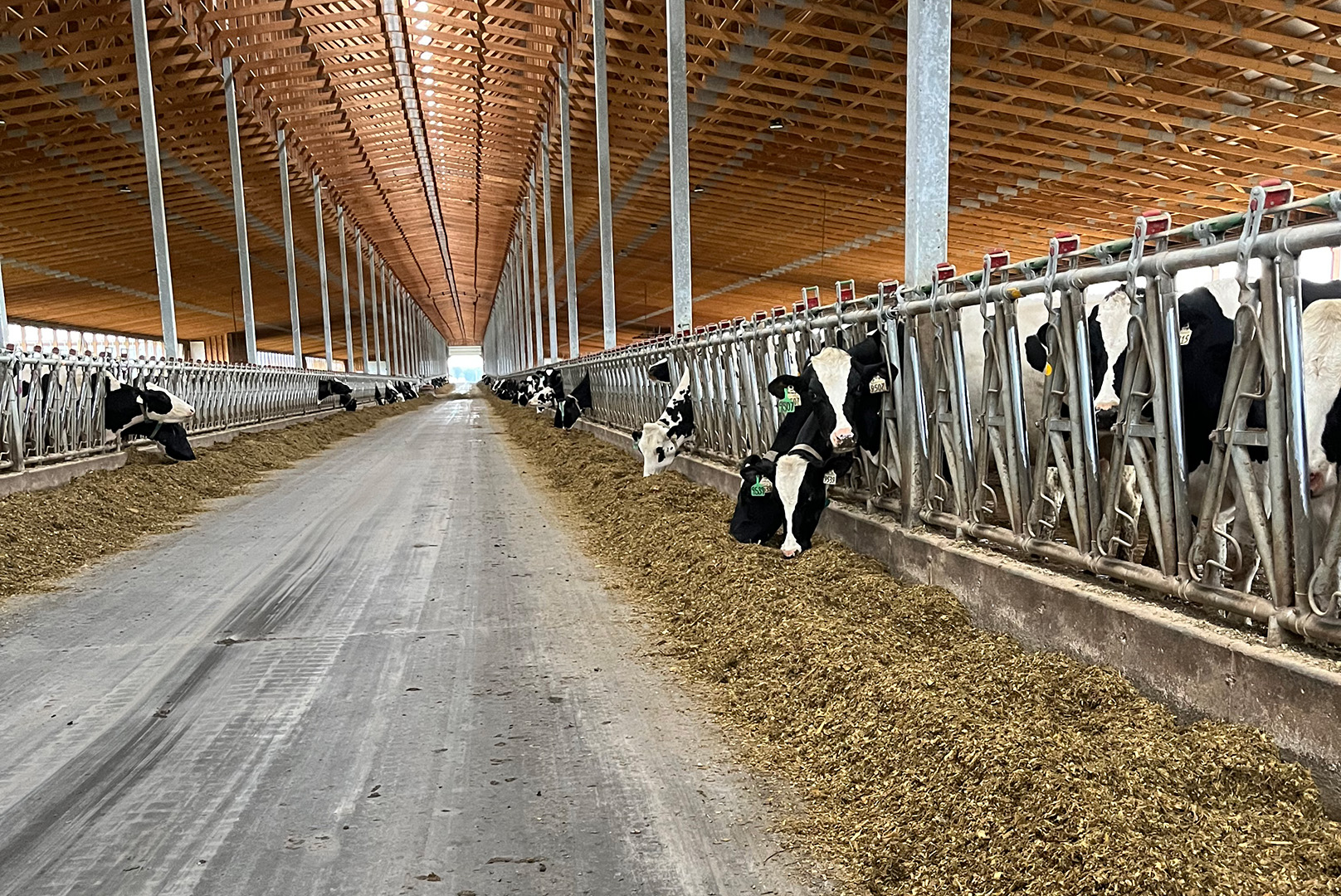
Methane emissions from cattle—driven by enteric fermentation, a natural digestion process— is the largest source of GHG emissions in agriculture and among the toughest to abate. What if the key to reducing them was ready and waiting to be unlocked?
Semex offers animal semen, embryos, breeding services, and software to farmers in more than 80 countries. The company recently identified a genetic trait that farmers can now select to reduce their herds’ methane by 2 to 3% each generation, with permanent reductions of methane emissions estimated to be 20 to 30% by 2050.
The key to bringing this discovery to market wasn’t a brand-new technology—it was a new way of looking at existing industry data. Semex leveraged a national milk database managed by Lactanet, who collects data using mid-infrared (MIR) spectroscopy for milk quality and herd performance. By analyzing this data through a climate lens, researchers uncovered a striking insight: MIR datasets could also be used to predict and influence methane emissions. This existing dataset was the resource needed to unlock insights on methane production by cattle as novel and direct measurement approaches in the barn for methane are still too costly to scale.
Thanks to existing big data and collaboration, Semex was able to bring the methane efficiency trait to market.
This case study highlights a vital lesson: climate innovation doesn’t always require new tools—sometimes, it’s about looking at what we already have through a new lens. Businesses that embrace this mindset can unlock new efficiencies, market advantages, and climate solutions without reinventing the wheel.
For more on policies, people and companies driving climate action in the agriculture sector, visit the sector analysis of our flagship report here.
This article is intended as general information only and is not to be relied upon as constituting legal, financial or other professional advice. The reader is solely liable for any use of the information contained in this document and Royal Bank of Canada (“RBC”) nor any of its affiliates nor any of their respective directors, officers, employees or agents shall be held responsible for any direct or indirect damages arising from the use of this document by the reader. A professional advisor should be consulted regarding your specific situation. Information presented is believed to be factual and up-to-date but we do not guarantee its accuracy and it should not be regarded as a complete analysis of the subjects discussed. All expressions of opinion reflect the judgment of the authors as of the date of publication and are subject to change. No endorsement of any third parties or their advice, opinions, information, products or services is expressly given or implied by Royal Bank of Canada or any of its affiliates. This document may contain forward-looking statements within the meaning of certain securities laws, which are subject to RBC’s caution regarding forward-looking statements. ESG (including climate) metrics, data and other information contained on this website are or may be based on assumptions, estimates and judgements. For cautionary statements relating to the information on this website, refer to the “Caution regarding forward-looking statements” and the “Important notice regarding this document” sections in our latest climate report or sustainability report, available at: https://www.rbc.com/our-impact/sustainability-reporting/index.html. Except as required by law, none of RBC nor any of its affiliates undertake to update any information in this document.