

 EN
EN 

➔ Toronto hosts its own climate event
➔ A major carbon capture project broke ground in Canada
➔ Get ready for more Canadian climate policies before year-end
Live from New York…it’s Climate Week
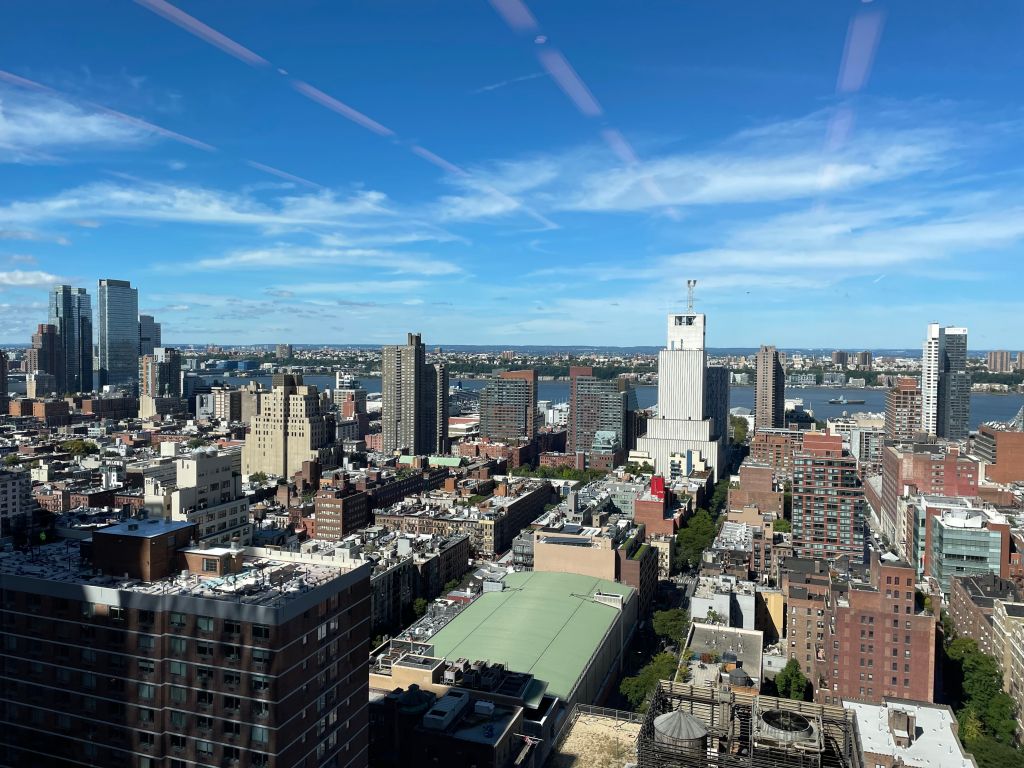
While the outgoing U.N. Secretary General Antonio Guterres fired off his final climate warning at the annual UN General Assembly, a few kilometres away many VCs, engineers, thinkers and doers were grinding on with the task of energy transition.
This year’s New York Climate Week is not only about climate resilience—it’s also testing the resilience of policymakers, investors and entrepreneurs. In some (almost therapy) sessions there was some venting, even talk of despair. But for the most part, there seemed an air of inevitability around energy transition. The question remains how to get there.
With more than 1,000 events, it’s impossible to find a neat narrative that ties the whole New York Climate Week jamboree together. But here is some of what we overheard:
1. Affordability was the buzziest of buzzwords. Utility bill backlash is now a midterm election issue in the U.S. In play are 15 public utility commission seats and 36 governor races. Big Tech may be facing a very different regulatory regime in the space of two months.
2. Energy transition shielded us from what one major think tank labelled as the “world’s biggest energy crisis.” It still hurts to pay at the pump, yes, but wind and solar have cushioned the U.S.-Iran war shock that disrupted the Strait of Hormuz.
3. That’s because The Age of Power is upon us. Electro-tech and infotech costs will keep falling, performance will keep improving and deployment will keep rising, according to a new report by Ember, a clean energy consultancy. A new IEA analysis published this week notes that electricity could cost-effectively meet 33% of the world’s final energy consumption needs by 2035, up from 23% today.
4. But supply chains are not moving fast enough. Limited supply of renewables was named the top barrier in markets around the world, especially South Korea, Singapore, and Japan, according to the RE100 Annual Disclosure Report. Grid bottlenecks and red tape are also restricting procurement.
5. Air conditioning—not AI—will be the biggest drain on power. This was a common refrain at several events. With heat-related deaths on the rise, air-conditioning is a life and death issue, former U.S. Vice President Al Gore’s group, The Climate Reality Group’s new report states. Meeting all this demand requires grid capacity to increase by at least 30% by 2035, the International Energy Agency said.
6. There is now an overlap between climate and defence ministers’ portfolios. Ukraine, Iran, wildfires, flash floods, water scarcity, and glacier meltdowns mean security and environmental ministers are sharing the same files.
7.Canada is emerging as a place to raise funding. As federal funding faces some pullback in the U.S., grant consultants are increasingly eyeing Canada as a place to raise funding for companies, drawn by the various funds, incentives and subsidies on offer.
8. Global rules have never been so far apart. Companies are now juggling conflicting environmental standards across Canada, the U.S. and Europe, compelling global players to maintain different metrics, rules and audits to meet different requirements. While rules were never harmonized in the past, they were never at odds either (especially between the U.S. and Europe).
9. Good intentions are having bad outcomes. Several EU policies that bar certain sectors from tapping sustainability bonds are hurting their progress. That’s true for many fossil fuel companies in emerging economies that need financing, expertise and technical know-how to enter the global financing mainstream.
10. Climate types are getting creative. Storytelling is being sharpened to illustrate the impact of government policy, corporate action and consumer behaviour on everyday folks. Dozens of new climate-focused film screenings, eco-documentaries and workshops are aimed at sharpening narratives. Funding and grants are also on offer.
Signals
-
Toronto is hosting its own climate event this week. Over three days, 1,000 delegates will hear from 200 speakers across 60-plus sessions at Adaptation Canada 2026. Organized by Local Governments for Sustainability Canada, the event aims to explore how communities and municipalities can navigate climate change’s impact on infrastructure, health and the economy.
-
Canada’s biggest carbon capture project broke ground. No, it’s not the Pathways project. Enhance Energy’s Origins CCS Hub in Clive, Alta., will store up to 1.5 million tonnes of CO2per year. We did the math: 0.062 tonnes per CO2e per barrel of emissions offset 66,300 oilsands barrels per day (hat tip: Energy Policy Lead Shaz Merwat). Once complete, Origins will serve hard-to-abate industries, including cement, oil and gas, power generation, and petrochemicals, in Alberta’s Edmonton-Calgary Corridor.
-
This year’s COP31 is all about rolling up the sleeves. The second edition of the “Implementation COP” in Turkiye (the first being COP30 in Brazil), aims to demonstrate more climate action. They are focused on six themes: financial regulation and taxonomy, green finance instruments, bankable project pipelines, blended finance and risk-sharing instruments, mobilizing private capital, and sustainability reporting for reliable climate data.
The cost of U.S. climate roll back
New modelling from Energy Innovation shows that U.S. federal energy policy changes since early 2025 could raise household energy costs, slow economic growth and increase pollution through 2040.
Using its Energy Policy Simulator, the report assesses several measures, including reduced clean-energy incentives, changes to vehicle and power-sector regulations, limits renewable energy development and cuts to hydrogen and solar programs.
By the numbers:
-
Households could pay an additional US$650 billion in cumulative energy costs, equal to about US$460 per household in 2035 and US$490 in 2040.
-
Gasoline prices could rise 14% by 2035 and 26% by 2040.
-
The U.S. economy could lose an average of 820,000 jobs annually over the next decade and forgo US$2.3 trillion in cumulative GDP through 2040.
-
Higher air pollution could add US$43 billion in healthcare costs.
The report suggests energy policy is increasingly linked not only to climate outcomes, but also to affordability, industrial competitiveness, public health and grid reliability.
The findings come as the U.S. balances rising electricity demand—driven by data centres, electrification and manufacturing—with debates over the pace and composition of future energy investment.
Conversations
-
Canada has the resources— and it’s also resourceful. Read John Stackhouse’s 10 takeaways from the Canada Investment Summit, which attracted the Who’s Who of global investors.
-
Was the Canada Investment Summit really a climate play? One analyst did the math: of the 167 projects pitched, 40 directly cut emissions, another 44 feed clean supply chains and 16 ports and corridors to ship said products.
-
We may be hurtling toward the final quarter of the year, but there’s much to come on climate policy before the year ends: Clean Fuel Regulations targeted amendments, Environment and Climate Change Canada industrial carbon benchmarks, and Alberta’s TIER floor price, and Alberta’s nuclear power generation strategy—all of it by New Year’s Day.
Curated by Yadullah Hussain, Managing Editor, RBC Climate Action Institute.
Climate Crunch would not be possible without John Stackhouse, Jordan Brennan, John Intini, Farhad Panahov, Lisa Ashton, Shaz Merwat, Vivan Sorab, Caprice Biasoni, Lavanya Kaleeswaran, Joelle Schonberg and Alicja Siekierska.
Have a comment, commendation, or umm, criticism? Write to me here (yadullahhussain@rbc.com)
Climate Crunch Newsletter
This article is intended as general information only and is not to be relied upon as constituting legal, financial or other professional advice. The reader is solely liable for any use of the information contained in this document and Royal Bank of Canada (“RBC”) nor any of its affiliates nor any of their respective directors, officers, employees or agents shall be held responsible for any direct or indirect damages arising from the use of this document by the reader. A professional advisor should be consulted regarding your specific situation. Information presented is believed to be factual and up-to-date but we do not guarantee its accuracy and it should not be regarded as a complete analysis of the subjects discussed. All expressions of opinion reflect the judgment of the authors as of the date of publication and are subject to change. No endorsement of any third parties or their advice, opinions, information, products or services is expressly given or implied by Royal Bank of Canada or any of its affiliates. This document may contain forward-looking statements within the meaning of certain securities laws, which are subject to RBC’s caution regarding forward-looking statements. ESG (including climate) metrics, data and other information contained on this website are or may be based on assumptions, estimates and judgements. For cautionary statements relating to the information on this website, refer to the “Caution regarding forward-looking statements” and the “Important notice regarding this document” sections in our latest climate report or sustainability report, available at: https://www.rbc.com/our-impact/sustainability-reporting/index.html. Except as required by law, none of RBC nor any of its affiliates undertake to update any information in this document.