TL Title

tl-title

But don’t blame the skills mismatch entirely — it’s also miscommunication. A U.S. report by LiveCareer, Bridging the Skills Gap, has found that part of the problem is around the way we talk about skills. For one thing, job seekers aren’t emphasizing them enough. The average job ad lists about 22 skills, but the people replying to it list only 13 skills. They aren’t articulating what they’re capable of doing. We also have a gap to bridge around the types of skills we’re talking about. Job ads in all categories mention hard skills more frequently than soft skills, encouraging people to highlight technical know-how over people skills. Of the 13 skills that the average person lists, 10 are hard skills and 3 are soft skills. But when employers sit down to review resumes, it’s the soft skills that jump out at them. They’re more likely to follow up with people who described themselves in human terms. If you have a positive attitude, say so. The report identified three highly-sought soft skills that people aren’t using in their resumes: energetic, detailed oriented and building effective relationships. When researchers compared the 20 skills that most frequently appear in job ads to the 20 skills most frequently listed on resumes, it revealed more interesting divergences.
  • Four of the top skills employers list in job ads don’t appear in the top 20 skills listed on resumes. Those missing resume skills are: multitasking, physical demand, teamwork, retail industry knowledge and positive attitude.
  • Five of the top skills job seekers do list on resumes don’t actually appear in the top 20 skills listed in job ads. Those are: budgeting, time management, being a team player and Microsoft Word.
There are lessons here for both sides. Job seekers need to showcase their full range of skills, even it means adding another page to their resume. But you can go ahead and delete Microsoft Word at this point. Employers should beware that relying on automated software to scan resumes and match skillsets might mean they miss out on qualified applicants. “Teamwork” is one of those most frequently listed skills in job ads. But people don’t use “teamwork” to describe themselves in a resume — they say “team player.” This isn’t a skills gap — it’s semantics. The skills gap is a long-term issue for us to tackle as a country. But we can close this communication gap between employers and job seekers first thing in 2019.

TL Title

tl-title

The province has the tightest labour market in Canada, with an unemployment rate of just 4.1%. More than 60% of B.C.’s tech companies identify recruiting mid-to-senior level talent as “very challenging” — and it’s expected to continue in 2019. As construction on LNG Canada’s Kitimat project ramps up, an estimated 10,000 jobs will be created. Good news for the economy — as long as you can find the people to fill them. Over the next 10 years, there will be more than 900,000 job openings in the province, and at the same time, 42% of existing jobs are at significant risk of automation over the next 20 years. Those numbers paint a worrisome picture of a widening gap between employers who will be short of people, and people who will be short of work. It’s B.C.’s other pipeline problem. Labour supply is tight – and it’s also being misdirected. Universities are proving slow at changing with the economy, and employers are still too fixated on credentials when they evaluate candidates. We know from RBC’s Humans Wanted research on the future of jobs and skills that we have to stop obsessing over degrees and diplomas, and start looking at the core skills a young person has attained, and where can they be applied.

Read the Full Report

Download
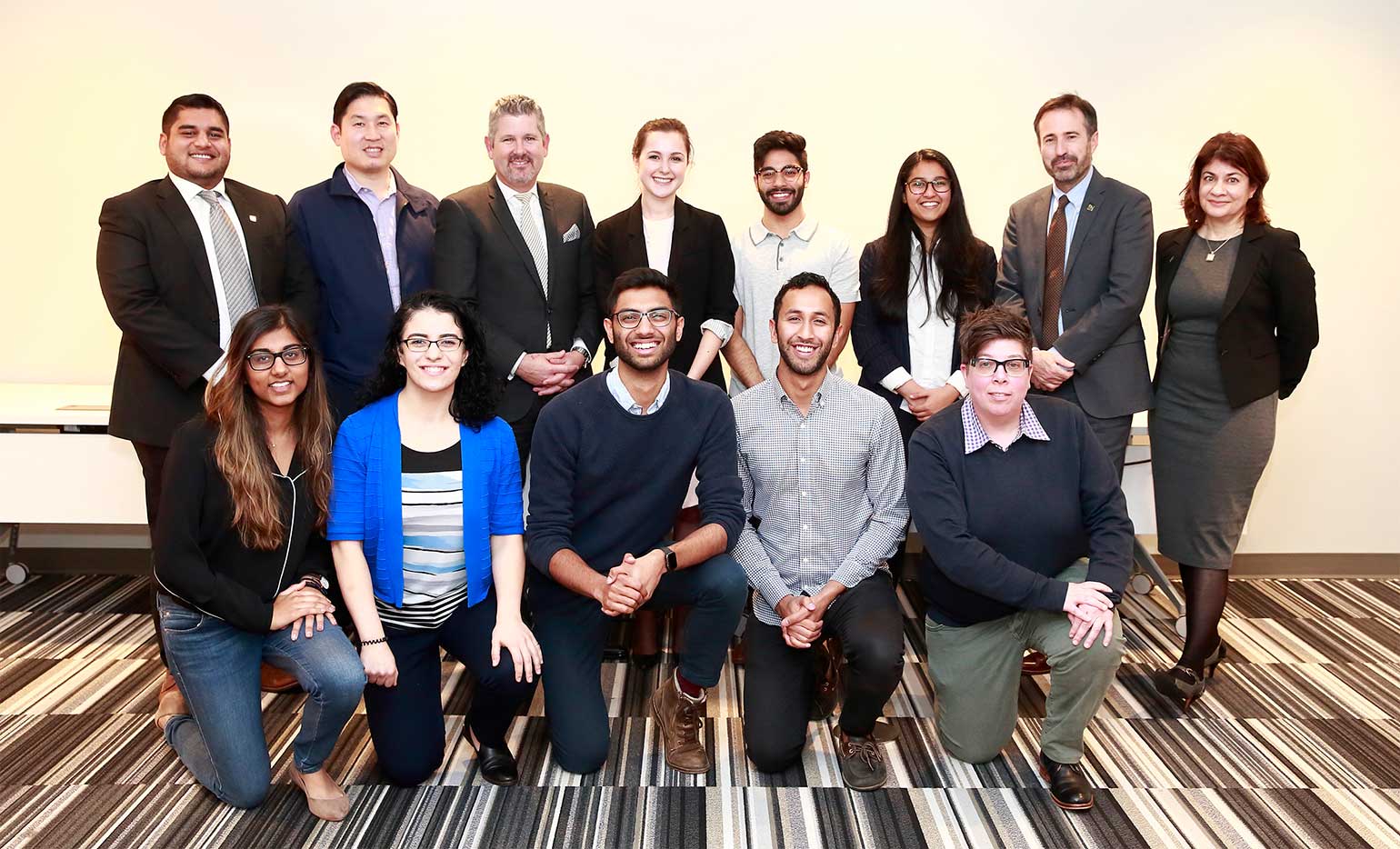
I visited B.C. recently, and had the opportunity to sit down with students from the University of British Columbia and Camosun College — bright young people who understand what’s happening firsthand. One Bachelor of Arts student at UBC said he wants to pursue a career in investment banking after he graduates. But when he interviews with potential employers, they look at his major in philosophy — and that’s all they see. “They call me a philosophy student,” he said. A philosophy degree teaches you do to a lot more than quote Socrates. You’ve learned how to conduct research, think critically, and solve problems — all part of the skills cluster our research says makes him a “Solver,” and well-positioned for the coming waves of automation. It could make a solid background for a future investment banker. If employers can see beyond a formal education path and focus on underlying skills, it could remove a barrier to B.C.’s talent pipeline. And if universities can adapt their programming so that students learn the skills that are in demand, more new graduates will find good jobs. B.C. needs to take a deep breath, and come up with a skills plan for the 2020s. It’s crunch time. But if it does bridge that gap between jobs and skills, its economy could be more competitive and stronger in the end. The launch of Canada’s first-ever Digital Technology Supercluster in Vancouver last month is a step in the right direction. It’s a $150 million federal investment that will bring together B.C.’s brightest minds to find new ways of doing things in natural resources and health care using technology, positioning the province to do more with less. B.C. is a province with a history of leading the pack. Its innovative credit transfer system allows students to easily move between college and university, capitalizing on the strengths of both, and still graduating on time. Ontario took more than 20 years to try to match what B.C. started in 1989. Langara College is at the hub of B.C.’s transfer system. It’s a dynamic and entrepreneurial place with a mix of students who have come from a university, or plan to go to one. It’s common for Langara students to complete two years at the college, then transfer to nearby UBC to complete their degrees — and career counsellors are trained to help them do it successfully. That’s the kind of thinking we need to see more in 2019. The students and educators I spoke to talked about the value of giving our youngest students the time to reflect on their interests and skills; offering mentorship opportunities for high school students; and making sure post-secondary students spend time in a workplace and learn on the ground. If we can close the gap between industry and education, by upskilling people and thinking beyond the title on their degree, B.C.’s shortage could turn into an opportunity. Ten years from now, the B.C. government projects that 130,000 jobs will be unfilled. You could add another Abbotsford to the province, and still be short several thousand workers. Or, we can find new ways to prepare young people for today’s economy and equip existing workers with even higher skills — and free up the pipeline. RBC’s John Stackhouse met with UBC students and recent graduates who shared stories about finding work in a changing economy.


TL Title

tl-title

Think virtual visits, automated self-care instructions and smart devices providing drug dosage reminders.

But even as healthcare increasingly relies on technology, we are going to need more humans, not fewer, to provide the care people need.

In fact, technology may end up making healthcare more human.

While routine, time-consuming tasks can increasingly be delivered by machines, it requires health workers with very human skills such as compassion, active listening and problem solving to interact with that technology and to focus on the kind of care only people can deliver. Imagine a nurse never needing to monitor vitals or arrange prescriptions, who is instead free to focus time on providing emotional support and resources to patients and families.

Earlier today, I presented these findings from RBC’s Humans Wanted research on the future of skills at the Home Care and the Future of Aging conference organized by SE Health, a 110-year old community health provider that is leading a conversation on the future of home care.

Our research shows that nursing is one of the most future-proof careers, with just a 0.9% probability of being fully automated. Healthcare jobs require the kinds of skills that are the least likely to be computerized. At the same time, demand for nursing and senior care workers is set to outpace the rest of the Canadian labour market, with 3.4% annual growth until at least 2035. Between 2019 and 2023, Ottawa projects we’ll need 55,000 new healthcare workers a year, for increasingly different jobs.

The more we invest in health tech, the more we need workers who can bridge the gap between technology and patient care.

With more technology and more people, our already strained healthcare system will be under even more pressure to evolve.

According to Dr. Zayna Khayat, SE Health’s Future Strategist, our country needs to step up its game.

“Canada is 15 years behind the rest of the world in healthcare and technology,” Khayat said.

By 2020, as many as 25 million patients in the U.S. may be monitored at home and work with wearable personal devices. If that requires more people to augment the technology and interact with patients, massive productivity gains will be necessary to cope with the demands of our aging population.

It’s not a question of whether humans or machines will provide healthcare in the end, it’s how we invest to ensure they work smarter together.

TL Title

tl-title

That was the case at last week’s Fortune’s Most Powerful Women event in Montreal. The conference, which was sponsored by RBC, touched upon the big business issues of our day: the opportunities and concerns posed by artificial intelligence, the challenge of lifelong reskilling, and how to navigate a more uncertain economic and political environment.

The room was filled with executives, company founders and senior policy makers, including veteran Canadian CFO Cynthia Devine, now financial chief at Maple Leaf Sports and Entertainment, RBC Chair Katie Taylor, and Fortune’s Most Powerful Woman of 2018, Lockheed Martin CEO Marillyn Hewson, who gave the audience a hint of what it’s like to negotiate with U.S. President Donald Trump.

Here are six things that stood out:

DQ is the New EQ

Digital transformation is factoring into the decisions of every business, from auto-parts makers to retailers and marketing firms. Barbara Humpton, CEO of the U.S. arm of industrial conglomerate Siemens, said leaders need to be evaluated not just on IQ and EQ, but on their Digital Quotient, or ability to envision a company’s digital future and help employees transition in a disrupted environment. Humpton should know: she was tapped to help accelerate the use of digital technologies at Siemens USA, which has 50,000 employees and more than 60 manufacturing plants.

Ranit Aharonov heads an IBM research team in Israel that’s developing an AI system that can debate real people on complex topics. Aharonov’s work highlights the tensions surrounding AI: while it holds great promise, business leaders are keenly aware of the impact AI adoption can have on the workforce. Siemens’ Humpton stressed that it is increasingly part of a business leader’s responsibility – and critical to the success of any company – to ensure workers aren’t left behind in digital transformation.

Embrace Disruption, Ramp Up Reskilling

For executives, embracing technological disruption means shifting focus to reskilling – providing employees with training to meet the needs of evolving businesses, or working with universities to ensure students are prepared for a changing workplace.

Many of the women at the conference had successfully pivoted at key moments in their own lives, embodying the best of what reskilling can offer. (Take Manjit Minhas, an engineering grad who built an international beer and spirits company, Minhas Breweries & Distillery, or Canadian Foreign Minister Chrystia Freeland, who has both journalist and Member of Parliament on her resume.)

From left to right: Patti Shugart – MD & Head, Corporate Banking and Global Credit; Jennifer Tory – Chief Administrative Officer; Kim Mason – Senior Vice-President, Personal & Commercial Banking; Helena Gottschling – Chief Human Resources Officer; Carrie Cook – Managing Director, RBC Capital Markets; Leanne Kaufman – Head, Estate & Trust Services; Bernadine Leung – Managing Director, Enterprise Strategic Client Group; Claire Sturgess – Managing Director, RBC Capital Markets

Raising Capital is Still a Gender Game

Intrigued by the lack of innovation in family planning over the last 60 years, Danish entrepreneur Ida Tin created an app called Clue as a way to harness data to help women better understand their bodies. She started her Berlin-based company with €70,000 in funding; it recently raised US$30 million.

Tin has achieved success in the startup world but she didn’t sugar-coat the challenges. Calling raising money “a man’s game,” she said she found it helpful to have a male ally as she was working to attract fundraising. Tin coined the term “femtech” as a way to entice investors to see women-focused technologies as a whole new category.

Know Your Red Line

Businesses are keeping a wary eye on the geopolitical backdrop. Growing trade tensions and political uncertainty were concerns for CEOs like Linda Hasenfratz, who heads auto-parts maker Linamar. Free trade is critical to a business like hers, in which a typical car part crosses a North American border seven times before ending up on the car lot.

Freeland, fresh from stickhandling Canada’s trade talks with the U.S. and Mexico, voiced optimism about international cooperation, highlighting her recent efforts to convene women foreign ministers from around the globe. But she revealed the steely side that served her well in renegotiating what is now the USMCA: Know your red lines, and make sure you stick to them.

Men Can Help Move the Dial

There was almost no talk of #MeToo at the conference, but the topic came up briefly on one panel, when the interviewer asked if the movement makes it harder for men to mentor women. RBC’s Katie Taylor brushed that off, saying men can play a positive role in “moving the dial” on getting more women into senior leadership and board roles.

With women occupying less than 30 per cent of senior management roles in Canada (and not even one-tenth of the C-Suite jobs at the country’s biggest public companies), Taylor’s point was clear: while women should support other women aspiring to senior roles, they can use male allies too.

The F Word Came Up

Family, that is. The challenge of raising children while managing a demanding career remains a largely female concern. Foreign Minister Chrystia Freeland got the last word on that score. She closed the conference by telling the younger attendees not to listen to those who tell them it can’t be done. With three kids and a new North American trade pact to boast about, she proves it can.

TL Title

tl-title

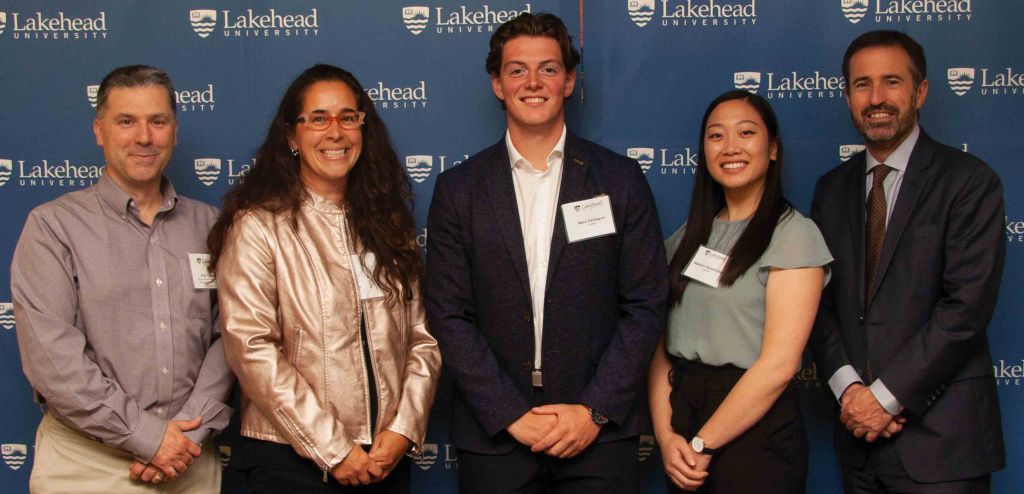
Last week, I spoke with a panel of co-op students and business owners at Lakehead University. Here’s some of what they said they want:

1. Longer Work Placements: Students and employers agreed that skills can be tested and strengthened when placements are longer. A 12-month assignment was seen as mutually beneficial, as it gives the employer better insight on a student’s capabilities and more incentive to offer a job after graduation. One student remarked that a longer program allows time to absorb and apply their experiences, and to build trust and credibility.

2. Get Outside the Office: A holistic experience — beyond delivering on daily tasks — can form lasting experiences for students, gaining more than just on-the-job skills. One student stressed the importance of understanding the human side of business. She felt that getting to know clients and community stakeholders was key to her ability to solve problems and think critically.

3. Tone from the Top: Work-integrated learning programs — coops, internships, apprenticeships — work best when they’re genuinely valued by an organization’s leadership. The more active management is in work placements, the more successful they can become. Senior leaders can elevate the learning experience by sharing feedback, creating new opportunities and building a sense of value for students.

4. Company Culture is Key: The table’s been turned on employers, who find youth are now taking charge in interviews, wanting to know “what can you offer me?” Culture is key. Students are asking about work-life balance, pathways for growth, and an organization’s values. Smart organizations ensure those values are central to their student programs.

5. Share, Share, Share: Employers without work-integrated learning programs often don’t know where to start. And yet too many established WIL employers don’t share their experiences. Both sides can benefit from more sharing, including from students. The result: a stronger ecosystem for employers, students and educators. Smart organizations know their student programs won’t thrive in isolation. They need a community of educators and employers .

TL Title

tl-title

It’s hardly Canada’s millennial magnet, either. Hello, Vancouver, for that.

Big name tech offices? Over to you, Toronto and Montreal.

And yet, Canada’s capital is tearing it up on the tech track.

Shopify, the hometown hero of ecommerce, is worth more than $20 billion, making it one of Canada’s most valuable companies. And it wants to add thousands more jobs in Ottawa, where it’s competing with the likes of Amazon and Apple – and 1,750 local tech companies – for talent and space.

Tech in the National Capital Region has expanded so quickly that it now accounts for about eight per cent of the local workforce – a higher concentration than in any other Canadian city.

The only thing Ottawa’s missing may be a bit more attitude.

“I would say Toronto and Montreal have much more swagger than Ottawa,” says Shopify’s head of international recruitment, Janeffer Gangji. “What we really need to be doing is to start building our story and talking about ourselves.”

I moderated a session with the Ottawa Chamber of Commerce to better understand what the city needs to thrive in the age of innovation, and was joined on stage by Gangji, Invest Ottawa’s Sonya Shorey and Jacques Beauvais, the University of Ottawa’s dean of engineering.

Their top answer? Swagger.

Here are five reasons Ottawa should have more of it:

1. Millennials

Shorey said the city’s early-stage companies are dominated by millennials drawn to its cheaper rent and high standard of living. And as the tech industry across North America matures, there’s more and more reason for young people to strike out on their own, especially in cities where they can afford to be an entrepreneur. As Shorey said, “Why go to California and be employee 10,001 at Google when you can be a vice president at KlipFolio, or at Mindbridge?”

2. Co-ops

Ottawa has two universities and two colleges, each with celebrated work-integrated learning programs. Beauvais said his school is aiming to take co-ops to a new frontier, by mixing arts and engineering students and working more closely with companies that want creative and technical teams speaking the same language. At Carleton University, the school has developed a new kind of work-integrated learning program with Shopify to allow students to complete a four-year Bachelor of Computer Science while working half-time at the company, which covers their tuition on top of a salary.

3. Startups

While not as famous as Communitech in Waterloo or MaRS in Toronto, Invest Ottawa has converted a 70-year-old industrial building along the Ottawa River into a destination for entrepreneurs. Bayview Yards is home to 35 startups, and according to Shorey is catching the eye of multinationals looking to scout the next generation of talent and ideas. “They’re looking for not only disruptive technology expertise but the ability to combine and integrate different types of technology approaches, create different business models, and bring truly new concepts to their products,” she said.

4. Coffee

Okay, it’s not Seattle. Yet. But Ottawa is dotted with third spaces serving up java and free wifi for budding entrepreneurs, including a local brand, Bridgehead Coffee, which has built itself up as a successful alternative to Starbucks. Bridgehead has even become part of Shopify’s origin story, as it’s where Harley Finkelstein, the company’s chief operating officer, first met its founder Tobias Lutke. Finkelstein points to the community feel – rare among G7 capitals – as central to an innovation culture that thrives on “collegiality and connectedness.”

5. Weather

Yes, weather. An Ottawa winter is perfect for two things: skating on the Rideau Canal and testing autonomous vehicles. Thanks to extreme conditions, the city is home to a new testing ground for self-driving cars – a joint project between the universities, Algonquin College, the local and provincial governments, and corporate partners including Nokia and Blackberry subsidiary QNX. It’s meant to be the most advanced AV project in the world, integrating into live infrastructure on public streets in all four seasons. You can’t get that in Silicon Valley. “California doesn’t have our ice, snow, sleet,” Shorey said. “That’s an advantage here.”

For more on the talent culture behind Ottawa’s thriving tech scene, I sat down with Harley Finkelstein at Shopify’s headquarters. Among his messages: “Ottawa and the entrepreneurs here certainly punch above their weight class. I hear a lot less discussion around looking to get acquired, and a lot more discussion about building the greatest company on the planet in that particular space.”

For more of our conversation, check out the latest RBCDisruptors podcast.

TL Title

tl-title

Their silent protests against police, and the handling of a possible serial killer case in Toronto’s gay village, demonstrated how far we have to go, too. It’s not just a public safety issue. For all the openness of the Pride Parades, employers have not done enough to create open and inclusive workplaces, especially for people who identify as LGBT+. Among minority groups, LQBT+ employees feel more discrimination and harassment than any other, according to new research from Diversio. The Toronto firm surveyed 2,100 employees in 20 firms across Canada, the U.S. and Britain, and found LGBT+ employees to be 3.7 times more likely than heterosexuals to say they had experienced mental, physical or sexual harassment at work. And they were nearly twice as likely to feel their opinions weren’t sought out or valued in the workplace. LGBT+ employees remain underrepresented in the workforce. The group accounts for just 8% of entry-level positions, 6% of management roles and none of the executive and board ranks surveyed, according to the Diversio study. We debated the problem at a recent Toronto roundtable with a group of community leaders, as part of an RBC Disruptors event featuring Dax Dasilva, the CEO and founder of Lightspeed, one of Canada’s fastest-growing tech companies. Here’s some of what they had to say:

1. Inclusion Is About More Than One Group

Companies need to encourage expressions of inclusion among all employees, regardless of their sexual identity. As an example, Dasilva said he attempts to celebrate religious holidays even if he doesn’t observe them. “I want people to feel represented and that we’re not just celebrating Pride or Martin Luther King Day because of a certain group,” he said.

2. Use the Power of Networks

Bruce McDonald, chair of the Canadian Gay & Lesbian Chamber of Commerce, said we need to do more to help LGBT+ entrepreneurs connect with large companies and government agencies, and to facilitate opportunities for financing and mentoring. He pointed out that emerging LGBT+ entrepreneurs often feel apprehensive when approaching large organizations. “While they’re comfortable in their own skin, they’re going into an environment where they’re not that comfortable,” McDonald said.

3. See the Economic Opportunity

It’s clear by now that the LGBT+ community has a measurable and significant impact on business. The community has a global spending power of US$3.5 trillion (yes, that’s trillion), according to LGBT Capital. Moreover, roughly one-fifth of millennials identified as LGBT+, according to GLAAD.

4. Showcase Success

Colin Druhan, executive director of Pride@Work Canada, tries to encourage companies to showcase LGBT+ role models to their staff, highlighting individuals from underrepresented communities who have done exceptional work in their field. “People need to realize there’s an importance to telling their story,” added Kary Cozens, executive vice president of StartProud, which helps LGBT+ students transition into the workforce. “Often people may think that they just want to be known for being good at their job, not for being a queer person. Well, why not? Why can’t you be both?”

5. Measure, Measure, Measure

If it’s not measured, it probably won’t get managed. And that’s where we’re seeing some progress. In the 2018 Corporate Equality Index, by the Human Rights Campaign Foundation, 83% of Fortune 500 companies have gender identity protections that include transgendered people in their nondiscrimination policies, up from just 3% in 2002. As well, 82% of all businesses surveyed in the CEI — which polled more than 5,000 major brands — offered benefits to domestic partners. And of those, 89% extend these benefits to all partners, irrespective of the gender of the partner.

6. Think Long Term

The group stressed the need for patience, and to learn by doing. No organization is going to get it right at the start. But we won’t get it right if we don’t start. As Dasilva said: “Iteration is innovation.”

TL Title

tl-title

Back in 1990, when the parents of many of today’s post-secondary students were themselves in higher education, it took 293 hours of minimum-wage work to pay for the average tuition. Today, it takes 505 hours. Those numbers underscore a big shift in who pays for university education in Canada. Years of belt-tightening have led to a sharp reduction in governments’ share of funding for university education. It has fallen by nearly half since 1990, while the cost of tuition has risen by 2.7 times in real terms, according to a new RBC Economics report. While families have stepped in to fill the funding gap, many students—particularly those in lower-income households—have had to turn to borrowing. And that’s left a subset of new graduates entering the workforce with sizable debts. In the most recent academic year, the average annual tuition cost for an undergraduate degree in Canada (excluding Quebec) jumped by 3.1% to $7,600. That reflects a decades-long trend of tuition costs outpacing inflation. Compulsory fees add around $900 to the bill. (And for those studying away from home, living costs can tack on another $12,000 or more.) Families are picking up some of the tab. The share of Canadian households with children who had an RESP recently stood at 47%. While that was up from just 16% in 1999, higher-income households were more likely to have one, and on average contribute three times more. Universities have boosted support for students—they currently spend some $2 billion annually on scholarships and bursaries—but that assistance only partially blunts the rise in tuition costs. The upshot is that half of newly minted bachelor’s degree holders walk off campus with some form of student debt, and surveys show the percentage of those with a heavy debt load—more than $25,000—has doubled in the past decade. Three years after graduation, nearly a quarter of bachelor’s graduates with government student loans still owe more than $25,000. For those individuals, debt acts as a brake on other spending that we typically associate with entry into working life, such as buying a car or a home. Graduating students can find some comfort in the fact that the median university graduate employed full-time earns 63% more than the equivalent high school student. And that’s at the heart of why Canadian students and their parents are willing to work harder, save more, or borrow more, for ever-rising tuition rates.

Read the Full Report

Download

TL Title

tl-title

Persistent dropout rates for high school youth and language barriers for many new Canadians are presenting the province – and its youth – with an acute challenge for the 2020s, as the Baby Boom retires and automation takes hold.

Will technology add to the burden, or ease it?

We debated the question at a recent Montreal roundtable, the first of a series with youth and education leaders across the country to explore the findings and recommendations of Humans Wanted, RBC’s landmark study of the Canadian workforce in an age of automation.

For Quebec, the economic benefits of technology are evident. According to RBC Economics, if the province can help its youth raise their productivity to the G7 average, it could add $7 billion to its economy.

Then there’s the social benefits of retaining and attracting a new generation to enhance Quebec’s place in the world.

But the status quo won’t do.

“We need to disrupt ourselves,” said Isabelle Bajeux-Besnainoux, dean of McGill University’s Desautels Faculty of Management.

Here’s how:

More High School Completion

A recent report from the Institut du Québec found the province’s high-school graduation rate (64%) to be the lowest in Canada, 20% lower than in Ontario, Nova Scotia and New Brunswick. It’s a challenge that’s deeply rooted in small towns and rural communities where youth still find good opportunities in the trades and manual labour. Trouble is, those jobs are being automated quickly, and many youth don’t have the breadth of skills they’ll need to move to the jobs of tomorrow, which will be much more tech-dependent.

More STEM

Quebec lags Canada in enrolment in science, technology, engineering and math and computer sciences, the so-called STEM streams. Statistics Canada data from 2016 show that of the province’s youth aged 20-29, the percentage who majored in STEM was only 17.7%, well behind Ontario (20.1%) and Alberta (21.5%). Pierre Dumouchel, who heads École de technologie supérieure, a Montreal engineering university, said Ontario has double the number of engineering students as Quebec. As a result, his school was able to fill only 3,600 of 6,000 available internships this past year. Dumochel calculates Québec will need to increase its engineering placements by 5.4% a year for another decade, with a heavy focus on software, to meet the current shortfall.

More Diversity

Quebec needs to boost the participation of women, indigenous youth and children of new Canadians in the STEM fields. That may require a rethinking of the prerequisites for engineering programs, which tend to exclude many girls who opt out of hard science courses in high school. Language barriers remains a challenge, too. Guy Breton, rector of Université de Montréal, said 40% of his students have neither French nor English as their primary language. It’s a growing issue in Montreal, where nearly one quarter of 20 to 24 year olds don’t claim French or English as their first language, up 21.2% from a decade ago. One idea: the province could make it easier for the 40,000 foreign students it graduates every year to transition into the workforce.

More Human Skills

François Bertrand, who heads the research, innovation and international affairs department at École Polytechnique, said there’s a need for a “C generation” of collaborators, communicators, and critical thinkers. He calls them “power skills,” which will be increasingly important to every job, from the surgeon to the sous-chef. Yet not enough Quebec schools are promoting, or measuring, those power skills. And not enough employers are sending signals to the market by hiring explicitly for them. An exception: the MBA program at HEC requires students to volunteer at non-profits to develop their human skills.

More Internships

Quebec leads Canada in practical learning, with 18.3% of its twenty-somethings holding an apprenticeship or trade certificate. That’s more than double the national average (8.3%). And it’s one reason Quebec has the lowest skills mismatch in Canada, with only 6.8% of STEM graduates holding jobs they’re over-qualified for, compared to 11.1% in Ontario and 12.1% in B.C., according to the 2016 census. Iris Unger, executive director of Youth Employment Services Montreal, cited paid internship programs as a critical bridge for youth into the workplace

More Space for Entrepreneurs

Caroline Brouillette, a social impact strategist at the consulting firm Credo, wants schools to explore new employment models, including flexible hours and “side hustles.” That would require more employers to create space for employees to pursue their entrepreneurial ambitions while also holding down a day job. And for many organizations, that would mean integrating entrepreneurship into their culture to help foster innovation among younger employees and attract quality talent.


TL Title

tl-title

https://youtube.com/watch?v=yao_o8fxLNE%3Frel%3D0

our stories

Videos that showcase Canadian entrepreneurs changing the world. Learn and be inspired.

RBC has joined forces with the C100 to share stories of Canadian entrepreneurs and our connections with Silicon Valley. “our stories” is your inside track on what it takes to succeed as a global player. RBC and C100 will be sharing videos that showcase Canadians changing the world, provide real-life stories of successes (and failures) and advice on how to succeed as an entrepreneur.

RBC is committed to sharing Canadian technology, entrepreneurship and innovation stories to elevate the conversation at home and abroad. Sharing and highlighting content elevates the conversation around infrastructure, education, talent, regulation and resources needed for economic prosperity in Canada.

C100 is dedicated to giving back to the Canadian innovation economy and fostering the next generation of successful entrepreneurs and innovative companies in Canada. Showcasing Canadian business thought leaders in the San Francisco Bay area through storytelling sheds light on their successes, their challenges and their advice for those who are building global players based in Canada.

About the C100:

C100 is a non-profit, member-driven association of Canadian thought leaders in the San Francisco Bay Area committed to supporting and accelerating the innovation economy in Canada. The C100 represents a select group of experienced entrepreneurs, executives of leading technology companies, and venture capital investors.