

 EN
EN 


- Create an expat unit at Rideau Hall, under the Governor-General, to speak up for our global population.
- Make a five-year budget commitment through Global Affairs Canada to co-fund expat networks.
- Build a digital platform, to be administered outside government, for expats to learn about and connect with each other.
- Create a national award and pin, in line with the Order of Canada, to be granted annually to overseas Canadians who have represented their country well.
- Bring together 50 of our best expats every other summer at Rideau Hall, to meet with government, business, science, media and academic leaders, and explore Canada’s place in the world.
Category: Skills and Post Secondary
The Issue
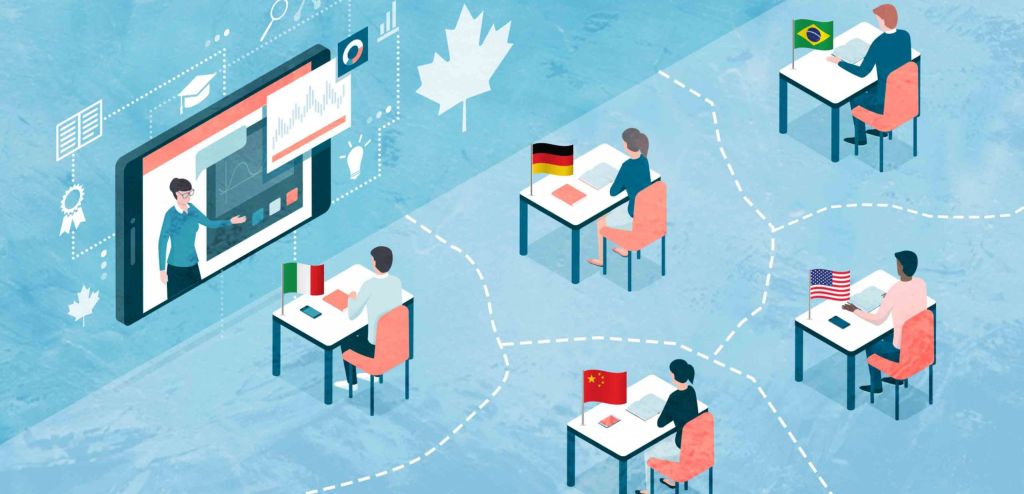
The pandemic has created a historic crisis for Canadian colleges and universities. It could present a significant opportunity, too. The widespread use of online learning platforms and tools offers educators a chance to reach a global body of students that could far exceed Canada’s current market.
It won’t be easy – other countries are eyeing the same opportunity and our schools will need to invest to grow, at a time when they’re being asked to cut. But as Canada pursues a knowledge-driven economic recovery, the digital export of post-secondary education could attract talent, create high-value jobs and help colleges and universities reimagine themselves in a pandemic-disrupted world.
POV
The global spread of COVID-19 shocked international education; and it’s not clear how quickly it will recover. So far this year, just three-quarters of the 2019 level of international students have arrived, while the number of study permit applications has plummeted, risking some of the estimated $22 billion in annual contributions these students make to our economy, and straining a sector that supports an estimated 170,000 jobs.
The fiscal impact of lost international student tuition is already hitting colleges and universities. Colleges and Institutes Canada expects only about a third of 2019’s level of new international students this fall. And rising deficits are leaving provinces with fewer resources to fight economic fires.
A concerted effort – among our schools, provinces and federal departments – is needed to resume Canada’s leadership in attracting international students, whose ranks numbered 642,000 at the beginning of 2020. Expedited visa processing, ensuring safe housing and broadening recruitment efforts will be critical.
Yet, international education is also ripe for new models. At the peak of national lockdowns, some 1.6 billion students were pushed out of school, prompting a shift in preferences toward distance and online learning. Among the nearly 300 million new degree-holders we’ll see globally by 2030 – double today’s number – many more will earn their credentials online.
Reaching these potential international students through a hybrid post-secondary model – online at entry, and on-campus at completion – would allow Canada’s universities to be key players in this growing sector. Consider the potential of a collective push among our universities to create a global “Canada U” program. Students would earn credits remotely from their home country, gaining language skills, career guidance and virtual work-integrated learning opportunities – becoming strong candidates to secure admission to upper year studies at a university in Canada.
Key Numbers
The global pandemic slowed student arrivals
Through June 2020, student arrivals among our top-10 source countries fell 26% compared with 2019. More troublesome was the 60% drop in new study permits received by IRCC in April, May and June, and the slow rate of visas processed – only about 10% of last year’s volume was completed this spring.
Yet, internationally mobile learners are motivated to continue studying abroad
COVID lockdowns have discouraged only 5% of international students to fully abandon studies. The majority (54%) are inclined to delay their education by up to 12 months in hopes of starting studies on-campus. Only three in ten plan to begin studying online first.
Number of young graduates set to double by 2030
Asia will produce new graduates at break-neck speed, accounting for more than half of young degree holders over the next decade. The surge will be largely fuelled by China and India, where the number of graduates will grow to 81 million and 70 million respectively.
Global middle class to add 1.7 billion people by 2030
If the COVID recovery is broadly inclusive, the global middle class could swell to 5.7 billion within 10 years, leading to higher post-secondary enrolments, though faculty and funding constraints in the global south may slow institutional growth. India – Canada’s largest source of international students – could see some 600 million move to middle income levels. Meanwhile, Ethiopia, Angola and Cote D’Ivoire could together add over 20 million to the middle class.
Online cross-border education market reaches double global learners
An estimated 13 million students are earning credits online from a foreign institution. This is double the roughly 6 million on-campus international students in 2019. Canada (12%) has been the third most popular destination for on-campus international students, behind the US (21%) and Australia (13%). But it remains a minor player in cross-border online learning.
Key Questions
1. How could an online focus strengthen Canada’s international education strategy?
Online education was absent from Canada’ international education strategy, released in August 2019. Just six months later, the federal government moved quickly to allow foreign students to complete up to 50% of their program online from their home country. While this was intended to shore up existing students amid the pandemic, it opens the possibility of a new approach to our global education engagement.
Canada’s universities have already made significant investments in remote learning methods and technology, having moved 1.4 million students online this spring. Left fragmented, these resources can serve the immediate needs of schools; but combined into a unique international program, they could magnify their reach.
Canada U would engage more students in more places, combining the flexibility of a MOOC, the rigour of a Canadian credential and the appeal of experience in the Canadian workforce. Broadly, here’s what it could include:
- Open, rolling enrolment for early-year online studies in their home country.
- Lower per-credit tuition costs, driven by the scale of massive global enrolment.
- Opportunity to accumulate credits towards a Canadian credential, or transfer to a domestic university.
- Canadian based faculty, and remote counsellors for academic, career and language development.
- Networking opportunities via Canadian trade offices in their country or satellite campuses.
- Chance to undertake remote work-integrated learning (WIL) with a Canadian employer.
- Opportunity for admission to on-campus learning at a Canadian school, once student has achieved equivalent credits to 50% of desired program.
Such an approach could open Canadian education to millions of young, mobile learners.
This would be no small undertaking. It would require unprecedented collaboration among our universities to provide course instruction and materials, with supports from federal and provincial governments to build digital infrastructure and global marketing, and among provincial credit transfer bodies to ensure smooth academic transitions.
2. How big is the online education market?
The OECD estimates that over 13 million students participate in cross-border online education, through both formal institutions and online platforms. The majority of these learners – while benefiting from the convenience of online studies – are not putting those credits toward a degree.
The UK has the largest number of remote international students working towards a degree – at 120,000 or about 12% of their enrolled foreign students. The culture of open distant learning (ODL) has been a key part of the UK’s strategy, cultivated across the Commonwealth – with the Open University in the UK claiming more than 2 million global graduates. By contrast, in the US, only about 5% of international students are based outside the country, and at Canada’s largest online-only school, Athabasca University, just 3% are international students.
The most significant growth over the last decade has been among MOOCs, or massive open online courses, that offer short-term courses. Though characterized by low course completions and poor student retention, their use has spiked amid the current economic uncertainty as learners seek to upgrade skills.
One of the largest platforms, EdX, claims to have had 33 million learners – nearly 70% from US and Europe. New entrant Lectera is launching a multi-lingual, fast-training program focused on workplace skills to reach global students. Google is entering this space too, providing fast-track online learning for job-focused skills to compete with traditional college diplomas.
Developed by MIT and Harvard, Edx has successfully bridged MOOC and traditional education with its MicroBachelors and MicroMasters programs, where students from anywhere can earn credits online, fast-tracking their learning when admitted on-campus. The success of these efforts demonstrates the potential for a “Canada U” program.
3. Do international students want to study online?
International students prefer– by far – to study on-campus, when possible. Surveys have repeatedly shown a strong desire among these learners to transition to the Canadian job market, with 70% intending to work here after graduation. Only the reputation of our education system (82%) and perception of a safe, tolerant society (79%) rate higher.
Yet, when we look at those who study primarily online, students in emerging countries appear to have a higher motivation to earn foreign credits online. Among MOOC students in Colombia, Philippines and South Africa, 49% completed at least one course; among those employed, it jumped to 70%, a 2016 survey found. By comparison, only 5 to 10% of MOOC students in the US and Europe will complete their online studies.
A Canada U could achieve a balanced approach of online and on-campus; offering accessible remote learning to many, with a pathway to completing studies at a Canadian school.
4. Where is the demand for greater post-secondary education?
Among Canada’s top originating countries of international students, five have seen enormous growth in high school completion that hasn’t been matched by post-secondary achievement: Vietnam, Brazil, Iran, China and India. Among them, the proportion of adults (over 25) with only a high school diploma jumped between 1990 and 2010.
Upper Secondary education completion among adults (25+) without tertiary education, select countries

This growth shows two things. First, the value of high school completion is rising in developing nations. Second, there has been a slower capacity to convert these learners to post-secondary degrees. It’s no surprise either that the top originating countries of international students are also source countries of new Canadians; last year over 11,000 new permanent residents previously studied here. For Canada, education exports have led directly to talent imports.
Online education can attract more international students than traditional on-campus education by lowering the high financial barriers of tuition, travel and housing. Cost will be a key factor for families arriving into the middle class. This year alone, currency pressures have seen the Canadian dollar appreciate greatly against the Brazilian Real, Nigerian Naira, Ethiopian Birr, Russian Ruble, and slightly against the Indian Rupee and Chinese Yuan – boosting tuition costs.
What to Watch
- As colleges and universities reopen, and travel restrictions ease, will applications to study in Canada return to pre-COVID levels? Do we have enough capacity to promptly process applications?
- How will universities perceive their new online education resources, as strictly emergency spending or a potential growth opportunity? Can schools collaborate towards more shared online resources?
- To appeal to global students, will universities attempt a larger physical presence abroad, through satellite campuses or local partnerships?
- How can the intellectual property of online education be secured when entering markets with poor censorship or legal regimes?
Key Stakes
Education is a global social good. It is also a potent global market. The two concepts should not be separated. Canada has an excellent reputation abroad for high quality education; it’s one of the things we do best, with the highest rated tertiary education among the OECD and an already impressive share of international students choosing to learn here.
In the increasingly global knowledge economy, education is one of Canada’s greatest competitive advantages. Our deep alumni network of foreign graduates helps foster business networks abroad and strengthens trading relationships. Our robust student work permits lead to strong talent acquisition as a pathway to permanent residency. As Canada looks to rebuild for the 2020s, international education must be a key plank in our national strategy.
Canada U is one idea to help us get there. Embracing this bold venture will mean breaking down the artificial barriers between our higher education institutions and provinces to promote a collaborative, platform approach to international education. It will also require new funding to assemble the necessary technology, faculty and global marketing to make it a success, without clawing back existing transfers to our universities.
There is no shortage of competition in international education – from traditional universities to tech upstarts to growing domestic higher education – but Canada is uniquely placed to lead (if it wants to).

How the COVID-19 Crisis will Transform Higher Education
This report was authored by John Stackhouse, Senior Vice-President, and Andrew Schrumm, Senior Manager, Research, in the Office of the CEO

1. Strengthen school-to-work linkages
While high school completion rates among Indigenous youth improved significantly between 2006 and 2016, university completion rates worsened compared to non-Indigenous youth. One reason: poor employment for Indigenous students, especially in the service sectors. About 20% of the Indigenous workforce is employed in trades, transportation and equipment operations, compared to about 15% for the non-Indigenous population. By contrast, only 5.5% are employed in management positions, compared to 9% for the non-Indigenous workforce, and the gap is growing. As employers begin to rebuild and rehire, and governments commit billions to economic reconstruction, creating more workforce linkages for Indigenous students will be critical. This can start with more internships, co-ops and mentorships that cultivate both workplace skills and help youth develop meaningful aspirations. These experiences also create stronger links for youth to local labour markets. This approach to human capital needs to extend further into businesses, too, to ensure better Indigenous representation on corporate boards, participation in collective bargaining and access to training funds that should be part of all development projects.2. Build connected infrastructure
Most Canadians take connectivity for granted. For Indigenous Canadians, that’s not the case. Nearly half of the status First Nations population lives on reserves, many of which are disconnected from the digital economy. A lack of reliable access to broadband not only limits commercial activity for Indigenous businesses; it constrains access to online learning, telehealth and remote work. The digital infrastructure for remote communities needs to be completed, no later than the federal promise of 2030, and in a way that anticipates future demands on networks. Indigenous ownership over infrastructure projects — digital, transportation, healthcare or energy — can strengthen the self-sufficiency of communities by providing diversified revenue and long-term employment. Building these connections will be exponentially more important to community prosperity in the post-COVID era where e-commerce is becoming the preference for many consumers, and big employers look to more distributed workforce models.3. Rethink supply chains through Indigenous procurement
Cross-border disruptions during the COVID lockdowns highlighted vulnerabilities within essential supply chains, particularly healthcare equipment. As public and private sectors consider on-shoring sourcing of these and other goods, there is plenty of opportunity to launch new procurement partnerships with Indigenous firms across Canada. The capacity to innovate among Indigenous-owned businesses is strong, as evident in how many mobilized to produce personal protective equipment for their communities. Greater integration into corporate procurement also would create better outlets for services-based businesses to grow and diversify, from graphics design and payroll services to engineering and management consulting.4. Accelerate low-carbon transition
The post-COVID reset will bring sustainable development into clearer focus; considering the triple bottom line of people, planet and profit. Canadians will be looking for better ways of balancing economic development and environmental stewardship. The transition to a low-carbon economy will take a phased approach — particularly in our resource-rich country — and doing so will rely on Indigenous knowledge. By making the proper investments now in their education and technologies, Indigenous youth can play a central role in developing the green-collar jobs of the 2020s and beyond. Many of them can become the climate experts of tomorrow, if given the chance to both gain traditional land-based training and cultivate skills in advanced technologies.5. Expand capital-raising capacity
Securing capital has long been a hurdle for Indigenous businesses. While financial institutions have significantly increased capital availability, Indigenous enterprises still do not operate on a level playing field. Increasing access to credit will remain key to financing start-ups and the small business ecosystem that drives the Canadian economy, including in Indigenous communities; doing this well through the economic recovery requires funders to become enablers by engaging within communities and forging two-way communication. Yet, securing lasting prosperity in Indigenous communities will take bigger, bolder moves. Settling land claims is one channel to do so, while creating a culture of institutional investing is another. Greater access to equity markets will help to create own-source revenue, with shared stakes in successful infrastructure, development and resources. Linking these investments to skill development and succession planning may build inter-generational wealth.
The Issue
COVID-19 triggered a mass experiment in online education that will have a lasting impact on how and where Canadians learn. The abrupt change poses a fresh challenge for a Canadian higher-education system that was already preparing for an economic future that might look very different.
POV
Over the span of a few weeks in March, Canada’s post-secondary institutions moved more than 2 million students online. The swift transition provided some early lessons: most students can learn from anywhere, and educational institutions have the ability to transform quickly.
As the urgency of managing the crisis shifts to securing Canada’s economic recovery, students looking to gain the skills to compete in the post-COVID world will demand more from digital education. Institutions should seize on this moment to give students and life-long learners greater flexibility in where, when and how they learn.
The higher-education system is about to become more competitive. Nearly every post-secondary institution on the planet has just made significant investments in online tools and methods. For Canada to remain a global education leader that continues to attract the world’s brightest, our institutions will need to differentiate themselves. This starts with cultivating the scale needed to make online leaning profitable; collaborations across the sector could give students more choices and specializations. The next step requires an inclusive approach to alternative learning – either experiential learning or micro-credentials – that gives students flexibility in how and where they obtain academic credits. At the same time, educators will need to integrate the tools of augmented reality and machine learning to personalize education.
Key Findings
Nearly 1.6 billion learners have been affected by national school closures
Amid the pandemic, 91% of the world’s students were displaced from the classroom. In Canada, more than 7 million students had to shift their learning style: 5.1 million in K-12, 1.2 million in universities, and 800,000 in colleges and polytechnics. The 540,000 students completing post-secondary education this year likely completed their programs remotely.
Canadian institutions historically lacked the resources or expertise to fully develop online learning
About 16% of university and 12% of college students learned primarily online in 2019, while more than one-third of undergraduates had at least one course with blended learning. Despite wider usage of online tools, funding and staffing issues have hampered digital education at half of universities and colleges, more so among smaller institutions.
Canada’s advantage in international student attraction is at risk
New international student permits dropped by 45% in March (year-over-year). Ongoing travel restrictions and visa-processing delays will likely stall international student arrivals in the coming months. These students pay about $6 billion in tuition alone to universities and colleges each year.
Digital spending comprised only 2.5% of global education expenditures pre-lockdown
Despite a 14x increase in EdTech venture capital since 2010, digital spending remains a small fraction of education budgets. Pre-crisis forecasts expected spending to reach 4.3% of budgets by 2025. Investment activity has been concentrated in China and the United States. Last year they attracted 52% and 33%, respectively, of digital education investments.
Key Questions
1. Will the explosion of remote-based learning lead to more options for students?
The simple answer is ‘yes.’ The longer schools remain unable to teach the way they used to, the more sticky remote-based learning will become. Students and educators will want to retain the experiences and tools they like.
Post-pandemic, institutions can expect to have a tougher time attracting students. With students realizing they can learn from anywhere, institutions will need to show why their campus experience is different.
Online education has the potential to be a great leveler among institutions. Schools of any size, location or level can provide unique offerings through online education: it is borderless, scalable and untethered to the traditional academic calendar. At the same time, students are looking for job-ready skills for a fast-changing labour market. Online non-degree granting institutions, such as edX, Coursera and Udemy, can create and scale new, skills-focused courses faster than universities. What if a student could get credit for them? Self-directed programs – where students choose from a menu of micro-credentials; online, on-campus or blended learning; and courses from a variety of institutions – may become an option in the not-too-distant future.
We’ll need to expand the traditional boundaries of higher education, with accredited institutions giving more credit for learning in all forms. While some universities are recognizing Massive Open Online Courses (or MOOCs) in their admissions practices, the real friction point will be within the credit transfer system. One example of more flexible learning is South Korea’s Academic Credit Bank (ACBS), where students can complete studies across institutions, based on their own pace and preferences; once they amass sufficient core, general and elective credits, the ACBS will certify their record and the Ministry of Education can issue a degree (without attachment to any individual institution). Such an experience would give students plenty of options in designing their own learning.
2. Which learners are most vulnerable to disruption?
As online education requires both personal digital devices and strong internet connections, students that lack access to either are most vulnerable to losing out.
About one in four Canadian households in lower-income categories use smartphones as their primary internet access. Roughly 10% of households – mostly in rural areas – lack reliable broadband internet. Indigenous students are over-represented in these categories. And for students with accessibility concerns, institutions may need to provide custom digital tools to ensure continuity in their learning.
The current ambiguity of when schools can return to normal operations will influence how some students make decisions with long-term impacts. In any other year, about 40,000 high school students will drop out of studies. This year, we are likely to see higher numbers, as nearly 300,000 are at higher risk of not completing a diploma due to economic insecurity.
For those entering university, college and trades programs this year, orientation is likely to be a remote experience too. Many schools are considering whether to change the timing of first-year courses, including front-loading online-ready courses to the fall, even those that previously had strict pre-requisites. Education consultant Alex Usher has called on Canadian universities to collaborate on a common, online first-year curriculum for 2020 entrants. Given uncertainties around the student experience in 2020/2021, one in four students is considering a gap year or leave of absence, according to recent Ivy Research Council surveys.
3. Will online learning in Canada still appeal to international students?
This remains to be seen, and is a critical question: international students are big business for our schools. If they are unable to enter Canada, we will need to find new ways of marketing a Canadian credential to non-residents.
At the start of 2020, over 640,000 foreign nationals held study permits; while at least 293,000 new permits were issued in 2019 alone, across all learning levels. In post-secondary, the international student population has doubled in the last five years to 500,000, nearly one in four students, contributing about $22 billion in GDP and about 11,000 new permanent residents annually.
Amid lockdowns, new student arrivals dropped in Q1 2020, while severe declines should be expected for the foreseeable future. To stem enrolment declines, the federal government is permitting new international students to begin their programs in their home country, complete up to 50% of their program via distance learning, and assuring access to post-graduate work permits. However, the shift to online learning greatly alters an international student’s experience if they’re unable to reside in Canada during their studies and make connections, while still paying nearly double the tuition of domestic students.
About 26% of study permit holders (or 168,000) come from countries with the most aggressive online censorship regimes. Access to Canadian education resources cannot be guaranteed for this group. Colleges and universities should prepare for a high degree of enrolment deferrals to Winter 2021 or later, and the resulting need to restructure course prerequisites and in-year bridging programs.
Colleges that offer career-transition programs for international students – which have experienced enormous growth in the previous 15 years – could be greatly impacted for two reasons. First, online learning won’t provide the hands-on, workplace-based learning that’s integral for these mostly health care workers or tradespeople. Second, uncertainty of the job market in Canada will dissuade many from taking the risk of relocating.
4. Can job-ready skills be cultivated through online learning?
Without question, learning remotely develops skills that employers demand. It requires students to manage their time effectively, strengthen their written communications and foster a digital aptitude to work alongside technology. And right now, the biggest lessons students are gaining aren’t academic; it’s about being resilient and adaptive. These will be key attributes for their future.
However, the online environment can fall short in developing socio-emotional skills like active listening, speaking and critical thinking skills. RBC’s 2018 report, Humans Wanted, concluded that these skills will be in the highest demand by Canadian employers. Online instruction requires a different pedagogy than in-person learning to achieve the same outcomes, and to develop these human skills it needs to support various forms of social interaction.
Athabasca University, Canada’s largest online-only school, doesn’t try to replicate the classroom in digital form. But it has taken a learner-centered approach to skills development, encouraging peer-to-peer interactions through team-based learning and virtual study groups. Athabasca’s April enrolment grew by 12.3% for undergraduate and 10.7% for graduate studies; an early signal of student preferences in the COVID-19 era.
Work integrated learning (or WIL) has become a part of studies for nearly 60% of post-secondary students, as it cultivates workplace skills and professional networks that can facilitate smoother transitions to employment. The lockdown has made these opportunities impossible for many employers; about one-third of students have lost or delayed their WIL placement. Virtual WIL has been an alternative for some students, and this format may stick around. Vancouver-based Riipen Networks, which creates short-term, virtual work projects for students, has now engaged with 45,000 students across 200 schools in North America. For coops, Canadian university administrators (via CEWIL) have ensured that students will receive credit for such Virtual WIL projects.
5. Can learning on a massive scale become more personalized?
If it can’t, students are more likely to disengage. While online learning requires scale to be profitable – such as classes of hundreds or thousands of students – it must offer learners personalized experiences.
The market for EdTech is as hot as it’s ever been, with VC activity reaching US$3 billion in Q1 2020, or about the entire value of deals in all of 2016. In highest demand are the tools that promise to make the digital experience unique for each learner. Augmented and virtual reality are being used to replace live subjects (e.g. nursing, dental) or to provide access to expensive test equipment (e.g. machine repair, construction). These tools allow students to practice and explore in new environments without risk of harm or error. EdTech market watcher HolonIQ is most optimistic on AR/VR, predicting a 7x increase in spending by 2025. Adapted for smartphones, these tools could usher in a new wave of remote learning including to virtual laboratories and situation-based learning that may be impossible in a physical environment.
Artificial intelligence will be a huge disruptor for education in the 2020s. While chat-bot tutors might reduce demands on faculty and real-time translators could break down language barriers, machine learning has the potential to completely alter student assessments. By understanding and documenting a student’s progress through digital-based learning, AI can develop customized learning plans. Applied broadly, these tools could eliminate aged-based grade levels in K-12 or change course pre-requisites to skill requirements for progression in post-secondary.
The infrastructure of education may be transformed too by blockchain technology, where credentials could be instantly verified. Such a system could lead to simplified credit transfers between institutions and stacking of credentials. This could open the possibility of a personal skills registry, where one’s skills, credentials and ongoing learning achievements are certified and accessible.
6. Are post-secondary institutions at an inflection point for their business model?
COVID-19 may precipitate the largest pivot in the delivery of higher education we’ve ever seen. Enrolment and revenue declines, combined with increased costs in technology, will force institutions to innovate. Those that can’t will be left behind.
First, we cannot ignore the transformation schools made to get over 2 million learners online in March. This is a major achievement, considering nearly two-thirds of Canadian post-secondary institutions cited faculty resistance as the main barrier to providing more online course options prior to COVID-19. Many educators believed online delivery limited outcomes, primarily that students were unable to self-regulate their learning. Any of these misgivings have given way – at least temporarily – to emergency measures, and institutions have been making strides on technology and course design.
Second, the institutions that had previously invested in online education are best positioned to pivot their operations. Université de Laval initiated its own learning platform in the late-2000s, through the Laval Academy of Digital Transformation; prior to COVID, 71% of its courses did not have an online component, but by end of March 95% of its courses transitioned to the online platform. At the University of Windsor, the Office of Open Learning quickly deployed resources and training for faculty to go “online in a hurry”. Bite-sized training through templates, tools, as well as blogs and podcasts, were shared across institutions. The University of Waterloo has hired over 300 summer students to work with faculty to transition courses online for fall 2020.
Finally, we will see a breakdown of the artificial barriers between Canada’s higher-education institutions. Many of which are already facing pressures to reduce costs, amid soaring public debts and expected enrolment declines. Stronger collaborations between universities and colleges will be needed to reduce duplication of and increase access to online resources. Sharing of course and learning materials is already practiced by the Maple League of schools in Atlantic Canada, the Tri-University Group in southern Ontario, and through Education City in Ottawa. Going forward, these types of partnerships will be necessary to coordinate online course offerings that maximize student options and experiences.
What we’re watching:
Canada’s higher education system has an opportunity to transform, to become a global player in online education, even in a post-pandemic world. To differentiate itself, things to consider:
- Collaborations among universities, colleges and polytechnics on common digital learning platforms, as well as shared online curricula.
- Proposals to modernize the credit transfer system that recognize micro-credentials and experiential learning completions towards a diploma or degree.
- Changes to the traditional academic calendar, with higher enrolments in spring/summer terms, as well as rolling start dates for online students.
- New forms of engagement with international students that may include more in-country presence of Canadian institutions.
- Greater demand for course designers to develop pedagogy that adds AR/VR and machine learning to create personalized student experiences.
To learn more about how Canada can leverage its strength in education to become a global player in online learning, listen to our podcast episode.
How the COVID-19 Crisis will Transform Higher Education
As our neighbour to the south grows increasingly insular, Canada has gone the opposite way – welcoming newcomers, which has led to a boom in our tech industry. Toronto had the biggest growth of technology jobs of any North American city between 2013 and 2018. Vancouver also placed top five.
Today, roughly 40% of Canadian tech workers are immigrants. And thanks to the Global Talent Stream fast-track immigration program, Canada has brought in nearly 24,000 high-tech workers since 2017.
But the COVID crisis has disrupted the very core of immigration – the movement of people. Canada will need to think about how to maintain the momentum we’ve built to jump over the hurdles of protectionism and continued border closures to connect with the world.
TribalScale, a Toronto-based digital consultancy, is among the many Canadian tech companies with relationships across the globe. It’s played a unique role by helping hundreds of new Canadians launch lives here and by exporting Canadian intellectual property to markets from Southern California to the Persian Gulf. TribalScale’s founder and CEO Sheetal Jaitly and senior product designer Eman Faiz joined the RBC Disruptors podcast to talk about Canadian tech talent – both within our country and abroad – in a post-COVID economy.
Listen on Apple Podcasts, Spotify or Simplecast |
See transcript
“Our Canadian ecosystem is really built around universities, where we attract some top talent around the world to come here and study,” Jaitly said. TribalScale has recruited from across the country and sponsored international students studying in Canada who were looking to get into the workforce.
“It was very much a merit-based system where you could attract some of the smartest talent in the world to come fill the jobs that are pretty scarce in technology.”
But consider the flip side. Elevating Canadian expertise on the world stage is equally as important as bringing talent in.
“We are super strong in the areas of AI, robotics, automation,” Jaitly said. “These are all things that the entire globe now is going to need.”
“It’s a huge moment for us Canadians.”
So, as we navigate the future and all the challenges it poses, here are five key points for Canadian tech organizations to consider.
1. Human-centred design thinking is crucial. In earlier years, most of us thought of design as prescriptive, even technical. But really it’s about solving problems. It’s a mindset that keeps teams creative and agile in the face of problems and constantly looking for data-driven solutions. Even those of us who aren’t designers can benefit from design thinking, which at its core focuses on adapting to customer and end user needs.
2. Universities and colleges are Canada’s talent magnets. We’re home to some of the world’s best schools. And every year, they attract hundreds of thousands of aspiring and ambitious youth. We need to think critically and creatively about how we can use this to our benefit and take advantage of global talent that’s already living, studying and growing in Canada.
3. Remote work culture is here to stay. Unfortunately, some of the companies that were hardest hit by the COVID crisis were the ones that were not set up to thrive in a digital environment. We’ve learned many companies can function with remote working cultures and many other companies need to adapt to remote culture so they don’t get left behind. Your future employees and customers will expect it.
4. Corporate purpose – we’re seeing it everywhere. Organizations with a clear purpose and vision are better positioned to withstand enormous shocks like COVID. It sees them through tough times and tough decisions. So as we struggle through the months ahead, be open and honest about the company you’re trying to build and the kind of values and attitudes that will get you there.
5. Mindset. Hard and soft skills are important, but the right mindset can be even more valuable. Invest in team members who are not only proactive and solutions-oriented, but open to and even excited by change. To succeed, we need to learn to thrive in any environment.
As we move forward with rebuilding our economy, it’s important that we understand the value of the right tools, the right team and the right way of thinking. That way, Canadians and Canadian companies can continue to grow, thrive and innovate.

In other words, no need for that AI flu vaccine.
In a new Gallup survey for Northeastern University, 61% of Canadians and 71% of Americans think artificial intelligence will eliminate more jobs than it creates. Roughly half of those respondents think AI will also decrease the number of good jobs out there.
But the vast majority also think they’re immune to automation.
Despite a general concern about the impact of AI, only 37% of Canadians and 17% of Americans think their job will be eliminated because of smart technologies.
The Gallup results were presented at a recent Future of Work discussion at Northeastern’s Toronto campus, put on by the Ontario Chamber of Commerce and RBC.
Helena Gottschling, RBC’s global head of human resources, told the forum that in financial services, automation is leading to new and different jobs – and a changing mix of skills – which means an ever-growing need for lifelong learning.
More than half of RBC’s 55,000 Canadian employees are enrolled in a digital learning program, often offered in the form of mobile and modular programs for skills ranging from digital troubleshooting to communications.
In the Gallup survey, 92% of Canadians (and 95% of Americans) said they want some form of ongoing learning through their careers – not surprising given that two thirds of them worry their skills will be outdated within a decade.
Despite those worries, few know what skills they’ll need to thrive in an AI-powered economy, but there was strong agreement across Canada, the U.S. and Britain that people will need so-called soft skills like teamwork, communication, creativity and critical thinking.
Gottschling agreed with that assessment, saying “the shelf life of tech skills will be shorter, while the shelf life of human skills will be just as long.”
A greater concern in the study was a lack of confidence in universities — for Canadians as well as American and Britons – to prepare graduates for the jobs of tomorrow. A rating of high confidence was lowest (3%) in the U.S.
A plurality of respondents viewed employers as best-equipped to provide career-long education and training.
Gottschling said most employees need solutions that are affordable, time-efficient and relevant to their ambitions. And then there’s mindset. Do people have the will and skill to learn?

The decade is wrapping up with a very different kind of championship held in the same arena. The Dota 2 tournament — the Super Bowl of electronic gaming — in Vancouver’s Rogers Arena and ensuing launch of a local pro esports team are just the latest indications of how much society, and the skills economy, can move in a decade.
From goal scorer to global gamer.
Few might have predicted such a change, or the massive surge in software jobs driven by gaming, social media and on-demand services. And yet, in the past decade, software publishing jobs have gone from 31,000 to 50,000, while jobs in computer systems design have grown from 155,000 to 258,000. The video gaming industry says it now accounts for 48,000 full-time equivalent jobs, with growth of more than 10% a year.
The skills revolution brought on by everything from gaming to the gig economy is just one reason most provinces are reviewing every level of education, as governments grapple with the ongoing challenge of people without jobs and jobs without people.
I was part of a panel discussion on the subject at the Canadian Club of Toronto, to explore how post-secondary education can better prepare students for a rapidly changing world of work.
Anne Sado, President of Toronto’s George Brown College, said we need to:
- Make learning highly personalized, as students have very different needs.
- Mix the classroom with digital and experiential learning.
- Connect the curriculum with industry and community.
- Set the stage for life-long learning.
- Make resilience the fourth R.
Ross Romano, Ontario’s post-secondary Education Minister, stressed the need to connect research with commercial opportunities. It’s not only about driving economic value from campuses; it’s about building an innovation economy between employers, entrepreneurs and educators.
I told the audience we can expect three trends in the 2020s:
- More educators entering the market, as demand grows for lifelong learning.
- More individuals focused on skills training. Think of how we approach fitness.
- More educators competing for that demand, and coming up with more creative and convenient approaches to teaching. Perhaps a Netflix for learning, with device-based, on-demand, shareable and snackable lessons.
I recently led a roundtable of employers to discuss what the elementary and secondary school systems might consider to better prepare youth for those challenges. The group included some of Canada’s biggest companies, trade unions, non-profits, small business representatives and public sector organizations.
Here’s what they said we need:
-
More computational thinking. We don’t need a nation of coders; we do need a generation who think like coders.
-
More digital design thinking, with students focused on problem solving, teamwork, iterative work models and data-driven solutions. “It’s a mindset,” one employer said.
-
New ways to connect teachers to practitioners.
-
Gen C skills: compassion, communication, collaboration, complex problem solving and critical thinking. They’re the skills most in demand, not least because of the ongoing boom in healthcare.
-
Digital learning. It will become commonplace in organizations.
-
Entrepreneurship. Even large organizations need more of those basic skills.
-
Trades. Most of Canada is facing a critical shortage. Schools need to get students — and parents — thinking more seriously about it.
-
Work-integrated learning. More co-ops, internships and apprenticeships, starting in high school. It’s not only good for the student; it injects organizations with fresh thinking and new energy.
-
Learning to learn. Students need to be taught to become better problem solvers and approach challenges in new ways.
-
Partnerships. No one sector or educator can address the skills shortage alone. Yet a failure to address those shortages will hurt economic productivity for all.

But in a workforce buffeted by technological change, healthcare has an advantage.
Due to the profoundly human nature of the work, advanced technologies don’t pose a significant threat to the physicians, nurses, therapists and others who provide all manner of care to Canadians. Automation will create efficiencies and replace some work, but don’t expect a robot to deliver a cancer diagnosis or replace hands-on homecare anytime soon.
That’s a welcome prognosis, but Canada’s healthcare sector is facing a critical test. The country’s aging population is poised to become a silver tsunami that will add another $120 billion in healthcare costs over the next decade. To harness the full power of technology in a country where one in four people will be seniors, the sector will need to embrace new ways of working.
Read the Full Report
According to Paging Dr. Data, a new RBC report, around 17% of occupations in the healthcare sector face a risk from automation—half the level faced by the workforce as a whole.
The sector’s robust job creation is also set to continue: there will be 370,000 job openings by 2025, and the sector will be short of workers under even the most optimistic of projections. The shortfall offers a potential career path for workers displaced in other sectors, many of whom already have some of the core skills sought in healthcare.
Which brings us to the reskilling challenge. Canada’s healthcare system needs to up its skills game, and fast. Workers hoping to make the leap into healthcare will need the time, funds, and external support to prepare for a career switch. Those already in the sector will need to retrain for disruptive technologies. And the sector will be looking for entirely new skills too. Think wearable-device coding and 3D printing design.
In a sea of specialists, our research revealed some themes in terms of skills needed: digital fluency (the ability to interact with and analyze data, not just collect it), an ability to deliver virtual care (as telemedicine expands), and navigational skills (to assist patients’ journey through an increasingly complex health system). Finally, the human skills at the core of the best healthcare—empathy, active listening, critical thinking and complex problem-solving—will be more important than ever.
The skills revolution is already happening in healthcare. Educators are adapting courses from other disciplines, and training for adaptability and resiliency. Doctors are talking to AI specialists about how they can build algorithms to improve care. Hospitals are adopting some of the state-of-the-art technology, enabling them to attract new talent.
Properly designed, a mix of technology, skills and innovative management can help Canada prepare for the silver tsunami. We still have time to get it right. But there’s a particular urgency to making the skills economy work for healthcare.
To learn more about the impending silver tsunami and its implications on Canada’s healthcare sector, listen to our podcast episode, Solving for the Silver Tsunami.

Listen on Apple Podcasts, Spotify or Simplecast
The challenge is deepest amongst front-line employees – think of retail servers or call-centre operators – and the majority of those workers are women. According to a global survey by Ipsos, 54% of front-line employees are going to need some form of significant reskilling by 2022.
Despite the challenges, there is also an opportunity. With the right kind of training and reskilling, millions of Canadians could move to new and better jobs as machines take on more mundane and repetitive tasks.
At our most recent RBC Disruptors, we sat down with Carol Leaman, CEO of Waterloo-based Axonify, a micro-learning company on a mission to revolutionize the way companies retrain their front-line workers, to talk about how the disruption of learning can turn the age of automation into a positive force, and how women are set up to thrive in an automated future:
By Drawing on Skills They Already Possess
In conversations about the future of work, two words are heard often: perseverance and resilience. These are qualities that Leaman learned on the job as a 26-year-old accountant, working for a difficult boss, who one day looked at her and said, “We need $40 million, go find it.” She was terrified but stepped up and did it. “He taught me that you can do anything, you just need to decide that you can do anything.”
While Leaman recognizes that women tend to be in positions that are more susceptible to automation, women have these and other attributes that position them well to move into jobs that are growing in demand. RBC research found that 54% of the jobs at greatest risk of automation are held by women, but that women are better equipped with the generalist, digital and social skills that will be in high demand for the jobs of tomorrow.
“Women tend to have the foundational skills that we need to move into new jobs and new sectors. We are under greater threat, but in a better position for future mobility,” says Leaman.
Case in point, women are creating businesses at an unprecedented pace. “Women are extremely resourceful. I think as the workplace shifts, you’re going to see organizations take more action to support women in different career streams.”
By Learning New Skills – and Learning Them in New Ways
The impact of automation will be greatest among front-line workers – such as servers, retailers and customer service representatives – the majority of whom are women. To survive the displacement that will come about as automation gains a foothold in the services sector, significant reskilling will be required.
Leaman thinks micro-learning is the future of workplace reskilling. Platforms like Axonify’s offer bite-sized learning moments to individuals in those front-line jobs that enables them to learn and acquire new skills, while still performing at their jobs.
Axonify has taken that to the next level by working with a neuroscientist to develop an adaptive algorithm based on brain science. “Because of the amount of data we now collect, which is about 50 million data points a month across the globe, we can apply machine learning to that data, and extract provable correlations,” she says, such as how certain training leads to growth and revenue outcomes.
By Changing up the Look of Leadership
So how do you ensure your workforce is equipped for change? Encouraging female leadership is a good place to start. Female leaders, who are living, breathing and understanding the skills needed to succeed in the workplace of the future, are well equipped to navigate the evolution.
Yet, in new research from Plan International, only 10% of Canadian youth aged 14 to 24 picture a woman when they think of a CEO.
“I think the reason is that there are not enough successful role models, who reach the upper echelons of the corporate world, who have profile,” says Leaman.
More women in leadership roles will attract other women, acting as role models for the younger generation entering the workforce.
As a veteran leader, disruptor and innovator in the tech world, Carol Leaman gets it. Selected as one of the Best Workplaces for Women in Canada, Axonify has a strongly female leadership and women make up 45% of its employees, including product leaders, sales professionals and software developers – male-dominated cohorts in most tech firms.
“I think women are attracted to working with large numbers of other women because they see the possibilities.”
For more research on how women are ready for work in an automated future, download our report.
To learn more about the future of work, and the ways micro learning and inclusion play a role, listen to our latest podcast episode, recorded live at RBC Disruptors.

Yet, vegetables are the most human-intensive food products to produce, and the sector is heading towards an enormous labour shortage in the 2020s.
In a recent RBC report, Farmer 4.0: How the coming skills revolution can transform agriculture, our researchers identified greenhouses as a “frontier” sector for automation, with great potential to boost output and alleviate labour shortages. Today, for every $1 spent on labour, greenhouses produce $3.88 in revenue; while at the other extreme, beef operators earn $33.73 by leveraging efficiencies of machinery and scale.
Making such a transformation for indoor vegetables requires innovative, data-driven and high-skilled agricultural business owners to take risks and seize the opportunities presented by advanced technologies.
Read the Full Report
The next Generation of Farmer
Hardeep and Teranjit Singh – business partners and brothers – exemplify the traits needed to succeed in the fourth agricultural revolution. As operators of Singh Greenhouses in Flamborough, Ontario, they ship 15 million English cucumbers per year across Canada and the U.S., grown over 24 acres of greenhouses. They are part of an incoming generation of young agricultural producers that bring a mix of experience, education and experimentation to a sector undergoing a high tech revolution.
“To succeed in this industry today, you have no choice but to go to school to gain the requisite knowledge,” Hardeep says. “Precision agriculture has become the standard.” An agriculture graduate of the University of Guelph, he is looking to bring a universe of digital, scientific and automation solutions into their business to reduce costs and boost output.
Data has become a fertile input for their business decisions. Last year, the Singhs instituted a new digital tracking system across their facility that allows them to monitor the health and output of their 154,000 plants in real time. The system has also given them a trove of data on their productivity, which they’re using to set targets and offer performance incentives to their 33 greenhouse staff.
For Teranjit, a graduate of Niagara College’s greenhouse technician program, improving product quality and reducing input costs through technology is a central focus. “The industry is changing so fast. We need to continuously learn about what has and hasn’t worked across the sector to make the best business decisions.” On example is a new cogeneration facility, where they produce electricity for nearly 9,000 area homes and capture the resulting CO2 to optimize greenhouse growing conditions.
Forming Human-machine Partnerships
The looming labour challenge for the greenhouse sector is severe. According to research by the Canadian Agricultural Human Resources Council (CAHRC), the sector will need to address a shortage of 29,900 domestic workers, or 55% of roles, within a decade. Already, over 40% of greenhouse and horticultural staff are temporary foreign workers, accounting for nearly two-thirds of all the foreign workers in agriculture.
A major question for researchers in the sector is, how can technology alleviate the labour gap? A leader in this effort is the Vineland Research and Innovation Centre, which is working on robotic cucumber harvesters. “The technology is still developing, where tasks that are low skill for human hands remain complex for machinery,” says Tania Humphrey, Vineland’s Chief Science Officer. “But even as machines learn best practices, complex biological systems will remain that require human intervention.”

For the Singhs, attracting and retaining staff is a perpetual challenge, in physically demanding jobs. “This line of work is a lifestyle that may require four hours one day and 14 on another, Hardeep says.” To normalize some of these pressures, they have invested in a new optical and robotic sorting, grading and packing line that can handle 14,000 cucumbers in an hour. Once in place, they will be able to divert the labour saved from the packing facility to tend and harvest more crops.
Mixing Traditional with Tomorrow’s Skills
With an increasingly digital and mechanized workplace, the skills required of greenhouse workers are changing, and educators are having to update how they train students to be job ready in the sector. At the University of the Fraser Valley, robotics and automation was added to its horticulture program in 2014. The school has been working closely with industry to identify the skills needed for the agricultural jobs of tomorrow and has shifted its greenhouse program towards more project oriented assignments. Students are challenged to draw on various data and hands-on learning to question “how do we do this better?”
Tom Baumann, an associate professor at UFV, says that agriculture educators need to “marry the old knowledge and the new technology” and encourage students to problem solve in an environment that uses both. He sees further automation of the sector as a necessity, but stresses how detrimental “losing agricultural knowledge to an algorithm” would be.
Capturing the Skills Benefit
Disruption is happening across the agri-food industry in Canada. New, high-skilled roles are emerging that promise to attract a new generation of food producer. If we are able to match people with the right skills to these jobs, our research shows that Canadian agriculture could add an additional $11 billion in output by 2030.
This growth mindset is deep-seated between Hardeep and Teranjit Singh. They’ve already broken ground on a new greenhouse, where they will expand to new crops – peppers and baby cucumbers – and leverage their experience and skills with new technology and data. This is the fourth agricultural revolution in action.
