EN
EN 

Thinking back over the past year, were there changes in how you got your food? Delivery platforms including Instacart, Uber Eats and DoorDash saw a huge surge in demand, and U.S. meal-delivery sales in January were up 164% year-over-year. DoorDash has been an especially big winner from the trend, and now boasts a 50% share of the U.S. market.
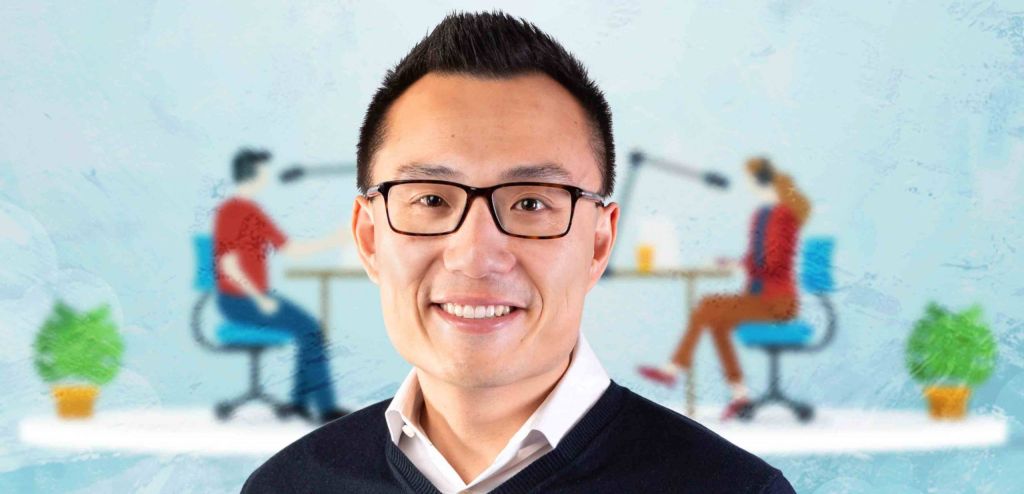
Like its peers, DoorDash has enabled many businesses to connect with home-bound consumers in new ways. But its mission, according to CEO Tony Xu, goes beyond getting tasty meals to more doors. Xu joined our Disruptors podcast for a special one-on-one conversation in which he outlined the company’s bold ambitions. Here’s some of what he had to say:
Listen on Apple Podcasts, Spotify or Simplecast
Delivery platforms empower smaller businesses to participate in the convenience economy
DoorDash’s mantra is to grow and empower local economies by creating logistics networks within communities to get things to people who need them, efficiently. The company’s platform also provides the delivery-fulfillment tools that allow small and mid-sized firms to scale their digital businesses.
“The majority of GDP and economic growth is still inside the city and neighborhood that you live in, and I think we sometimes forget that,” said Xu.
Demand is broadly similar, access varies greatly
When it comes to access, those living away from urban hubs want the same as their big-city neighbours. DoorDash feels this “democratization of convenience” is more important now than ever. Xu believes wants are similar, but access differs. That’s because the last-mile economy is still out of reach for many smaller businesses.
DoorDash has embraced a “seize the suburbs” strategy, which now represent 58% of its customer base.
“The goal was always to create two things: the biggest local commerce marketplace where we can bring you everything inside your city, and give people tools so that they can build their own digital business,” said Xu. “For merchants, what the last mile enabled them to do is actually build deeper relationships with these consumers, because now they get to add a family of products called convenience into what they offer.”
Build technology that solves real problems and forms connections
Xu believes that building technology for technology’s sake is usually not that useful. He says DoorDash has built a logistics network that ultimately benefits cities’ GDP.
Three years ago, the company launched “Project Dash” to connect like-minded grocers and restaurants that want to donate excess food to those who need it most.
“We’re a company that wants to marry technology and operations. We sit at the intersection of solving a math problem and a human problem. I view them as not ones that oppose one another, but ones that come together,” he said.
“In our business, technology, if it helps solve a problem, that’s one marker of success. But the other marker of success is making sure that it’s married into the human operations of what we do and making sure that, again, works for all audiences.”
[00:00:02] Hi, it’s John here. I don’t know about you, but I had a few gigs as a kid delivering stuff in my neighborhood, newspapers, of course, some groceries. Can I say cigarets on the show? Hey, it was the 70s. Can you believe how far we’ve come from groceries and clothing to electronics, booze, even prescriptions? It’s now a parade of delivery people to our front doors. And that parade got a whole lot bigger during the pandemic. In particular, the restaurant industry’s pivot to delivery may well end up being one of the biggest storylines to emerge from the covid crisis. I still like the smell of my local pizzeria and to chat to the chef, but it’s hard to beat a full grocery order coming to the front door. The relationship between bricks and clicks hasn’t been without challenges, though. Fair wages, data privacy, the environmental footprint of all that packaging, and, of course, the viability of neighborhood businesses. So what do the current trends tell us about the future of delivery? What if the platform’s learned from the challenges of the pandemic? And how could they play a critical role in the last mile ecosystem as the economy moves into recovery mode?
[00:01:23] This is Disruptors and RBK podcast, I’m your host, John Stackhouse.
[00:01:35] It’s hard to overstate what the past 12 months have done to food delivery. I have not resorted to midnight donut deliveries, but everything else. Yeah, and I’m not alone. Food delivery tripled last year, and the past year has been even more significant for one platform in particular. Last spring, Dorda expanded its offerings in the US beyond food to other essentials like toiletries and pet products. And in December it raised three point four billion dollars in one of the largest IPOs of twenty twenty. Just last month, it acquired the robotics company Chao Baltic’s. It’s all part of that really interesting idea in the new economy called The Last Mile. And how many of the world’s biggest companies, as well as your favorite local pub or antique shop, are trying to pave a new path to your door. Today, we’re lucky to be sitting down for a special one on one with one of the pioneers of the last mile, the CEO of Dorda, Tony Shiu.
[00:02:35] Tony, welcome to Disruptors. Thanks, John, for having me. It’s good to be here.
[00:02:39] It’s great to have you and really excited to learn not only about Jordache, but about where you see this last mile going, because it’s, I think, going to reshape the economy and all sorts of interesting ways. But maybe I can start by just getting you to look a bit in the rearview mirror. I don’t think anyone could have predicted the level of disruption covid caused to all of us, but to the food service industry in particular. What stood out for you most of the past, the past year?
[00:03:06] I think the past 12 months was in many ways a reflection of some of the things that were happening probably for the last couple of decades. And I’ll try to narrow my comments just to the commerce sector. But really, this is true across a variety of industries and frankly, even all throughout society. But when it comes to commerce, ever since the advent of the Internet, conveniences has kind of only moved in one direction, which is we only seek more convenience as consumers. And I think we saw that in the last 12 months in some ways because we were compelled or forced to because stores had to shut down. And as a result, every store, every brick and mortar business had to become omnichannel. And that was true in restaurants. That was true in retail. That was true in grocery. That was true and convenience. On the flipside of that, though, one of the things that hasn’t changed, in addition to just this move towards conveniences, we all want to support what’s inside our local neighborhoods. We all want to support the local restaurant. Maybe it’s the burger priest. We all want to support the local flower shop. We all want to support the local convenience store or grocer. And I think in some ways, if there is a silver lining from this pandemic, it’s that it reminded us that sometimes the best things are closest to us. And really, that’s been the mission for Jordache since day one, which is to grow and to empower local economies and to transform every brick and mortar store. And we were lucky enough to see that mission realized every hour during this pandemic.
[00:04:39] I love that you seize on that word convenience because that really underscores so much of the economy. Now, the other night, I had a craving for something and thought I can run to the convenience store, but it’s no longer that convenient. I could just have it sent to my door. And it was tough weather outside and that was much, much more convenient. I wonder if I can take you back to the origins of Jordache. Did you see this battle for convenience, if I can put it that way, as what you were wanting to take on? Or did you just have a crazy idea in your head it evolved into this?
[00:05:12] No, I don’t think it was either a crazy idea in my head, nor was it maybe observations about convenience. It really started a long time ago, over thirty years ago when I was a five year old, when I came to this country with my family, you know, I grew up working alongside my mom inside a restaurant that she worked at, sometimes moonlighting as a dishwasher. Where was her family from, Tony? My family immigrated to the US from China. And so I moved to the US when I was five. And, you know, my mom was working three jobs a day to put food on the table. My dad was getting his PhD at the University of Illinois, and that’s pretty much how I grew up. And as a kid, as well as a product of really a local business, I got to see at a very, very young age all the hustle and bustle inside different local businesses. And that motivation kind of stayed with me as I grew up into adulthood and started making the observation that for every amazing change in the world, whether it’s technology driven or something else, it’s still the physical businesses, the small, medium and large businesses that produce the majority of GDP and job growth in pretty much every city around the world. So in twenty thirteen, when my co-founders and I got together, the motivation was helping people like my mom. And so we actually spoke with a group of business owners, some of. I’m more like my mom, they sold food, others sold flowers or retail items, and what we learned was that seven and a half years ago or eight years ago at this point, these businesses were not ready to make this jump into offering that convenience. And that’s really what started the founding journey for Dornbusch.
[00:06:52] When did you know you were onto a hot idea?
[00:06:56] I don’t know if it ever feels this way as an entrepreneur. I don’t know if there was ever like one aha moment. But I’ll give you a story that maybe illustrates some of what we had learned. I remember meeting a macaroon store owner. The store managers name was Chloe and she would show me this notebook of orders, customer information that she had written down of orders that she wanted to receive and actually deliver because they were all delivery orders. But she could not fulfill them because she was a one person shop. She was running the store. She was handling every part of business and operations. And there’s no way to actually fulfill the deliveries. And while that wasn’t an AHA moment, what I would say was that kind of gave us the sense that a huge transformation needs to happen in order in order to allow these businesses, business owners like Chloe, to compete in the convenience economy. And in fact, you have to build lots of things. You have to build delivery. You have to build marketing. You have to build customer service, analytics, customer support and operations and all of these things. But obviously, as just a few people inside my apartment, which is how Doris got started, we couldn’t start everywhere. So we kind of decided to narrow in on this idea of delivery. The goal was always to create two things the biggest local commerce marketplace where we can bring you everything inside your city. But the other thing we wanted to do was we wanted to give people like Chloe tools so that she can build her own digital business. That was way too big of an idea to tackle on the first go. So we narrowed to delivery and then even within delivery, we decided to narrow to serve restaurants because we thought if we wanted to deliver everything, it would behoove us to start in the category that had the highest frequency.
[00:08:41] You’re also starting in a category that is competitive. If you’ve got some pretty good players that you’re going up against. What competitive advantage did you feel you had over those other players to allow you to grow so quickly?
[00:08:52] Every space has lots of competitors, and to me, the way I’ve always thought about it is what is it that the customer wants versus what it is that the market offers and where we are on that journey. And if you think about it, most of the physical world is not yet online, believe it or not. Even during the pandemic, we saw, I think, a glimpse of what that looked like. But still, most of it is in online.
[00:09:18] There isn’t a digital repository, for example, of where can you find every menu item description or every price of every grocery store item or whether it’s in stock or not. All of these things still are becoming digitized for the first instance. So when you look at something like penetration, even today, even during or after, I should say, kind of hopefully the worst parts of the pandemic behind us, the total sales and something like takeout and delivery is still a mere fraction of the amount of total restaurant sales. And if you looked at other categories, it’s still very, very, very early. And so for us, it was never a focus on what quote unquote advantages we had. It was what is it that we’re going to bring the customers that they don’t have today? What selection of restaurants can we bring? How can we bring in the highest quality way? And how do we do it at an affordable price point and get that combination right so we can offer the best experience?
[00:10:14] That’s a fascinating way to describe it. Wonder why that is, Tony, that I can find the world history through Google. I can find an almost infinite selection of music and film, but I can’t find a quick and easy list of where potato chips are in my neighborhood or who’s got the best picture frame in my neighborhood.
[00:10:35] And yet that’s where the majority of GDP and your economy is in the majority of GDP and economic growth is still inside the city and the neighborhood that you live in.
[00:10:48] And I think we sometimes forget that part of that is because the Internet has really opened our eyes and our access. On the flip side, sometimes we forget the very things right in front of our eyes and just how big they really are in terms of sustaining all of us.
[00:11:04] You had a seize the suburbs strategy. Can you give us a bit of insight into what what led you to the suburbs?
[00:11:11] Well, so when Dora started, you know, we started in a pocket of the Bay Area that was fairly suburban. There is San Francisco, a city, but there are a lot of suburbs that kind of surround it. And I always had the belief that there’s no difference between customers in terms of geography. When I think of people that I grew up with in the middle of the. Or in the Bay Area, we’re very similar. We eat three times a day, maybe sometimes more during this pandemic, we all seek convenience. We all sometimes wish we had more time, especially if some of us have growing families. And so we’re always looking for ways to make our lives easier. It’s not that there’s anything special per say about suburbs or cities because we all tend to want the same things. However, access to these same things are not evenly distributed in America, for example, or frankly, in most cities across Canada or the world, a lot of that access tends to go inside the cities first. But that doesn’t mean that people in other places who live elsewhere don’t want those same things. And so for us, one of the ideas early on was can we actually bring our service to customers where does not exist? And we found a lot of that, frankly, in most parts that that was true, frankly, in cities as well as suburbs. But that certainly was more true outside of the New York cities of the world than inside New York City.
[00:12:35] Doesn’t geography change the economics, though? I’m thinking of sprawling suburbs and just the distance and you’re in the distance business of getting things to people who are more widely distributed.
[00:12:46] Yeah, a lot of things actually affect the ability to create a highly efficient network. Distance is one of those things. But so are things like parking. So are things like how busy or not busy traffic is on the roads. I know we’re in a pandemic, so this is a bit muted right now. But if you think pre and post pandemic, imagine how fast you can drive a kilometer inside downtown Toronto versus maybe the suburbs. Sometimes it might be faster walking inside downtown Toronto than necessarily driving or cycling inside the downtown area. And so as a result, you’re right, geography certainly are different from place to place. But really, when you think about constructing a logistics network, what you really care about is creating the most amount of nodes and achieving the most amount of information inside that network. And distance is just one of those factors.
[00:13:45] You see, the other explosion over the last year has been in data and we’re all we’re all part of that and we’re beneficiaries of that. It’s extraordinary how much more data the big tech platforms are thinking of. Facebook and Netflix and Google, of course, have even more now than a year ago. Much of that can be for for good. There’s much debate about some of the downsides there. Wonder what your thoughts are about the kind of the long game when it comes to data and how that is going to continue to evolve in terms of addressing that convenience question that you spoke to earlier?
[00:14:22] Well, having studied math by training, I can tell you that sometimes you’re only as good as your data. And before we apply techniques, whether it be machine learning or other methods to data, you really need large volumes of structured information. So what I would argue with respect to trying to change and transform the physical world is we’re still in the data collection phase, whereas every last parking spot, when there’s a busy commute day, for example, how many apples are left in aisle six? What’s the price of Pad Thai today versus the promotion a month ago? These things are all pieces of information that foster the majority of GDP in all of our lives and all of our communities. And so we’re still in that collection phase. I think a lot of times there’s been, to your point in the question, a lot of the technology, especially consumer technologies that have been built in the last decade or two, have really centered on the consumer or the individual, you know, our professional lives, our social lives, our interactions with one another.
[00:15:34] There still isn’t much around the city and collecting information about what makes that city tick, what makes that city grow, what is the economic engine of that city? And and that’s the world that we’re playing in Ed cash or trying to collect the data around the ATMs, convert them into bits and actually distribute them in a way so that business can continue to grow.
[00:15:57] And you’re up against, obviously, some pretty big players, like an Amazon that has data on a lot more than probably you have access to. How much of a competitive challenge is that at this point and how much more will it matter a few years down the road?
[00:16:13] Well, I’d actually argue that no one really has information about cities. And the reason is because none of these services were designed to grow and to serve these local businesses and these physical businesses. Most of the businesses that have come in the last couple of decades were designed again around serving for the consumer with. Is great, right, they brought us all this technology around, making our lives easier and again collecting information around the individual, but not a lot of information has been collected around what’s the right entryway into an apartment complex, for example, which is not that important if you’re just moving from point A to point B on a map. But it’s pretty important if you’re thinking about shaving minutes off for delivery or something like that. Right. There hasn’t really been a need for that until recently or in the past seven or eight years that Dorotea has been doing this. And so for us, our goal is to grow and to empower these local economies. And if we can do our job, I think what will happen is, one, we can bring the best of your city to in minutes, not hours or days, but on the other side, maybe even more important than our marketplaces, we can give that information back to the business owners, people like my mom, so that they can transform their businesses into offering both experiences inside their stores as well as convenience in the form of digital products.
[00:17:36] We’re going to take a quick break, but don’t type stuff on your device. Still ahead, we’re going to find out how Dauda is approaching the last mile or one point six kilometers, if you prefer.
[00:17:51] You’re listening to Disruptors and RBC podcast, I’m your host, John Stackhouse. If you’ve been enjoying this conversation, there’s some relevant RBK research you might also find of interest. In Twenty Twenty. We dug into the pandemic crisis for small business and tried to lay out solutions for a digital transformation. The report’s called Small Business Big Pivot. We’ve also just released a report on the big trends coming out of covid, including this one. Small business is the next data frontier you can find both at thought leadership. RBC dot com.
[00:18:33] Today, it’s my pleasure to sit down for a special one on one conversation with the CEO of Dorda, Tony Shiu, Tony, I’d like to talk about the payment structure, the fees that both customers and restaurants pay to use platforms like yours. I think we’ve seen a lot of evolution through the pandemic, but it’s still kind of nascent in terms of the kind of the economic breakdown of this new part of the economy. Tony, I’m wondering where you see the economics of food delivery going. Is there going to be a dominant revenue model, be it subscriptions or fees or commissions or a blend of all that and more?
[00:19:09] Yeah, I don’t know if I think that way. I mean, we really think about pricing to the value that we bring. It’s really about offering choice. At the end of the day, some merchants, they actually have really strong brands and they want to invest in their own marketing and in their own digital channels. And actually what they really need is they need help with fulfillment and customer support. And that’s what we do for certain companies. We do that actually in both instances. For Tim Hortons, for example, we support and empower their channel as well as having Timmy sell on the door. And it really depends on what the needs and the problems that the merchants are trying to solve are. If you think about it, it’s the same cost for everyone. There’s always going to be a delivery person. Someone has to make sure that that person is appropriately paid. And so that’s on our marketplace. We’re happy to do that. If the merchants want to deliver that themselves, we allow that to or if the merchants just want to use our logistics, we’re OK with that as well. And so really a door, it’s about creating the widest suite of products to allow the merchants to pick and choose what makes sense for them. And that’s going to evolve. So I don’t necessarily think of this as what’s going to be the dominant model, because it really depends on what the merchant wants.
[00:20:25] It’s remarkable to see so much experimentation and innovation going on. And we’re seeing some of the platforms expand well beyond their traditional lanes, creating new competition. Amazon getting into groceries is is an obvious example. How do you see that playing out?
[00:20:43] Well, I guess most of my time is spent thinking about how we’re going to best serve customers who lost convenience as a category, really in response to the pandemic. You know, we accelerated the launch of that category by a few quarters, mainly because customers were telling us and searching for in our app, how can they get some of their household essentials and pantry items delivered very, very quickly. So we launched nationwide with 7-Eleven and Circle K and Canada. Really, what we’re trying to do is we’re trying to provide access to the entire city in minutes, not hours or days.
[00:21:18] And and that’s what we’re focused on. I think we’re a long ways away from achieving that. But I think some of the early progress that we’re seeing in Canada really suggests that consumers really like going to one place to be able to shop their entire neighborhood.
[00:21:34] I don’t know if you have concierges in apartments in San Francisco, but it makes me think of the classic concierge in Manhattan apartment to kind of get everything and know what’s coming and when from where for all the all the occupants. Is that kind of what the what the last mile is going to evolve to be that sort of concierge service?
[00:21:57] Well, I think it depends on who you ask. I think if you ask the consumer, I think a consumer certainly would say, boy, wouldn’t it be great that I can actually shop locally and support all the businesses inside my neighborhood. I think for merchants, what the last mile will represent is a transformation into really serving two families of products. I think people will continue to want to go back inside stores, whether they’re restaurants or retail stores or grocery stores, especially as we get out of this pandemic. But on the flip side, I do think that people also want more convenience. I think the good news here is that the pie is a lot bigger than we may think because we eat three times a day, which is almost one hundred times a month. And if you add other shopping occasions on top of that, I mean, it’s a large opportunity per person, not just based on how many people live in a certain population, but even on a per person basis. There’s a lot of commerce happening. Most of that is happening locally, but most of that is happening in an offline way. So I think for merchants, what the last mile and enabled them to do is actually build deeper relationships with these consumers, because now they get to add a family of products called convenience into what they offer consumers.
[00:23:16] In addition to the experience, is the last mile going to be a winner takes all competition?
[00:23:20] Well, I guess I’ve never thought of things that way. I think at the end of the day, the consumer is going to make the decision to to that question. But I think there will be many players, because if you just think about how.
[00:23:32] Large GDP is and how how big it’s happening already. Maybe we don’t even understand it, even though it’s right in front of our eyes, you know, it’s happening for large stores. It’s happening for small stores like Mom and Pops, like the one I grew up in with my mom. And it’s happening everywhere. And so for me, it’s not necessarily thinking about what part of that we will own. It’s about thinking what part of that we will enable.
[00:23:59] You know, how will we grow this marketplace to be a source of incremental demand for all these businesses? But also, how do we equally give the same tools to these businesses so that they can transform into the next century of commerce for them and continuously be the largest driver of GDP growth in every city?
[00:24:18] Can they be cost competitive against the mass play? I’m thinking of the ghost kitchens or the warehouse model that we’re seeing emerge and for different product lines, how does the local small scale supplier survive against the massive efficiencies of that other model?
[00:24:38] Well, I think one of the things that we underappreciated sometimes about say something like food is that food is actually not a commodity, know. Otherwise, there would not exist hundreds of thousands of pizza shops or burger places or Chinese restaurants. Right. And the reason why it exists is for something that we consume three times a day, meals. We don’t want the same things, you know, like even if it’s our favorite meal. Can you imagine eating that twenty one times a week? I can’t. And I don’t think most people can. I think most people actually want variety. And so I think sometimes there is a desire as just normal people to want to oversimplify the world into thinking about what gets commodities, what doesn’t get commodities. I don’t think that’s how local commerce works, though. Otherwise cities shouldn’t exist at some point. Right. Like like they should just all be replaced by mass mainstream commoditization effects. But instead, cities, if we study history. Right. Have been arguably the most resilient organization, far more resilient than companies. And so I think what it suggests is that we as consumers have a strong desire to support those in our neighborhood. Now, people come and go, things come and change. And I think that those will continue to be successful for those who adapt. But one of the things I like to study is also what causes things to not change. And I think one of them is that we as humans, to your point of why that local mom and pop stores survives, is we want to support them. We want to go inside those stores. We want to dine with our friends and our families. I think that’s something that is very difficult to replicate with something like just technology.
[00:26:24] There’s been so much speculation about the demise of cities through the pandemic. What do you think will not change about cities?
[00:26:31] Well, one of the things I think we have to remember when we take a step back is life in cities. And when I say cities, I mean that in a very generic sense. I don’t mean urban areas versus suburban areas or even rural areas. I mean cities across the board have very much improved. If you looked at education rates, health rates, crime rates, if we study that over the last couple of centuries, virtually across the board and the vast, vast majority of countries, that has been a number moving in the right direction, depending on the metric. And I predict more of that in the future. Now, I think one of the things that we have to do as we kind of think about how we continue that resilience is there are moments where we have to come together. I think you saw some of the best of that during this pandemic. You also saw some of the worst of that. And I think when there has been the best of it, you see, again, things moving in the right direction. So what I think needs to happen is I think businesses and cities need to work together in order to solve big issues, whether those issues are inequity issues, climate change issues, issues to support local commerce. All of these things, I think, will be challenges that will evolve in the years and decades to come. But they’re all things that get solved when we come together.
[00:27:53] When I think about the last mile, I’m concerned about the amount of labor that’s needed for it. And I wonder how much of a role automation is going to play over, let’s say, the next decade. You’ve just invested in a interesting sounding company called Baltic’s. More broadly, where do you see technology and automation going in terms of how we how we manage our neighborhoods and local commerce?
[00:28:18] I’ve always believed that a couple of things. One, that technology, for technology’s sake, is usually not that useful. The technology that solves problems, I think can be very productive towards progress. You know, for example, building a logistics now. That allows you to deliver all of your city, I think, has benefits to the city’s GDP, but it also has benefits to the community, for example, where we launched Project Dash about three years ago. Now, on one side, we’re connecting organizations that want to donate excess food like grocers and restaurants. And then on the other side, we’re using our logistics network to connect them to those that need that food. So I think technology that solves problems can be very, very, very useful. The second thing I’ve always believed is that companies like Doordarshan and certainly this is how I view Dorridge today, we’re a company that wants to marry technology and operations, and we sit at this intersection of solving a math problem and a human problem. And so I view them as not trying to oppose one another, but as ones that kind of come together. And that’s and that’s really I think even if you studied history, that tends to be what happens when technology comes in, whether it’s electricity or the semiconductor industry or the computing industry in the 80s or the Internet revolution in the late 90s and the mobile revolution in the first decade of the 2000s, it introduces one shockwave. But but the job growth continues overall and morphs in terms of how it shifts, how those jobs change. If you think about the auto industry, for example, maybe you have fewer people making some of those cars because there are safer ways and more consistent ways to produce them in certain factories. But those humans are now service professionals and they actually are either engineers creating the next lines of products or the assembly line technologies to actually drive some of this production, or they’re literally creating services to actually maintain those vehicles. You know, think of electric cars, for example, and what’s happening in that industry. That’s what I think will happen, frankly, in all industries of technology when it works well. And that’s kind of how I think about it for us. Like in our business technology, if it helps solve a problem, that’s one marker of success. But the other marker of success is making sure that it’s married into the human operations of what we do and making sure that, again, works for all audiences.
[00:30:48] We did a big study before the pandemic called Humans Wanted. That kind of demonstrated how much of a demand there is for exactly that. More more humans, but more human skills as well in all aspects of the the economy. And as we get back to what will be a very different normal but hopefully a robust economy in the months and years ahead, we’re going to see new technologies like 5G rolling out something. Many people see it as the electricity of of the twenty twenties and thirties. Maybe that’s a bit of hype, but it could be transformative. I wonder as we wrap up, Tony, if you can give us a sense of your grand vision and especially with respect to the last mile, is this going to be I don’t know if you are Jetsons fan growing up, but is this going to be like a Jetsons world where food and packages are delivered by drones to my to my stoop? Or is there going to be a different kind of community evolving with all this technology?
[00:31:46] Yeah, well, I think hopefully if we do our jobs right, a few things will happen. I think for consumers they will be able to get everything inside their cities brought to them in minutes, not hours or days. Sometimes it might be them getting the products in terms of walking back inside these stores to to do some of this, because it’s really if technology is doing its job, it ought to serve as a way to connect consumers to the best of what’s inside their neighborhoods. At least that’s how we think about it. For the consumers on our platform for merchants, it really should empower them to grow their business in more ways. Whether that means opening up more stores, whether that means opening up extensions of their store, whether it’s in other brands from the same kitchens or opening up new kitchens and new places, or considering how they can take their content into a lot of different areas and giving them the ability to compete, just like so many other marketplaces have been able to compete on their own. And then I think for dashers, it means a world in which they can have a lot more opportunities to work. Maybe some of that is in delivery, maybe some of it isn’t. If you think about the dashers in our platform, 90 plus percent of them work fewer than 10 hours a week. Really, what they’re saying literally with their time, their money and their feeds, that they actually like the idea of being able to do different things in the times that they want. And that’s really how they view the relationship with us. And so how do we create more of those opportunities, especially as we were talking about earlier? Technology kinds of comes in and evolves the landscape. So that’s that’s how I see it.
[00:33:21] I wonder if I can ask one last question, Tony. I love how you describe yourself as a problem solver. So many great entrepreneurs are exactly that. Their problem solvers when you look. The post pandemic world, what’s the biggest problem you hope to solve?
[00:33:37] It’s allowing these local businesses to transform their business models and whether they’re small, medium or large ones, helping them. I think they saw a big part of what that can look like during the pandemic.
[00:33:49] And I think if there’s any case for optimism there, I mean, if you looked at the year 20, 20, there was a lot of hardship for everyone. But it was actually the first time that physical retail actually gained share in e-commerce. You know why? Because they all had to do and participate in e-commerce. And so I think it’s a case where as businesses realized that they can transform their own business model into better serving their customers, that we can be a part of their journey and doing that. And I think if we can do that, cities will get stronger. And I think local economies will continue to produce the vast majority of jobs and GDP. By the way, that’s been a stat that’s been true for the last seven or eight decades when governments have measured this. And so I’m confident that this could be something true in the future as well.
[00:34:36] We need so much of that optimism. Tony, thanks so much for joining us on disruptors. Thanks, John. When I invited Tony to be on our podcast, I was thinking a bit selfishly as a food delivery user, I hadn’t appreciated the transformation for every business in my neighborhood that companies like Dorda are connecting me with. The economy of communities across the country is being disrupted, but also transformed through this crisis. Over the past year, the platforms have allowed many of them to connect to customers in entirely new ways. Data has given them new consumer insights and allowed them to scale. But connecting the shopkeeper or the restaurateur with all of us as consumers is still an epic challenge. That’s the last mile economy. And who owns that economy? Who develops it, who innovates in that last mile is going to play a much bigger role in the 20s and as Tony laid out, may even help us reimagine our communities wherever they may be. I’m John Stackhouse and this is Disruptors and RBC podcast. I hope you’ll join me again next time. We have an electrifying conversation lined up about Canada’s place in the rapidly growing EV industry. Talk to you that.
[00:36:10] Disruptors and RBC podcast is created by the RBC Thought Leadership Group and does not constitute a recommendation for any organization, product or service, it’s produced and recorded by Jar Audio for more disruptors, content like or subscribe or ever you get your podcasts and visit RBC Dotcom Slash Disruptors.