➔ Canada’s EV battery plan is supercharged

➔ The electric-jet era takes off at Billy Bishop airport

➔ How to unsettle scientists

Canada’s EV battery vision takes shape. Volkswagen’s Canadian battery arm PowerCo is pushing ahead with its St. Thomas, Ontario, gigafactory, with two construction contracts. The plant is slated to start production in 2027. But it’s more than a construction milestone, it’s a signal that Canada’s high-stakes bet on EV supply chains is materializing despite tariff skirmishes and uncertain demand. For Ottawa and Ontario, the real test will be whether it can give Canada a foothold in North America’s evolving battery supply chain. 

Energy ambitions clash with sustainability. Ontario’sproposal to connect Alberta and Saskatchewan oil and gas to refineries in Southern Ontario and tidewater ports, including a new deep-sea port on the James Bay coast, is facing Indigenous pushback. Their key concern: They feel “invisible.” The Indigenous Resource Network is also concerned they are seen as roadblocks to project development, when in fact “they are in fact part of the solution,” the IRN noted. This will be a recurring challenge as Canadian governments look to fast-track projects. Canada will need to get Indigenous groups on board to avoid project delays.

Scientists are unsettled. The U.S. Department of Energy (DoE) stunned the climate academia world with a new report that suggested “CO2-induced warming might be less damaging economically than commonly believed.” Talk about unsettling the science community. Several websites including Nature and Carbon Brief have published pointed ripostes, but the new DoE report is challenging accepted wisdom on climate. Will the UN’s Intergovernmental Panel on Climate Change (IPCC) move swiftly with a rebuttal? Its next assessment report is not due till mid-2028.

Ksi Lisims LNG project is ready for its spotlight. The Indigenous-backed project is waiting for an environmental assessment (EA) order from the B.C. government that could potentially see the natural gas export project proceed. The province’s ministers of environment and parks and energy are set to decide by September 7.

Here’s how the project could impact Canada’s economy, emissions and energy:

Who’s behind it:  The Nisga’a Nation, a self-governing First Nation on the Pacific Coast. Western LNG, backed by an affiliate of investment heavyweight Blackstone Inc., is a partner.

Location: Right next to the U.S. border on Pearse Island.

Timelines: The EA was expected by Q4 2024, so we are already playing catchup. The original application placed construction between Q2 of 2025 to Q4 of 2027, with operations beginning in 2028 (till at least 2058).

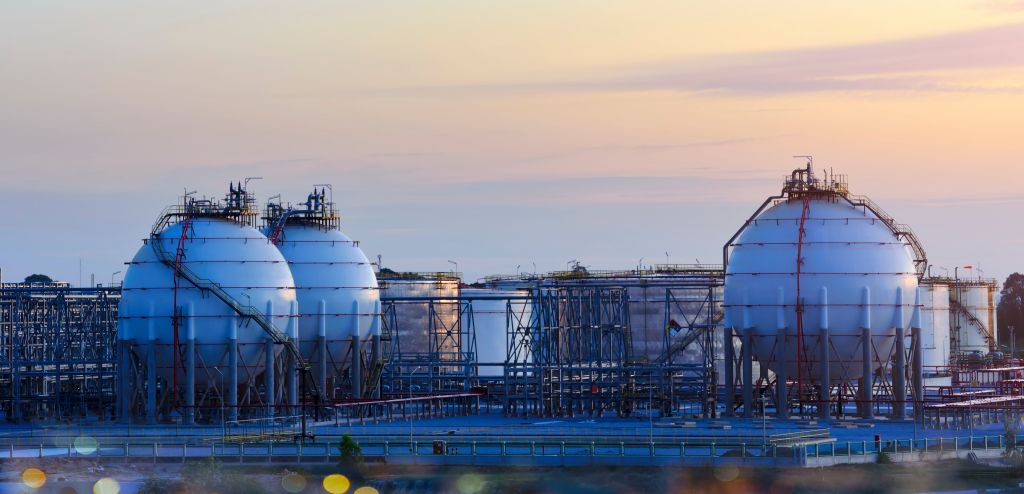
Project description: Two floating LNG facilities, each with liquefaction processing units. Once fully complete, the project will handle up to two billion cubic feet per day (bcfd) and export around 12 million tonnes per annum of LNG.

Who’s opposing it: The project faces opposition from several environmental groups and Indigenous groups, including the Gitanyow Hereditary Chiefs and Lax Kw’alaams Band.

Related infrastructure: An environmental certificate has been issued for the 780-kilometre Prince Rupert Gas Transmission (PRGT) project, which Nisga’a and Western bought from TC Energy in 2024. If PRGT rings a bell, that’s because it was the key conduit for the now-defunct Malaysian energy giant Petronas’s LNG project proposal back in 2014. It was approved even then, with amendments in July to address new environmental concerns.

What about the project’s emissions: The development expects to be net-zero ready by 2030, subject to an electricity agreement with BC Hydro. Project proponents say it would contribute 0.02% of B.C.’s emissions and 0.002% of total Canadian emissions.

Is that good?: The project claims to have a lower well-to-port emissions intensity compared to U.S. Gulf Coast projects (0.76–1.19 tonne of carbon/tonne of LNG lower). At full production, Ksi Lisims LNG would emit 9–14 million tonnes less CO2e per year than a U.S. Gulf Coast terminal project.

Is this the future of electric aviation?

RBC Thought Leadership’s Energy lead Shaz Merwat was on the Billy Bishop Toronto City Airport runway last week as Beta Technologies Alia CX300 rolled out an all-electric aircraft. The conventional takeoff/landing aircraft can be configured either as a passenger or cargo aircraft. Here are some cool specs:

  • Passenger capacity: 5 passengers

  • Cargo capacity: 1,250 lbs. of cargo

  • Maximum demonstrated range: 336 nautical miles (i.e., Toronto to Sarnia, or Calgary to Okanagan region)

  • Max speed: 280 km/hour (Cessna 172 can top 344 km/hour)

  • Charge Time: <1 hour

  • Energy cost: $18 per hour of flight time (Cessna 208: $347 per hour)

  • Emissions: At least 75% less emissions than a conventional small aircraft

  • Uses: Short-haul cargo and corporate travel

The CX300 photographed above is the cargo variant, and fourth off the production line with final delivery to Air New Zealand. The carrier will use the aircraft for regional cargo routes.

Billy Bishop is arguably already one of North America’s most sustainable airports, and is on a path to fully electrifying its vehicle fleet, including shuttle buses, ground vehicles, towing, etc.

To learn more about decarbonizing aviation, listen to the episode of RBC’s Disruptors Podcast on the topic with Angela Avery, Executive Vice President, Chief People, Corporate & Sustainability Officer at WestJet Group and Geoff Tauvette, Executive Director at the Canadian Council for Sustainable Aviation Fuels (C-SAF).

Canada’s turning its chill into an advantage. Ottawa recently injected $2.5 million in TerraFixing’s direct air capture (DAC) tech—aimed at extracting CO₂ in remote, wintry zones where low temperatures actually enhance efficiency. It’s an inventive way to turn Canadian winters into an advantage. If TerraFixing can prove cold-weather DAC works at scale, it could give Canada an edge in the global carbon-capture arms race.

A new “cli-fi” take on extreme weather. Sarah Hall’s Helm, is the latest novel in the new climate fiction genre that blends “atmospheric principles” with folktales to paint a picture of humans’ relationship with nature. Meanwhile, eco-warrior Bill McKibben, who once wrote a book with the grim The End of Nature title, returns with a surprisingly upbeat Here Comes the Sun: A Last Chance for the Climate and a Fresh Chance for Civilization.

Curated by Yadullah Hussain, Managing Editor, RBC Climate Action Institute.

Climate Crunch would not be possible without John Stackhouse, Jordan Brennan, John Intini, Farhad PanahovLisa AshtonShaz MerwatVivan SorabCaprice Biasoni, Lavanya Kaleeswaran and Joelle Schonberg .

Have a comment, commendation, or umm, criticism? Write to me here (yadullahhussain@rbc.com)

Climate Crunch Newsletter
➔ The worried, the hopeless and the climate-conscious

➔ King Coal’s long rein continues

➔ A global gridlock’s holding back renewables

Hot takes

Climate literacy for the worried and the hopeless. Ottawa plans to invest14.4 million in 17 projects to boost environmental literacy among young people. It ranges from $1.8 million for BC Parks Foundation to inform students about biodiversity loss and several programs that combine climate science with traditional Indigenous knowledge. We are going to need all of it: A recent study shows Canadian youth are wallowing in “worry and hopelessness” in response to climate change.

Carbon Upcycling is a step closer to cracking the cement emissions challenge. The Calgary-based startup recently broke ground on Canada’s first commercial-scale carbon capture and utilization facility at partner Ash Grove’s Mississauga cement plant. Opening in 2026, the $10-millionproject will capture kiln CO₂ and convert it, along with other industrial byproducts, into up to 30,000 tonnes a year of low-carbon cement materials. Funded by federal programs and venture firm CRH Ventures, the initiative aims to embed circular economy solutions into heavy industry. Also read our 2024 case study on Carbon Upcycling.

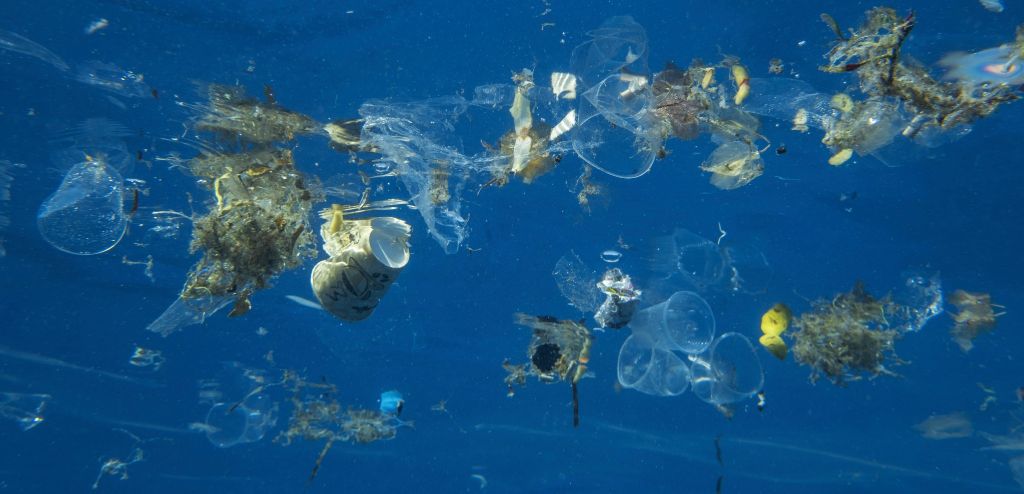
UN plastics treaty talks are on the brink. There was limited consensus among delegates of 179 nations after a 10-day marathon on global plastic pollution that ends today. The scale of the problem is massive, with straws, cups and stirrers, carrier bags and microbeads among the single-use products clogging up oceans and threatening marine life. The 2,000-plus delegates are poring over 32 clauses in a draft text, but, some say, countries can’t even agree on the definition of “plastic pollution.”

Saskatchewan Premier Scott Moe was the latest target of an AI deepfake video that falsely showed him promoting cryptocurrencies. It’s not just a public menace—it has implications for the climate.

Some AI models gobble up 20.4 million joules to generate a 30-second video, according to data extrapolated from an MIT study —that’s enough to power an electric vehicle for 18 kilometres. Eight million AI deepfakes could be shared online this year—doubling every six months, according to Open Fox, a law-enforcement consultancy. Add to it millions of meaningless, misleading and near-malicious AI-concocted videos that litter the Internet (countries as mythical monsters , anyone?). It’s not nothing: One 30-second video per day, for a month, would be the equivalent of adding 40% to a typical one-bedroom apartment’s utility bill, according to energy policy lead Shaz Merwat who wrote about AI’s power needs last year.

AI’s demand on power grids is already formidable:

➔ Datacentres will account for 20% of electricity demand growth to 2030 in advanced economies, the International Energy Agency estimates.

➔ Emissions from data centres could rise from 180 million tonnes today to 300 metric tonnes (Mt) by 2035 in IEA’s base case, with 500 Mt as a higher estimate—roughly 2.5x the emissions of Canada’s oil and gas sector.

➔ The United States now has the largest pipeline of gas-fired power plants in development globally, surpassing China—with a fifth to power data centres.

➔ Given the exponential use originating from image and video queries, most likely over time, we could see tiered pricing for heavy data users to match users’ data use for heavier AI tasks, Merwat said.

Felippa Amanta, who published a study on the AI deepfake challenge for Oxford University, goes a step further: “The deepfake’s effect on climate information and emotion will be much more significant than the direct energy to produce the deepfake.”

Spot the resilient fossil fuel in the chart below. Old King Coal set a new demand record last year, with coal-for-power generation also hitting its highest level ever. Trade in the carbon-intensive commodity also broke records in 2024. Coal is the world’s most carbon-intensive fossil fuel, with emissions on average 50% higher than natural gas.

Here are some coal trends that suggests it will endure for some time:

  • China accounts for 56% of global demand, but India and the U.S. is expected to see production rise.

  • The U.S. is considering several regulations that were poised to limit coal use in power generation. A Trump executive order also lifted “unattainable emissions controls” for coal plants to ensure energy security.

  • The IEA expects global coal consumption to plateau in 2026, but rise 5% in the fast-growing ASEAN region.

  • Despite coal’s resurgence, the IEA expects renewables-based electricity generation to overtake coal-fired generation in 2025.

Ballard is powering through a global hydrogen reckoning. The Vancouver-based company that’s been plugging away at hydrogen tech since 1979, launched its second major shake-up in less than a year. It underscores the pressure hydrogen fuel cell companies face after years of hype. Under new CEO Marty Neese, Ballard is pivoting to a narrower set of applications where its technology has proven traction, like transit buses and stationary backup power. The 30% operating cost cut target for 2026 suggests that the pace of hydrogen buildout has been slower than the market—or Ballard’s earlier strategies—anticipated.

A global gridlock is stifling renewable energy. Nearly 40% of Scotland’s wind power capacity was curtailed due to grid constraints over the past six months. That’s the latest setback in a long list of renewable and affordable power being held back by a gridlock. For every dollar invested in renewable power, just 60 cents go to grids and storage—the ratio should be one-to-one, the UN estimates, noting that there’s three times more renewable energy waiting to be plugged into grids than was added last year.

Solar and wind are getting eclipsed. The White House’s war on renewables has seen projects valued at US$22-bilion scrapped in the first six months of 2025, according to E2 data . That’s 16,500 in jobs lost during the period. On the heels of the Big Beautiful Bill that would see low-carbon energy credits phased out faster, a new federal order subjects wind and solar projects to greater scrutiny as it “denigrates the beauty of our Nation’s natural landscape.” It echoes Alberta’s no-go zone directive last year.

➔ AI gets all the attention, but the AC is also a major power drag, too

➔ Canada’s ghost emissions

➔ David Suzuki and Chris Wright’s starkly different world views

Hot takes

Ghost emissions are climate change’s untold story. Globally, emissions from Land Use, Land-Use Change and Forestry (LULUCF) are tracked but not included in a country’s emissions inventory. While emissions from managed lands are included, emissions from unmanaged lands are excluded as they are triggered by events beyond human control-such as wildfires. But they are formidable: Wildfire on just managed lands had emissions in 2023 that surpassed Canada’s total accounted emissions-by a lot. This year’s LULUCF emissions could rack up, too. By June 2nd, total estimated wildfire emissions for Canada were second only to 2023, with approximately 56 megatonnes of carbon (or 8% of Canada’s GHG emissions in 2023), according to the EU CAMS Global Fire Assimilation System. That’s years of painstaking climate action wiped out in weeks. This highlights a fundamental tension in Canada’s climate policy: most of the attention has been on emissions mitigation; less attention has been paid to climate adaptation. And we are all paying the price.

Is it time for a $100-billion Pathway + pipeline package? Alberta and Ottawa are making progress on a big energy package that could include a West Coast oil pipeline, the long-contemplated Pathways project to capture carbon emissions, and room for expanded oil production, writes John Stackhouse from Calgary. But Mark Carney’s team may need to finesse its way out of the previous Liberal government’s oil and gas emissions cap. That could involve a new target, or delayed timeline, or a refined approach to measuring abated emissions. The package’s headline costs could also be sobering—up to $100 billion.

The Texas tragedy underscores the frequency, and intensity, of floods. More than 80% of Canadians live in urban areas, and around 8 out of 10 major Canadian cities are located in proximity to flood zones, according to the federal government. Floods are already Canada’s costliest natural hazard in terms of property damage, causing $2 billion in destruction annually, as climate change supercharges weather conditions. As part of a greater National Adaptation Strategy, Ottawa is spending  $164.2 million to update Canada’s flood mapping program by 2028. Will it be enough?

David Suzuki and Chris Wright’s recent comments highlight the tension between environmentalists and some energy proponents. Canada’s veteran environmentalist told iPolitics recently that its “too late” to reverse climate change as policymakers are focused on economic growth, not nature. Meanwhile, U.S. Energy Secretary Christ Wright sees the climate crisis as a byproduct of progress, not an existential threat. “I am willing to take the modest negative trade-off for this legacy of human advancement,” he wrote in The Economist. Policy is often driven by political cycles, with energy proponents winning this round. However, the next political cycle is around the corner.

Power-hungry data centres get all the attention, but the humble air conditioner is also a major strain on grids. As summers get more oppressive in Canada and around the world, the International Energy Agency expects air conditioners to be a top driver of global electricity demand, with air-conditioner ownership worldwide rising from 37% to 45% by 2030.

Here’s why cooling is emerging as a critical climate issue:

➔ Cooling generated just over 1 gigatonne of carbon emissions globally in 2022 (1.9% of total). Space cooling could also lead to leakage of refrigerants, which have a global warming potential of around 1,000 times higher than CO2.

➔ 2Energy demand for space cooling globally is growing at 4% annually, twice as fast as water heating. This is putting pressure on power capacity, especially as countries like Canada strain to keep their grids clean.

➔ In Canada, the percentage of households with an air conditioner hit 64% in 2021, compared to 55% in 2013. That’s even more impressive given the surge in households over the past decade.

➔ Buildings account for 18% of Canada’s total emissions. Of these, space heating and cooling represent more than 67% of building energy use.

➔ One in 10 Canadian households had a heat pump (which, of course, double up as air-conditioners) in 2021, from virtually zero a few years prior. Heat pumps are 4.5 times more efficient than conventional air conditioners, making them a key pillar of climate action.

➔ Residential heat pump imports jumped 71% in Canada in Q1, compared to the same period last year, the Heating, Refrigeration and Air Conditioning Institute of Canada (HRAI) data shows.

➔ Federal and provincial Canadian policymakers are considering building codes that would stipulate at least one room with an air conditioner in a home.

➔ Access to cooling is emerging as a human rights issues, especially after nearly 600 people died in a Vancouver heat dome event in 2021.

➔ “An important driver of activity is climate-change mitigation, driven mostly by policy, rebate programs, incentive,” says Martin Luymes, Vice President, Government & Stakeholder Relations at HRAI. For instance, federal rebates led to record heat pump sales, which then dropped off when the programs ended. Several provinces including Ontario, B.C., and Nova Scotia continue to offer rebates, helping sustain interest.

➔ The Canadian HVAC industry sees the possible termination of the Energy Star program in the U.S. as a “major mistake,” says Luymes, noting that the program, which promotes energy-efficient products including air conditioners, as valuable, low-cost consumer guidance tools. Experts say scrapping or weakening Energy Star could harm climate progress.

Sign up to receive RBC Thought Leadership’s newsletter, major reports and analysis on the biggest ideas shaping Canadian business and the economy.

Donald Trump’s signature 2025-26 budget bill is now law. The legislation changes several clean energy tax incentives that were managed under the Inflation Reduction Act (IRA), tightens domestic content requirements, imposes new qualification deadlines and sunsets other tax credits that could impact Canadian cleantech firms eyeing opportunities across the border.

Here’s the good, the bad and the ugly of the OBBBA:

Carbon capture: The bill maintains credits for carbon capture, but also provides incentives for captured CO2 for oil production, underscoring the administration’s commitment to the fossil fuels industry.

Nuclear: The bill maintains credits for both existing nuclear facilities and new advanced energy technologies. However, new foreign entity provisions could inject uncertainty in the sector’s growth. The legislation is supported by an earlier executive order that targets a quadrupling of U.S. nuclear capacity from 100GW to 400 GW by 2050.

EVs: Electric vehicle manufacturing and competitiveness will be “hard hit,” according to the Center on Global Energy Policy, noting that the law could reduce domestic demand for EVs, jeopardize battery investment and allow China and other foreign competitors to gain greater market share.

Clean grid: Solar and wind power was particularly hard hit as historic investment and production tax credits sunset earlier than before. The law would reduce the build-out of new clean power generating capacity by 53-59% through to 2035, according to the Rhodium Group. An executive order following the OBBBA directs the U.S. Treasury Secretary to eliminate subsidies for “unreliable green sources like wind and solar,” that it believes is threatening national security. A separate executive order directs the Treasury Secretary to end “market-distorting subsidies for unreliable, foreign controlled energy sources.”

Critical minerals: Metallurgical coal is nowdeemed a “critical mineral,” allowing it to qualify for a production tax credit. The law also broadly reduced 45X Production Tax Credits for critical minerals to 2033 (compared to no limits before), which would pose a challenge as most critical minerals projects require long timelines. The Center for Strategic & International says the “amended tax credit disincentivizes investment in newly discovered greenfield projects with longer timelines to production in favour of brownfield legacy mines that may be closer to production but have lower grade reserves.”

China is the world’s energy transition workhorse. Around 74%, or 1.3 terawatt, of the world’s new wind and solar capacity is being built in the country, with the U.S. a distant second with 5.9% of all new projects, and India third at 5.1%, according to Global Energy Monitor. The 590GW of new Chinese wind capacity proposed or underway could power nearly all U.S. households. China’s inevitable cleantech dominance poses a conundrum for the West, as suggested by EU President Ursula von der Leyen earlier this month: “Beijing is at once a staunch competitor in the clean tech race, and a vital partner for global decarbonization.” A fractured G7 can’t keep Chinese tech out for too long.

Straddling cleantech and AI. Founded by veteran tech investor Nicholas Parker, CleanAI recently launched a networking and financing ecosystem for entrepreneurs and businesses intersecting AI and clean-tech. CleanAI research shows that the artificial intelligence-enabled cleantech solution space would require US$138 billion over the next five years and could mitigate up to 10% of global greenhouse gas emissions.

The Institute In Action

  • Last week, John Stackhouse visited Limberlost Place, Ontario’s first mass timber, net-zero carbon emissions building, to participate in a documentary about the project. The George Brown College building is set to open this fall in Toronto.

  • On July 15th, Nathan Janzen and Lisa Ashton gave a keynote presentation at the Dairy Farmers of Canada Annual General Meeting in Toronto.

Books on the team’s reading list:

  • Genesis, Henry Kissinger, Craig Mundie and Eric Schmidt, on AI’s transformative powers, in politics, security, prosperity and science. Read John’s review here.

  • The Explorer’s Gene: Why We Seek Big Challenges, New Flavors, and the Blank Spots on the Map, by Alex Hutchinson.

Curated by Yadullah Hussain, Managing Editor, RBC Climate Action Institute.

Climate Crunch would not be possible without John Stackhouse, Jordan Brennan, John Intini, Farhad PanahovLisa AshtonShaz MerwatVivan SorabCaprice Biasoni, Lavanya Kaleeswaran and Joelle Schonberg .

Have a comment, commendation, or umm, criticism? Write to me here (yadullahhussain@rbc.com)

Climate Crunch Newsletter

➔ A Silicon Valley of direct air capture set to debut in Alberta

➔ Global abundance: Exploring the New Energy Age

➔ Brazil is cooking up sustainable soybeans for China

Hot takes

The Silicon Valley of direct air capture is taking shape in central Alberta. Quebec-based Deep Sky, backed by a US$40-million grant from Bill Gates’ Breakthrough Energy, is opening its direct air capture innovation and commercialization centre in Innisfail in central Alberta this summer. The facility—seen as a hub for direct air capture activities—will serve as a sandbox for firms to test direct-air carbon-sucking technologies before they scale their operations commercially. Eight companies—from Canada, the U.S. and Germany and others—have already signed up. In a vote of confidence, the Alberta government also recently invested $5 million in DeepSky from the province’s Technology Innovation and Emissions Reduction Regulation (TIER) fund.

Ontario is crafting a new wood construction strategy. The recently announced Advanced Wood Construction Plan aims to promote wood use in larger and taller structures to accelerate projects, lower costs by as much as 20%. Swapping cement and steel with wood would also help lower emissions in a sector that accounts for 18% of Canada’s total emissions. Widespread adoption of wood, specifically mass timber, as a substitute or complement to concrete and steel could cut embodied emissions in buildings by as much as 25%, according to our report Mass Timber. The five-year plan comes as the province’s $20-billion industry is facing punitive U.S. tariffs.

Forecasters are scrambling to assess demand from data centres in the U.S. Electricity demand is now set to grow 25% by 2030 and 78% by 2050, compared to 2023 levels, according to a new report by ICF, a consulting firm. That’s an annual growth rate of 3.2% through 2030 (1.4% previously) and 2.2% (1.1% previously) through 2050 and contrasts with the past two decades when U.S. electricity demand was essentially flat. The strain on capacity could lead to a doubling of electricity prices by 2050, ICF warns. Texas, along with California and PJM region (covering 13 mid-Atlantic and Midwest states)—markets already importing Canadian electricity—will see the highest demand growth.

Brazil is developing bespoke, sustainable soybeans for China. Inspired by its successful Boi China beef model, the Latin American country aims to develop “Soy China,” through a supply chain that aligns with China’s environmental standards and runs on renewable energy. It’s also seen as a way for China to counter the EU Deforestation Regulations (EUDR), which have much stricter rules. Many countries (inside and outside the EU) have raised concerns about the EUDR because of its stringent traceability requirements that do not align with conventional soybean supply chains. And Brazil and China’s move is alternate route for soybeans to flow. The U.S. Department of Agriculture recently warned that sustainable soybeans would directly challenge American and Canadian exporters’ market share in China.

Nature capital: Canada’s other green power

By Lisa Ashton

As climate change disrupts the U.K.’s landscapes—from the Scottish Highlands to the Somerset Wetlands—the country is facing a £97-billion ($181-billion) nature asset deficit. The Green Finance Institute (GFI) estimates that planned public spending on conservation and restoration by the government is well short of delivering on its binding commitments, including the 25-year Environment Plan and the U.K.’s 30×30 targets under the UN Biodiversity targets. It also presents real risks and losses of between £150-£300 billion of U.K.’s GDP by 2030. The U.K. government is now seeking ideas from businesses, investors, and innovators to protect the “natural foundations of its economy,” and spur growth in its “burgeoning” nature services sector.

Canada can draw lessons from the U.K. experience. It’s home to landmark investments in several initiatives including the Great Bear Sea project finance for permanence (PFP), and watershed policy commitments to protect and conserve 30% of Canada’s land and water by 2030.

Canada’s is truly a nature powerhouse with riches that are second to none:

➔ It’s one of just five countries that collectively contain more than 70% of the world’s remaining intact ecosystems;

➔ 20% of the world’s total freshwater;

➔ 25% of the world’s wetlands;

➔ 24% of the world’s boreal forests;

➔ the world’s longest coastline;

➔ the world’s longest coastline;

➔ ecosystems in Canada provide essential habitat for approximately 80,000 species.

But, Canada, like many others, has not been able to unlock nature finance at scale to address declining natural capital as a share of GDP—roughly 70% in 1995 to about 40% today—and mitigate the risks associated with a natural environment that’s experiencing more deterioration than the U.S. and the U.K. Wildfires year-to-date alone could risk 0.4% of Saskatchewan’s GDP and 0.2% for Alberta, according to Statistics Canada estimates.

Nature finance is in its infancy, but a pathway to build natural capital in Canada and investments is slowly being charted. In 2022, the Government of Canada issued its first green bond, valued at $5 billion, with a portion of funds going to nature-based projects including financing that supports the adoption of climate-smart agriculture practices.

Exploring nature finance is an opportunity to build greater resilience in Canada’s natural resource dependent economy driven by fuel, food, fertilizer and forestry production.

Sign up to receive RBC Thought Leadership’s newsletter, major reports and analysis on the biggest ideas shaping Canadian business and the economy.

Gas flaring in Alberta is raising alarms among health professionals. The Canadian Association of Physicians for the Environment (CAPE ) Alberta chapter cited research that shows a 1% increase in flaring exposure led to a 0.73% rise in respiratory-related hospital visits. The warning comes after Reuters reported that gas flaring blew past the province’s self-imposed limit on annual natural gas flaring in 2024, for a second year in a row. In June, the Alberta Energy Regulator said it was ending limits on flaring.

Overcapacity is reinforcing steel’s hard-to-abate reputation. Around 30% of steel capacity remains unused globally, an excess that’s sent prices plunging to a four-year low. With margins under pressure, steelmakers are hardly in the mood to decarbonize. The problem is set to worsen: more than 40% of new steelmaking capacity—mostly from “non-market” forces such as China—that’s set to enter the market by 2027 will be emission-intensive, according to an OECD report . Strengthening international co-operation to address excess capacity and market distortions will be vital to improve the outlook for steelmakers in market economies, the OECD recommends. That would give steelmakers the space to advance decarbonization efforts. New anti-dumping tariffs in Canada and the U.S., primarily aimed at China, is also an opportunity to establish a green steel market.

Plastic bag bans and fees are making a difference. Several U.S. jurisdictions that enforced these policies have seen a 25-47% dip in plastic bags as a share of total items collected in shoreline cleanups, according to an extensive University of Delaware and Columbia University study. The ban also reduced the number of animals entangled along the shoreline. Still, plastic pollution overall remains a growing challenge. The final round of a Global Plastics Treaty is set for August in Geneva.

The New Energy Age

By John Stackhouse

More, more, more energy.

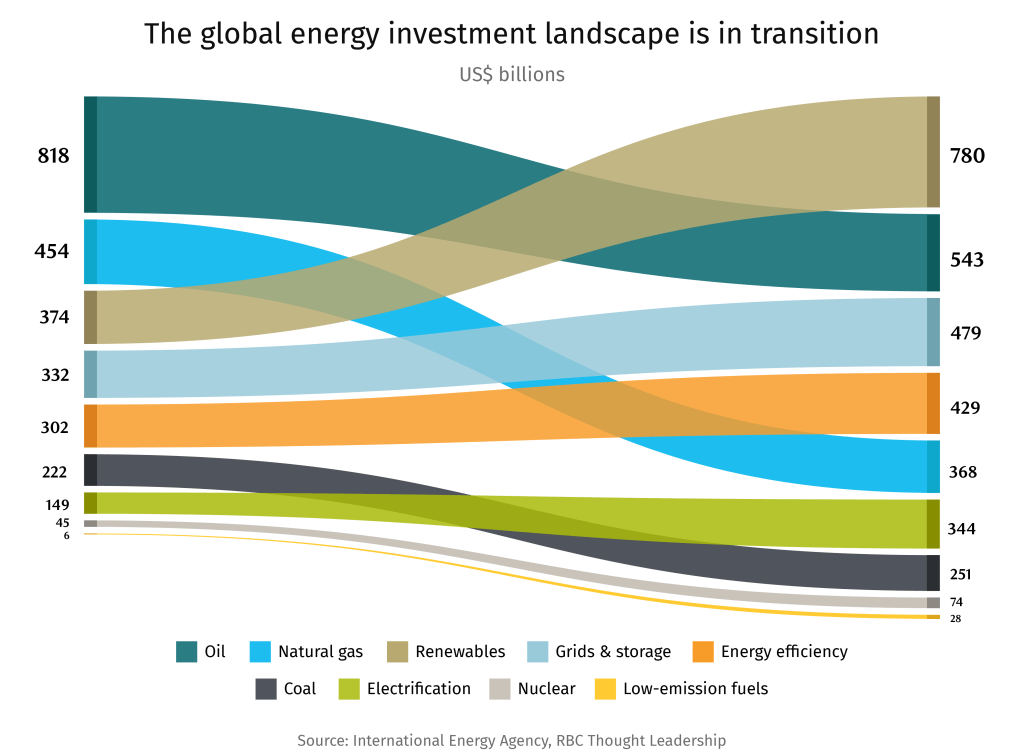
That was the big message in the IEA’s 10th annual investment report.

The International Energy Agency (IEA) tracks investment flows for all forms of energy, and this year is more relevant than ever, given the volatility we’ve seen in energy prices this decade. While a slower global economy may temper some investment patterns, what gets built today will shape energy patterns in years to come.

Some highlights:

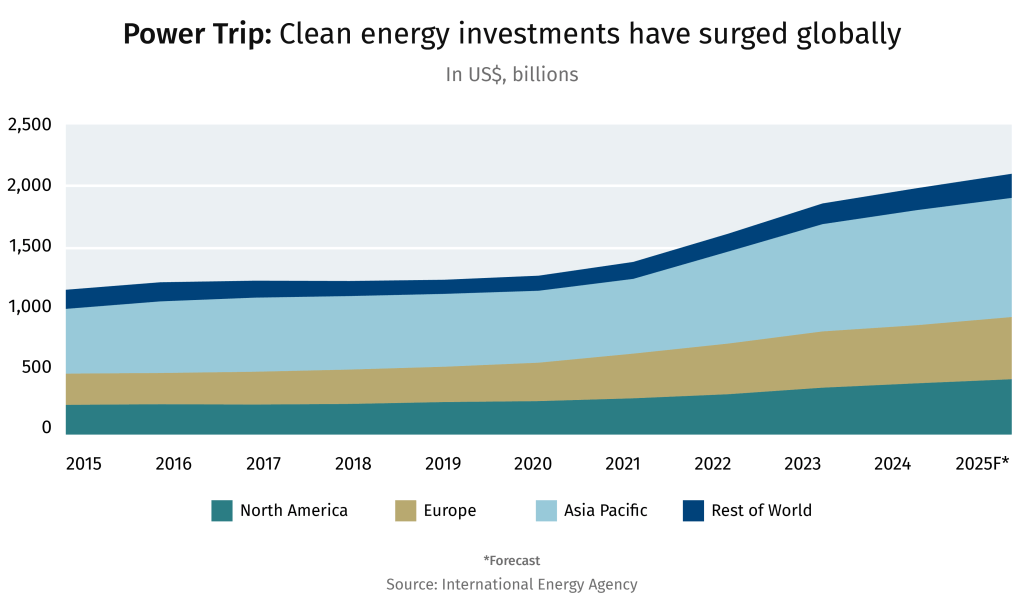
  • Capital flows to the energy sector are on course to reach US$3.3 trillion this year.

  • China is leading the energy investment surge, accounting for nearly a third of global investment, split almost evenly between grid and storage, renewable power and fossil fuels.

  • North America saw a record US$700 billion in investments in 2024, but will see pullback to US$690 billion this year. Clean energy investment is at an all-time high.

  • Would the U.S. new “big, beautiful bill” that guts several clean energy incentives, and Canada’s Bill C-5, that promotes clean and conventional energy projects, move the needle on energy investments?

  • The biggest use of investment globally is electrification, which will consume almost half ($1.5 trillion) of all energy capital.

  • Only a third of investment will go to oil, natural gas and coal:

  • lower oil prices are likely to keep investment down;

  • LNG investment is on “a strong upward trajectory,” led by the U.S., Qatar and Canada;

  • nuclear’s renaissance continues, rising by 50% over the past five years;

  • coal-fired power in advanced economies has ground to a halt, while it’s showing a comeback in China and India.

The bottom line is the world will continue to need to invest trillions a year in energy, across a wide array of sources. As that continues, some long-term trends are clear—more energy investment will go to Asia, especially China; more will go to electrification; and as our new report, “A G7+ Strategy for Natural Gas,” lays out, more will go to gas infrastructure.

Countries that develop the right policies will generate and attract the bulk of that capital, in what’s shaping up to be a New Energy Age.

The Institute In Action

  • John Stackhouse and Lisa Ashton visited the Kelburn Farm in Manitoba in late June. The demonstration farm operates out of the Red River Valley, a growing hotspot for agri-food innovation. The Kelburn Farm is a place for farmers, students, researchers, and companies along the agri-food supply chains to test and trial new ideas that are advancing Canadian agriculture.

  • Shaz Merwat was at the RBC Energy Transition Conference in London last week. He also attended a virtual International Energy Agency Conference on certified natural gas this week.

On the team’s reading list:

  • Crisis: A Global Case Primer, by Jason Miklian and John Katsos, on leading when things are falling apart.

  • Shaz Merwat was at the RBC Energy Transition Conference in London last week. He also attended a virtual International Energy Agency Conference on certified natural gas this week.

Curated by Yadullah Hussain, Managing Editor, RBC Climate Action Institute.

Climate Crunch would not be possible without John Stackhouse, Jordan Brennan, John Intini, Farhad PanahovLisa AshtonShaz MerwatVivan SorabCaprice Biasoni, Lavanya Kaleeswaran and Joelle Schonberg .

Have a comment, commendation, or umm, criticism? Write to me here (yadullahhussain@rbc.com)

Climate Crunch Newsletter

➔ Why Canada’s critical to G7+’s metal security

➔ Peak IEA vs OPEC fight

➔ A geothermal breakthrough

Hot takes

Canadians slammed the brakes on zero-emission car purchases in Q1. Sales were down 19.5% compared to the same period last year, while total light-duty vehicles, that includes hybrids and plug-ins, fell 3.2% during the period. New vehicle registrations accounted for 9.5% of total car sales in Q1, down from an impressive 18.9% in Q4, S&P Global data shows. A confluence of factors tripped up sales, including the end of the $5,000 federal rebate, a drop in Quebec’s rebate program, and tariff uncertainty. Tesla is also losing its brand appeal in Canada, securing less than 10% market share in April, down from 50% a few years ago.

G7 leaders were not the only luminaries in Alberta this month. Haitham al-Ghais, secretary-general of the Organization of Petroleum Exporting Countries, showed up in Calgary for the Global Energy Show with the bold claim that “there is no peak in oil demand on the horizon.” Over the past few years, OPEC and the International Energy Agency have bickered over the peak dates of oil, which the Paris watchdog believes could come before 2030. OPEC also recently called out the IEA for cutting its electric vehicle forecast as proof it was backtracking on its peak-demand theory. But the IEA remains firm, noting in its June forecast that a “peak in global oil demand is still on the horizon.”.

The Arctic is hot territory. Three new books this year show how the top of the world is now top of mind, as it warms up for—and to—more commerce. In The North Pole, Norwegian explorer Erling Kagge charts how explorers were traversing the region as early as the 1600s to find shortcuts from Europe to Asia. In End of the Earth, fossil hunter Neil Shubin explores what the latest science tells us about the riches beneath. And in Arctic Passages, journalist Keiran Mulvaney explores how thawing ice could cut trips from, say, Korea to the Netherlands, circumnavigating geopolitical flashpoints Suez and Panama canals.

Critical Canada

From Nice to Kananaskis, critical minerals are on everyone’s lips. But it was awkward in the coastal French city where delegates at the UN Ocean Conference criticized the U.S.’s interest in deep-sea mining, suggesting that the White House’s plans for offshore critical minerals set “a dangerous precedent that could destabilize the entire system of global ocean governance,” according to the International Seabed Authority (ISA). It seems that the business of developing clean energy inputs is not always, well, clean.

In Kananaskis, Canada corralled G7 nations to at least agree on a critical minerals “action plan .” While a united and sweeping G7 statement was being avoided on several matters to avoid the ire of the Oval Office, leaders agreed on developing a framework to finance new mines and downstream processing facilities, and reduce reliance on China for key metals such as lithium, cobalt and rare earth elements.

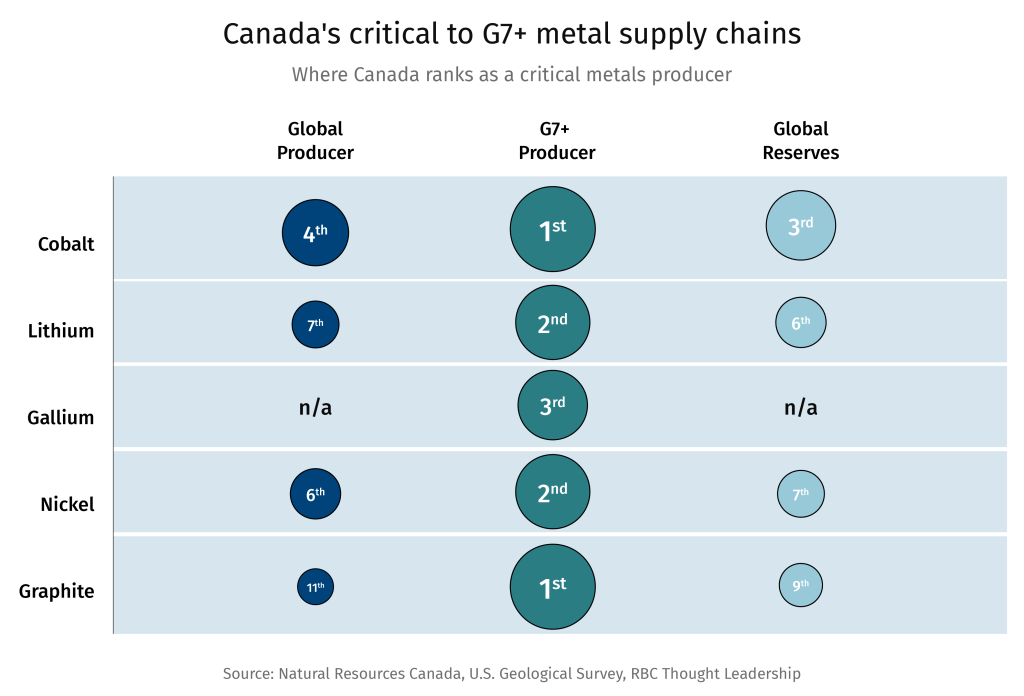
As a major producer of several commodities vital for the production of electric vehicles, defence, smart phones and wind turbines, Canada wants to play a key role, as part of its overarching “energy superpower” ambition.

There’s some awkwardness here, too as the federal government is starting to get some pushback: Chiefs of Ontario believe Bill C-5, proposed by the government to fast-track mining and other projects, will override environmental laws and “sidestep constitutional obligations.”

The private sector , which overwhelmingly wants all levels of governments to build an energy-agnostic utility corridor, also has a laundry list of concerns including cost overruns and delays of mega-projects, scope creep, stakeholder consultations, environmental assessments, and regulatory delays, according to a KPMG survey of Canadian executives.

Our report, The New Great Game, outlines how Canada can overcome challenges to scale its critical minerals sector. Further reading: Resourceful: How Canada can strike a new commodity deal with the U.S. and others

The Canada-Japan gas nexus

Japan is the Canadian energy sector’s new market—with a climate twist. B.C. Premier David Eby was in Japan as recently as this month, showcasing his province’s commodity resources, including energy. Meanwhile, Mitsubishi Corp.—an anchor investor in LNG Canada, will start receiving shipments from the facility starting in July.

Our new report on G7+ Strategy for Natural Gas , examines how member countries can leverage natural gas to ensure energy security. Canadian LNG can find a greater Asian foothold if it can align with Japan’s Green Transformation Emissions Trading System (GX-ETS), which is central to the Asian country’s carbon neutrality by 2050.

Here’s how:

  • Japan’s GX policy accepts low-carbon LNG—particularly if paired with methane abatement, carbon capture and storage (CCS), or certified emissions standards—as transition-aligned. Canadian LNG could qualify for long-term GX-aligned supply contracts, if emissions reductions are verifiable.

  • Japanese investment via GX Transition Bonds, especially in infrastructure such as liquefaction and CCS-enabled transport. Japan is collaborating with Australia and other countries on clean ammonia. Canada’s low-carbon certified energy products can tap several opportunities including financing through GX Transition Bonds and Japan’s Joint Crediting Mechanism (JCM).

  • Canada can also tap Japan’s plan to scale blue hydrogen imports, by developing natural gas with CCS.

  • Japan’s economy also needs power to maintain its edge in computation and digital infrastructure. Data centres, AI and digital infrastructure are going to depend on natural gas, offering another opening for Canada.

Read the full report here. Also watch John Stackhouse and lead author Shaz Merwat discuss the report.

The World Bank is entering the nuclear energy space. In a boost to nuclear, the World Bank is collaborating with the International Atomic Energy Agency, the UN nuclear watchdog, to support existing reactors and support “grid upgrades,” including SMRs, amid a push from the U.S. and Germany. Natural gas power plants, that do not “constrain renewables,” could also tap its funding. However, the World Bank’s board has not yet agreed on funding upstream natural gas development.

Carbon capture projects are ramping up. Between 2020 and 2030, carbon management project deployment is expected to be dominated by capture-only initiatives, which will account for approximately 45% of all operational and planned projects, according to a new report by the International Energy Forum . The U.S., the U.K. and Canada—in that order—have the highest number of proposed CCUS projects by 2030. That will take proposed global CCUS capacity to 1 gigatonne of CO2 by 2030 (equivalent of taking 306.3 million cars off the road for a year), with most initiatives financed through public funding.

A Bill Gates-backed geothermal firm reported an industry-shaking breakthrough. The industry is abuzz after Houston-based Fervo Energy drilled 15,765 feet in 16 days—a 79% cut in average drilling times. With drilling the costliest line item for geothermal companies, the feat is a giant step in making geothermal economically competitive with other energy sources. Second, its technology—borrowed heavily from fracking techniques—, allows the industry to look beyond geological sweet spots for geothermal, like Iceland. Gates’ Breakthrough Energy immediately rewarded the company with an additional US$100-million injection, part of a US$206-million investment round for the company.

Curated by Yadullah Hussain, Managing Editor, RBC Climate Action Institute.

Climate Crunch would not be possible without John Stackhouse, Jordan Brennan, John Intini, Farhad PanahovLisa AshtonShaz MerwatVivan SorabCaprice Biasoni, Lavanya Kaleeswaran and Joelle Schonberg .

Have a comment, commendation, or umm, criticism? Write to me here (yadullahhussain@rbc.com)

Climate Crunch Newsletter
➔ Climate-tech funding perks up

➔ Nuclear ramps up

➔ Got eco-friendly milk?

Hot takes

Canadian climate technology companies raised $468 million in Q1. That’s upfrom a paltry $39 million during the same period last year. It’s a bright beginning to the year following a sluggish period of investment from Q2-Q4 2024. First quarter funding in 2025 was mostly driven by energy storage and clean power deals. While the overall rise in climate technology funding is encouraging, additional investments in industrial innovation—beyond the $36 million raised to date this year from a single deal—will be critical in decarbonizing hard-to-abate industrial sectors.

Speaking of funding, Canada will need more foreign capital to realize its commodity ambitions. More than 100 mineral projects worth $107 billion, are at various stages of development in Canada over the next ten years, according to research by RBC’s Cynthia Leach, Shaz Merwat and Vivan Sorab. With Chinese investment in minerals effectively blocked by Ottawa, Canadian miners would need to tap a variety of countries such as those in America and Europe and institutions such as Middle East sovereign wealth funds, to emerge as a commodity powerhouse. Read the full report here. Also watch RBC analysts talk minerals.

After all the talk, nuclear is finally ramping up. A new U.S. executive order aims to speed up new nuclear plant applications within 18 months—and quadruple nuclear power generation in 25 years. Belgium is scrapping its nuclear phase-out law, while EU members Germany, Denmark, and Italy are reconsidering their stances on nuclear. Ontario also kickstarted a nuclear modular reactor in May. But New Brunswick is delaying its small modular reactor (SMR) plans after its two partners failed to raise capital and hire workers. Ambition is fine, but the challenge is finding the money and the people to execute.

INFRASTRUCTURE

Build, Baby, Build—But Also Wait

Lofty ambitions, meet ground realities.Despite a reset, Canada’s plans to build new clean and conventional energy projects are running up against familiar obstacles, such as stringent environmental rules and lack of Indigenous consent. Both are critical considerations that should not supersede national interest.

Provinces that stitched together new laws in a hurry are being asked to wait:

  • Ontario’s Bill 5, which is set to become law, gives the provincial government wide powers to allocate projects to “trusted proponents” in special economic zones. The Canadian Civil Liberties Association calls it an “alarming move,” that they say gives the government the authority to unilaterally scrap legal safeguards that protect vulnerable communities and some Indigenous people.

  • Worried about the surge in mining activity, First Nations in Ontario’s Ring of Fire region are demanding the bill be struck down. Mining claims at the Ring of Fire have shot up 67% since 2022, with just under 43,000 claims covering an area 14 times the size of Toronto city, according to Wildlands League.

  • In British Columbia, which is hoping to be an LNG and commodity hub, the government narrowly passed the Infrastructure Projects Act (the Speaker had to break the tie) aimed at fast-tracking projects, amid opposition from B.C. Assembly of First Nations, municipalities and environmental organizations.

  • Anishinabek Nation Regional Chief Scott McLeod said a national plan to advance projects without input could trigger another “Idle No More” movement.

What are the chances of the federal government facing similar headwinds as it embarks on pushing through a new wave of major projects? The NDP and Bloc Quebecois are already gearing up for a fight. For now, the momentum is with the “Build” crowd.

RBC’s John Stackhouse who wasin Quebec and British Columbia recently, says attitudes towards resource development, and oil and gas exports, are shifting. (Read John’s full briefing from Quebec and B.C. here).

But as Prime Minister Mark Carney and the premiers thrash out a plan and prepare a “national interest” bill, here’s what’s on their to-do-list:

  • Indigenous consent will be needed and will take time, especially under B.C.’s commitment to the UN Declaration of the Rights of Indigenous Peoples. The First Ministers’ statement after their meeting acknowledges those challenges.

  • Premier Danielle Smith wants nine “terrible” federal policies, such as the proposed oil and gas emissions cap and tanker ban on B.C.’s northern coast, which she believes discouraged investment. How will policymakers balance their economic and environmental commitments?

  • Industrial carbon pricing remains another point of contention as it makes Canadian gas exports less competitive, but advance’s the country’s climate goals.

  • First Ministers’ focus on “decarbonized oil and gas pipelines” is another interesting proposition and would require leaning on carbon capture technology.

  • Building cleaner and more affordable electricity systems to ensure net-zero by 2050 could also spark activity in several industries such as steel, lumber and aluminum that have been deeply disrupted by U.S. tariffs.

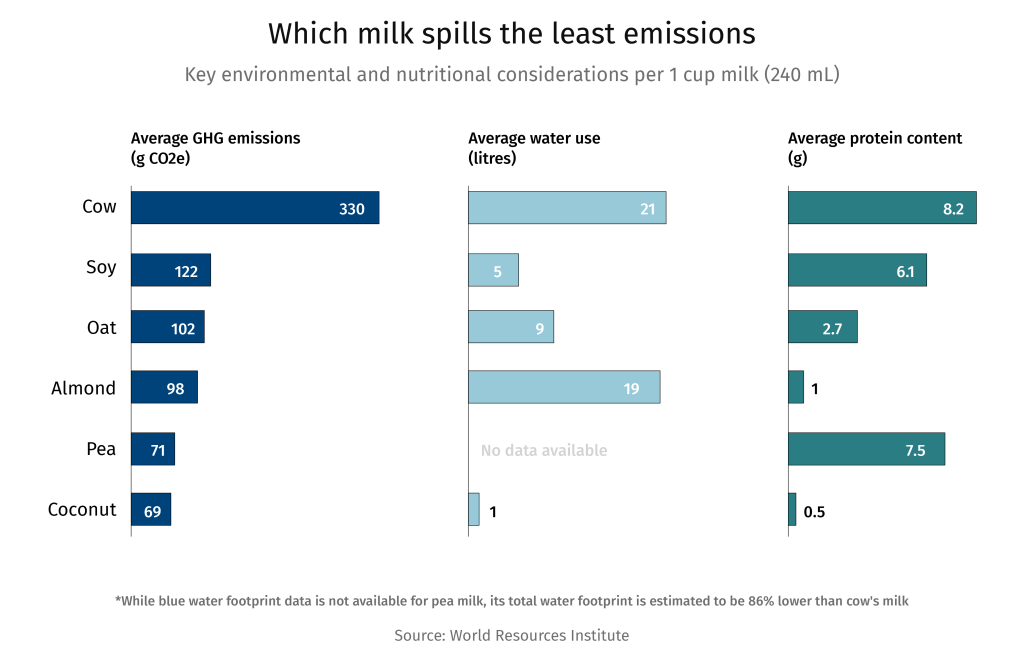
Got eco-friendly milk? It appears consumers can’t have all three—nutrition, low emissions and water conservation—when picking milk. Good old-fashioned dairy is the most emissions- and water-intensive but also the most nutritious, according to a World Resources Institute study. Almond appears to be the greatest disappointment: consuming almost as much water as dairy but is rather unwholesome. The winner appears to be the lesser-known pea milk.

Canadian cleantech remains a man’s world. Women were paid 17% less than men in 2023 in the environmental and cleantech (ECT) space—more pronounced than the 12.8% wage deficit women face in the overall Canadian economy, Statistics Canada data shows. Even though women in the industry (41.6%) were almost twice as likely as men (24.6%) to have a university diploma or degree. Overall, 7 in 10 jobs were held by men in a sector that represents 1.7% of all Canadian jobs in 2023.

A garbage truck’s worth of plastic enters the ocean every minute.That catastrophe is what makes Ocean with David Attenborough compellingviewing (now out in cinemas). “In front of us is a chance to protect our climate, our food, our home,” said Attenborough, the famed 99-year-old biologist. Oceans absorb 30% of CO2 emissions from human activities, yet only 2.4% of oceans are protected—compared to the global pledge to protect 30% of the ocean by 2030. The UN, which is hosting a conference on oceans next week in Nice, France, notes that of its 17 Sustainable Development Goals, protecting “Life Below Water,” remains the most underfunded.

The Institute In Action

  • In British Columbia, John Stackhouse joined a meeting between the Greater Vancouver Board of Trade and Calgary Chamber to discuss Canada’s role in global natural gas exports.

  • Myha Truong-Regan attended the Walrus Talks, Power Economy: Using Electricity to Change Cities, Homes, and Industry recently, to hear seven climate thought leaders and practitioners argue why the future is and must be electric.

  • Varun Srivatsan spoke to an audience at the Saskatchewan First Nations Energy Forum last week on equity financing and the importance of capacity, capital and consent to resource development.

On the team’s reading list

  • Fantasyland, a 500-year history of “How America Went Haywire” by Kurt Andersen. Read John’s review here.

  • Hotshot: A Life On Fire by River Selby, on wildfires and insights on U.S. federal fire policy, Indigenous land use and ecological history.

  • Is A River Alive? by Robert Macfarlane, tracks flowing water in Ecuador, India and Canada.

  • Who is government: The Untold Story of Public Service, by Michael Lewis, explores the vast complexity of American bureaucracy.

Curated by Yadullah Hussain, Managing Editor, RBC Climate Action Institute.

Climate Crunch would not be possible without John Stackhouse, Jordan Brennan, John Intini, Farhad PanahovLisa AshtonShaz MerwatVivan SorabCaprice Biasoni, Lavanya Kaleeswaran and Joelle Schonberg .

Have a comment, commendation, or umm, criticism? Write to me here (yadullahhussain@rbc.com)

Climate Crunch Newsletter
➔ A battery storage project going live and an approved SMR project suggests Canada can build

➔ Mark Carney’s cabinet: The fixer, the insider and the skeptic

➔ General Fusion needs financial infusion

Hot takes

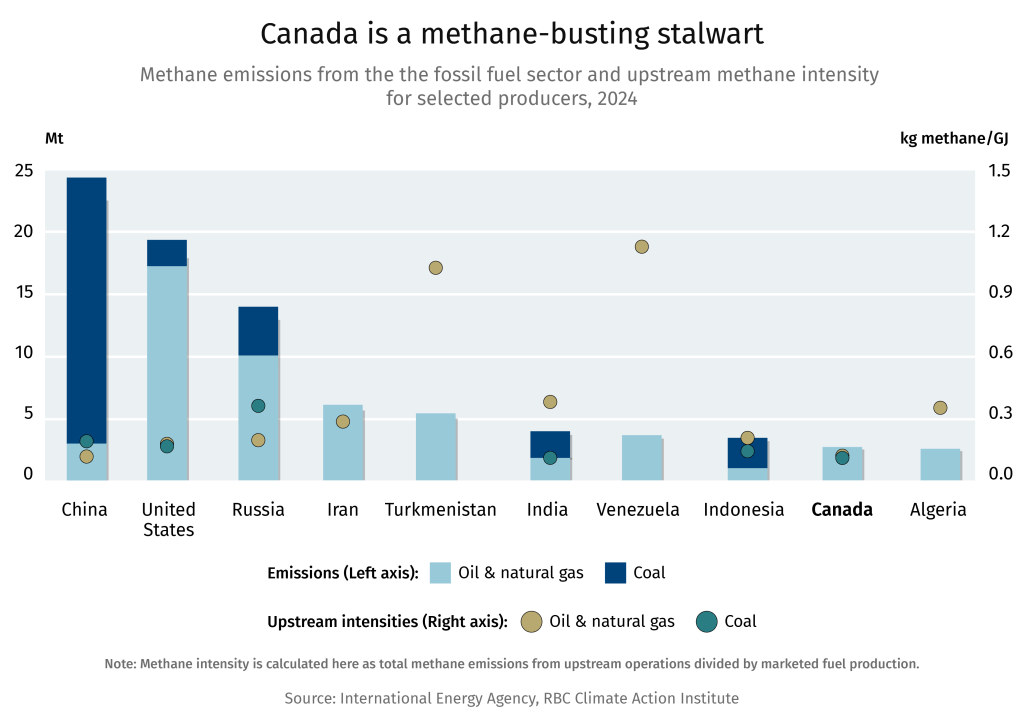
Canada is a methane-busting powerhouse. The International Energy Agency ranks Canada as among the lowest in methane intensity among major oil and gas producers including the United States, Russia and Iran. Emissions from methane, a far more potent greenhouse gas than carbon dioxide, remains at a high level globally despite pledges and available solutions that can lower fossil fuel emissions at “near zero” costs, the IEA estimates. Worse: methane emissions remains widely underreported globally, the agency said in its latest Methane Tracker report.

Canada is a methane-busting stalwart

The U.S. is going after solar power—and showers. A new U.S. Republican proposal aims to rollback popular tax credits for home solar and electric vehicles. The sweeping proposal to gut several incentives in the Inflation Reduction Act and other programs will save the government US$560-billion over a decade, but raise U.S. household costs by 7% by 2035, analysts say. The cuts could also impede U.S. efforts to cut emissions by 43% to 48% below 2005 over the next decade. Another U.S. proposal aims to scrap rules that conserve water in shower and toilets; also on the block: the Energy Star program that’s been credited for boosting energy efficiency and cutting utility bills.

The number of rare earth projects in Canada currently stand at 12. These constitute projects that are active in the exploration, resource estimation, or the preliminary economic assessment phase. Three separation and processing facilities and two rare earth elements (REE) recycling plants already exist, according to a report by Vivan Sorab, senior manager, clean technology. Fixing a couple of bottlenecks could help fast track the 12 projects. First, government investment, such as provincial funding in Saskatchewan, can help bring rare earth processing facilities closer to commercialization. Offtake agreements at competitive prices could also help Canada’s REE industry get a foothold.

Planting trees isn’t enough to tackle climate change. The world needs a global industry focused on removing carbon via nature-based and man-made solutions from the atmosphere at scale. Listen to a new episode of Disruptors X CDL: Innovation Era, where John Stackhouse and Sonia Sennik sit down with David Keith, a pioneer in carbon removal and founder of Carbon Engineering, to explore what it will take to build a low-carbon future.

POLICY

The fixer, the insider and the skeptic

Tim Hodgson, the new federal energy and resource minister, has been charged by his boss Mark Carney to make Canada a “leading energy superpower.” Hodgson will have to play the role of fixer in the resources sector, that includes mending relationships with Western provinces and Indigenous groups to make that dream come true. So far, he has been warmly received in the West, where grievances over Ottawa’s attitudes towards fossil fuels run deep—and remain live.

Julie Dabrusin, the Minister of Environment and Climate Change of Canada, has elicited a different reaction from oil and gas provinces. Her bio boasts a “strong stance against oil sands expansion,” raising concerns. But her insider knowledge as a parliamentary secretary to the Ministers of Natural Resources and Environment and Climate Change, and a member of the Natural Resources Committee, will be vital for Ottawa to streamline and fast-track project developments, including oil and gas pipelines. The Prime Minister seems open to the idea of new fossil fuel pipelines, as is Quebec. “Quebecers are saying, ‘There’s no way Trump is going to control the oil we produce in Alberta.’ So, can we export it to Europe through Quebec instead of being stuck with Trump? There’s openness. I feel things are shifting,” Premier Francois Legault said recently, adding that no concrete projects had been proposed.

While former environment minister Steve Guilbeault is now in charge of the heritage file, his skepticism about the economics of an east-to-west oil pipelines on his first day back in parliament, has also raised eyebrows. His portfolio appears to include Parks Canada, which gives him a platform to raise issues of biodiversity and nature erosion brought about by climate change. Committee to watch: Cabinet committees are where most of the business of government is transacted. One committee to watch will be the Build Canada committee, tasked with considering issues as diverse as housing, infrastructure, Indigenous economic prosperity, climate action and a host of others. The tag-team of Hodgson and Chrystia Freeland–chair and vice-chair of the committee–will provide a mix of private sector expertise and cabinet experience.

CLEANTECH

Financial infusion for General Fusion

General Fusion needs fresh capital. The B.C.-based nuclear fusion company announced a technological breakthrough that brings it one step closer to bringing zero-carbon fusion tech to the electricity grid. But the company also cut its headcount due to “unexpected and urgent financing constraints,” and is seeking new capital “to finish the job,” CEO Greg Twinney said.

Nuclear fusion mimics how stars create energy—an incredibly complex technology that’s perpetually “five years away,” but has gained investor interest in recent years on the back of several tech advances.

General Fusion also needs the stars to align. While the Canadian federal and provincial governments have injected funds in the company in the past, Twinney is looking for more financing including from the private sector, as the company’s competing with “nationally funded fusion programs around the world.” Since 2002, the company has raised US$440.53 million, according to PitchBook, and include counts Temasek, BDC Capital, and Chrysalix Venture Capital and Jeff Bezos as investors. The company recently hired the former CEO of the Amazon.com Inc. founder’s rocket company Blue Origin LLC as a strategic adviser.

The U.S. has been spending US$800 million annually in fusion technology in recent years, while China has injected between US$1-billion to US$1.5 billion annually. There are now around 98 demonstration plants or prototypes operating globally, another 13 under construction and 33 more planned.

Domestic rivals are also nipping at General Fusion’s heels. Montreal’s Fuse Energy raised US$32 million in new funding late last year, with the U.S. National Nuclear Security Administration (NNSA) as its largest collaborator and potential customer. The idea is to make Fuse to NNSA, what SpaceX is to NASA, said its 24-year-old CEO JC Btaiche. Last year, the Canadian Nuclear Laboratories called for a Canadian Fusion Strategy to help the country advance its net-zero emissions target by 2050. Canada provides the least government support for fusion development on a per capita basis among its G7 peers, CNL noted.

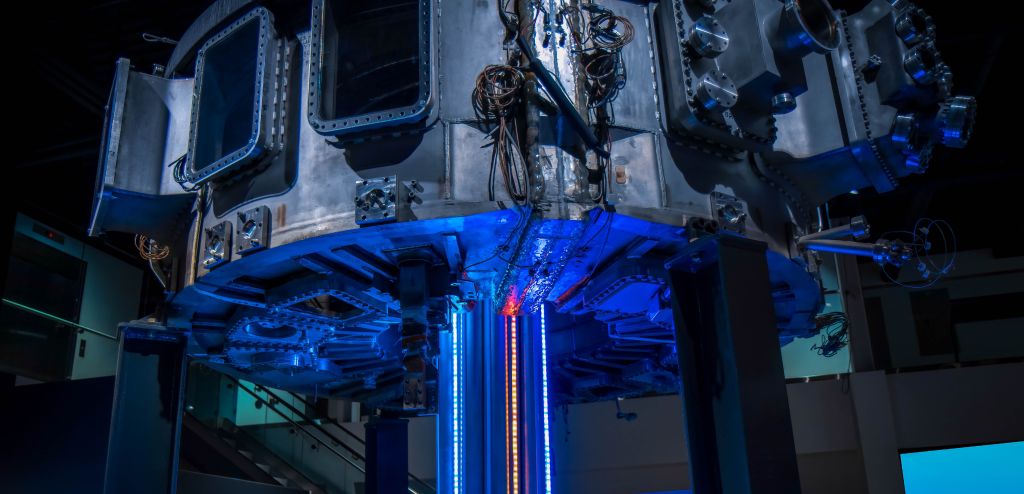
Ontario is set to build the G7’s first SMR. The province gave Ontario Power Generation the greenlight to start building the first of four small modular reactors at its Darlington New Nuclear Project—the first nuclear project in the province in three decades.

The Oneida energy storage operation is now live. The development in southern Ontario, near Hamilton, in Haldimand County is the fourth largest battery storage facility in the world. Its 278 lithium-ion battery units will store enough power to keep southern Ontario buzzing when demand peaks, or other sources get too expensive. Powered by renewable sources, the Indigenous-led project will reduce Ontario’s emissions by up to 4-million tonnes, equivalent to taking nearly 850,000 gas-powered cars off the road for a year. It may soon become a model for big demand users (such as datacentres) as they explore options. Read John Stackhouse’s blog on how battery storage gives us even more optionality to ensure costs remain low, relatability remains high and Canada’s climate commitments are fulfilled.

Recycling seems to be going out of fashion. A report by think-tank Circle Economy found only 6.9% of the 106-billion tonnes of materials used annually by the global economy came from recycled sources, a 2.2% point drop since 2015. While the use of recycled materials rose 200-million tonnes from 2018 to 2021, overall material consumption rose much faster, offsetting these improvements, Circle noted.

The Institute In Action

John Stackhouse attended the B7 Conference in Ottawa last week, where he presented preliminary findings from RBC’s joint project with Columbia University’s Center on Global Energy Policy, focused on exploring policy options for gas and LNG.

➔ On April 30th, John and Lisa Ashton presented our latest research on agriculture, food, and postsecondary education to the Deans Council-Agriculture, Food and Veterinary Medicine in Ottawa, highlighting key insights on talent development, innovation, and sector resilience.

➔ Read Head of Climate Research Myha Truong-Regan’s four key takeaways from a recent gas and electricity event organized by the Toronto Region Board of Trade.

➔ As part of the Salazar Center for North American Conservation’s symposium in Vancouver this month, the RBC Climate Action Institute co-hosted a roundtable with Nature United. Lisa hosted the discussion, which focused on how nature conservation and stewardship can be positioned as a strategic asset in pro-growth plans for nature-dependent sectors, including forestry, agriculture, and mining.

➔ On the team’s reading list: The Measure of Progress: Counting What Really Matters by Diane Coyle Bad Company: Private Equity and the Death of the American Dream, By Megan Greenwell; Transcend: Unlocking humanity in the age of AI, by Faisal Hoque.

Issue #12

➔ On Carney’s to-do list: carbon capture project and transition bonds
➔ Warren Buffett’s successor built the company’s energy empire
➔ Struggling cleantech stars, and a Climate Fiction Prize

Hot takes

➔ Canada’s EV policies are hurting farmers. Ottawa’s tariffs on Chinese EVs has had the “unintended consequence” of Beijing slapping levies on Canadian canola, lobsters, and peas, etc., agriculture members of the Canadian Federation of Independent Businesses’ wrote in a letter to three federal ministers. Canada’s $62 billion in total subsidies to EV firms has also not triggered an investment boom as those firms have paused their plans in Canada, CFIB pointed out. The group wants some of those funds redirected to small businesses.

➔ Did green power trigger Iberian blackouts? Some suggest “non-controllable” resources—i.e. solar and wind that can’t be controlled or scheduled on demand—were to blame. But it’s not like fossil-fuels grids can’t break down (Italy in 2003, anyone?). But intermittent generation poses a different set of problems. While authorities remain in the dark for now, the Spanish grid operator REE had warned in February that reliance on renewables could lead to grid instability, especially if the government closes its nuclear power plants by 2027. Could the simple answer be: keep the energy mix diversified?

➔ Warren Buffett’s successor is an energy empire builder. The Oracle of Omaha handpicked Edmontonian Greg Abel to succeed him at Berkshire Hathaway. As chairman of the company’s energy and other non-insurance businesses, Abel runs a conglomerate that’s among the largest operators of wind and solar energy in the U.S., electric utilities, and natural gas pipelines. While Berkshire Hathaway runs some of the dirtiest coal plants in the U.S.—coal power now accounts for only 22% of Berkshire’s power generation, compared to 71% in 2005.

➔ Ontario is fast-tracking critical minerals development. The new proposed rules will boost investment in local supply chains and reducing reliance on foreign imports would drive job creation, stimulate economic growth, and position Ontario as a leader in the green economy. The new rules also give the province wide powers to shield its strategic assets against “hostile foreign actors and regimes.” The move comes as the U.S. is moving at a frenzied pace to lock in critical minerals, including a deal with Ukraine, fast-tracking of supply chains, and plans to accelerate deep-sea mining.

CLIMATE POLICY

Carney’s Climate Corridors

Economy and trade tops the new federal government’s priority list, but there’s room to push through climate policies—especially “energy corridors,” that are seen as the path to an investment-led growth spurt.

Here are some high-profile climate files on the new government’s to-do list:

➔ Building a major carbon capture project in Alberta. How can a CCS project backed by Pathways Alliance—a consortium of oilsands firms looking to build a carbon capture project—get off the ground? Prime Minister Mark Carney said last week in Edmonton he is keen to see it built.

➔ Strengthening industrial carbon policy. The Conservatives wanted to repeal the federal carbon pricing for industrial emissions, but it stays for now. Last year, Myha Truong-Regan, RBC Climate Action Institute’s Head of Climate Research, co-wrote on how industrial carbon markets can be central to Canada’s efforts to accelerate energy transition.

➔ A Carbon Border Adjustment Mechanism. It was in the Liberal platform and could be Canada’s version of a climate-tariff—if it proceeds—helping climate-compliant Canadian companies compete with high-emitting foreign rivals. The Europeans may nod approvingly, but a Canadian CBAM will likely face strong pushback—and retaliation—from the U.S. and other trade partners.

➔ Carbon Contracts for Difference (CCfD). Carney is supportive of expanding the initiative, but the federal government is already dealing with a laundry list of other financial priorities.

➔ Climate risk disclosure. The idea was floated on the platform just as Canada’s provincial securities commissions suspended their work on making climate-related disclosure mandatory for public companies.

➔ Transition bonds. The Liberal platform suggests financing clean industrial and agriculture projects with $10 billion in bonds issued annually.

➔ Oil and Gas Emissions Cap. There might be tweaks after Carney suggested he would work with industry and provinces “on specific ways to get those reductions, as opposed to … having preset caps or preset restrictions on preset timelines.”

➔ For more, read John Stackhouse’s blog on Carney’s energy options in the age of Trump.

Climate treads, tech & science

➔ Li-Cycle is running out of road. The Toronto-based company’s woes persist with its CEO departing after a takeover deal with Swiss miner Glencore collapsed.

➔ Quebec won’t save Lion Electric Co. No white knight yet for the electric bus and truck maker that has struggled amid delays in subsidy and incentive programs in Canada and the U.S., and supply-chain disruptions.

➔ Nova Scotia-based Planetary Technologies won US$1 million XPrize. The ocean-based CO2 removal tech firm beat 1,300 rivals to win a slice of the US$100-million competition backed by Elon Musk. Mati Carbon, an American-Indian-African company, won the $50-million grand prize for its carbon-removal tech.

➔ Listen to Mike Kelland of Planetary Technologies, Jim Mann of UNDO who won US$5 million from XPrize, Dr. David Keith, a pioneering climate scientist and co-founder of Carbon Engineering, speak to RBC Disruptors hosts John Stackhouse and Sonia Sennik, on the innovation race to scale carbon removal technologies.

➔ Nunavut welcome solar power. A tiny community on the Arctic Circle will be able to ditch diesel generators—in the summers at least—once 2,500 solar panels are switched on soon. 

➔ Climate Fiction Prize. Boy meets girl amid climate change, and love in the time of wildfires are among the themes explored in the five novels short-listed in the first-ever £10,000 Climate Fiction Prize . The winner will be picked at the Hay Festival later this month in Wales.

The Institute In Action

➔ Many of Canada’s top Indigenous leaders came together for the RBC-sponsored 8th annual First Nations Major Projects Coalition conference, to see how we can better mobilize capital for Indigenous-partnered projects. RBC also published a report, Building Together , and hosted a private roundtable with 30 Indigenous leaders and CEO’s around building Canada’s economic resilience, and the central role of Indigenous partnerships and inclusion.

➔ Grow Ontario Food Summit brought together agriculture and food leaders from across Ontario. RBC Thought Leadership’s John Stackhouse and Lisa Ashton delivered the keynote address on Canada-U.S. trade relations and its impacts on agriculture and food, and highlighted key insights from our latest research report, Food First. On the team’s reading list: Just Earth: How a Fairer World Will Save the Planet by Tony Juniper; What’s Left: Three Paths Through the Planetary Crisis, by Malcolm Harris; Values: Building a Better World for All, by Mark Carney; Abundance, by Ezra Klein and Derek Thompson.

Curated by Yadullah Hussain, Managing Editor, RBC Climate Action Institute.

Climate Crunch would not be possible without John StackhouseMyha Truong-ReganSarah PendrithFarhad PanahovLisa AshtonShaz MerwatVivan SorabCaprice Biasoni and Frances Dawson.

Have a comment, commendation, or umm, criticism? Write to me here (yadullahhussain@rbc.com)

Climate Crunch Newsletter

Issue #11

➔ Earth Day edition focuses on Canada and B.C.’s power struggles
➔ Green steel is coming
➔ EVs: Open road or roadblocks?

Hot takes

➔ Our power, our planet. That’s the theme of this year’s Earth Day, celebrated today, just as the world feels a little less empowered to take care of the planet. But this edition is striving to celebrate small victories in a (very) long journey to heal the planet. Despite policymakers axing or toning down several ambitious global climate policies, there are rays of sunshine: led by solar and wind, renewable energy capacity additions hit a new record globally in 2024, while renewables accounted for more than 92% of total power expansion last year. Still, IRENA forecasts, the world’s falling short of the collective goal set in 2023 to triple installed renewable energy capacity by 2030.

➔ Sault Ste. Marie, Ont., is the setting for a Canadian green power revolution. The northern Ontario-based Algoma Steel is gearing up to launch its electric arc furnace (EAF) this month—it would cut back on coke, or coal power, and slash the company’s annual emissions by 70%. That’s a feat for any sector, but a monumental one for an industry considered among the hardest to abate.

➔ Canada’s first SMR got the green light this month. The small modular reactor (SMR) at the Darlington Nuclear Generating Station in Ontario—the first in a G7 nation— has the all-clear from the Canadian National Safety Commission. Ontario Power Generation, the developer, is now awaiting the provincial okay. There is a trade twist, though: the BWRX-300 reactor was built by North Carolina-based GE-Hitachi Nuclear Energy—making Canada dependent on the American supply chain at a time when ties between the two countries are strained.

➔ Climate drops off the radar as an election issue. About 24% of Canadians believed climate was an important issue in the 2021 federal election cycle. Just under 4% feel the same way as they start voting in the run-up to election day on April 28. Predictably, U.S.-Canada ties topped the list in the non-partisan Vote Compass’s poll of 161,000 Canadians, followed by economy, affordability, social justice and healthcare. The environment did not crack the top 5. Climate change also barely got a mention in the leaders’ TV debates (read John Stackhouse’s LinkedIn post here).

Earth Day: A Clean Super-Power

With this year’s Earth Day theme focused on tripling renewable energy by 2030, Canada can point to some victories in the electricity sector, the big one being that it’s Paris Agreement-compliant already. Alberta is coal-free, six years ahead of schedule, while Canada’s absolute electricity emissions declined by about 10% in 2024 compared to 2023.

Three charts that illustrate why electricity is Canada’s climate poster child:

There is no room for complacency, though. Here are 3 critical challenges Canadian policymakers—and a new federal government—will need to address soon.

➔ Balancing affordability with clean energy goals. New hydro dams and nuclear buildouts will be expensive, straining the ability of utilities to keep electricity bills affordable. 

➔ Expanding grids cleanly. Canada needs to more than double electricity capacity by 2050—and keep it clean—, if it wants to compete for investment dollars for data centres, automotive supply chains and other heavy manufacturing.

➔ Ensuring Indigenous rights. Power and energy projects—gaining renewed urgency—require a buy-in, consent and financial involvement from First Nations. Canada has had a spotty track-record on that file, which needs to change to fast-track projects.

Ready or not

Sticking to the power theme, B.C. LNG projects now only need to be net-zero ready. That’s the distinction the B.C. government made in a new letter to the environmental regulator, widely considered a weaking of the province’s environmental rules. Or is that climate realism ? Jurisdictions are walking a fine line as they fast-tack new projects in a tariff-stricken world without abandoning their environmental commitments.

The provincial utility BC Hydro has been bulking up, but not as fast as the surge in demand, which it estimates will rise 15% by 2030. Just over 90% of B.C. grid is no-emitting, but that could drop if natural gas power.

Here’s how the province is racing to meet its economic and climate goals:

➔ BC Hydro’s updated 10-Year Capital Plan (2024/25 to 2033/34) includes almost $36 billion in community and regional infrastructure investments—a 50% increase over its previous capital plan.

➔ The Site C hydro project’s fourth unit began this month, with two more set to be switched on by the fall. Once fully operational, the project in the province’s northeast can power nearly 500,000 homes, increasing BC Hydro’s electricity supply by 8%. Given expectations for Canada’s supply needing to 2x or 3x by 2050, we need similar additions every two to three years, Energy policy lead Shaz Merwat estimates. “Policy of needing to be ‘ready’ probably adds a level of ambiguity but good to see perspectives are changing about the need to build.”

➔ In February, B.C. signed deals for 9 wind and 1 solar energy projects with a combined 4,830 gigawatt hours (GWh) projects. All projects are majority-owned by First Nations.

➔ B.C. is working to electrify Northern B.C., vital for several big-ticket energy projects including the Ksi Lsims LNG project that’s currently under regulatory review. The Indigenous-backed gas export project now faces competition for Asian markets from an Alaskan LNG development that’s gaining traction. Canada needs to move fast.

➔ The North Coast Transmission Line is a critical piece of the northern B.C. clean grid. The government is fast-tracking permits to speed up construction of the NTCL and other major high-voltage transmission lines.

➔ The B.C. government is not ruling out more hydro dams in the province.

➔ Finally, we are watching how a greenhouse gas emissions cap for natural gas utilities, as envisioned in the CleanBC Roadmap to 2030, will play out.

Four roadblocks ahead for EVs

By John Stackhouse

EVs may be one of the causalities in the trade war — or one of the winners. It’s too early to tell.

The latest quarterly assessment from BloombergNEF shows a U-turn forming in some markets, and acceleration in others, notably China. Canada is one of the markets at a turning point.

EVs, including plug-in hybrids, accounted for one in five vehicle sales last year, reaching 17.2 million new vehicles on the road, up 24% in one year. Most of that growth was in China, where close to half of new vehicle sales are EVs—a number expected to increase this year thanks to a scrappage scheme for car-owners.

Elsewhere, EVs are facing new challenges, and not just the brand war that Tesla finds itself in. European sales started to flatline in 2024, while sales growth in the U.S. tempered. And that was before Liberation Day (April 2) and Donald Trump’s decision to slap 25% tariffs on imported vehicles and parts. Higher costs are the last thing EV producers need. Other policy changes—looser fuel standards in Europe and an end to the consumer carbon tax in Canada—may further impede EV sales, as the economics of traditional car engines gain ground again on batteries.

Canadian EV sales in the past year accounted for around 15% of passenger vehicle sales. BNEF expects Canadian EV sales to rise 20% this year, amid a decline in policy supports.
If EV sales stall, it will be due to four roadblocks in the months ahead:

➔ 1. Subsidies. Fiscally challenged governments will be looking to cut spending in some areas to pay for economic supports for businesses and workers hit by the trade war. The Trump administration has its eye on generous supports introduced in the Biden years. And many governments are pulling back EV mandates for their own fleets.

➔ 2. Tariffs. The U.S. is advancing a range of tariffs and trade restrictions on batteries and battery components, while China is also restricting exports of critical minerals. Battery-specific tariff rates are projected to hit 115% this year, and 132% next year. The Trump administration is also expected to continue to explore anti-dumping measures against Chinese battery components producers, even though a number of U.S. manufacturers, including Tesla, rely on them.

➔ 3. Economic growth. If the trade war continues to be a drag on economic growth, consumers will hold back on vehicle purchases of all kinds — and the more expensive range of EVs will be especially challenged.

➔ 4. Interest rates. If tariffs stoke inflation, and keep interest rates higher, car sales will be the first consumer item to take a dent, or worse. EVs may be at the front of that line, as car-owners hold on to their old vehicles for a year or two longer.

Climate Crunch would not be possible without John StackhouseMyha Truong-ReganSarah PendrithFarhad PanahovLisa AshtonShaz MerwatVivan SorabCaprice Biasoni and Frances Dawson.

Curated by Yadullah Hussain, Managing Editor, RBC Climate Action Institute.

Have a comment, commendation, or umm, criticism? Write to me here (yadullahhussain@rbc.com)

Climate Crunch Newsletter
Issue #11

➔ Energy transition clashes with tariffs
➔ IRA: Scrap, slice, or save?
➔ Let’’s talk climate realism

Hot takes

➔ Canadians remain keen on climate. Compared to their American and British counterparts, more Canadians believe reducing industry emissions is an important climate goal, according to an Ipsos survey for RBC (see chart below). However, Canadians are less likely to think that reducing the use of natural resources should be a societal goal.

➔ Let’s talk climate realism. The Council on Foreign Relations launched the Climate Realism Initiative this week, aimed at developing a new U.S. climate strategy. Myha Truong-Regan , Head of Climate Research, says five ideas from the launch event caught her attention: (1) economic and national security priorities will drive countries’ climate agenda; (2) climate can be a source of competitiveness in global trade; (3) global and national climate goals should be easy to understand, to garner widespread public support; (4) the world will need to pursue both fossil fuels and renewable energy as energy demand rises exponentially; (5) framing climate action as personal sacrificial acts rather than smart spending decisions will not resonate with the public. 

➔ Major investors are hoovering up renewable assets. Companies are circling over renewable assets that have seen their valuations shrink over the past five years. Brookfield Asset Management recently bought U.K.-based National Grid’s onshore U.S. renewables business for US$1.7 billion, and its units swooped in to buy French developer Neoen SA for US$6.6 billion, and UK offshore wind farms for $2.3 billion. KKR & Co. is looking to raise US$7 billion for its first Global Climate Fund, while Copenhagen Infrastructure Partners , closed its largest-ever renewables fund, at €12 billion, in March. Deep-pocketed investors are on the prowl. 

➔ A new U.S. biofuel policy may limit Canada’s market opportunities. Many Canadian farmers and biofuel producers worry they’ll be excluded from the proposed U.S. Clean Fuel Production Credit (Z45). This new credit replaces existing incentives that Canadian producers once benefited from and introduces a farmer tax credit with carbon-intensity and country-of-origin restrictions, says Lisa Ashton, Agriculture Policy Lead. U.S. farmers could be at a significant advantage if majority of Canadian farmers are ineligible for Z45 tax credits. 

The climate trade wars are here

Add the humble terbium to the list of commodities caught up in the tariff turmoil. The silvery, rare-earth mineral, used in wind turbines, was one of seven minerals on Beijing’s export controls as part of retaliatory measure to the U.S.’s reciprocal tariffs this month. China, which controls 95% of the global terbium’s supply, also restricted exports of substitutes gadolinium and scandium that could impact big American tech firms.

While autos and steel are grabbing the headlines, companies involved in sectors leading the energy transition are also hit by tariffs, and scrambling for materials that make the parts, cogs and pistons that drive clean technologies.

It’s early days, but here’s what we are watching as tariffs—especially if they remain in place beyond a few months—disrupt the energy transition:

  • EV batteries will be hit hard. U.S. baseline tariffs and higher levies on China and the EU will likely roil global supply chains. BloombergNEF expects batteries and solar prices to be hit hardest.

  • Certain metals and minerals were exempted—but China had other plans. The U.S.’s exemption list includes copper and zinc, rare earths, germanium, nuclear fuel, lithium and cobalt, etc. But China is weaponizing its metal dominance to hit back. Chinese control of several key minerals would hurt Western nations at least in the short to medium term. Canada, with its abundant resources, can help allies.

  • Uranium is about to get expensive. The U.S.’s dependence on mined uranium, especially from Canada, and foreign enrichment services, such as from Russia, make the price trajectory of nuclear fuel uncertain, notes Vivan Sorab, Senior Manager, Clean Tech. Tariffs on Canadian uranium were initially set at 25%, before falling to 10%. Rather than signing new purchase contracts in early 2025, U.S. reactor operators are staying on the sidelines on tariff uncertainty, according to Mining.com . With the U.S. reliant on foreign manufacturers for certain reactor components (e.g., reactor pressure vessels), tariffs could further hike costs.

  • Renewables are no strangers to tariffs. Tariffs on renewable energy systems and components averaged twice those applied to fossil fuels, the International Energy Agency said last year—long before the U.S.’s trade war started.

  • Cleantech was getting really cheap. Many technologies had seen costs drop over the past decade. However, a 100% tariff on solar PV modules today would cancel out the decline in technology costs seen over the past five years, according to the IEA.
    “A range of Chinese clean energy imports already faced high duties; these will become steeper yet,” BloombergNEF noted.

  • Climate remains an emergency, btw. While equity indices vacillate day to day, the global carbon emissions index is only headed one way: higher. CO2 levels are at the highest level in 800,000 years, the UN estimates. Every roadblock, material shortage and trade barrier is delaying efforts to rein in emissions.

IRA: Scrap, slice or save?

The Inflation Reduction Act is among the legislations in the U.S. currently under scrutiny, as Washington eyes spending cuts.

The U.S. Congress has to decide how to pay for the extension of the Tax Cuts and Jobs Act, which could impact IRA tax credits. Here’s how RBC Capital Markets is thinking about IRA’s prospects:

➔ With a potential price tag of US$4.5 trillion to extended tax breaks over 10 years, Republican lawmakers have indicated that every piece of the tax code is on the table, including energy-related IRA tax credits. 

➔ In a signal of some support, 21 Republican House members wrote a letter recently, arguing that developing clean energy was critical for the U.S. to meet President Donald Trump’s goal of becoming “energy dominant.” 

➔ Additionally, 83% of the US$126 billion in private sector manufacturing investments made since IRA’s passage was in Republican congressional districts. 

➔ While RBC Capital Markets does not foresee a full repeal of the IRA as a likely outcome, “we caution against broadly optimistic views that Republican lawmakers will hold the line to save green tax credits in the face of pressure from Republican leadership and ultimately, Trump himself.” 

Trump Tracker

A veritable selection of orders and actions from Washington that are impacting climate and energy transition:

➔ Reciprocal tariffs: The big one on April 2. It sent markets plunging, nerves fraying and brows knitting tighter. Originally, baseline tariffs started at 10% but many countries faced higher tariffs. Close trading partners Canada and Mexico were spared—for now. As markets plunged, Trump retained the universal 10% on most countries, except China which now faces 125% tariffs. 

➔ Upshot: “Major blow to the world economy,” is how European Commission President Ursula von der Leyen described it. China has retaliated with 84% tariffs now in total. 

➔ Tariffs on imported vehicles: The blanket 25% tariffs on all foreign-made vehicles. Parts that are compliant with the U.S.-Mexico-Canada Agreement would remain tariff-free—for now. 

➔ Upshot: Canada responded with matching tariffs on U.S. vehicles that are not compliant with the North American free trade deal. Stellantis shut down its Windsor assembly plant for two weeks. 

➔ Boosting American critical mineral production: The order aims to streamline ways to increase production of uranium, copper and potash. Also on the list: gold and coal that are often not viewed as critical. 

➔ Upshot: The U.S. is not abundant in several critical minerals vital for key technologies such as semiconductors. However, loans, and investment support for new projects through the International Development Finance Corporation (DFC), could “make it a clever candidate” to boost mining in the U.S., according to the Atlantic Council. A potential U.S. minerals deal with Congo highlights the administration’s wide push to source minerals. 

Curated by Yadullah Hussain, Managing Editor, RBC Climate Action Institute.

Climate Crunch would not be possible without John StackhouseMyha Truong-ReganSarah PendrithFarhad PanahovLisa AshtonShaz MerwatVivan SorabCaprice Biasoni and Frances Dawson.

Have a comment, commendation, or umm, criticism? Write to me here (yadullahhussain@rbc.com)

Climate Crunch Newsletter