It’s no secret that Canada’s labour market is facing significant challenges, but heading into another school year, there’s hope that a series of regulatory changes enacted by the Federal Government could help get more international students into the workforce. That’s why we’re highlighting an episode from the past season of Disruptors, an RBC Podcast, featuring a conversation between host John Stackhouse and tech entrepreneur Martin Basiri. Basiri is the co-founder and CEO of Kitchener, Ontario’s ApplyBoard, an AI-enabled software platform that lets students from around the world quickly identify and apply for post-secondary programs in North America, the U.K. and Australia. Basiri came to Canada as a student himself and has valuable insights to share about the challenges and opportunities facing our country and those who want to study here. You’ll also hear about the Business Higher Education Roundtable, a group of leaders in both business and education who are trying to create better connections between employers and educators right across the country. Shownotes: To learn more about The Business + Higher Education Roundtable (BHER) — the non-partisan, not-for-profit organization that hosted this discussion — follow this link. ApplyBoard uses an AI recruitment platform to connect international students with post-secondary institutions. To learn more, follow this link. And to read about Martin Basiri’s fundraising success (totaling approx. $600 million), check out these two articles.
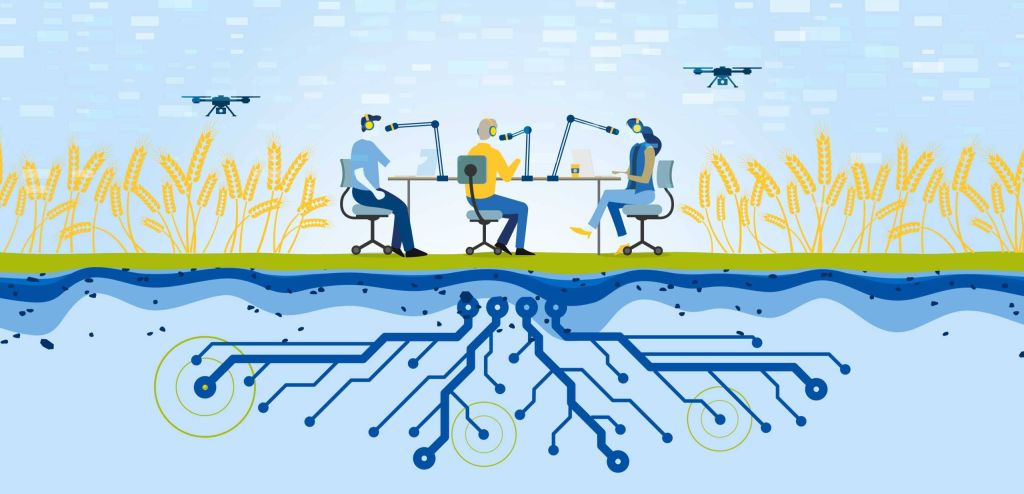
Speaker 1 [00:00:01] Hi. It’s John here. If you had to do a word cloud for 2022, I suspect talent and labor would somehow pop large. Everyone knows there are labor shortages out there, and every organization across Canada seems to be hunting for talent. And there are few avenues as promising for that as Canada’s international education system. I recently had the chance to sit down with Martin Basiri to talk about these things and more as part of the Business Higher Education Roundtable. That’s a group of business and post-secondary education leaders who are trying to build greater connections between employers and educators right across the country. Martin is co-founder and CEO of Kitchener, Ontario’s ApplyBoard. If you haven’t heard of a play board, it’s a great Canadian success story. It has an AI enabled software platform that lets students from around the world quickly identify and apply for university or college programs across North America, the UK and Australia. In seven years, Martin, who moved to Canada as a student from Iran, has grown apply board to more than 1500 employees and attracted more than $600 million in venture capital. In this special live edition of Disruptors. We tackle how Canada compares to other countries in building a pathway to citizenship for immigrants and especially those who come here as students, and how companies can do a better job of attracting and retaining this global talent. Martin is part of that story, so please have a listen. Martin, it’s great to be with you, as always. You helped us at RBC produce a report that was published a few weeks ago called Course Correction, that looked at the state of international students in Canada, not only from the perspective of the education system, but from the economy. I don’t think it’s widely known that about 20% of permanent residents now come through our school system, and that’s about double what it was a decade ago. This is 170,000 new Canadians a year are coming out of our post-secondary system. That’s extraordinary. It indexes even higher for STEM courses. So when we hear there’s demand for all sorts of STEM skills, it immediately points to the need for international students. You’re part of that story. Maybe you can just quickly kick us off with a sense of how you came to Canada as an international student. Speaker 2 [00:02:24] Yeah. Thank you very much for having me here, everyone. This is my pleasure. I came to this beautiful country about 12 years ago. I grew up in a I don’t call it poor, but lower middle class family in Iran, where my parents were educator. And I wanted to just code and build software and hardware, and it wasn’t that much opportunity there. And I was building as much and University of Waterloo, like Vivek is here today. It gave me my life. It gave me a scholarship to come to Canada. And I only paid for my ticket. And, you know, I sold my car and I had $6,000 in my pocket. I came to this beautiful country and my aunt came to pick me up. And when we came out of Pearson and we were going north to Richmond Hill, I fell in love with Canada. I love everything and I have two younger brothers that I help by raising them was, Oh, I have to bring them here too. So right there I started like looking for ways how I bring them. Now, the problem is I don’t have money. They don’t have a scholarship. They didn’t think I had a lot of inventions or stuff in my high school and my bachelor, but they were in high school and so I found this way of bringing them to Canada. It was very creative, very cheap, and I convinced my parents to sell all of the retirement homes, whatever they saved in the life, with the hope that, oh yeah, don’t worry, they’re going to find jobs here and I’ll, I’ll support them anyway. When they came to Canada, it took about a year and now everyone wanted to know, how did we do that? And they became customers. And coming from not having money, it was the best thing. We were like, okay, sure, I’ll charge you and I help you as well to pay for their tuition fee. And so I’ve done it a little bit. Then I graduated, went to us just for paperwork because I wanted to start a company. But as international students, when you graduate, you can’t start a company that you’re you have to work for someone else. And I was like, if I have to work for someone else instead of I stay in Canada, let’s go to us. It’s a, you know, so I went there. Then naturally I went back to entrepreneurship. Now I’m in U.S. is stuck. I can’t come to Canada. My brothers in Canada, no, they graduated from college. They can’t come to us. So we’re like, okay, what do we do? Events back to helping other students get started, apply work. And this time we were like, whatever we were doing, manually coded, recoded, and we put all of the admission information of universities and colleges in one algorithm, and it does something like a, like a book income. So it just comes out. For example, I’m from Nigeria, this is my credential and it is how much money I have. I want to study business, maybe Saskatchewan, maybe for example, Windsor. It shows exactly what the university or college, what program they offer. But the deadline was a payment, everything. And they can apply to all of them with one application right now is also does it for US universities, Australian universities and UK universities. And it started working. Then the University of Waterloo again came to our rescue, helped us out. We gave us free office at Velocity. We’re very thankful for that and we stayed there 2015 for about a year. Then we became 20 people. They kick us off. So go graduates, go find your own office and then then apply. We’re like, we went and we it took four years to get to the point that we can raise institutional money. It was so hard. And then after that, life got a little easier for our money point of view, but harder from a responsibility point of view. So right now we help, I think, 425,000 students. So far, of course, not all of them are getting Visa for Canada, US, UK and Australia. We vote for about 90% of universities and colleges. So I think almost everyone except one university here we work with and is a very hard problem. Very challenging. Which is good because it’s always like some problem to solve. Speaker 1 [00:06:41] Is amazing story and congratulations on on your success although I think you’re just getting going. Remarkable. You’ve built in seven years. We wanted to have this conversation not only just to hear your story, but you’ve got a great window on what’s going on in the world and where international students are coming from, where they’re going, and what some of the challenges are in between as we come into a new school year in the fall. Now, what are you seeing out there in the world? Speaker 2 [00:07:09] So let’s look at Canada as a as a company. So we are only as good as our people. Our fertility rate is 1.47 means we are not replacing our population. We are in huge deficit for about 50 years and it’s just getting worse is not coming back up. So if you rely on immigration, normally we bring people in their thirties as a skilled immigrant, a better ways to bring people for international students when they come. And they they’re normally in their twenties. They adopted a country of ours. And by the way, they’re more likely to have children because they come at that earlier stage, which is good, because we want as a country to be sustainable. We don’t want to always rely on one generation immigrants. We want bring them earlier to be sustainable. So it’s an amazing fact. And also international students and work people who we bring with work, they’re double more productive to economy than a normal immigrant. So perfect. International student is what we have to like work. But what we need to do, we need to make our government, our job market and our universities all align. So we have to see what do we need in terms of different areas in labor market in, for example, 2030 and after then work backward universities teach those ones and government incentivized do the right incentivize. So what we see government done, beautiful government of Canada done beautiful. They came with this idea of what if we give every single international students postgraduate work permit three years. You started two year of college or two year of university. They give it to you, boom. And that’s why Canada became almost the first thing it was at the same time that in UK conservatives came. So Theresa may thank the UK numbers Australia. It was Indian government to start having tension with Australian governments. So the students start coming and then of a boom. It started from when Donald Trump got elected because everyone now we are the only country that everyone come. And Canada, we went to that beautiful growth. And then what happened is gentlemen from UK, which by the way is working with apply for right now George Johnson is a younger brother of Boris Johnson said oh let’s copy Canada so they have now for year for graduate or fair mate and UK start booming but what a what a very big difference. And then so UK it started going up from 2019. They achieved their 11 year target of 600,000 international students from 237,000 in less than three years during pandemic years. So to give you like she was talking about the time of visa right now an average visa has taken four months in Canada. The diversity of markets, six months. Think about if you want to show up in fall semester, you need to have your visa already for 1st of March university. Sometimes don’t even open their acceptance till then. How can you already applied? So what does it mean? Means uncertainty of visa, uncertainty of time. So what is happening right now? UK and Australia is cooking all of the best talents. So the top talents are not coming to Canada. So we should expect to see more suffering happening in U15. Speaker 1 [00:10:37] So we’re still getting the numbers in aggregate, but the quality is is changing. Speaker 2 [00:10:41] Quality changing and you will see more of a more shift. So right now, colleges are about 50% body of the all international students, universities are only 25%. You will see more of that going to the colleges. So more and more, we see universities come down, colleges go up, and the total, the quality also go down. Even though Canada is the cheapest among just four countries, we are the cheapest. We have the safest. But it is funny because we have this metric in Norway, all the universities, the colleges want diversity. And in India we have this pin drop area that they’re historically very tied with Canada and they always want to come together. And it’s unbelievable. Even from Punjab area, the top of the funnel is weakening. Even Panjab students who are, of course, in friends, family, everyone here in Canada, they don’t want to come here anymore. Why not? Because first four months wait for a visa, which means you already have loan or where your money is taught for months and months. Second, even the minister himself or the most expert Irctc members sit down here and you give them the best students they can say if these are students, get visa or not complete is objective. There is no rule. We sent to exact same students. Sisters. One girl. Grade 11, one grade 12. Going to the exact same high school, same. That same high school from Iran. One of them in four days got the visa. One of them is seven months, got rejection. Speaker 1 [00:12:17] Photos and to Canada. Speaker 2 [00:12:18] Yeah. So what does it mean? Is like one of them went to one office or the other one went to another officer. So when is unpredictable then? The visa rates are either 48% or if you are a top talent visa rate of your case, 99%. Visa rate of Canada is 48%. Why would you put your life and everything one year, one and half year of your life to maybe you come over there? And this is a stat that shocked everybody. 80% of the visas in UK are done under five days. 80%. We are average four months right now and the other 20%, you may say, okay, so the other 20%, how long does it take is an average 16 days. So they’re the this to this is 16 days. Speaker 1 [00:13:08] Or is this four months? Speaker 2 [00:13:09] So Australia now came they gave the visa fee their first. Even Western Australia government is incentivize recruiters in other countries they pay them commission to send them as students and they have the cheapest. UK is about 50% on average more expensive. Australia is about 70% more expensive. So people are going to more expensive destinations. And unfortunately what was our mode which took us. It got copied and they just made it better. You committed for years. Now Australia can with six years postgraduate work permit and said oh if you study a stem that I need or health care I give you six years. So now you are a student. You are comfortable as you can go anywhere in the world, no longer bored. You can go to UAE, you can go to a Singapore visa. The UAE right now is under 30 days there, like zero income tax. Come here. Why should you come to Canada, if you may, after a year and a half, you may at 48% get a visa. Speaker 1 [00:14:18] One of the challenges we may not appreciate in this country is that the past decade of international student flows is not going to be what the next decade looks like. We in Canada relied heavily on Chinese students and that worked very well. There was a system and culture that worked exceedingly well for a lot of Canadian schools, as well as the students gone, as you say now we’re heavily reliant on India as a primary source of students. That’s starting to face challenges. Do you want to share some insights into what you’re seeing from the Indian market? Speaker 2 [00:14:48] Yeah. And 23rd of September, the foreign minister, the foreign affairs minister of India issued an official notice that Canada is now no longer safe and they see hate and crime is exactly what happened 11 years ago. 50% of our total international students coming from India, we are too reliant on one country. And on top of that, 66% of colleges and universities and if you look at trends, is not like diversity to get better, diversity get worse. Two out of three students that go into our colleges can vanish and it it vanished in Australia. So here’s a difference between international students and something like banks or a SAS product. SAS product, you get someone, you have them for years to keep using your software. International students, you can be the top today every year you need to find newest do this next year all can go so our entire sector not only we didn’t build diversity right now UK if you relax there are international students and three years of pandemic when we went down and we still don’t know if we should give them online or offline, they went from 37,000 217,000 international students from India. As you guys know, China since 2017. Then Canada and China, they have tension is just on decline. You 15 going to hurt to the most because they’re especially non undergrad they rely on the Chinese students they priced it up so much that only Chinese and Korean, Japanese, all three of them vanished. The only other students that they were going was Saudi Arabia. That what happens with Saudi Arabia, that sector 90% vanished. 90% of US students vanished overnight. Speaker 1 [00:16:40] Many of these challenges are solvable. Let’s start with the the visa challenge, because in some ways this is what apply board solved for a similar challenge. It’s technology and and matching systems. What can we do quickly to reduce the visa stress? Speaker 2 [00:16:57] Put the responsibility on universities, colleges and the sector same way that works in UK and say that work in Australia. So what they do they say. University so right now so let’s say I’m a university I can give anyone a letter of acceptance. I don’t bear any responsibility. If they get my acceptance, they come and they don’t show up. In fact, majority of universities don’t even report to government if their student showed up or not. I don’t bear any responsibility for their students. Have money or not. Nothing because the government don’t ask them. Of course, no one take responsibility for something that they are not asked for. But let’s look at the UK and Australia. Universities are responsible to check so many things like financial interview with students, integrity of students, everything and government become like a randomly check a student and they say University, be careful, you should not have more than 10% rejection. You need to tell me every single semester if the students attending your school or not. Can you believe we have 330,000 students we bring to the country? No. University? No. How many students got their visa? How many students got visa with their acceptance? Nor the government know how many of this the students are actually studying. So the solution is what Minister Champagne said on the when we met said Don’t come to government with your problem, come, come to government. The solution is us. You and universities go to government said this is the solution. Please use it and let us take some of that burden from you because government right now they’re saying the reason that you have delay is there are so much of checks they have to do their fraud and we don’t have enough labor in place to do that. So that’s phase one just to solve to the problem. Speaker 1 [00:18:44] So let’s let the schools take responsibility for the students. Speaker 2 [00:18:47] Not only as schools, as schools, banks and private companies and all the middlemen, whoever is doing the test companies, the test of language like a tougher party. And it’s those companies that they administer this test. They have to take responsibility. Everyone makes them responsible. And it very simple, like, for example and by the way, we have all the technology for it in Canada. It’s funny like apply, but we are a Canadian company and we are like a product of this. We have the technology universities have the manpower universities already checking the transcript of the students why someone else should exactly do the same job, you know. Speaker 1 [00:19:25] So it sounds simple. Why? Why isn’t it happening? Speaker 2 [00:19:29] Maybe one is like, first, that shift of mindset of come to government, the solution of the problem. I think we as a sector, we are always like raising the problems we never got together of say, hey, let’s ten of us solve something and go. And it has worked before like we have done is here see I can they provided pilots that now is permanent. Right. So we know it’s possible. I think one of them is on us that we have to get united together and go. The other thing is on government, I think our government is our government is and they do have to like be more accessible to the sector to listen to them and provide things like during the pandemic, we see how much their delays cost. Our data shows that on average, around 30% of us students who are supposed to start fall semester, they didn’t get their visa. And I’m pretty sure all of you guys are have that problem 30%. And the funny is majority of universities and colleges try to say mandated I only going to do in-class not going to do it online and by September 1st 30% of us do the law show of what should we do okay online again and they have problem with the academy teachers and everything else. Speaker 1 [00:20:49] We’ve got just a couple of minutes left to if we can resolve these challenges and pain points. What are the bigger issues that Canada needs to think about in the decade ahead in terms of maintaining our leading position when it comes to international students? Speaker 2 [00:21:03] Yes, we need to align what business at the end of this story. As in Canada, we want top talent and as universities we want our alumni to be fine. Very successful drives right now. Great that we bring a lot of STEM students, but that’s not enough. Like we bring 52% of our students are studying business. They’re only 20% of the jobs are business. That sounds right. We need to create way more software developers and way less project management. I can’t call head of nursing of Ontario, but you guys can’t. We need to push them so you can have. Nursing student hundred 10,000 health care need right now in Canada 12% of job can you if we don’t have nurses, we’re going to die. If you go to a hospital, I go to a hospital. We’re going to solve this. And not only that. Also, we need to like push on blue collar workers. Now, you remember they’re talking about we don’t have truck drivers. We don’t have people like do piping hatchback has a huge shortage in things and colleges are perfectly established to to create trades. But trades, we are very behind. And I think Canada can be the leader on that. That’s second. Third. We should do what worked. We should be takes like for example if you go right now computer science you 15. We should give them six years postgraduate work permit. Why should we give them same advantage if they got a two year college of study, for example, business or their studies four or five years for computer science that we know the society need or nursing so we can incentivize them for Canada need. The good news is the three database that we’ve done that the study we know exactly with a very good accuracy what Canada needs in 2030 every year. So we know what is the need of Manitoba in 2030. These are the jobs so we can work backward. The schools in Manitoba teach this and then alumni become more successful. Speaker 1 [00:23:14] All of these challenges come down to information flows between students, educators, governments, employers. What’s just as we wrap up. What are the one or a couple of things that Canada can do to elevate our game in terms of sharing information and using technologies like you’re developing? Speaker 2 [00:23:33] I think our brand is everything we’ve seen on us. How brand is matter. So does it matter? You are the you could be the biggest economy in the world. If you feel if people feel unsafe or unwelcome, they don’t come. And we took advantage of during these years, all these talented people came to Canada. It was because us was unsafe or unwelcomed. The biggest asset of Canada is our brand for safety. So right now, when India last week said, oh, Canada is not safe for Indian students, very valid response. There was a couple of videos. They’re sending visuals right away. React to the students. The market can shift overnight. We should react. Is that. No, they’re welcome. And in fact, we want them here. They’re going to be CEOs of companies. They’re going to be the head of ITC of the companies. They’re going to be the nurses. They’re going to be successful people. We need to as a sector and this is not on government. I think it’s on us. Every of us have to take responsibility. And one other thing, if I add at the end of the story. What applied to exist for and what the universities and colleges exist for. We are all here to serve as students, to educate the board, and I think we have to understand international students is extremely lucrative business. But at the end of the story, it’s a business for educating the world. So if you have a greater responsibility to making sure every single of those students are successful in their lives. Speaker 1 [00:24:57] It’s a competitive in an increasingly competitive world, especially in in education. And Canada needs to be more ambitious. That’s one of the messages you’re saying and you. Martin, reflect that ambition. You’re a great Canadian story. But when Martin saw the ads, just to give you a sense of his ambition, when he saw the RBC boardroom, he said, I’m going to have a board table bigger than that, apply board. Speaker 2 [00:25:21] So you. Speaker 1 [00:25:24] May have a buyer. Speaker 2 [00:25:25] Hundred thousand to get through the fair. Speaker 1 [00:25:28] But that kind of ambition is great to see so alive and well in the country. Martin, thanks for being part of the conversation. Speaker 2 [00:25:36] Thank you for having me. Thank you. Thank you so much. Speaker 1 [00:25:43] That was Martin Basiri, co-founder and CEO of ApplyBoard. Thanks to Martin for sharing his inspiring story with our listeners. Stay tuned for our upcoming special three part series called The Growing Challenge. In it, we explore how Canada can lead the world in food production using cutting edge technologies, data systems and smart thinking to help feed a growing and divided world and do so sustainably. You won’t want to miss it. Until then, I’m John Stackhouse, and this is Disruptors, an RBC podcast. Talk to you soon. Speaker 3 [00:26:17] Disruptors, an RBC podcast is created by the RBC Thought Leadership Group and does not constitute a recommendation for any organization, product or service. It’s produced and recorded by JAR Audio. For more disruptors content, like or subscribe wherever you get your podcasts and visit rbc dot com, slash disruptors.
Summer bounties are hitting our dinner, picnic and BBQ tables and farmers are busy gearing up for another fall harvest season. But have you ever considered how much of the food we produce in Canada never even makes it to your plate? Or how much of the food on your plate goes into the green bin? This year on Disruptors, an RBC Podcast, we tackled the challenge of food waste in a special series called “The Growing Challenge: How Canada Can Lead the Next Green Revolution in Agriculture.” We’re showing good progress on limiting food spoilage and waste, but we can – and need to do – more.. Listen in as host John Stackhouse hears from a variety of experts including Meeru Dhalwala, author, chef, and the co-owner of Vij’s and Rangoli restaurants in Vancouver; Randy Huffman, the Chief Food Safety and Sustainability Officer at Maple Leaf Foods; Kevin Groh, Senior Vice President of Corporate Affairs at Loblaw Companies Limited; and Jeremy Lang, the founder and Vice-President of Sustainability at Pela Earth, the creator of a smart composting system called Lomi. Shownotes: To learn more about Meeru Dhalwala you can visit her Wikipedia page or follow her on Instagram at @meerudhalwala. Maple Leaf Foods has much more information about its sustainability goals on its website. Loblaw Companies Limited has details on its efforts to reduce waste in both the textiles and food industries. Click here to learn more about the Lomi smart composter, and here for information about Pela’s compostable phone cases. For more about BCG’s work on food systems and food security—follow this link. And for details on The Arrell Food Institute at the University of Guelph, please click here.
Speaker 1 [00:00:00] Hi. It’s John here. Speaker 2 [00:00:02] And it’s Theresa. Speaker 1 [00:00:03] Theresa? When I think back, way back to my childhood, there’s a saying I seem to remember hearing a lot, which was waste not want not. In fact, it seemed to be a daily message at the dinner table that scraps of food could be much better used elsewhere in the world if we kids didn’t appreciate them. Speaker 2 [00:00:22] Yeah. And I mean, the numbers are shocking, John. According to the Boston Consulting Group, about one third of the world’s food is lost or wasted every year. And the UN’s Food and Agriculture Organization estimates everything that’s lost or wasted is enough to feed one and a quarter billion hungry people each year. But before we go any further, it’s worth clarifying some terms. Food loss is something that happens at harvest or soon. After all, food waste happens after the food reaches retailers or consumers. And so if we eliminated both food loss and waste, so many hungry people would be fed, which is especially important given how many people are facing food insecurity. Speaker 1 [00:01:00] Plus, there’s a huge opportunity to reduce greenhouse gas emissions if we can reduce these totals because food loss and waste create 12 megatons of emissions every year across Canada, landfills are literally filling up with food. Metro Vancouver, to take just one example, estimates that up to 30% of the garbage sent to landfills is organic waste. Speaker 2 [00:01:21] Canada is among the worst countries on the planet when it comes to food waste. Not so fun. Fact Did you know that the average Canadian household throws out a staggering 79 kilograms per year? That’s compared to 59 kilos in the U.S., according to the UN’s Food Waste Index Report. But businesses have a part to play to. More than a quarter of all food waste comes from restaurants, while 13% comes from retailers. Speaker 1 [00:01:46] It’s a massive issue throughout the food system, but there are some elegant solutions emerging from the farmer’s field to the grocery store to our plates. And each of these solutions has the potential to reduce loss and waste and reduce harmful greenhouse gas emissions throughout the system. And that’s what’s on our table today. This is Disruptors, an RBC podcast. I’m John Stackhouse. Speaker 2 [00:02:17] And I am friend Theresa Do. Welcome to the final installment in a special three part series that we’re calling The Growing Challenge. And it we’re exploring how Canada can lead the world in clean, green agriculture using cutting edge technology, data systems and smart thinking to increase yields while reducing our environmental impact. Last week we talked about some of the technological solutions aimed at reducing emissions on Canada’s beef and dairy farms. But the issue of food waste and food loss is arguably an even bigger challenge to be solved. After all, the less we waste, the more resources we save, the fewer emissions we put into our atmosphere and the better able we are to feed a growing planet. In the first episode of this series, we introduced you to Sonja, who she’s a managing partner at Boston Consulting Group, who is investigating this vital question How can Canada produce more food while slashing GHG emissions in the process? As Sonja explains, the twin issues of food waste and food loss have to be central to that discussion. Food waste is something that actually happens all across the value chain, from everywhere, from production, all the way to the food that we waste at home. And that makes up about 10% or so of the agricultural emissions. Speaker 1 [00:03:36] That’s a significant number. But I also wanted to know how much food, waste and loss happens at each stage of the value chain, from producer to retailer to consumer. Speaker 2 [00:03:45] A good chunk of that comes from the on farm production. So what happens is farmers will actually grow food that is just not for whatever reason harvested or if it’s harvested, it may just not be brought to market. Then that happens for many reasons, including labor challenges. There may be fluctuations and variability in prices in the market, or there just may not be a market for the farmers to sell into. So it’s actually more cost effective for them to just leave the food there and there aren’t any penalties for doing so in terms of processing and manufacturing. Now mostly we’re pretty efficient at food processing, but there are byproducts of processing. So as we make food, things that come off that could potentially be leveraged because there’s still sort of food stock, but they may not be today. So that’s another source of waste. And then really the big chunk of waste. So, you know, close to 40% or so will be from sort of what we think of as restaurants, grocery stores, and then ultimately consumers at home. And that’s everything ranging from, you know, if you just think about the food that you’re leaving on your plate when you go out or when you’re at an event and there’s the buffet that set up, you know, not all of that food gets eaten. It gets thrown out to the food that just goes bad in our refrigerators because we bought too much or we didn’t get around to eating it. John This gets back to that saying you mentioned off the top waste not want not all that food we buy at the grocery store or in a restaurant that never gets eaten. And that 40% number that Sonia mentioned, it’s seared into the minds of many of those who work with food day in and day out. Like our next guest. Hi, Meeru Dalwala. I’m the co-owner and chef of Veggies Restaurant here in Vancouver as well. I am the founder of my Banbury Organic Baby Foods Meeru, along with her ex-husband Vikram, which runs one of Canada’s most acclaimed Indian restaurants. Mira is a child of immigrants, and her upbringing has shaped her entire attitude towards food waste. So Mom and Dad grew up in refugee camps in Old Delhi because of the war of partition, and so it was a little bit more direct for me growing up. We weren’t allowed to waste food. We could we could do a lot of other things. I remember I shoplifted once at the age of ten and I got in trouble for shoplifting. It was candy bars because we weren’t allowed to eat candy bars, but I got in less trouble for shoplifting. Then I would get in trouble for not finishing my dinner. This is super relatable as a child of refugees myself, not wanting to waste food is related to living with a scarcity mindset. You don’t waste food because you can’t afford to, and if you do, it means you’re depriving your family or your future self of nutrition, which risks your ability to survive another day. So I can very much understand why Mira takes the issue of food waste so seriously, as do many of the people she works with. We had a restaurant in Seattle called Shana Restaurant from December 2012, all the way through to 2015. And half of my kitchen staff I hired, they were refugees from Ethiopia and Eritrea, and the other half were new immigrants from India, all women on opening night. From my point of view, it was a fantastic evening. And then at around 12:30 a.m. I found my Ethiopian and Eritrean staff by the Compost and they were pulling out all this meat, all this meat going to the trash. And I said, It’s the compost. And they said, No, compost is trash. I don’t see any goats eating this right. We don’t see any cows eating this. They were tearfully indignant. Then I looked in it to. Well, there’s a lot of lamb popsicles in there. It was uneaten. I can’t even just jump in here. LAMB Popsicles are one of Mira and breadcrumbs, signature dishes, fresh cut racks of lamb with vinaigrette, cream sauce. That sounds so good. Honestly, finding those in a compost bean would seem like some kind of environmental food crime. And that’s when I looked at that and I thought, how must this look to people coming from? And we all know about the history of famine in Ethiopia and Eritrea. And I that’s when I thought, oh, this is just I’m so embarrassed at all levels. But at that point, I was more morally embarrassed for is now it’s not just about pointing your finger now. It’s just a logical climate change issue as well. Speaker 1 [00:08:09] That’s a profound story, Teresa. And being confronted with our own waste by people who have seen famine up close. It’s a real wake up call. Speaker 2 [00:08:17] Very true. So Muro says that she is very committed to reducing food waste and also to solving foods, climate challenges in terms of emissions. She thinks that part of the problem lies in the fact that consumers have trouble connecting the dots between food waste and climate change. It’s an out of sight, out of mind situation. Maybe it’s because we don’t see the visual of it getting wasted. Maybe because right now we’re not feeling the impact of food waste in terms of climate change. Maybe we just need it, for lack of a better phrase, thrown in our face. The obviousness of we’re thinking about how do we cut down our carbon footprint? But maybe food is so cheap that we’re not thinking about the fact that when you buy that steak or you’re buying that chicken in the store, a lot of fossil fuels have already gone into putting it there in the supermarket. The plastic wrap on the chicken is there, the raising of the chicken, the fertilizer, the feed, the pollution going into the river, transporting it. Then we’re purchasing that chicken. It sits in our full fridge and then we realize, Oh, the best before date was two days ago. Then we’re worried about getting food sick and then we actually toss the chicken. Speaker 1 [00:09:31] So maybe there are some ways to address that in the grocery store. Things like labeling the detail, the carbon footprint of that package of chicken breasts to use mirrors. Example, if you gave an indication of how far that chicken has traveled from farmer to grocer, it might help build awareness right at the point of sale. But how does that awareness then translate into the restaurant environment? How do you reduce waste there when the order of the day is giving customers what they want? Here’s Meru again. Speaker 2 [00:09:59] We restauranteurs. The smaller we are, the more efficient we tend to be with our money is tighter, right? The smaller you are, the less staff you have, the tighter you have to be. We’re pretty consistent at veggies, so that really helps the restaurant. When you are consistent, when you know, okay, we’re going to do approximately within $500 or within $1,000. We’re going to do this much business on a particular night. It’s a lot easier for us at the restaurant. We can choose what we want to purchase and get deliveries and things done. So on the back side of the kitchen, we have minimal, minimal food waste at the restaurants. Our food waste comes from the customer point of view. Now, that’s a hard one because in the past 15 years, maybe even 20 years, the U.S. and Canada, we’re competing with these big corporations, with all you can eat for 699. And people are expecting this bang for their buck when they go to the restaurant. And especially for us during tourist season in the summertime, there is this preconceived notion that Indian food is like an all you can eat buffet. That really resonates with me, John. Every time I travel, especially to the U.S., but really all across North America, I can’t help but notice how big portions have become. Speaker 1 [00:11:14] For some reason, many consumers have come to value quantity over quality. When it comes to dining out, it’s something Miro thinks about a lot. Speaker 2 [00:11:22] I have been working a lot in the past couple of years of trying to figure out how do I do it? That the customer is paying what the customer should pay for the food. But the food isn’t cheap enough subliminally to that customer that they have no problem leaving an entire lamb popsicle on their plate or asking for more naan and more rice and then just leaving that rice and not on the plate. We actually look at our compost every single night to determine, just to have a look at it and just say, okay, this is what customers today wasted. Speaker 1 [00:11:54] Have you tried scolding your customers the way your parents did? Speaker 2 [00:11:57] Well, Vikram is pretty good at that. Finish your plate. But customers don’t mind being teased about, you know, what they’re wearing. But morally, it’s hard to tease the customer. Speaker 1 [00:12:07] So instead of teasing or scolding customers, Mira and Vikram try to educate them about food waste for some of their charity fundraising dinners, for example. Mira uses ingredients from a nonprofit in Vancouver, the Food Starch Foundation. It collects so-called rescue food from local grocery stores and. Speaker 2 [00:12:23] At the very end when I announced that you just ate a meal prepared from rescued food and even rescued food. I don’t like that word because it has like some charitable component to it. You get very high quality food that grocery stores deemed not worthy to sell anymore because of this best before date or because it didn’t look the way a consumer wants it to look. And thankfully, I got it. I was able to host a fundraiser. You were able to experience what this food is. I mean, it’s great to see the look on their faces. Speaker 1 [00:12:59] I’ll bet they’re a little surprised, but also impressed. Emmy RU hopes it causes people to really think about their habits. Speaker 2 [00:13:05] We need to change our eating when we go to restaurants and we need to change our purchasing. When we go to the grocery stores, we need to become a little bit smarter and wiser about how we purchase food and our fears of getting sick. As Mira says, we need to change how we eat and go to restaurants, and we need to change how we shop when we go to grocery stores. But of course, there’s another critical player in this revolution, and that’s the producer who supplies those restaurants and stocks, those store shelves. Speaker 3 [00:13:35] I’m Randy Huffman and the chief food safety and sustainability officer at Maple Leaf Foods. Speaker 1 [00:13:40] Maple Leaf Foods is one of Canada’s largest and oldest food producers. Dating way back to 1927 and as a food producer. Maple Leaf knows full well that its activities have a significant carbon footprint. But Randy Huffman told us that Maple Leaf is also aiming to become, quote, the most sustainable protein company on earth. And a key ingredient in that plan is cutting its own food waste in half. Speaker 3 [00:14:03] Back in about 20 1415, we began to set long term environmental footprint goals focused on how our operations impact our utility usage, such as natural gas, electricity and water. But we also recognized the importance of food loss back in 2014, and we set a goal to reduce our impact, to reduce the amount of food loss and waste from our manufacturing system by 50% by 2025. That was a goal, we said, based on a baseline in 2016. Since 2016, we’ve accomplished a 36% reduction in food loss and waste in our system. So we’re on track to meet our target of a 50% reduction by 2025. We’ve got work to do, but we feel confident we’ll hit that. Speaker 1 [00:14:49] Of course, targets are great, but implementing those changes on a tight timeline is another matter. I asked Randy how he’s planning to achieve this audacious net zero goal, and specifically what role food waste plays in the effort. Speaker 3 [00:15:03] The products that we produce have a very defined shelf life, and depending on the category, it can be from, you know, a week or two of salable shelf life to several months. But in all cases there’s an end to the life of that product. So probably the most meaningful approaches that we can take to ensure that the product maintains its quality and maintains its quality characteristics and consumer acceptability throughout the shelf life have to do with improving our hygienic conditions in our facilities. So improving the microbiological status of foods that we produce. And we’ve made dramatic strides in that. Second, we packaging the technologies and the ways that we packaged foods today compared to five, ten, 20 years ago, is is dramatically improved. And so packaging can play a role in improving the quality of the product through the consumer’s use of that product. Speaker 2 [00:15:59] Essentially, he’s saying that quality foods, cleaner facilities and better packaging make food last longer. That all checks out because the longer food lasts, the less likely it is to get thrown out. But there must be some waste that occurs in other areas of Maple Leafs production process, right? Speaker 1 [00:16:15] There is. That’s why it’s often called shrinkage in the retail world. When something falls off a conveyor belt and onto the floor, for instance, it gets deemed unfit for human consumption. It has to be thrown out. But as Randy says, through regular food and waste audits at its plants, Maple Leaf has been able to tighten its production processes and reduce some of that shrinkage. Speaker 3 [00:16:35] Those audits continue every year, and they identify best practices or engineering changes that we can make to our equipment that reduce the amount of loss that occurs in the system that Maple Leaf Foods were big believers in. You manage what you measure. That that concept and principle helps us strive for improvements. One example that comes to mind is very simple mechanical approaches to preventing product from falling off of a conveyor. Let’s say once we started measuring this, it became more important to our teams. And then we began to address, well, how can we create that guarding on that conveyor to be more effective and not have that inch gap where food can fall through? Speaker 2 [00:17:21] One thing I thought was interesting in our conversation with Randy was how he highlighted generational changes in the reasons why food gets wasted. He says, For one thing, we’re much more conscientious these days about spoilage. Speaker 3 [00:17:33] In the past, food spoilage was a much larger contributor to waste, and my parents grew up in the Depression era. My dad on a dairy farm. And now when it comes to assessing whether or not deli meat is safe to consume, my mom, she would say, never eat slippery me how we think about freshness and shelf life and quality of food products today. I know many consumers are driven by what’s on the label, the use by date. In fact, our food systems have become so efficient at producing food that it has a long shelf life and it has technology over the course of history. Recent history has led to dramatic improvements in the life of the foods that we consume. Yet we still have a major problem. Speaker 1 [00:18:17] It’s an interesting observation, Teresa. In the past, food got wasted due to things like poor refrigeration or production processes. But back then, consumers valued food, especially during economic crises like the Great Depression, when there was so much scarcity. Canadians waste more than 50 million tons of food. Every year. This suggests that the source of the problem lies at least partly in the attitudes of consumers. Speaker 3 [00:18:40] I think prior generations, our parents generations were much more cognizant of the value of food and were less tolerant of approach we have today where, you know, there’s just not as much appreciation for the value of food and what goes into getting it to a consumer’s home. I think back in those days, people were much more aware of that and reducing food loss in the home. Speaker 2 [00:19:03] It’s true, although I do have to wonder about the impact inflation is having. Food may be relatively cheap compared to historical highs, but it’s getting more expensive by the day. Data released by Statistics Canada this fall suggests the price of food purchased from stores is now rising at its fastest pace since 1981, up more than 11% year over year. You have to think that maybe those increases will force consumers to be smarter about what they buy and don’t buy. And to that point, John, who better to ask than somebody from Canada’s top grocery chain? Stick around for that conversation and more right after this short break. You’re listening to Disruptors an RBC podcast. I’m Theresa Do. I’d like to share with you our latest Proof Point report from RBC Economics and thought leadership that dives into Canada’s provincial finances. All provinces from coast to coast have recently recorded surprisingly high revenues, thanks in part to elevated commodity prices and soaring inflation. But how long will this revenue windfall last? We predict that the looming economic downturn and higher interest rates will soon tip the scale for provincial governments. To learn more, visit RBC E-commerce Thought Leadership. Welcome back to the third and final episode in our special series on the future of Canadian Agriculture, The Growing Challenge. Today, we’re looking at the issue of food waste from several different perspectives, from the role played by consumers to producers to restaurateurs and retailers. We just heard from Randy Huffman of Maple Leaf Foods, who told us about how Canada’s leading food producer is reducing waste and loss throughout its production system, thanks to data driven decision making and cutting edge technology. But remember that stat Sonja, who from BCG shared with us that 40% of waste comes from a further down the food chain from restaurants, grocery stores and ultimately consumers at home. While this means that grocery stores in particular have a vital role to play in helping to move the needle. Speaker 3 [00:21:12] My name is Kevin Groh. I head up an area called Corporate Affairs for Loblaw Companies Ltd.. And Corporate Affairs is really the company’s relationship and communication with stakeholders right across the spectrum. So from the people we work with, to the folks in our stores, to suppliers, governments, communities, and that’s an increasingly tightly connected activity to the things we’re doing around the environment, fighting climate change and also priorities around advancing social equity. Speaker 1 [00:21:43] Kevin says grocery stores are in a unique position to gauge changing consumer choices about climate change and sustainability. Everything from how we shop, whether it’s in-store or online to what we buy organic vegan, gluten free meat or dairy to how those items are sourced are all part of the food shopping equation. As the Loblaw Group of companies moves to become a net zero operation. Kevin says they’re looking at the many ways they can reduce waste in stores and throughout the supply chain. Speaker 3 [00:22:12] As we look at our company purpose. We talk about helping Canadians live life well. And it’s really evident how you might do that if you’re Loblaw and you operate the largest chain of both corporately owned and independent grocery stores across Canada and also the Shoppers Drug Mart chain. So we came up with five crisp commitments. One is to fight climate change and the other is to advance social equity. And beneath those are really specific goals and activities around. On the climate side, bringing our carbon footprint to zero, getting to net zero greenhouse gas emissions position and then food waste are. Our goal is really simple, which is we want to send zero food waste to landfill by 2030 and all of those things we believe link back to helping Canadians live life well. The interesting thing is many of them intersect. So if you look at carbon, for instance, we want to have a net zero carbon footprint within. That is certainly going to be consideration of food waste and the negative impact that food waste going to landfill has on the environment. Similarly, on some of the commitments we’ve made around social interests, namely the health and wellness of families, there is a very direct connection between food waste and that category of social equity, which is think it’s morally offensive that businesses or people are throwing out food that can be otherwise consumed, particularly when we have levels of food insecurity like we do in Canada. Speaker 2 [00:23:41] That last point. Food insecurity is a really important one, John. When we talked with Sonja from BCG, she told us a shocking fact. Nearly 16% of households in Canada were food insecure in 2021. That means that nearly one in six Canadians doesn’t have access to enough safe and nutritious food to meet their daily needs. And the soaring cost of food isn’t helping. But Kevin says a food waste for grocers is also a sign of a business that’s not running particularly well. Speaker 3 [00:24:12] I guess if you look at food waste, fundamentally, you could almost say that that the existence of food waste is a business failure for a grocer. So if you talk to ten grocers about the idea of food waste, most of them will start with the statement, something like, you know, we’re in the business of selling food, not throwing it out. Many years ago, we met internally and actually met with others in the industry to wrestle the challenge of food waste and the fact that, you know, it’s not only morally objectionable, but from a business perspective, the less food waste we create, the better our business is running. And in those conversations, we took a baseline of our food waste from 2016 and said that we would cut it in half by 2025. And we came out of the gates really, really strong. And within a matter of a couple of years, I think we had cut our food waste by about 75% in our corporate stores. Those are the ones we effectively own and operate that aren’t independently run. And it was a really great achievement. And it it sort of gave us the ambition of saying, you know what, we’re going to up the goal and we’re going to say by 2030, we will be sending no food waste to landfill. Speaker 1 [00:25:19] And that’s where innovation comes into play. Loblaw has partnered with a wide variety of startups delivering tech solutions. To the food waste challenge and to research. There are innovations that provide benefits to the environment and substantial savings to consumers. Speaker 3 [00:25:33] One of the innovations we’ve been looking at and have actually tested with great success is Flash Foods, and that’s an app based program that actually gives people access to food in our store at discounts as great as 50%. And the selection of those items really has to do with an algorithm that assesses whether we have ordered too much of something and the likelihood that that product will sell by its best before date. And as items sort of approach their best before date, but are still very safe and healthy to eat, they’re made available at deep discounts. And we found that it’s an interesting microcosm of the bigger challenge, which is we don’t want to create food waste. Ideally, the things on our shelves we’d like to sell and not throw away. And people are very inspired by discounts. Speaker 2 [00:26:22] I get that. I mean, who doesn’t appreciate a good deal? Right. Speaker 3 [00:26:26] And I think when you look at the issues behind food waste, whether it’s the negative business implication of throwing out food or the negative social implication of throwing out food, flush foods has been a bit of a sweet spot solution that checks a lot of those boxes. Speaker 1 [00:26:42] Flashfood was introduced in more than 500 Loblaw stores, resulting in the elimination of more than 5 million kilos of potential food waste in 2020. So some pretty significant savings there, but the benefits are also being seen up and down Loblaws supply chain. Speaker 2 [00:26:58] Kevin told us the company is working with growers to help market imperfect produce to consumers. You’ll remember hearing about that concept of rescued food from Marion’s Alala so it’s a similar idea at Loblaw. The company is taking fruits and veggies that might not fetch a full price and giving them a new lease on life. Speaker 3 [00:27:16] We’ve actually packaged it up to say, Yeah, this potato looks a little strange, but it’s perfectly edible and healthy and we’ve packaged that under the no name naturally imperfect line. So there’s a there’s an effort there to just think slightly differently, both at the at the brand level, but also at the consumer level to capture what otherwise might become waste or in another part of the country. We’ve been partnering with a group called Loop Resources to literally collect our food waste and take it and turn it into animal feed for local farms. So there are there are ways to address the challenge and where food waste is inevitable, we’re working to make sure that it’s not inevitably the landfill. The other areas that we’ve worked on include Zoo Share, which is a partnership with the Toronto Zoo to take our food waste and their anim on manure, combine it into a biogas that is renewable energy fed directly into the grid. Speaker 1 [00:28:11] Theresa We’re hearing this again and again about biogas and the opportunities throughout the food system to turn waste into energy. Speaker 2 [00:28:19] It really gets back to that idea of a circular economy, John, where surplus food or waste from farms, grocers and wholesalers is finding new purpose while helping to reduce harmful emissions. And that commitment to a circular economy is something that consumers can also tackle in their own homes. You don’t have to wait for your favorite retailer or restaurant to take that action, as our next guest proves. Speaker 3 [00:28:41] Hi, I’m Jeremy Lang. I’m the founder of Pila and we are working on creating a waste free future. So we do it by creating everyday products or everyday waste, and our goal is to eliminate £10 billion of waste. And we started with plastic waste and now we’re working on food waste to help keep food waste out of the landfill and get it back to the soil where it belongs. Speaker 2 [00:29:00] Sheila produces a smart countertop, composter called Lomi. It holds about four liters of waste and takes between three and 15 hours to break it down, depending on the type of material that’s compared to the weeks or months it takes. Conventional composter. Jeremy says the need for his product was obvious because our landfills just aren’t meant to handle the millions of tons of organic waste they get every year. Speaker 3 [00:29:23] When plants and animals die, they’re supposed to go back to the earth. When we send them to a landfill, they biodegrade anaerobic with no air and they create methane, which is way worse than CO2. Food waste rotting in landfill creates roughly seven or 8% of all greenhouse gas emissions. So it’s a big problem to solve. So anything that we can do to help nature get that food waste, keep it out of the landfill and put it back into the soil so it helps to create healthy topsoil, which helps to grow healthy plants. And it’s like nature’s fertilizer, the end product. You can sprinkle in your garden and you can sprinkle on your lawn. You can avoid the compost facility altogether and go directly into the soil. We’re saving emissions by preventing that greenhouse gas emission, by preventing and are avoiding the landfill, avoiding that food waste from rotting landfill, and by creating healthy topsoil, which helps to sequester carbon from the atmosphere. Speaker 1 [00:30:14] It sounds like a great consumer oriented innovation. Theresa And according to Jeremy, more than 100,000 households are now using Lumi to reduce their food waste. Speaker 2 [00:30:23] That’s quite impressive. John, I can’t believe we’ve reached the end of this series. We’ve covered so much ground, and yet there’s still so much more to say. When I think about that big number that more than a third of the world’s food is lost or wasted every year, it really strikes a chord with me. Reducing waste seems like low hanging fruit, to use another food pun in our battle to get more food into the hands of those who need it and to keep our greenhouse gas emissions in check. Speaker 1 [00:30:54] But before we wrap up, Teresa, I’d love to hear your thoughts on everything we’ve learned in the series. Speaker 2 [00:30:58] There’s a lot to digest here, John, but what stands out to me the most is how incredibly high tech agriculture is, which of course, is evidence everybody working in the space and not that much to those outside of it, like I was until I started doing research on it. And we were only able to touch a little bit on this in a previous episode. But the future of food is unreal. Lab grown meats, cheeses, even chocolate one day could be available at a restaurant or bodega near you. Not to mention the vertical farms that are already offering fresher local microgreens at the grocery store. It makes me feel like we can really transform how we produce and consume food to be way more climate conscious and meaningfully reduce our emissions. What about you? Speaker 1 [00:31:43] I keep thinking about change, and if we’re going to tackle climate change, we all have to think about how to change the way we produce food, the way we transport food, the way we consume food, and how we can better preserve food. Fortunately, there are technologies emerging in all sorts of fascinating ways. I think about how the past decade of innovation or a couple of decades really has been rooted in software and how much innovation in the decade ahead is going to be based on hardware, especially in the ag and food sector, where we’re going to need new machines, tools, devices to transform and change all that we do with food. And that’s what Canadians for generations have been great at. So for Canada, it’s game on. Speaker 2 [00:32:28] And just to cap off with the focus of today’s episode, I think about food waste or rather not wasting food a lot in my daily life. It’s fascinating to me that food waste is both one of the easiest aspects of emissions to address because it’s directly under our control and also one of the hardest, because it’s about changing our behavior and our attitudes, which are very sticky. Speaker 1 [00:32:49] Absolutely. We love on this podcast to talk about technology, but technology doesn’t matter if we don’t think a lot harder about all of our own behaviors. Speaker 2 [00:32:58] So we’d like to offer a huge thanks to all our guests for sharing their insights with us. We hope you’ve enjoyed listening to the series as much as we’ve enjoyed putting it together. And if you’d like to revisit some of our past episodes or you just want to keep the conversation going, visit RBC dot com slash thought leadership. Until next time. I’m Theresa Do. Speaker 1 [00:33:18] And I’m John Stackhouse. This is Disruptors, an RBC podcast. Talk to you soon. Speaker 2 [00:33:27] Disruptors, an RBC podcast is created by the RBC Thought Leadership Group and does not constitute a recommendation for any organization, product or service. It’s produced and recorded by Jar Audio. For more disruptors content, like or subscribe wherever you get your podcasts and visit rbc dot com, slash disruptors.
As another wildfire season blankets Canada and the U.S. with smoke, air quality is worsening, and the summers are only getting hotter. Some of Canada’s most populous cities even topped the rankings when it comes to the worst air quality on the planet. That’s why we’re highlighting an important episode from Disruptors, an RBC Podcast, focused on spending on climate action. August 16th marks exactly one year since President Joe Biden signed into law the almost $370-billion Inflation Reduction Act — the country’s largest ever investment in green technology. But how and where can that money be spent for maximum impact? And what should Canada do now that its own coffers have been topped up thanks to the 2023 Federal Budget? Listen in as host John Stackhouse chats with two leaders who are collectively responsible for investing billions of dollars in green tech; Dr. Andrew Steer, President and CEO of the Bezos Earth Fund, and Eli Aheto, a Managing Director at BeyondNetZero, a new climate venture from General Atlantic. It’s a fascinating conversation that’s only becoming more relevant with record heat temperatures being set by the day. Shownotes: For more information on the Bezos Earth Fund, visit their site. More information on BeyondNetZero can be found here.
Speaker 1 [00:00:01] Hi, it’s John here. Happy New Year and welcome back. We’ve been warned for years that the point of no return is coming. Sea levels are rising. The Earth is warming. We’ve seen thawing permafrost and large scale die offs in coral reefs. And even parts of the Amazon are experiencing increased episodes of drought. Okay. That’s a lot of despair. But guess what? There’s also hope. We know the problem. And more than ever, we know a lot of the solutions. Critical policies are actually in place and a very key element. Money is on the table to fund innovative technologies that can change our world. The US is making its largest investment ever. The European Commission has pledged to mobilize at least €1,000,000,000,000 in sustainable investments over the next ten years, and Canada is ponying up, signaling the next federal budget, along with commitments from key provinces, could set the course of public spending on climate for years to come. But it’s not enough. Now it’s time for the private sector to put those billions of dollars to work and add many billions more. The future is here. The question is how can we disrupt it before it disrupts us? This is Disruptors. An RBC podcast. I’m John Stackhouse. Today, I’ll be speaking with two people who decide how billions of dollars are invested in green tech. I’ll be joined by Elliot haTO, a managing director at Beyond Net Zero, a global growth equity firm with $73 billion under management. But first, I’d like to introduce Dr. Andrew Steer. Andrew is the president and CEO of the Bezos Earth Fund, created by Jeff Bezos in 2020. It has $10 billion that has to be disbursed as grants to address climate and nature within the current decade. Andrew, welcome to Disruptors. Speaker 2 [00:02:07] Thank you very much, John. Speaker 1 [00:02:08] I want to start with the Bezos Earth Fund. What is it? And maybe give us a sense of the vision behind it? Speaker 2 [00:02:14] Well, Jeff Bezos allocated $10 billion to be spent down this decisive decade on the challenges of climate change and nature. And so it’s an exciting venture. It sounds like a lot of money and it is a lot of money. But actually, compared to the need, of course, it needs to be leveraged so that we can get real change because this is the decade that will determine whether or not we succeed or fail. Speaker 1 [00:02:43] So is it that critical that those sorts of investments, that scale of investment be made this decade? Because if it’s made a decade hence, it’s too late? Speaker 2 [00:02:53] Well, next decade will also be critical. The problem is, if we don’t do it right this decade, it will be impossible to do next decade. So that’s why this decade is is really absolutely critical. We we simply have to get down to net zero. When we talk about climate change and we simply must reduce the incredible loss of nature which is going on at the moment because these two problems multiply themselves and we’re heading to a bad place. We live in this highly paradoxical world, don’t we? We have never had the progress. You know, the average person today lives 20 years longer than when I was born. Poverty has fallen from 80% of the world’s population to less than 10% of the world’s population. Amazing achievements. But the price we’ve paid has simply been too high in terms of losing species, losing natural habitats, polluting the atmosphere. And we can do better. Speaker 1 [00:03:56] And Jeff Bezos, I mean, he’s celebrated widely for a level of thinking and ambition that is all too rare in this world. Can you give us a bit more sense of how that ambition applies to climate work? Speaker 2 [00:04:08] Well, I mean, it is wonderful, isn’t it, that wealthy people decide to give back. And it’s wonderful how a growing number of high net worth individuals are seeing these big problems that are needing to be addressed. And Jeff Bezos himself obviously has a way of thinking. I mean, he is somebody who has taken on problems that at times seem impossible and systematically gone about addressing them so that we now have the ability to do things that we couldn’t do before, having really transformed entire industries. And so bringing that mindset to these incredibly, you could say, wicked problems, solving climate change is the greatest collective action problem, as many have said sort of in the history of the world. It’s got everything that makes it difficult. It’s got into temporal inequities, it’s got current inequities, it’s got deep moral issues, it’s got massive technological issues, it’s got complex financial issues, and it’s got huge political questions that need to be resolved and all of that kind of free rider problems that we know about. And so, my goodness me, we need the best brains as well as the best money to address these issues. Speaker 1 [00:05:27] But I guess in some ways you’re not solving that problem. Jeff isn’t solving that problem. You’re trying to find support, invest in the many folks out there who are developing the ideas and solutions. And I’m curious what kind of mindset you strive to bring to that. You know, I’ve heard the fund described as one that supports ideas and not just projects. That’s got an appeal. Not always easy to invest in ideas on, unfortunately, but it probably takes a different approach than building a company or running a project. Can you give us a bit of insight into what kind of thinking you and your team tries to bring to the challenge? Speaker 2 [00:06:03] Well, we try to identify and monitor the roughly 50 to 70 major transitions that are required this decade and next. You know, the big blocks of we’ve got to totally transform energy. We’ve got to rethink our food system. We’ve got to think about forests. We’ve got to think about our cities. Within each of those, there are five or six transitions, which in and of themselves are pretty major. We’ve got to get. Rid of the internal combustion engine. We’ve got to shift diets towards more plant based. We’ve got to do about 50 things of that level. And what we do is we co-manage with the World Resources Institute and some others something we call the System Change Lab. And what we do with those, we monitor those 50 to 70. And we ask the question, how close are they to tipping points beyond which change becomes irresistible and unstoppable? And what are the barriers to get there? Our job is to be pretty forensic about where we go in using both money and convening power and influence Power. It could be to finance primary research. It could be to finance political advocacy. It depends on the issue, and it depends upon precisely where they are in that trajectory towards a positive tipping point. So when you mentioned we like to address ideas, this is again, is something that Jeff Bezos, you know, will say let’s not allocate funds in our efforts to issues or even to targets. Let’s allocate them to ideas that will get to those targets, that will address those issues. Speaker 1 [00:07:46] And the ethos of the fund, primarily one of technology. That technology can and will solve this. Or do you believe that we also need culture change, behavior change, even social change, and not rely on those magic bullets of technology? Speaker 2 [00:08:02] We absolutely and utterly require cutting edge technology and behavioral change. And indeed, as we move forward towards the end of the 2020s into the 2030s, behavioral change is going to become more important is probable that people in Canada and certainly in the United Kingdom, where I come from originally, we have reduced our greenhouse gases quite a lot. The average citizen has no idea it’s happened because they haven’t had to change their behavior. As we move forward, we are actually going to have to change our behavior. Now, technology is still incredibly important and we couldn’t have a chance of addressing climate change. You know, if you look at the cost of, say, solar energy, I mean, since Jimmy Carter put solar panels on the roof of the White House in 1979, the price of solar has fallen by 99.6%. So there’s actually been a wonderful revolution that’s intellectual and economic. I mean, even ten years ago, the entire economics profession felt that, my goodness me, it would be nice to do something about climate change, but we’re going to have to pay a cost in terms of lost competitiveness, lost economic growth. And now because of cost changes, because of technology changes, because we’ve learned about what policies work. It now turns out that actually smart, strong climate action leads to more economic efficiency. It drives new technologies, it opens new opportunities, it shifts expectations. So there is a much better future. So you get more competitiveness and you can get more growth. Now, we don’t want to be Panglossian about this. It’s not all win win. There are losers. And that’s where politics comes in. Speaker 1 [00:10:00] Well, exactly. This is political and I mean that in a positive way because it’s about collective decision making, which is reflected in in our politics when we do it well. But we don’t do politics very well in many countries. How are you thinking about systems change in the political arena or the collective decision making arena that can perhaps accelerate some of the other investments that you’re making? Speaker 2 [00:10:25] Well, I mean, this is a very difficult issue. We’ve certainly put quite a bit of resources already into communications. Last year, we invested quite a bit here in the United States trying to clarify the narrative about good climate action leads to a good, better economy. And we we invested in targeted messaging through various media, television, social media, basically bringing data, bringing the data and evidence and bringing human stories as to what works. I think generally the environmental movement has been trumped by more sophisticated communications and political skills from the opposition. Speaker 1 [00:11:16] I want to shift to the idea of of of leverage. People will hear that you are investing $1,000,000,000 a year and think that’s a large amount of money. And of course it’s a huge amount of money. But the need out there for the transition is going to be kind of in the 5 to $10 trillion a year range globally. That’s how much capital needs to be invested. So we all need to be thinking more about leverage. And I’m curious what you’re seeing and learning about leverage in your own climate work. Speaker 2 [00:11:45] Well, most philanthropy has been unleveraged, so a dollar into good health gives a dollar of good output. In good health. You know, you build a hospital, you build a school, you build whatever. Unfortunately, because the problems are so great, we need to do better than that. Now, you can leverage in several ways. You can leverage through de-risking private investment. And obviously the Royal Bank of Canada has done incredible work on that. Many investments in sustainable development need some de-risking. One could do that very directly, but one also can, if you like, do the policy side, which is also leverage. I mean, in many ways that’s the most effective leverage of all if one invests in reshaping policy. So what we try and do for every single investment we ask, well, if you like the direct impact and then what’s the second order impact that would encourage others to do it? And another I mean, another form of leverage is simply doing something that is so successful that then through the right kind of communication, it can then become irresistible. So we’re experimenting with all kinds of ways of doing it. So as an example, last year we really wanted to take on the most difficult issue of protection or conservation that exists, which is the Congo Basin, which is, you know, unbelievably precious. It absorbs more carbon than the Amazon Basin and the Southeast Asia tropical forests combined, and yet it’s under massive threat. And obviously there are all kinds of governance issues. So we gave funding to about ten different world class organizations and we said, look, the deal is each of you are very, very good at certain things. Your job is to work on those and be accountable to to us for what you do. But in addition to that, for the first time ever, let’s work as a team together. So if you’ve got the CEOs of ten internationally recognized organizations together with ourselves, then suddenly you get some European governments that say, actually, we’d be like to be part of this. And then you can go and see any head of state in the Congo basin that you want and you start sort of thinking differently about, my goodness me, if we only we could get the the head of the office, the head of the country all the way down and have something joined up, my word, that could be real leverage. Speaker 1 [00:14:20] But that spirit of collaboration is really at the heart of leverage. Leverage isn’t just a financial equation. It’s about bringing together different forces and empowering them, but also using them together to do things that none could do on their own. And it makes me think of the Electric School Bus initiative, which I wanted to ask you about, because that’s a it’s a really neat and ambitious project aimed at decarbonizing the entire U.S. school bus fleet. Curious how you see it as a template for more collaboration, especially between public and philanthropic forces? Speaker 2 [00:14:51] You’re absolutely right what you just said, John. I think I mean, if you look at almost any of the problems that we’re trying to deal with, there’s no one organization. There’s not even one group of organizations. It’s basically a sort of multi-stakeholder solution. And you need governments and you need, you know, NGOs, you need citizen group, corporate sector and so on. And actually the school bus situation in the United States, a very good example of that. There are 480,000 school busses in the United States. If you are a poor child from a poor county going to school in a bus in this country, because remember, schooling is a county level responsibility, you breathe air from diesel fumes. That is basically like being on the street in New Delhi. I mean, it’s really bad for health. So this has a social justice element to it, a health element. And this is one of the very first conversations that I have had with Jeff Bezos and Lauren Sanchez about when I was in my old job. And it was like, wouldn’t it be exciting if we could do something that would have a health benefit? But not only that, it would have a climate benefit, it would have an intergenerational benefit. It would it would actually also help create an industry in this country, because 96% of all the electric busses in the world were built in China. And then on top of that, by the way, during those long, hot summer months while school busses just sit there, they actually don’t sit there if they’re electric because they become a giant battery. And because 480,000 batteries, when you take electricity off the grid, when it’s cheap and plentiful, you put it back on the grid when it’s not, my goodness me, that saves dozens of power plants being built. But you can only then do it if the state level gets engaged, the school districts get engaged, the industrial and financial sector gets engaged. And so what we did, we worked on legislation and now there are, what, $12 billion that’s been put into this, something like that through the new Biden administration. And little by little, you start seeing, my goodness me, we could put this jigsaw puzzle together. Not us. I mean, you said earlier we don’t take any particular credit for this, although I think we’ve played a very good role. We’re part of, if you like, making sure that the pieces of the jigsaw puzzle sort of come together at the right time in the right kind of way. Speaker 1 [00:17:24] This point about multiple benefits from multiple our allies is really critical and often lost on climate policy, where many people, for understandable reasons, see the objective as critical enough on its own to be the only ROI, if you will. That’s important, but that’s not necessarily the case for all sorts of people in society who have multiple needs. And the more that policies and investments can help address those multiple needs rather than be a kind of a single solution oriented one, probably the better we all are. And I’ve been seeing more of this in the biodiversity space, and I raise that because our last episode of 2022 was on biodiversity, and you and I met for the first time at the Montreal Biodiversity Conference and it was there that I got to more deeply appreciate the intersection of climate change and biodiversity and how they both lead to benefits in each realm and are interconnected in all sorts of ways. And I’m curious, Andrew, how you see those two challenges intersecting and how we can do more. Speaker 2 [00:18:28] Well, you’re absolutely right. And by the way, your podcast edition on that was wonderful. I think that conference in Montreal was extremely important and I think combining that with COP26 in Glasgow, which for the first time sort of recognized we can’t solve climate change unless you also protect nature because it’s there’s more than one third of the solution. And the same goes the other way round. You can’t protect nature unless we address climate change, because with the way that climate change is going, we are losing nature at an even more rapid rate. And it’s really been wonderful to see just in the last 18 months culminating in in Montreal, we’ve seen this sort of willingness to think of these two as integrated. And your points about, you know, multiple benefits are incredibly important. You know, they call them co-benefits. And in many parts of the world, you know, if we want to deal with climate change, you know, don’t enter the policy door through the climate change door, enter it through health or entry through nature. Speaker 1 [00:19:32] We’re sort of time, unfortunately. But I also was just reflecting we’re still in the early days of January, and therefore I want to seize on the New Year spirit to ask you, as you look through 2023, what your maybe greatest hope is for the year and also what your greatest fear is. Speaker 2 [00:19:50] Well, look, this is a year where things are going to need to start improving. We got data just today on greenhouse gas emissions in the United States. Greenhouse gas emissions went up last year and things need to change. I am deeply hopeful that actions that may take a year or two to have bite, they are going to start having impact this year. I think some of the decisions made in Glasgow and in Sharm el Sheikh will start to bear fruit in the United States. Obviously with the additional funds that are being put forward. I mean, historically important. We are going to start seeing some progress. But look, we are in a hugely uphill battle. We’re in this paradoxical world where, if you ask two experts say on climate change, you say, how are we doing? And one will say, it’s amazing. You know, costs have come down 99%. We’re doing this. It’s really great. Others who say, you know, we’re a bunch of lemmings going off a cliff the end times and which how could they both be, right? Well, they actually are both right. They are both right. We are doing better and better than we are dog chasing a bus and the dog is going faster and faster. And we are saying we are running so fast is great, but the bus is accelerating away and so the dog can’t keep running faster. The dog has to get its own electric bike. You know, we need a new instrument. And I’ve got a feeling that we’re getting towards the stage where. Will accept that fact. Speaker 1 [00:21:17] What do you think those dogs need to do in 2023, above all else? Speaker 2 [00:21:21] We need once and for all to recognize that no individual government or even government can solve the problem. We need to sit down around the table and we need to get the real decision makers to say, okay, if the issue is electrification of transportation, what do we need to do? How do we how do we have a rational conversation? It can’t simply be preaching. It’s got to be a multi-stakeholder approach. And I hope and pray that we’re heading towards that kind of new it’s really a new governance system. And I think there are signs of hope. But, you know, there’s still a far, far more risks than most people are aware of. Speaker 1 [00:22:08] In a site governance system going to have to come from government or from collectives of government like the U.N., or is it going to come from philanthropists, private actors, business and other coalitions? Speaker 2 [00:22:20] I think it’s already starting to change. I mean, it is quite interesting that if you go to the United Nations General Assembly now, you’ll see a much, much richer approach. You’ll see young people. You see businesspeople. Governments have to accept it. But often governments, you know, don’t always lead. They are responsive. And so the business community, I mean, it’s albeit difficult, it is stunning when you think about it that now $130 trillion of assets under management are now committed to net zero. That would have been unthinkable. Now it’s very, very difficult to implement it. And there’s some rocky things going through right now, but we now need to come through that and say, look, you know, we know it’s difficult, but now let’s really redouble our efforts. And I’ve got a feeling that that’s happening. And, you know, I don’t want to flatter your country, but I do think actually some pretty exciting things going on in Canada right now. Speaker 1 [00:23:20] What excites you most in terms of what’s happening in Canada? Speaker 2 [00:23:22] Well, I think, for example, on the nature side, the announcement that Canada made on massive new protected areas, I think anywhere in history on the first day of the COP and led by First nations, very, very exciting. I mean, talk about multi-stakeholder. I mean, so interesting seeing First Nations seizing and being given authority to manage natural resources, which they are very good at, at managing. That would be just one example. Speaker 1 [00:23:58] It’s those coalitions likely and unlikely that are keeping us moving forward as bumpy as rocky as that road can be. And I’m grateful that the Bezos Earth Fund is leading a lot of those coalitions. Andrew, And that you’re you’re a champion of so many. Thank you so much for being on disruptors. Speaker 2 [00:24:15] Thank you, John. We love listening to your podcasts. Speaker 1 [00:24:19] That was Dr. Andrew Steer, president and CEO of the $10 Billion Bezos Earth Fund. Up next, Ellia haTO will join us to talk about how massive investments in technology are changing the fight against climate change. Speaker 3 [00:24:37] RBC Tech for Nature. Is there a $100 million by 2025 multi-year commitment to accelerate tech based solutions that help preserve the world’s greatest wealth, our natural ecosystem? We work with partners to leverage technology and innovation capabilities to help solve pressing environmental challenges. This program is a key element of how we are delivering on our climate strategy. The RBC Climate Blueprint RBC Tech for Nature is now accepting funding applications until February six. Apply now to partner with us and create a more sustainable future. Visit RBC dot com slash tech furniture for more information. Speaker 1 [00:25:12] Welcome back. Today, we’re talking about how Canada can emulate the most comprehensive climate law in American history, the Inflation Reduction Act, or IRA. Our next guest is Eli Aheto. He’s the managing director of Beyond Net Zero, a global growth equity firm that invests in companies to develop innovative climate solutions. Eli, welcome to Disruptors. Speaker 4 [00:25:34] John Thank you so much for having me. It’s a pleasure to be with you. Speaker 1 [00:25:37] I want to start with Beyond Net Zero, and if you could give our listeners some background on what it is and what it’s all about. Speaker 4 [00:25:44] Sure. Beyond Net Zero is the climate investing team at General Atlantic. I think folks may recognize General Atlantic as a 40 year old global growth equity firm. We’ve been investing in leading businesses in digital sectors for most of our history. And the climate initiative is one that’s fairly new in the last two years. But we recognize it as one of the most consequential opportunities in business today and also one of the most consequential opportunities in society. And so we think that there is a significant need for capital to help drive the growth of businesses that are putting out products and services that help people decarbonize either their operations, their livelihoods. You know, all sorts of activities that need to have reduced greenhouse gas emissions. And so we’re pretty excited about the opportunity ahead of us both, because there’s a real social dimension to what we need to accomplish. But we think it’s a fantastic business opportunity where there are entrepreneurs creating products and services that are saving customers money, which is really exciting, at the same time helping them reduce their greenhouse gas emissions. Speaker 1 [00:26:48] I want to get into some of those examples and opportunities, but wonder first if we can talk a bit about the macro environment. Of course, the Inflation Reduction Act or IRA, is clearly injecting a lot of capital into American opportunities. But at the same time, we’ve got a lot of challenges and headwinds in in markets generally. How are you looking at the macro environment for investing in 2023? Speaker 4 [00:27:14] You know, it continues to be a challenging market as an investor. Obviously, we’ve had markets falling over the last year. In some sectors we still have high valuations, which those two things don’t seem to go together. In the climate sector particularly, we’ve still seen high valuations that haven’t yet reflected where the public markets are. But at the same time, we’re seeing markets that are growing quite dramatically. So if you think about, for example, EV charging infrastructure, that’s a market that Bloomberg thinks will grow 80% year over year, and that’s despite the macro environment. More broadly. If you think about solar, the IEA has just increased its estimate of solar buildout for the next several years by 20% globally. That’s a pretty big step up in one year. Part of that is an adjustment that is a consequence of the IRA. Part of that is an adjustment that’s a consequence of energy security in Europe. And part of that’s a consequence of the decreased cost of renewable power. And so there are a lot of tailwinds that are driving forward the climate opportunity, despite what is still a volatile and in some ways rough macroeconomic environment. Speaker 1 [00:28:22] Well, it has been a pretty rough year that maybe now in the rearview mirror a bit longer than that than a year. And for some that brings back memories of earlier clean tech wrote Wonder in your mind what makes this time different? Speaker 4 [00:28:36] I think there are numerous differences between clean tech 1.0 and where we are today. We have now ecosystems of entrepreneurs, financiers, scientists, academics, policymakers who have experience in climate. We didn’t have that last time around. We have now technologies that very importantly are mature and are cost effective. We have now entrepreneurs focused on business models where they are delivering a cost savings to consumers. We have now financial markets that are ready, willing and able to finance businesses that have demonstrated they can be profitable at scale. And we have obviously a desire for consumers to decarbonize and mandate from corporates to decarbonize their supply chains. We have a political support that we didn’t have in the first clean tech investing boom. And so it’s a it’s a radically different environment. Speaker 1 [00:29:34] Did IRA change your fundamental outlook? Did you wake up in August, September, whenever it hit the headlines and think, Wow, I’ve got to rethink my portfolio and my allocations? Or is it more kind of a marginal benefit than that? Speaker 4 [00:29:47] There’s no describing the IRA as being marginal. It clearly was an overdue substantial statement around what the U.S. was going to commit to relative to climate change, and it created the incentives in several different sectors, some of which were already active. And so I mentioned distributed generation. You know, we’ve been very keenly looking at transportation, electrification. So it will create great tailwinds for those sectors. But those sectors were already moving forward. I think in things like hydrogen and carbon capture, it has changed the game. So anywhere from a 60 to 70% reduction in the levelized cost or the, you know, the cost for those technologies. And so you’re seeing right away companies announcing large scale manufacturing facilities, new hydrogen facilities. You’re seeing people announce new battery facilities, you’re seeing folks announce new lithium mining operations. And so I think the IRA has very successfully catalyzed those harder to abate longer duration and somewhat less mature technologies to make them economic and help them scale. The IRA was a game changer in a lot of ways. Now for our portfolio, I don’t think it changed what we’re doing. Mostly we are focused on mature technologies, businesses that are scaling, and so these were businesses that were successful pre IRA, but there definitively is a wind at their back with the IRA. Speaker 1 [00:31:16] But as you look at options, as all investors are doing and will continue to do, what do you see as the needs for Canada to become a greater pull for investors like you? Speaker 4 [00:31:28] The key for us is is business models with scale. And so obviously relative to the US, Canada has a smaller population and a smaller economy by the numbers, but it’s still a very large country and the very clear regulatory frameworks and there are a fairly sizable and very attractive sort of income levels in Canada. So we would expect that those things will yield. Businesses that are serving customers decarbonize in attractive way. You could see easily businesses that are focused on electrification of automobiles being relevant in Canada. You could see easily businesses that are financing consumers to decarbonize, being relevant in Canada. And so I don’t I don’t think that there is any business that exists in the US that couldn’t exist in Canada. It’s just a question for us to go out and find those entrepreneurs and figure out how to convince them to partner with us. Speaker 1 [00:32:20] And that’s a great message for entrepreneurs who may be listening that the world of capital is watching and ready to move and move very quickly in in this environment. Ali, as we move towards close, I wonder if you can give us a perspective on General Atlantic for our listeners who may not be familiar with it. It is one of the great names in investing and has been for decades. What excites you most About 2023? Speaker 4 [00:32:46] I wouldn’t have guessed that we would have the tailwinds we have today. It’s the IRA is a big tailwind. Unfortunately, energy security as a as a concept is a big tailwind. The cost of these technologies keeps coming down. And every day I meet an entrepreneur who is, I think, cracking the code around how to bring decarbonization to markets in a way that’s attractive for the customer and for the investor. It is a sea change from what climate 1.0 was. But when you see that it’s possible to both bring your customer value, your investor value and society value, that that I think is a really attractive proposition. Speaker 1 [00:33:29] That’s a great message to wrap up with Ali and a great message to begin the year with that there’s a lot of people out there cracking the code. Thank you for being on disruptors. Speaker 4 [00:33:39] It was my great pleasure. Thank you so much for having us. Speaker 1 [00:33:42] That was Eli Aheto, managing director at Beyond Net Zero. And before that, Dr. Andrew Steer, president and CEO of the Bezos Earth Fund. We’re at a critical juncture as a country with so much money being put into the advancement of renewable energy and electric vehicles, Canada is bound to feel the effects. It’s up to all of us not to sit back and watch from the sidelines, but rather take bold action, show courage and in the global race to net zero, even take the lead, it’s Canada’s opportunity. Join us next time for a special live on location episode from Davos, Switzerland. I’ll be there along with business and political leaders from across the globe for the World Economic Forum. And you can bet the climate crisis will be one of the hot topics. Until then. I’m John Stackhouse and this is Disruptors, an RBC podcast. Talk to you soon. Speaker 3 [00:34:39] Disruptors, an RBC podcast is created by the RBC Thought Leadership Group and does not constitute a recommendation for any organization, product or service. It’s produced and recorded by JAR Audio. For more disruptors content, like or subscribe wherever you get your podcasts and visit our RBC.com slash disruptors.
Few things have been more disruptive and hotly debated this year than AI as 2023 marked the potential tipping point in its mass adoption thanks to the public release of generative AI platforms like ChatGPT. From healthcare, to cybserecurity, to journalism and, now, Hollywood, AI is sending shockwaves through virtually every sector of our economy. So, it’s a perfect time to highlight an episode from the Disruptors, an RBC Podcast, where host John Stackhouse talks with one of Canada’s preeminent AI voices, Professor Ajay Agrawal. Ajay is a professor at the University of Toronto’s Rotman School of Management and co-author of “Power and Prediction: The Disruptive Economics of Artificial Intelligence”. To demonstrate how quickly AI will evolve, many of the predictions on this episode have already come to pass. But some of the most compelling questions about the future of artificial intelligence and its impact on our world have yet to be answered. Episode notes: To read Ajay Agrawal’s newest book, “Power and Prediction: The Disruptive Economics of Artificial Intelligence”, co-written with fellow Rotman School of Management professors Joshua Gans and Avi Goldfarb click here. Follow this link to the University of Toronto’s article about testing out GPT-3 and this one for more about Open AI, GPT-3 and Dall-E2. Some background on IBM Watson can be found here.
Speaker 1 [00:00:01] Hi, it’s John here on this show. We’ll be talking about artificial intelligence or AI. But first, I want you to meet someone. Or should I say something? Hi. It’s an AI version of John here. It’s remarkable how much I sound like the real thing. Another remarkable thing I can do is write podcast episode titles. For example, our friends at the University of Toronto were kind enough to feed the interview you are about to hear through GPT three. Hi, it’s the real John again. GPT three stands for Generative Pre-Trained Transformer and it was created by Open AI, an organization founded in San Francisco in 2015 by Elon Musk and Y Combinator. Sam Altman. Elias Suzuki over there. Chief Scientist is Canadian. He’s a U of T alumna. He’s also a former grad student of A.I. pioneer Geoffrey Hinton, who we’ll hear about a few times in this episode. GPT three uses deep learning to produce text that read like it was written by a human and their daily to app is making headlines for its ability to turn text descriptions into hyper realistic images. We wanted to test this tech marvel, so we took the interview that you’re about to hear and gave it to GPT three and came up with a clever title. AI. We weren’t as prepared as we thought. No kidding. Hi, it’s me again. A.I. John. A.I. has proven itself capable of many things, like reading and delivering a podcast, introduction and writing great titles. But has it proven to be the game changer many thought and promised it would be? I would say no, or at least not yet. Thanks for that Amy. GPT three also generated concise summaries of the interview you’re about to hear. One in particular reads A.I. is not going to figure out the complexities of health care. It’s a matter of time for organizations to experiment with A.I. to figure out how best to use it. A.I. is a prediction tool to help organizations optimize against an objective function. But you decide. See if you agree with GPT. Three Thoughts on the topic. This is Disruptors, an RBC podcast. I’m your host, John Stackhouse. Today’s guest is one of the many people who sees the potential but knows we still have a long way to go. AJ Agarwal is a professor at the University of Toronto’s Rotman School of Management, a global center of research and teaching excellence at the heart of Canada’s commercial capital. AJ was named to the Order of Canada this year for his contributions to enhance Canada’s productivity, competitiveness and prosperity through innovation and entrepreneurship. Looking back, AJ admits that when he wrote his 2018 bestseller Prediction Machines, he overestimated how quickly A.I. led changes would come. This was the impetus for power and prediction. His latest book that looks at the economics of the systems in which technology operates. AJ may also be a familiar voice to our listeners as he was a guest on our special two part series called The Creativity Economy, which we produced last year. We recently got back together to talk about how Canada can stay at the forefront of air developments and how businesses of all sizes can stay ahead of the curve. Here’s our conversation. AJ, Welcome to Disruptors. Speaker 2 [00:03:29] Thanks very much, John. Happy to be here. Speaker 1 [00:03:31] You’re the founder of the Creative Destruction Lab. For those listeners who may not be familiar with Kdl, can you give us a quick sense of what it is and what motivated you to launch it? Speaker 2 [00:03:41] Sure. So Creative Destruction Lab is a not for profit program found at the University of Toronto at Rotman School. And the mission is to enhance the commercialization of science for the betterment of humankind. So my Ph.D. dissertation was on the economics of commercializing early stage science, and I spent a few years at MIT, and my first faculty job was at Queen’s. So I moved back to Canada. This had become a topical issue in Ottawa that Canada was doing a good job on the science side, but not a great job at commercializing the science given my topic area. I started getting invited to various policy meetings and white papers and roundtables and so on, and I thought that was great. And after about ten years of doing that, I realized, Wait a minute, I’ve been doing this for ten years, and everyone’s still talking about exactly the same thing as when I first arrived in Ontario. And so that point, I decided I was never going to do another roundtable or breakfast meeting. I wanted to focus on actually doing something. And so when we launched Creative Destruction Lab, it was very small. There were 25 companies that came into the program today. There’s this year we took in 650 startups around the world, but when we started, it was 25 companies. And the idea was that there was a missing market for what we call judgment. Judgment is simply when an entrepreneur wakes up in the morning, they have a thousand things they could be doing and they think they don’t have the bandwidth, do all those thousand things. And so let’s say they can do three things. How do they pick from the list? Thus, judgment. You can’t go down to Bay Street and buy five units of judgment. It’s not for sale. And so that’s what in economics we call a market failure, where there’s willing buyers and willing sellers, but somehow there’s a friction that prevents the market from clearing. And so Creative Destruction Lab was designed to address that market failure that we bring together the inventors who need the judgment and the people who have the judgment. Speaker 1 [00:05:31] Is that a natural extension from that into AI, which Sidel has become fairly well-known for, and what will get into more deeply in this conversation? Speaker 2 [00:05:40] Yeah, so that was our first introduction to the modern incarnation of AI, which is through machine learning, is that some graduate students of Jeff Hinton, who’s a well-known professor, pioneer in deep learning. They came in 2012 into the first year of Creative Destruction Lab, and they introduced us to this new technique. In the beginning, we didn’t fully appreciate it, but they came to Creative Destruction Lab as a way to help them turn their scientific innovation into a business. In fact, the first one was a student named API Fitz, and he had come up with a way of using this new technique, using A.I. to predict which molecule would most effectively bind with which protein. And created a company called Atom Wise. So he brought that into Creative Destruction Lab and in the process introduced us to what would become a revolution in artificial intelligence. Speaker 1 [00:06:29] I suppose there are. Just ask for your definition of A.I. artificial intelligence. Speaker 2 [00:06:35] Sure. In terms of the characterization, this was the definition that we had in our first book, from an economics perspective, is we characterize a rise in A.I. as a drop in the cost of prediction. And so effectively, it’s the technology that makes prediction cheap. In economics, we do that with all technology. So we strip away the technical parts of a technology. And in economics we always ask the same question about every technology is what does this reduce the cost of? So semiconductors reduces the cost of arithmetic makes a metric cheap Internet reduces the cost of search costs, digital distribution of goods and services and AI reduces the cost of prediction over the. Speaker 1 [00:07:21] Past ten years, there have been incredible advances in A.I., but it’s also not played out in the ways that many of us thought it might. AJ What over the last five years of AI’s development has surprised you most. Speaker 2 [00:07:37] On the negative side? I would have thought that it would be far more prevalent, but it hasn’t transformed the world the way that we thought we would be further along in that transformation. When we wrote that book in 2018, on the positive side, there are some things like, for example, the large language models, Darley and and the various other permutations where you can type in a sentence describing a scene and it creates the picture and GPT three where you type in a prompt and it writes a paragraph or a page or multiple pages and it’s like autofill, except it’s rather than just filling in the rest of the sentence, it fills in the rest of the story. And so those things are, I would say, better than what I would had expected by this time. But from an impact on the economy perspective, it’s been significantly less than we expect and that’s really motivated the second book. Speaker 1 [00:08:32] You have some really startling statistics in the book. One is that only 11% of corporations that are invested in AI have achieved success in scaling AI applications only 11%. These are big companies with lots of really smart people and capital and data to work with, and most of them are failing. Why is that? Speaker 2 [00:08:54] Yes, that’s really the motivating question. The puzzle in the book is what happened as we poked and prodded and met with lots of people in industry who are working with AI. We came to the conclusion that we had severely underestimated the importance of all the other parts of the system that need to change above and beyond the actual prediction tool created by the AI. And in my view, this is really the key insight here from the book. We make this example comparison to electricity and how electricity took so long to take off. And the original value proposition for electricity was this was will save energy. And so let’s say you have a factory. It didn’t make any economic sense to tear out your existing infrastructure and replace it with distributed electricity. But as new factories came online and some people were willing to experiment with this new electricity, they started to discover benefits from the electricity above and beyond fuel savings. So, for example, in order to actually transmit the power to the machines in the factory, it would come into the building via a big steel shaft that would turn and power machine. And that thing was very heavy. And so it required a lot of bracing and quite a significant structural requirements to the building. As soon as you remove that. Buildings could be constructed much lighter. And so it just lowered the capital costs of building a factory. Secondly, because they wanted to keep those heavy shafts as short as possible, they would put all the machines as close as they could to the wall and they would build vertically. Once you remove that constraint, they realized it could make single storey buildings again, much cheaper for construction. And then perhaps the biggest advantage they discovered is that before they would power everything off a single shaft so that when one machine went down, the entire factory came to a halt. With this new distributor, electricity, each machine had its own power source. And so when one machine went down, the others could keep operating. And that made the whole thing a lot more productive. And so when you start adding up all those benefits, it became much greater than the energy savings. And so what they realized was the key benefit was not so much energy saving, which was the original value proposition, but instead it was decoupling the machine from the power source. But that was the real value proposition. Speaker 1 [00:11:24] So the challenge really is the organization. It’s the systems, it’s not the task. And one of the other examples I’ve been reflecting on a lot from your book is IBM Watson. Does everyone remember IBM Watson It was kind of supposed to change everything just because it won Jeopardy. But there was a sense that health care particularly would be where IBM Watson would make the most profound change, as we all know, the inefficiencies of health care. Wouldn’t it be great if AI rooted and driven technologies could get us better? Health care for less money really happened because of the complexities, the systems of health care. Is that a forever thing with a complex system like health care, or is that just a matter of time for AI to figure out the complexities? Speaker 2 [00:12:11] Well, A.I. is definitely going to pick out those complexities, in other words. So, John, about three weeks ago, my coauthors, Avi Goldfarb, Joshua Gans, as well as one of our colleagues at MIT named Kathryn Tucker. The four of us organized a conference in Toronto. Some of the top economists in the world focused on AI. And the second day, Watson focused entirely on A.I. and health. Since you raised the issue of health and if I were to characterize that day, I would say it was a mix of both elation and depression. The elation was all the experiments that people were reporting in of eyes that were performing really miraculously in health care applications. So superhuman, better than doctors in all kinds of, for example, diagnostic capabilities, being able to read medical images, pathology slides and eyes that are better able to predict mental health crises, attempted suicides than mental health experts, you know, all kinds of things that would make health care cheaper, faster and more accessible, especially to lower income environments. So that’s on the positive side. On the negative side, the reason it was depressing was because so few of these things have been demonstrated in any kind of application setting outside of the research labs because there are so many barriers to deploying them, these system frictions that they are not aligned with the incentives of hospitals or the fixes are not aligned with the incentives of doctors, of insurers. There’s all kinds of frictions that basically require an entire system level overhaul. And these people who have been working in this area, you know, see the benefits. They’ve measured how effective they can be. And yet they’re seeing them being dismissed in terms of application. And so, you know, the question is, what’s it going to take for a system overhaul? People were asking, what maybe, maybe in some other countries, maybe in lower income countries where there’s less regulatory barriers and people can try things more easily? We don’t know. Speaker 1 [00:14:09] You also make the point in the book that AI’s success often requires experimentation. That’s probably true for all technologies, but especially for data based technologies and software. That’s harder to do in business and harder to do in business. That involves people even harder to do in a regulated business where human safety or privacy or other legitimate concerns are at play. Do we just have to give this more time than we may have thought five years ago? Or are there greater challenges then than time? Speaker 2 [00:14:40] Well, certainly time is one. And also a disposition and willingness to experiment. I think a number of things need to come together in terms of leadership, whether it’s of a hospital or a health system and the capital and the willingness to experiment. And I suspect there’ll be some kind of catalyzing event where somewhere in one of the OECD countries, somebody will really push the boundaries, then they’ll demonstrate the benefits, and then others will follow. Speaker 1 [00:15:11] If I’m running an organization, big or small, in any sector, if I’m listening to this and thinking about how this might affect whatever it is I do, how can I move faster without having to wait for that catalytic event or a crisis? Speaker 2 [00:15:26] I think, you know, creating a an environment with a very purposeful process for running experiments. I think in most corporations there is not a culture of experiments, experiments with a purpose. In other words, we’re running this experiment to test this particular hypothesis. Once we learn the outcome of that, that reduces the risk for scaling it to this next step and then this next step. So in other words, there is a North Star that we are pursuing. Let me give you an example. Imagine going to the doctor and you go for a checkup and the doctor does their annual checkup and then says, you know, I think you’re going to get really sick in about three years. So, you know, thank you for coming in and we’ll see you next checkup. He would say, wait, wait, wait a minute. What do you mean? I’m going to get sick in three years? Aren’t you going to tell me what’s the matter with me? And aren’t you going to give me some kind of treatment plan? And imagine, Doctor said no, but you would think that’s crazy. It doesn’t make any sense. But that’s what the insurance industry does all the time. Let’s say you and I both want health insurance and let’s say my premiums are 25% more than yours. That’s because the the insurance company has made some prediction that I’m more likely to file a claim than you. And their capabilities today are so much greater than they were before. Now they’re able to make predictions down at the sub peril level. So in other words, like the likelihood that you’re going to have a leaky pipe that would cause a basement flood or an electrical fire, that they’re down at that level of precision in their predictive capability. And given that they’ve got that kind of predictive capability, they could figure out whether it’s worth it for, let’s say, you or me to buy a $500 device to do early detection of a leaky pipe or a device that you can plug in to your wall that gives you early detection of electrical fire. So those devices exist. You and I might see them advertised on late night TV, and we don’t know whether it’s worth it for us to buy that. But they know, Hey, I know what the risk is. I’m pricing your risk. John It wouldn’t be worth it for you to pay the $500, but. AJ It would be worth it for you because you’re at a higher risk for that kind of a of a peril. So they have that kind of information. And yet for the most part, the insurance industry does not do risk mitigation. And part of that is that the agents who sell us insurance, it’s not in their interest to offer us things that will lower our premiums. That’s going to change. So it means changing the cost structure. It means investing in risk mitigation solutions or partnering with risk mitigation solution companies and so on. It’s a different business model, but I suspect these will be senior leadership teams at large corporations, financial services like banking, insurance, automobiles. And it’s just hard to imagine a world, John, where like that we won’t ultimately go there. It will likely take time because of all the system changes that are required to get there. But the guys are laying the foundation for value propositions that are very different than what they were in the absence they are. Speaker 1 [00:18:42] In just a moment, Professor Agarwal will give us his thoughts on how Ottawa is regulating and stimulating the innovation economy and how businesses can make the most of the power of AI predictions. Back in a minute. Speaker 3 [00:18:59] You’re listening to Disruptors, an RBC podcast. I’m from Theresa Doerr. I’d like to share with you our latest agriculture report from RBC Economics on thought leadership called The Transformative Seven Technologies That Can Drive Canada’s Next Green Revolution. In it, we identify seven key agtech innovations we believe can both meaningfully reduce emissions and present opportunities for Canada to lead. Some, like anaerobic digesters, carbon capture and precision technology, are ready to scale now. Others, like vertical farms, plant science and cellular agriculture, will be key solutions for the future. In every case, maximizing their potential will mean building the right platforms for collaboration among not just farmers and entrepreneurs, but also investors, corporates and governments. To learn more, visit RBC E-commerce Thought Leadership. Speaker 1 [00:19:57] Welcome back. Today on Disruptors, we’re speaking with Professor AJ Agarwal on the success and failures of AI and how industries can make the most of this powerful technology. One of the takeaways for me from the book is the need to focus on value rather than cost. And too much focus was on cost rather than value creation. And I’m wondering how that changes in a post-pandemic reality, where resilience is as important for many organizations as, say, efficiency is. How do you think about the power of AI in that kind of complex economy? Speaker 2 [00:20:36] I’m interpreting your question as resilience is more important today because we just went through COVID than it was pre-COVID, but we care about it more because it’s just more salient for us. And so that’s a change compared to five years ago. There’s an increased emphasis on resilience today than there was, let’s say, five years ago. And so what role does A.I. play in that? And I would say that think of AI as a prediction tool to help you optimize against things like an objective function. And so no matter what you put in the objective function, AI’s job is to make predictions to optimize against that thing. So in other words, you’re asking it to trade off, say, hey, you know, now resilience is more important to me. I’m willing to trade offs and speed or trade offs something else in order to get more resilience. And so the idea says, okay, I’m going to optimize for that now. His job is not to decide what’s the objective. That’s our job. But once we set the objective, then AI’s job is to do the the statistical calculations to make its predictions accordingly. Speaker 1 [00:21:37] This can also be really helpful in terms of how we think about jobs and the evolution of work. You mentioned early on in the conversation the great Geoffrey Hinton, one of the godfathers of modern AI. I still remember something he said that I think was wrong maybe five years ago, and this was to do with radiologists. And he said declaratively, we should stop training radiologists right now. They will not be needed. And you have a fascinating chart in the book of all the tasks that a professional radiologists is required to do. I think it was 30, and of the 30 only one that machine learning could replace the rest involved humans. So we’re actually going to need radiologists for a very long time. How are you thinking differently about A.I. in its impact on the workforce? Speaker 2 [00:22:27] The reason why it was reasonable for Professor Hinton to make his comment was that while the radiologist has these 30 different tasks and image recognition, that’s one that that where there’s been a lot of advance. That’s one where as a radiology student, you spend the majority of your time training on that task. That’s kind of the defining one of the field. So that’s, I think, why he said it. Yes, the computer scientist is not a manager or I don’t think he would claim he has any expertize in change management. And I think what we all underestimated was how hard that is. And so if you were to take away the image recognition requirement from radiologists, you probably cut out several years of schooling. And maybe ultimately that job could be done by someone who has more basic medical training. But what his remark severely underestimated is the system change in order to do that. He was imagining that everything will change at the pace of the AI’s predictive capabilities. So his thing was, I bet you we can train AI’s to be as good at image recognition as a human within five years. He’s probably right. But he fully underestimated, as I suspect, many people, including the three authors of our book, of how hard it is to change the system. Speaker 1 [00:23:44] There’s been a lot said over the last five, ten years about what AI is going to do to society, particularly how it may fuel discrimination and lead to other negative social outcomes. You make an intriguing argument towards the end of the book about how I may actually turn that tide and may already be reducing discrimination. Yeah. Speaker 2 [00:24:05] So I think the two basic elements to reducing discrimination are step one, detecting it and then step to fixing it. So, for example, Amazon had an item it was using for, for h.R. And it, it was trained on human data and it became very biased in favor of males. So much so that if you were a male applicant but even mentioned the word woman on your CV like said that you are the coach of a women’s soccer team, it would disqualify. And so that became a very high profile, disastrous case of applying A.I. and amplifying bias. But I think once we push harder on this, we’ll find there’s already been quite a bit of evidence for this that I can be much more screwed about than humans, because we can ask it’s so many questions. And then once we find evidence of bias, we can fix it in a much more effective way than we can fix. Once you find evidence of bias, you can go in and fix it. Whereas with humans, it is. Not at all obvious that we can do that. You know, there’s been a lot of effort at various training for so-called unconscious, systematic bias. And the evidence is very mixed of whether that works at all. Speaker 1 [00:25:20] Are we wrong, then, to try to regulate A.I.? Speaker 2 [00:25:23] No, not at all. I think I can be very dangerous like these samples we’ve seen. Speaker 1 [00:25:28] But those were corrected without regulation. And technology can also self-correct. One might argue that too much regulation is going to stymie the innovation that you’ve been making the case for. Speaker 2 [00:25:39] I think that obviously you never want to overregulate, but I do think that some regulation would be not just good for society and, for example, protecting people that might be discriminated against, but actually good for innovation. Because I think once we set the guardrails, it will spur more innovation and more use of A.I. And probably the greatest example of that is the FDA. Before the FDA, nobody would invest the types of of of money that was required to create drugs, which is why that industry before the FDA was really snake oil salespeople, because a citizen, if you got sick, you had no way of evaluating whether something was real or snake oil. And so everyone just assumed, you know, there’s a 50% chance, whatever I get, it’s going to be snake oil. So once the FDA came along, that regulation, well, many people think of it as stifling innovation because it’s so burdensome. It also created the incentive for people to make very significant investments in pharmaceuticals, because they knew that once we clear that, that there’s a third party verification that this thing works. Speaker 1 [00:26:42] AJ As we move towards close, I’d love to get your perspective on how Canada is doing in a I. It’s been roughly five years now since the launch of a national A.I. strategy. The government, federal government has invested hundreds of millions of dollars and committed more to two, five, five years is a very short period of time with which to assess any policy impact. But generally, how do you think we’re doing? Speaker 2 [00:27:07] I think we’re still doing very well on the research side, and I think the government deserves a lot of credit for that. In other words, we had some early successes in this field with you already mentioned Jeff in Toronto, Joshua Benjamin of Montreal, Rich Sutton, University of Alberta, and then a whole host of others that both faculty and graduate students. And then the development of various research centers. Vector in Toronto, Milan, Montreal, similar. Amy in Alberta We’ve done very well punching above our weight in terms of attracting students to Canada to develop expertize in applied statistics and machine learning and so on. It’s more mixed on the industrial side, on the application side. So part of that is that we don’t own a lot of the infrastructure that needs to be embedded into. That’s a challenge. If I were to say, you know, which are the the billion dollar businesses that have been created in Canada that predicated on our expertize. And I you know, there are some but it’s not a huge number. VeriFone is one would me might have been the first one out of the gates to really achieve a significant valuation and acquired acquired by Nasdaq. And then there’s a handful of others across the country now, but there’s not a huge number. You know, I think we’re still in the early innings, but we probably have a fair amount of improvement we could make in terms of leaning hard on the application side into in Canada. Speaker 1 [00:28:32] What do you think would be the single best thing we could do? Speaker 2 [00:28:35] The single best thing we could do, I think, is develop a muscle for experimenting. And it’s not like, you know, a large organization should have one or two experiments, they should have dozens, and they should really be leaning hard into saying, okay, this is not just business as usual. We need to rethink our R&D budget, which is probably this is a bad time right now for companies to be rethinking their R&D budget, given that many are trying to cut costs. But now is the time, because in every industry someone’s going to do it. Speaker 1 [00:29:09] In fact, it’s probably the best time to do that because your competitors may be tightening up and this is where you can really make some moves, at least for the daring. What a great inspirational call to action. AJ Let the age of experimentation begin. Thank you for being on Disruptors. Speaker 2 [00:29:24] My pleasure, John. Thanks for having me and thanks for your interest in our new book. Speaker 1 [00:29:29] My guest today was Ajay Agarwal, professor at the University of Toronto’s Rotman School of Management and the Jeffrey Tambor chair in Entrepreneurship and Innovation. His latest book is called Power and Prediction The Disruptive Economics of Artificial Intelligence, which he co-wrote with fellow Rotman profs, Joshua Gans and Avi Goldfarb. If you’d like to read GPT three full episode summaries which are actually quite good, please visit rbc dot com slash Disruptors. And to be fair, since the. I took hours to learn my voice. Why not let it close out the show? Thanks, John. I’m John Stackhouse. And this is Disruptors, an RBC podcast. Talk to you soon. Speaker 3 [00:30:13] Disruptors, an RBC podcast is created by the RBC Thought Leadership Group and does not constitute a recommendation for any organization, product or service. It’s produced and recorded by JAR Audio. For more disruptors content like or subscribe wherever you get your podcasts and visit our rbc.com slash disruptors.
When it comes to the energy transition, we’re going to need to literally rewire our economy. On the series finale of Disruptors, an RBC Podcast, host John Stackhouse sits down with Olivier Desmarias, the CEO of Power Sustainable, one of Canada’s most significant and global enterprises. The firm is a sustainable investment manager that invests in companies and projects that contribute to decarbonization, social progress and growth. Listen as they discuss where Canada fits in the global Net Zero transition, investment strategies, and the country’s biggest opportunities to win. Links: To learn more about Power Sustainable, visit their website.
Speaker 1 [00:00:01] Hi, it’s John here. We’re coming to the end of season six of Disruptors and want to thank you, our listeners, for a remarkable journey this season and for helping make us the number one Business and Entrepreneurship podcast in Canada. We’ve got a lot more ahead, but it’s kind of exciting how far we’ve come this season. We’ve talked about some remarkable disruptions from chat to the tech rack, and we wanted to wrap up the season with a conversation about the biggest disruption out there, which is climate and how Canada can play an even greater role in the world’s progress towards net zero. It’s going to take a lot of capital, a lot of ideas and a lot of technology. And we’ll be joined today by a Canadian leader who thinks this is Canada’s opportunity to win. We’re seeing historic amounts of capital, whether it’s in the US Inflation Reduction Act or with China’s bold moves on decarbonization that are transforming every sector of the economy. And we’ve also heard through this season remarkable innovations in Canada, from construction to agriculture to energy systems. We’ve called it the $2 trillion transition. That’s the amount of capital Canada is going to need to mobilize over the next 25 years to get to net zero. And when you think about all the technology and all the people that’s going to be required to put that capital to work, it’s hard not to see the coming years and decades as a remarkable period of positive disruption. This is Disruptors, an RBC podcast. I’m John Stackhouse. When it comes to the energy transition and the enormous innovation and technologies, we’re going to need to literally rewire our economy. There are few Canadians with a better viewpoint than Olivier Desmarais. He’s the chairman and CEO of Power Sustainable, a sustainable investment manager that invests in companies and projects that contribute to decarbonization, social progress and growth while also delivering returns. And if you’re not familiar with the power group of companies, it’s one of Canada’s most significant and global enterprises. Founded by Olivier’s late grandfather, the legendary Paul Desmarais, who started with a single business, a bass company. So it’s kind of fitting that two generations later, Olivier and the team at Power are looking to new ways to pardon the expression power, our lives and economy. Olivier, welcome to Disruptors. Speaker 2 [00:02:42] Hello, John. Glad to be here. Speaker 1 [00:02:44] It’s great to have you on the podcast and I think it may be your first podcast. So all the more special. You’ve been blessed with a lot of things in life, but to remarkable grandfathers as well as remarkable grandmothers. I mentioned Paul Desmarais in the introduction and of course Jean Cretien is the other. What did they teach you about business from a young age? Speaker 2 [00:03:04] There’s actually a lot that they taught me, and a lot of it was through osmosis of just being allowed to be there while they were negotiating certain deals, just being around the dinner table during conversations when they were talking about business. Both of them imbued sort of foundational values. You know, what our principles that you just want to hold true, especially when taking over the long term. Speaker 1 [00:03:29] What a great lesson for life. Whatever you do, make sure it’s values rooted. Tell us a bit about power sustainable. What’s the origin? Speaker 2 [00:03:37] Power sustainable got created, I guess, in 2019 when I joined Power Corp. roughly nine years ago, when Power Corp. merged with Power Financial, there was a will to be much more financially focused as a firm, really get to all the correct conversations at all the correct tables so that we can be forward thinking in where we want to go. And instead of just catching up, how to try to leapfrog our competitors in order to go there. And so the angle that we took it was building a climate First alternative asset manager. And by climate, it’s really about decarbonization. That’s the one kind of KPI that cuts across all of our strategies that we bring to market. Got to be. Speaker 1 [00:04:18] A decarbonization KPI, whatever you do. Speaker 2 [00:04:21] Fully, that’s the big one. Net zero is all about decarbonization. It’s more of a broad sword tool, but it’s a great place to get all corporations focused in order to have everybody working together. If we’re going to keep ourselves below 1.5 degrees Celsius, which we’re already not going to do. Speaker 1 [00:04:38] Olivier, what were you doing before this that prepared you? Speaker 2 [00:04:43] Well, I’m a lawyer by background. You know, went to law school that studied political science and sociology because at first I wanted to go into politics. I then learned that politics is a very ugly business. And so therefore, I chose the environment as a place to where I wish to lean in and work with governments. And by that I mean all governments are trying to push their economies forward in a clean way. And so that’s where I decide to push forward. Speaker 1 [00:05:06] It’s remarkable how few politicians in Canada spend time in business. Unfortunately, it’s a bit of a gap for the country. You mentioned starting power sustainable in 2019. What gives you confidence to continue to be investing in sustainability in 2023? Speaker 2 [00:05:23] Oh my God. This is not even the beginning of where we have to go as a society. We’re going to be seeing much more, shall we call it climate impact within our own lives, which will drive the public to becoming much more serious. But more than this, I think governments are competing. You know, the United States with the IRA, China, that’s already a leader across so many sectors and sustainability. The Middle East wants to change. Europe wants their say. And the reason is it’s because it’s about the economy of the future. And will your companies be up for that challenge? And to me, just seeing the big actors on planet Earth going at it full tilt just doubles down my intuition and my theory that all Canadians should be focused much more on that. And we will need a lot more capital to help grow this sector. Speaker 1 [00:06:14] Where are the most exciting opportunities you’re seeing in the world today? You mentioned the U.S., China, Europe, the Middle East. What areas excite you most anywhere? Speaker 2 [00:06:23] Just pick where you want to play in sustainability. It’s all incredibly exciting. I mean, energy is the main focus right now. We want to electrify everything as long as we can make clean energy, which we have solar that’s continuing to improve, wind that continues to improve, and those resources are free. Batteries continue to get worked on in order to levels how the grid works. People are coming out with small modular reactions. We got hydrogen coming on board. So energy is sort of the starting point. But every single other sector will also be all about electrification. So we’re really at the beginning of this. We have a lot of the technologies today that can decarbonize us, but we’re still missing a good 20 to 30% of them. And people who do come up with those solutions will have beautiful businesses in the future. But more than that, people that also focus on how to put all the technologies together and make them even more efficient and effective will have a wonderful future in this transition that will be taking place over the next 20 to 30 years. Easy. Speaker 1 [00:07:30] I want to get deeper into some of those opportunities and where Canada sits. How are we today in 2023 in terms of the attraction to Canada for investment, for the transition versus all those other dynamic markets that you mentioned? Speaker 2 [00:07:48] Yes. Look, Canada is endowed with resources. We have huge oil reserves, natural gas reserves. We have huge hydro reserves which really help to electrify our grid in a intelligent and clean way. We have metals and mining critical minerals all over China that have yet to be extracted. But lastly, and most importantly, we have entrepreneurs and we have business leaders. There are going to be the people who really help shape the rest of Canada through the clean tech start ups that we’re creating and where Power sustainable comes in play, which is how do we think more intelligently about the energy and the resources that we have? How do we work with our First Nations to build more pipelines to the West Coast so we can sell to Asia? That’s building tons of coal fired power plants? You know how to. We help them. Do not get switching. I get that it’s not the end solution. But if considering how good we are at extraction, how clean we can be in extraction because of the quality of the labor that we have, but also the regulations that we have. We can be a real solution to help India, China and the rest of all of Asia really go off of coal and onto that gas, which is and most likely can be cleaner. Speaker 1 [00:09:04] It’s such an important point, and that’s why we call it a transition, not a switch. But it’s going to take a different kind of approach to business, I would argue more public private cooperation, a lot more collaboration with indigenous communities, as you said. And that’s one of the fundamental differences between the clean tech revolution, if I can put it that way, and the digital revolution of 20, 30 years ago, which the private sector was able to do, VC’s were able to do kind of on their own. Among the fundamental differences this time is it’s going to take a lot more public capital and a lot more public engagement because of regulations and other policies that are critical to accelerating innovation. How do you think we can go about that differently, we as Canadians? Speaker 2 [00:09:47] Well, first of all, as Canadians, we can’t be everything to everyone, right? So we have to pick where we want to win and focus in on it. There are a lot of advantages that we have in Canada or natural resources being one, and how do we add value throughout that supply chain to the world as it’s transitioning, but also leave us in a strong position after the change that we have good companies that can continue to add value. So how do we help support our clean tech entrepreneurs that are really sort of straddling this fire between private and public investments? One of the things that everybody’s investing in infrastructure, this will clearly have a private public dimension to it. I think there’s loads of opportunity for people in there, but to your point, it will require them understanding and partnering up with bigger partners that know how to work in a more public, private way. Speaker 1 [00:10:42] Olivier, tell us a bit more about power sustainable and where you see things going. You’ve launched a number of new funds in recent years and hoping we can discuss maybe a couple of them briefly. And what excites you most, beginning with the billion dollar Renewable Energy Infrastructure Fund. What’s the priority there? Speaker 2 [00:11:00] So we have four main strategies that power sustainable and a few products inside those strategies. The first one is an energy strategy, as I mentioned, electrification. This is more of a traditional product offering solar, wind, batteries. We’re looking into renewable natural gas. And so it’s really changing our grid from what it was to what we want it to be, so more sustainable, renewable focus. So right here we have about $1.6 billion of committed a um, we’ve deployed about a billion or 800 million of it as we speak right now. This will continue to be a focus because as I mentioned, the grid needs to grow rapidly and that’s how this strategy of renewables really helps power sustainable, make a difference. Speaker 1 [00:11:48] Getting projects going is not the easiest thing in this country, including in the energy sector. How can we go about that differently to meet the fairly pressing deadlines that we know are coming at us? Speaker 2 [00:12:02] Well, I think the government has taken steps already by mimicking a lot of the IRA in the U.S. That means a lot of projects that might have been put on pause will be shovel ready and moving forward. This is fantastic because we need to virtually double the size of our grid and make it clean if we really want to be competitive. And 20 to 30 years from now with our peers that are focused on doing this also, the quicker we can get there in a cost effective way, the more competitive we will be as a society and all businesses within Canada will be on a go forward basis. Speaker 1 [00:12:43] A lot of people might wonder how we’re going to pay for this. How are you thinking through the long term impact of these transitions on the economy and on individual Canadians who will have to be along for the journey? Speaker 2 [00:12:57] Yeah, well, these are infrastructure projects that have 20 to 30 year lives to them if we do them correctly, maybe even longer. So therefore, my quick one is you mortgage your country, right? You put on debt and this is to me is the correct decision. This is a part that I believe is very strategic for Canada to make sure that we win, which is being the cheapest and most effective and cleanest form of energy possible, but not over 5 to 10 years. That could lead you to doing more coal fired power plants. But over 20 to 30 years, which will lead you into taking a little bit of technology risk. But we should start thinking, well, where does. Clear fit into all of this for us as a baseload. Where can we develop even more hydro because it’s a natural born batteries set? These are the real questions that we have to ask ourselves and these are our long term focus. So as we figure out how are we going to pay for this? I think definitely some more long term capital from the government side, but also some more long term players from the private market should be building this out as much as they can in partnership with government indications of how they would like our grid to look like in the future. Speaker 1 [00:14:08] The mortgage is a great reference because none of us could afford the homes we live in if we had to pay for it all at once. So it’s a great to get a long term view. You’re right, Olivia, that governments are now taking a longer term view. You deal with a lot of private investors as well when you’re raising capital and when you’re working with partners, what do they need to have confidence to make those long term 2025 year investments, particularly in an investing world that over the last quarter century has become very short term oriented? How do you kind of compete with a mindset. Speaker 2 [00:14:43] Like the private markets are the best at really telling you where the most? Effective capital allocation is. So for us, you have the energy side, which is more infrastructure related, which I think people should be investing in that because there’s such a shortness of supply. But then you can go to agri foods where we have companies that want to shift and be more sustainable. But the impacts of how we get there are complicated. We have lots of people that would love to take a business. Risk and investing are sustainable because they see where it is in the future. But unfortunately the capital is more than they could bear and that’s where people like us come in place. We would like to partner up with mid-sized mid-cap companies that we think can be leaders in the North American market, but also the global market and sort of write significant checks that helps them achieve the goal of what they’re going for. And we will help them measure it. We will help them accomplish that transition with the managers and the private equity people that we hire, such that we can create winners in that sphere that can help to catalyze capital faster as they win. And more people want to build businesses like them. Speaker 1 [00:15:54] That’s a great description of the flywheel impact and what we can see emerging in this country in all sectors. Stay with us. In just a moment, we’ll talk more with Olivier Marais about the climate transition, about exciting technologies, and about the emerging trends in agrifood. Welcome back. I’m talking with Olivier Desmarais about the climate transition and power sustainable. In the previous segment, you were describing four strategies you’ve got for power sustainable, and we talked largely about energy, which is the dominant theme. So appropriate. Maybe you can expand on the other strategies. Speaker 2 [00:16:41] Yeah. So as I mentioned, we have four strategies. One is in energy, one is our agrifood strategy under the US name. And basically what it is is a mid-cap private equity strategy. So $200 million of revenue and less across the supply chain. And it’s how do we take hopefully the company private. But as you can imagine, some of the companies might be too big for our fund size, which is 300 million. So we would take small positions where we would really lean in and have impact from the board on helping the company really get all of its measurements up to speed, but also continue down the path of truly decarbonizing its footprint or having a good source of social impact. So, for example, the first kind of company that we bought is a company called Goodlife. And so basically Goodlife is a company that pretty much makes a salad in a vertical farming kind of way. And so it’s lots of technology, very energy intensive, which is very useful that we’re here in Canada because our energy tends to be a little bit cheaper. But not only that, our energy tends to be a lot cleaner. So therefore the carbon footprint that you can have is wonderful. Speaker 1 [00:17:56] And so glad you’re focused on agrifood. We’ve done a lot of work on that. As our listeners know, it’s such a great opportunity for candidates. 10% roughly of our emissions, maybe more, depending on how far up or down in the value chain you go. But it’s also something we can export to the world, not just the food, but all these technologies that can transform agrifood here in Canada, but ten acts the impact by being implemented elsewhere. Speaker 2 [00:18:21] Yeah, but there’s also another benefit, John, which is medicine. Some medicines are only in different places in the world here. Can we grow them at home. But when you think about sort of vertical farming and where it could go, food security across the globe could become a reality where everybody sort of is producing their own food and getting a higher quality food because of it. Speaker 1 [00:18:45] How do we do that efficiently? Because we have a food system, for better or worse, and it’s both that is incredibly efficient. So those tomatoes or strawberries that come from California. There’s a downside to that, including a climate downside. But the upside is it’s cheaper. How do we ensure that food is accessible as well as nutritious and more sustainable as we go through this transition? Speaker 2 [00:19:07] Well, I think that’s exactly what the point of the transition is and the technologies that are coming out and that will be coming out and even the vertical farming technology, you know, it’s on the cusp of becoming really economic. It’s economic in some regions, but not in all regions. And so it’s how do we get people to really hone in to that technology, but from a point of strength, from a point of profitability, and then really grow globally to allow all the markets to get more nutritious food, but hopefully also greener because of the nature of how the electric grid has been green-ified. Speaker 1 [00:19:41] It’s really interesting and often misunderstood by consumers how much energy goes into food production. It’s eye popping, how much energy. But fossil fuel energy particularly goes into the production and delivery of that tomato. So pick up a tomato and think it’s got a low carbon footprint. It actually might have a fairly significant carbon footprint. And the agtech that you’re talking about can really help transform that, while also improving food security and nutrition, other benefits. Speaker 2 [00:20:11] And it’s going to go slowly but surely. But you will reach a tipping point to where, you know, the big food companies will start to see that A, there’s more supply to be sustainable because their big problem is they’d love everything to be sustainable. It’s just hard to make that shift all at once. And where do you focus? So that’s where we can help. But with these technologies that I think will just enhance the yield and also the nutritional value for populations around the world. And this will be a phenomenal, phenomenal outcome if done correctly. And I think we have a place to where we can lead here in Canada by continue to invest inside these technologies and by being supported by government subsidies to make sure that we can be extremely competitive and at the forefront of this massive change that will be happening in our Food Network. Speaker 1 [00:21:02] Olivier, you’ve talked about energy and agrifood. What else are you looking to take on? Speaker 2 [00:21:07] Another mandate that we’re coming out with is industrial decarbonization, but also infrastructure debt investing, Because, John, one of the goals of Paris is. Attainable is to catalyze capital in this sector in order to make us go faster. Because when you think about sustainability, right, there’s two camps. You have the technologists and the put steel in the ground, the technologists. If you think about it, we don’t have the technology to get to zero. So there’s a lot of capital being put in there in order to figure it out. And then we have the other side, which is, well, we have enough of the technology to make a significant dent into the climate story and to shape the curve of how quickly we decarbonize. And within that, we need more people to start putting steel in the ground, right. Deploying the technology that we have. Messing around with how you combine the technology that we have in order to make it more effective. And the only way we’re going to do this is by showing people that not only can you be sustainable, truly sustainable, but that you can make market or market better returns. Speaker 1 [00:22:06] When you talk about putting steel in the ground, can you give us an illustration? Speaker 2 [00:22:10] Well, literally building out the energy grid of the future, right, Putting windmills all over the place, building new vertical farms, coming up with industrial companies that are making the shift to sustainability in their processes or are starting a whole new way of attacking a system like Carbon Cure, which is helping construction companies decarbonize, which helps make cement stronger and also helps suck up carbon from the atmosphere. These kinds of companies across the three pillars that we mentioned will be winners as they continue to rethink how we can decarbonize the future. Speaker 1 [00:22:45] Glad you mentioned Carbon cure. We’ve had them on the podcast and it’s a really interesting company. You also mentioned the challenge of market returns, war for infrastructure, and I’m curious about what gives you more than a hunch confidence that this space is going to outperform the market. Speaker 2 [00:23:01] So look, just to kind of macro trends, China and the U.S. are really going at it over sustainability. The Europeans want and people want this thing to happen. So a lot of money is being deployed by governments towards electrifying our grid. It’s almost reached a form of national security. And so therefore, there’s a lot of will from government actors and people see that it could be the future of businesses, period. And so therefore, that’s one is a big micro trend that even government actors are buying into now. The second one is every financial firm that I know of has signed up to U.N., PRI, which means they have to hit their net zero targets. There is a lot of balance sheet money out there, like trillions that will be chasing less amount of good products. That means yield compression in the market. This will happen over time, naturally. But I think that as 2030 comes around and we realize that we haven’t quite decarbonized 50%, which is our goal for 2030, we will start to focus in more from a government perspective, but also from a people perspective on what we can do, which will create a sort of gold rush effect towards the sector. And so I think from where governments and people want to deploy their capital is creating all the conditions to win for people that take it seriously and for people that really focus solely on this, which is what we do at power sustainable, We are solely climate focused. Climate first, right? Speaker 1 [00:24:39] Climate first. And you’ve taken us through energy agrifood infrastructure. You touched briefly on industrial decarbonization. But before we wrap up, Olivier, I wonder if you can tell us a bit more about industrial decarbonization and what catches your interest there. Speaker 2 [00:24:53] So this is a broader category, right? What really catches the interest here is the US kind of has $25 for every $1 that we put inside that growth opportunity. We Canadians know how to build interesting companies that can help decarbonize our industrial base. But what they really need, if we want to keep them in Canada and if we want them to really go bigger, is we need that kind of capital that can come in and help them grow. And so that’s really where we power sustainable, come into play. This fund that we’re going to be launching comes into play, which is how do we really target these companies that really want to win and give them that growth capital? Now, we will have a Canadian contingent inside this fund because it is North America focused, but this will help Canadian companies that I think are really good access to this kind of growth capital such that they can win and we can have real Canadian winners in our marketplace going forward. Speaker 1 [00:25:53] Olivier, you’ve laid out so many great opportunities from the energy sector to agrifood to infrastructure and to heavy industry and decarbonizing it. And it’s a global opportunity, but also a global race, as you said at the beginning. What does Canada need to come to grips with in order to be a winner in that race to net zero? Speaker 2 [00:26:12] I think we have to realize it’s a transition. Even if we produce ten carbon more in Canada, as long as we’re eliminating 100 carbon somewhere else, we’re a net contributor to -90. Let’s dare to think big. Let’s dare to take risk and not be afraid so much a failure which we are in Canada, but take risks in order to grow and to be winners in sectors. And dare I say case, we can’t get over that challenge. There are lots of sectors that will pride themselves on the Canadian sort of slow but steady and methodical way in order to win. So let’s not put all our eggs on the fact that we’re going to be super aggressive. Let’s put some of it towards the less sexy parts of the value chain, but where you can really decarbonize and really have good long term business, that creates good long term employment here in Canada. Speaker 1 [00:27:02] You mentioned an interesting point earlier about a realization that we may have in the coming years that we’re not going to hit our 2030 targets and that that could be a powerful catalyst. I suppose there’s another side of that coin where people may just shrug or give up and say, We can’t do it. As we come to that crossroads. What do we need to keep in mind? Speaker 2 [00:27:23] Look, first of all, we can’t quit. It’s really it’s not an option because of the power of compounding. So right now, by 2050, we’re trying to keep it to below 1.5 degrees. What does 1.5 degrees mean? Well, minus two degrees was the ice Age. Now, I’m not saying that two degrees will be a literal hell on Earth, but it will disrupt lots of states. People will start to emigrate all over the place in order to have a lifestyle or just a chance to live. And that will cause huge global problems. And so therefore, it’s not about can we get there? We have to get there because if we don’t, it will just get worse and worse in our own countries also. So we will get there. It’s just the speed at which we get there makes a difference. Speaker 1 [00:28:07] But it’s not just a threat. As you’ve laid out through this conversation, the power of compounding as an opportunity is extraordinary, perhaps unprecedented. Speaker 2 [00:28:16] Well, yes, we have to get there. And so therefore, we will get there. And so, therefore, it’s about more people coming to the realization that you can actually be profitable and be thoughtful and get there. And that’s one of the things that we have Paris Sustainable are trying to do, which is catalyze capital by really truly being sustainable, being forward thinking, and then teaming up with great investment teams in order to get market or market better returns. And so if you partner up with the best and you are thinking forward on sustainability, there’s no reason you’re not going to win. Period. Speaker 1 [00:28:49] What a great note to wrap up on. We have to get there, so we will get there. Olivier, thank you for being on disruptors. Speaker 2 [00:28:57] Well, thank you, John. Speaker 1 [00:29:01] That was Olivier Desmarais, chairman and CEO of Power Sustainable. There was so much that Olivier talked about, and it’s hard not to feel confident about that. QUESTION Can Canada win? When you hear him lay out the opportunities? But it’s also clear that we’re not going to win if all Canadians are engaged in this transition, whether it’s entrepreneurs or investors and certainly governments, but all of us as consumers and voters, to leaning into these enormous opportunities that are right before us. I took away from Olivier’s comments that we’ll need even more government commitment, whether it’s federal or provincial or local, to the climate transition. We’re going to need even more leadership from the private sector, from large companies and small companies laying out pathways for their own transition to net zero. And we’ll need even more commitments from investors who are going to finance this transition. At the end of the day, we can win this, but it’s on all of us to get there. That’s a wrap for season six of Disruptors. We’ll be taking a break over the summer months, but we’ll still be releasing episodes featuring our conversations from this past season. And we’ll be back with a fresh lineup for September. Have a great summer and we’ll look forward to joining you with Season seven in September. Until then, I’m John Stackhouse and this is Disruptors, an RBC podcast. Talk to you soon. Speaker 3 [00:30:26] Disruptors, an RBC Podcast is created by the RBC Thought Leadership Group and does not constitute a recommendation for any organization, product or service. For more Disruptors content, visit RBC dot com slash disruptors and leave us a five star rating if you like our show.
If Canada is going to transition to clean energy, we’ve got to involve and engage our Indigenous communities for economic development and reconciliation. On this episode of Disruptors, an RBC Podcast, host John Stackhouse speaks to two leaders working to make a meaningful partnership happen: Annette Verschuren, CEO of NRStor and Matthew Jamieson, the CEO and President of Six Nations of the Grand River Development Corporation. Listen as John and guests dissect the makings behind the recently-announced Oneida Energy Storage project, a 50/50 private and public partnership with Six Nations of the Grand River. The project will help Ontario reduce greenhouse gas emissions by 4.1 million tonnes, the equivalent of taking 40,000 cars off the road every year. Links: To read RBC Economics & Thought Leadership’s report, “92 to Zero: How economic reconciliation can power Canada’s climate goals”, click here.
Speaker 1 [00:00:02] Hi. Is John here. It’s National Indigenous History Month here in Canada. And while there’s a great range of issues, some of them very difficult for us all to reflect on and learn from. There’s also a lot we can take forward from history to advance society, help our communities and accelerate economic growth. One of those clear opportunities is indigenous ownership in all aspects of the economy, but particularly the resources sector. We’ve done a lot of research on this at RBC, including a report entitled 92 to 0. The 92 is a reference to recommendation number 92 from the Truth and Reconciliation report. And zero refers to net zero. The point being we’re not going to get to net zero without economic reconciliation. The report shows that more than 50% of the critical minerals opportunities in the country sit on Indigenous territory and 40% or more of the best wind and solar developments are going to take place on Indigenous territories. So it’s clear that economic reconciliation is fundamental to our prospects of getting to net zero. I recently spent time in Ottawa with a group of Indigenous leaders making this case to a range of departments, including the need for a National Indigenous loan guarantee to help scale and accelerate the flow of capital to Indigenous owned projects. And it’s not just about money. Canada’s Indigenous communities hold the key to unlocking the country’s national resources in a more sustainable way, which is why they must have a seat at every table. Their unique insights on sustainable practices make them a key partner in accelerating Canada’s new energy economy, as well as helping us achieve reconciliation. One great example of this is the six nations of the Grand River. It’s the most populous first nation in Canada, with about 30,000 members spanning around 180 square kilometers. And the community recently announced something called the Oneida Energy Storage Project, which will help Ontario reduce greenhouse gas emissions by 4.1 million tonnes. That’s the equivalent of taking 40,000 cars off the road every year. But it’s also going to help Ontario better manage peak electricity demand by drawing power from the grid during off peak hours and storing it for later periods of heavier demand. And when it’s operational in 2025, it’s expected to offer enough power to run a city the size of Oshawa. And just as importantly, when completed, it will be amongst the first of its size to be co-developed by private and public partners, including the provincial and federal governments. As you can see, the entire project is a pretty big deal. It promises to make renewables more reliable, advance reconciliation, and perhaps forever change the way our electricity grid works. It’s probably the kind of project we’ll see a lot more of in the years to come. This is Disruptors. An RBC podcast. I’m John Stackhouse. As Canada recognizes National Indigenous History Month, we look at why Canada’s next resource boom must run through Indigenous consent and collaboration. On this episode, we’re going behind the scenes of the Oneida Energy Storage Project to see how indigenous business can accelerate Canada’s net zero transition. My first guest today is Annette Verschuren and she’s a great Canadian trailblazer from a small town dairy farmer to global change maker. Annette has done pretty much everything. She co-founded the craft chain Michael’s and is the former CEO of Home Depot, Canada and Asia. She sits on so many boards, too many to count. She’s the chair of Mars Discovery District and Sustainable Development Technology Canada. She’s also the president of the Ontario Energy Association and a bestselling author. And if that weren’t enough, by day, she’s the chair and CEO of Enter Store Inc. That’s a Toronto based clean tech firm that builds, owns and operates innovative energy storage projects. I’ve known Annette for many years and have engaged on a range of issues. Annette, welcome to Disruptors. Speaker 2 [00:04:28] Hey John, great to be here. Speaker 1 [00:04:30] It’s wonderful to have you and to be talking about Oneida. It’s a big commercial project for you and our store and a true 5050 partnership with Six Nations of the Grand River. That’s all the more significant because we’re in Indigenous Peoples Month in Canada. And I want to start with asking you, Annette, what Canadians need to understand about the importance of Indigenous equity in the economy and especially in the energy transition. Speaker 2 [00:04:58] Follow This is such an important topic, John. I think there’s a real opportunity as we make this energy transition that we really truly engage our indigenous peoples. This project started six years ago and we wanted to do it from the beginning with six nations of the Grand River Chief Mark Joe and Matt Jamison, the president of the Development Corporation. We were truly partners from the very beginning. We wanted to partnership. We have a lot to learn from the indigenous peoples in our country. I come from Mi’kmaq territory. I am from Cape Breton. I grew up with Chief Terry Powell. I grew up with Chief Downey. I understand the capacity, the enormous capacity, the long term capacity of how indigenous people think. There’s so much to contribute to us. And so what a way to do this. A 5050 partnership. We set up the rules at the very beginning, we were involved in designing, involved and choosing the equity. We’re involved making the application. We were involved and presenting to governments together. This to me is the way it needs to be done. In order to have that economic reconciliation. They need returns to build their infrastructure and their communities. And so what better way to do it in a project like Oneida? Speaker 1 [00:06:15] You’ve done projects across the country and around the world. How did that kind of partnership make things different? Speaker 2 [00:06:21] So I think we have a tendency to want to do things faster and perhaps not as thoughtful as things should be done. We had this outreach with the Six Nations community and we talked to the community about this project, and we just kept coming back to say, Look, we want you to understand what we’re doing. We want you to understand the benefits and the risks of this project. And we were very open in how we dealt with the communication project. It truly, truly was something that was built in partnership. Speaker 1 [00:06:57] Tell us a bit about the basics of battery storage and how that’s playing into the economy of southern Ontario. Speaker 2 [00:07:05] I really feel that battery storage is a bridge to the future of other technologies that are being developed. And what’s really needed as we are verify our grid and have a greater demand for electrification. We need capacity, right? So what this facility does, it takes excess energy and it’s not just from renewables. It’s from anything access, whether it’s a nuclear plant, whether it’s hydro, it takes in those electrons when they are not needed and then they distribute that electrons when they are needed. And so it’s a really wonderful tool where electrons go both ways and that two way movement really will provide an amazing opportunity for the electricity operator, the ISO, to manage that grid way more effectively, to not have to curtail wind, to not have to sell our excess electricity, to give back to our friends south of the border. And what’s really cool is this project saves ratepayers money. Speaker 1 [00:08:11] I suppose you could do this in a lot of different parts of Southern Ontario. Why do it on the territory that you chose? For our listeners who don’t know the territory, it’s just over the Niagara escarpment from Toronto and Hamilton, a beautiful little part of southern Ontario. Speaker 2 [00:08:27] Yeah, look, the place that we put it had enormous transmission capacity, 4000 megawatts. So we wanted to put it in a place where it could be used very efficiently and effectively, had the capacity to go both ways. So we worked closely with the ISO, Hydro One, etc. to make that all work and close to the Imperial Refinery as well, right next to a transmission station. It’s it’s really the right location for this facility. The other thing that’s important is that Mississauga, because of the credit, are us involved. And it’s one of the first projects where two different first Nations groups are working together. So it’s very cool. Speaker 1 [00:09:04] What’s the ambition from here? Speaker 2 [00:09:06] I want to get off call very quickly. I want to help Saskatchewan. I want to help Nova Scotia. I want to help New Brunswick make this transition. We have to reduce greenhouse gases quickly. We’re going to need three times the amount of electricity in the next 15 years. And it’s got to be clean because companies will not be attracted to Canada. They’re really pushing hard to say, Well, can you produce my tire clean? You produce my steel plate, you produce all the things, all the products clean. So we have a big opportunity. 80% of the electricity in Canada is clean. That’s amazing. And so let’s use that to attract industry and manufacturing to Canada. Speaker 1 [00:09:49] Tell us a bit about reliability is also a concern. Affordability. Sustainability are key components, but reliability is also something we actually get to take for granted. But it was only 20 years ago this summer, and Ontarians will remember this well that we had the great blackout of 2003. How do we manage this transition and not risk more episodes like that? Speaker 2 [00:10:15] Well, battery storage will help that transition, right? You know, you put a battery a next to a manufacturing plant and the electricity goes out and the backup power is battery. You know, I was involved in 23. I was working at Home Depot, and 12 of our stores had generators, which was highly unusual. And so we could continue operating those stores during that time. Resiliency is really cheap. Manufacturing plants wind in the middle of a still run around, middle of a pulp and paper run. You have a problem with the quality of your electricity. You can screw the whole day’s production. Another example is we sell the Tesla power of Yeah, right. And so we did a deal with Hydro One and remember that storm that came through about two years ago. We put those Tesla batteries at the end of the road. Okay. And it saved the utility an enormous amount of money, like 80% of what it normally would cost when you have to take all your trucks and have to reboot the whole system, etc., etc.. So decentralization of energy and electricity is very, very exciting. Speaker 1 [00:11:23] How are we going to get all this built? I mean, it’s very exciting the way you describe it. But whether it’s big energy storage facilities like the one you’ve built it or Nidaa or the Tesla battery packs at the end of my street, we’re kind of literally flipping a system that has been built over the last century and a half, and we’re going to have to do that in probably 15 years or less. Speaker 2 [00:11:44] Yeah, you know, it’s not easy, my friend. Not easy. And it’s going to require a lot of creativity. There is an enormous amount of work that has to be done. When you think of growing, all the buildings in the city are all built with a different electricity model. The wiring of these buildings are not built for putting chargers in. There’s a whole bunch of work that has to be done. But businesses are driving this change. You know, there’s not a meeting that I go to that ESG and the e of ESG is not one of the top issues that people are dealing with, but it’s going to require an enormous amount of money. It’s going to require different thinking about how we pay for this. It’s going to require involvement of the business community, involvement of the business community. It’s a lot of work, but the social and economic advantages are enormous. The return on investment are enormous. And so let’s do it this way. Let’s go forward and really make a difference as Canada makes this big transition. Speaker 1 [00:12:46] That’s a great message to all our listeners as we move towards closing that, I wonder if you can reflect a bit on what we can all learn in terms of reconciliation and Indigenous inclusion. What you’ve learned through the entire project. As I said earlier, it’s Indigenous Peoples Month, which is both a month for reflection and for celebration, but also for commitment. Curious what we should all be thinking about in terms of how we take a business minded approach. To both reconciliation and economic development. Speaker 2 [00:13:18] We have this amazing upsurge of 1.8 million indigenous people in our country. We need to engage with them. When I go to a conference and I see one or two Indigenous people there, I really worry that we don’t invite Indigenous people to table with us. The way we need to think is how can I develop a relationship with that Indigenous community on this particular project? My team’s filter system is that we are really trying to do every project going forward with an Indigenous partnership like this. So we have to think differently and what you will discover is that these are amazingly smart, capable people. I’m humbled by working with people that have survived what we’ve done to them over the last 200 years. I come from a community where a lot of the indigenous people went to residential homes. I know the history and it’s time we catch up and we do it quickly and we do it with respect. And we don’t have these biases that I see sometimes. And we have to be more patient and we have to be more constructive. And in the end, I’ll tell you this prejudice can be built on budget and on tongue. We have people that want to do this project. We have people that are empowered to do this project. And what is the cost of that? How much would it cost if we were trying to set up this battery operation on land that is the territory of Indigenous people and not having them involved? Speaker 1 [00:14:54] That’s a great message to wrap up on, Annette. Thanks for all you’ve done for Canada and for being on the podcast. Speaker 2 [00:15:00] Great to be with you, Joan. You’re terrific. Speaker 1 [00:15:03] That was Annette, for sure. CEO of Enter Store. We’ll be joined in a moment by Matt Jamison, the president and CEO of Six Nations of the Grand River Development Corporation. Please stay with us. Welcome back. Today, we’re talking about the Oneida Energy Storage Project and its significance for the clean energy transition and indigenous economic reconciliation. We’re joined by Matt Jamison, president and CEO of Six Nations of the Grand River Development Corporation. Six Nations is the only first nation community that includes all 600 national nations. It’s located along the banks of the Grand River in southwestern Ontario and is also the most populous first nation in Canada. Under Matt’s guidance, the Development Corporation has deployed more than $50 million of direct equity into utility scale renewable energy projects and has participated in the construction of more than $2 billion of infrastructure assets. Matt, welcome to Disruptors. Speaker 3 [00:16:10] Happy to be here, John. Thanks for the time. Speaker 1 [00:16:12] I want to start with the connection between Indigenous led conservation and economic reconciliation and how that applies to energy production. Probably some people don’t see the immediate link there, so maybe walk us through that. Speaker 3 [00:16:24] Sure. From an economic development standpoint, six Nations is not unlike other indigenous communities in this country. We went through this cycle of development where the world was effectively built around us. Through that time. That was frustration and a lack of consultation. Finally, the emerging green energy economy came really to our doorstep, and it’s one of those very few sectors that are really closely aligned with the values of indigenous people not just six nations, but generally. And so for us it was really an opportunity to participate in a new paradigm of economic development and ownership of assets that really ultimately strive to achieve our long term values, which is creating a better future for the next seven generations. Speaker 1 [00:17:07] Tell us a bit more about how battery storage connects with your values as a community. Speaker 3 [00:17:12] Well, Six Nations, Devco. We’ve been an investor in the renewable space since as far back as 2010. We’ve made some significant investments in and around our region that large wind and large solar farms. And we see firsthand the performance characteristics of these assets. But at the same time, you see the frustration of the rate there. You see energy curtailment that happens. And really what that did for us is it opened up the reality that we are operating within an inefficient system. We don’t have the right tools in the toolkit to really unlock the value of these assets. And so energy storage for us was a way for us to actually bring forward a solution. And and that energy project was really borne through that goal of how do we bring forward a solution that hasn’t been done before at a scale that will be meaningful, that will be grid facing and create value not just for us as equity or as bucks for the ratepayers and for the environment. Speaker 1 [00:18:02] How did this particular project find you or how did you find the project? Speaker 3 [00:18:07] It’s been a long time coming, John. It just so happened that through networking and connections, I ended up coming across the net reassuring in our store and she of course had a reputation for getting things done in our store as a company that was really at the forefront of energy storage across Canada. And one of our key tenets of our strategy for economic development is to seek out and partner with the best industry. At the same time was thinking, how do we work with indigenous communities to do something that matters, to do something that’s more than just profit? We really latched onto each other very closely that we struck an economic bargain where we’re in this 5050. And so this thing was born not from Miner Story and not from situations that were born together. And I think that’s really the future of economic reconciliation, the communities to do things together as opposed to trying to have a solution that you then bring in the 11th hour and expect an indigenous community to accept. Speaker 1 [00:19:01] Lots of businesses across the country. Maybe most businesses now want to partner with Indigenous communities. What do you look for in a partner? Speaker 3 [00:19:10] Yeah, and I will say that there is a paradigm shift happening in this country. You see from coast to coast, whether it be as Squamish Nation, there they have a $1.4 billion housing project that they’re building. You’ve got the MEMBERTOU and the billion dollar seafood deal. There is this collision of opportunity and economic development. And really the question I get all the time is, well, how do these companies make these connections? How do these companies make these transactions take place? I think it goes back to the key ingredient for the entire project, and that is working together. The early onset of a concept or idea, allowing those indigenous communities to inject their DNA, if you will, their fingerprints on projects to talk about siting, whether or not the location has impact from an archeology perspective or from the plants and wildlife perspective. Those are the principles that really are important to indigenous communities anyway. And energy storage is really the first example. We’ve been able to demonstrate that and has really been a catalyst for us to approach all projects in new and interesting ways. Speaker 1 [00:20:06] How did you convince your own community and communities, since there are six nations involved here, that this was the right project at the right time? Speaker 3 [00:20:14] Well, I mean, Six Nations is not unlike other indigenous communities in this country, not unlike other societies. We do have folks in our. Community who we know may not necessarily understand the technology or expressed concern. And it really is an exercise of patience job. We have a fairly methodical process that we go through to speak with our community. We went through ten sessions with this particular project. We were on the radio. We exercised efforts to all channels to reach our community members. We were looking for qualitative feedback, the kind of feedback that can help us put that DNA that I talked about on these projects. That qualitative type of feedback would enable us to make the project that much more attractive to the community members. And at the same time, we have to talk about other things economic benefits like revenue, profits, employment, capacity building training. Carry on a good conversation with the community and have them have a better appreciation for what we’re trying to accomplish. Speaker 1 [00:21:06] How do you know when you have the support of your community or even consent? Speaker 3 [00:21:11] Well, consent is a very, very challenging thing to achieve. Consent is something that has been a sort of a blurry goal line, not just for six nations, but for businesses in general in this country. And so for us in our community, we do the best we can. And really, the development corporation was founded on the principle of transparency and accountability so people can come here and ask questions all day long about anything they want. And we have those answers. If we don’t, we’ll find them. We don’t seek to quantify community content because if you have 80% that still does 20% of the people who don’t support the project. And so what we’re really trying to achieve is an environment where community members can quietly support projects. There will be folks who don’t support it. Sometimes they can be loud, but they don’t necessarily care the voice of the people. And so we act amongst the silent majority within the best interests of our community in a way that’s transparent, accountable. Speaker 1 [00:22:00] You talked about your private sector partners and our store being the lead one. You also had to negotiate with the provincial government as well as the electricity authorities, including the ISO, the independent electricity system operator, which for people outside of Ontario runs essentially the grid for the province. What did you learn not through that journey? Speaker 3 [00:22:22] Well, I mean, it’s been a learning process for us, but also for the province of Ontario and the ISO, this curtailment issue, there was a lot of political pressure on renewables, and for us it was how do we unlock the inefficiency used to open up the opportunity for more renewables? And so, yeah, I mean, it was a challenge. It took a lot more time than I would have expected. But now you see new active procurements sent to the ISO, which is going to lead to a much more accelerated future of energy storage. I must say though, John, the energy storage project I think is a classic example of call it an MBA course for Emerging Bright Minds, where you assess the relationship or the opportunities that can be created through collaboration with the federal government, through the Canada Infrastructure Bank, who’ve played a big role in this project through the province, through the ISO to an indigenous community, six nations, two public companies like our new partner Northland, and through private companies like Interstellar. I think that that really is an example of what the future of Canada is, and that’s a collaborative future that definitely includes Indigenous participation. Speaker 1 [00:23:26] When other Indigenous leaders call you up to ask you for guidance on how they should approach deals like this, what’s your advice to them? Speaker 3 [00:23:34] Well, I get that a lot, John. And the one thing that my board of directors does encourage me to do is share our story as much as possible with those indigenous communities. So I would say my number one message to those leaders are our responsibility as Indigenous people is to be organized and prepared to do business when those opportunities present themselves. There’s this collision of reconciliation. There’s the U.N. Declaration on the Rights of Indigenous people. You’ve got to RC, you’ve got Supreme Court rulings. All of this is driving this conversation with indigenous communities. And if they’re not prepared, they’re doing a disservice for future generations. So I always advocate for communities to create a separate legal structure like what we have that Stations Development Corporation, so you can separate business from politics. So that would be my key word of advice. Speaker 1 [00:24:20] That sounds like a pretty logical approach, but communities are always complicated and this is what politics are. People are pushing for different benefits or different outcomes. How does the community find that balance between the political and the commercial imperatives for the community? Speaker 3 [00:24:36] I think it’s important for us to think about the history that has gone on. Right, And that history for Six Nations for indigenous people is very much an oral history of this country. So we went through this exercise to understand what are the barriers that we face as a community. We wanted to list them. And one is how does a community suddenly enter into the corporate world and do large commercial transactions and borrow money and trust development partners sort of in a hope and a prayer on someone else’s capabilities. And the reality of it is that it is communities, not just six nations, but others, lack understanding in the corporate world and never done due diligence deals before. They don’t have many people on staff. They don’t understand the risk and how debt structures and tax implications work. When things take place, folks volunteer. When your grandparents and great grandparents tell you that they were harmed by somebody that resonates with you. That’s amplified over the course of time. And that’s something that we as a community do go through this healing process to recognize that what was in the past isn’t in the future. We need to do things on our terms, and we’re looking for partners that see it that way and believe in that and will buy into working together. That’s the way we’re going to overcome these barriers. That’s where we’re going to get our community onside. And the social license is something you earn, you’re not entitled to, and it’s something that you can lose very quickly if you one poor decision. So we’re always cognizant of that and we’re always keeping those fears and distrust and those other barriers that mildly transact business. Speaker 1 [00:26:04] Those are powerful messages, especially for Indigenous Peoples History Month, including your line, that we don’t need to be beholden by history, but we certainly need to learn from it and need to carry those lessons into the future. What are the key messages that you’d like Canadians to carry forward? Speaker 3 [00:26:19] Well, I think that Indigenous history in Canada, believe it or not, in the Stone Age, is not well understood. Less than 40% of Canadians have ever stepped foot on Indigenous communities, but yet 100% have an opinion. And I think that part of the responsibility of Canadians is to take the time to learn and to go on that discovery. The future is bright. The future is possible. There’s nothing that’s going to be built in this country from a large scale perspective unless there’s an indigenous ownership. Almost 100% of Canada is subject to a land claim, a treaty writer asserted. Land interest and indigenous people make up 5% of the population. So you have a very small group of folks who have a very vast interest in land. And you know what? We’ve been here for thousands and thousands of years. We’re not going anywhere. So let’s work together in ways that are innovative and creative. One of our goals by 2030 is to have $1,000,000,000 asset valuation for our company. That’s our goal. And whether we achieve it or not, I’m not sure, but nobody’s ever accused me of thinking it’s all junk. Speaker 1 [00:27:18] That’s what we love. On disrupters. People who don’t think small not. It’s been great to have you on the podcast. Thank you. Speaker 3 [00:27:24] John. Thanks for having me. Speaker 1 [00:27:28] That was Mark Jamison, president and CEO of Six Nations of the Grand River Development Corporation. I’d also like to thank Annette for Sharon, the CEO of our store, who joined us in the first half. The Oneida Energy Storage Project is something you may be hearing a lot more about in the years ahead because it’s being talked about all over the country as a model of what’s possible. It also reflects how much Canada has changed, of course, how much we still need to change. But it shows what’s possible. Not far from where the project sits is a big hulk of an industrial structure, which used to be the world’s biggest coal burning power facility that was shut down just a decade ago. And now the province of Ontario has one of the continent’s cleanest grids. With this new battery project, we’re also seeing the power of indigenous ownership, which will only increase across the energy sector and frankly, across the economy in the years and decades to come. It’s not a bad way to end a discussion about Indigenous People’s History Month by casting an eye to the future with a sense of where we’ve been and the pain that that’s caused, but also to see the possibilities of Indigenous communities from coast to coast to coast. That’s real disruption. Join us next time for our season finale. When I sit down with the leader of one of Canada’s most significant and global enterprises, Olivier Desmarais is the CEO of Power Sustainable. Join us to hear his insights on how Canada can win the global clean tech race. Until then, I’m John Stackhouse and this is Disruptors, an RBC podcast. Talk to you soon. Speaker 2 [00:29:10] Disruptors, an RBC Podcast is created by the RBC Thought Leadership Group and does not constitute a recommendation for any organization, product or service. For more Disruptors content, visit RBC dot com slash disruptors and leave us a five star rating if you like our show.
It all starts with the envelope—a building’s envelope, that is, to create more sustainable, comfortable homes and offices. Then the power of innovative materials and software comes together to create Net Zero buildings. In Part 2 of a special two-part series of Disruptors, an RBC Podcast, focused on greening Canada’s build sector, host John Stackhouse chats with three experts dedicated to building Canada’s next generation of sustainable buildings: Brad Carr, CEO of Mattamy Homes; Carol Philips, Design Leader and Partner, Moriyama Teshima Architects; and Sam Ramadori, CEO of BrainBox AI. Find out how buildings made of wood are paving the way for less carbon-intensive concrete, and how the power of AI is helping buildings run smarter and greener. Links: To read RBC Climate Action Institute’s latest report, “High Rise, Low Carbon: Canada’s $40 billion Net Zero Building Challenge”, click here. To sign up for “Climate Signals”, a new weekly newsletter from the RBC Climate Action Institute on the world’s path to Net Zero, click here to subscribe. To learn more about Mattamy Homes, check out their website here. To learn more about Moriyama Teshima Architects, click here, and for updates on George Brown College Limberlost Place, click here. To learn more about BrainBox AI, click here.
Speaker 1 [00:00:01] Hi, it’s John here. You know, one of the great things about Canada I’ve always thought is the lineup of people around the world to get into this country. It’s a tribute to every Canadian and the society that we continue to build. It can also be a challenge, especially when it comes to housing. Canada has an affordability crisis and we’re going to need a lot more housing units to accommodate not only the population that we have, but the population we aspire and need to grow in the coming decades. That’s a housing challenge. It’s also a climate challenge because the houses that we all enjoy and call home are also contributing negatively to climate change over the coming decade. We’re going to need up to 6 million new housing units to accommodate the expected growth of our population and to make housing more affordable. How can we add all those units and also cut the emissions from our buildings? As you heard on our last episode, buildings are Canada’s third biggest source of greenhouse gases. That’s because of the unsustainable construction materials that go into every building and also the way we heat and cool our homes and offices, shopping centers and warehouses. Technology can make a big difference, and it can be materials technology, as well as the software that increasingly drives our homes. But it’s also going to take a bit of change from each of us when it comes to our relationships with the built environment. Can technology make our homes and offices smarter for a new climate change? This is Disruptors and RBC podcast. I’m John Stackhouse. Welcome to the second of a two part series on Greening Canada’s built sector. We’re exploring new builds and whether the combined power of new technologies, techniques and innovative materials can get us closer to net zero. Building better homes can be better for everyone, as we’re about to hear from our next guest. Brad Carr leads one of the largest privately owned building firms in North America, and it’s the largest new homebuilder in Canada. From its origins in 1978, Mattamy Homes has gone on to build more than 60,000 homes and in some ways is just getting going. It’s a real pleasure to welcome Brad to Disruptors. Brad, welcome to the podcast. Speaker 2 [00:02:37] Thanks for having me, John It’s a pleasure to be here. Speaker 1 [00:02:39] Let’s start with a basic question about houses, because a lot of people probably don’t think of their homes as sources of greenhouse gas emissions and therefore a challenge to the climate. What’s wrong with our houses as they’re built now? Speaker 2 [00:02:52] I’ll try and break it down into two components. There is obviously a lot of energy, a lot of carbon that is used to construct homes and to construct all the materials that go into homes. So that’s kind of one component, the actual physical building of the house. The second part is how we operate our homes. We all live in built structures and we all consume energy to heat cool and operate our homes. And so that we referred to is kind of the operational component of the greenhouse gases produced by housing. Speaker 1 [00:03:27] And what can you as a home builder do because you presumably just have to buy the cement and wood and glass that’s on the market. And then once you sell the home, people can turn up or turn down the heat as much as they choose. You have no real control over that. Speaker 2 [00:03:41] I think what’s important is we all recognize that we have a role to play. And our founder, Peter Gilligan, once said it very succinctly As the largest home builder in Canada, we not only have the opportunity, but we have the obligation to lead our industry in the direction that it needs to go. I think we can be a real catalyst for changing some of those materials by encouraging our trades and suppliers to do things differently. And at the same time, I think we can create built environments that our home buyers can operate more efficiently. So we’re kind of right in the middle and we can hopefully have an impact on both. Speaker 1 [00:04:21] Give us a sense of how houses are changing. What’s different today from, let’s say, 25 years ago in terms of the climate impact? Speaker 2 [00:04:30] I think one of the easiest things for everybody to get their arms around is how well-built the homes are and the fact that as we build better building envelopes, the more efficient it is in terms of its consumption of energy. Ultimately, what we don’t want is a whole bunch of leaky houses where we’re just paying money and consuming energy to heat the outdoors or cool the outdoors. Speaker 1 [00:04:55] So it seems like an interesting challenge between kind of old fashioned materials, the way we seal a window, for instance, and then high tech, the way we operate our homes. Where do you think the greatest opportunities are? The ingredients of the building or more in the technologies that help us operate our homes better? Speaker 2 [00:05:14] It’s always the safest answer, but I think it’s a bit of both. I think materials science can make a massive difference moving forward. If we think about some of the elements in our homes that we all value so much. An example would be Windows. Obviously, the tightest home we could build would be a box with no windows, but that wouldn’t be very enjoyable to live in. And so materials science around window efficiency and window insulation, the type of sealants we use around the windows, all of those things can have a major impact. But the other part of it that can have an impact is just how we put these materials together. Just really efficient building practices that encourage disciplined installation methodologies can also have an impact on how well that building envelope performs. Speaker 1 [00:06:00] I’m guessing that costs more, and that cost ultimately has to be borne by the homeowner. So how are you thinking through and how are home buyers thinking through the economics of this? Speaker 2 [00:06:10] I think we would all agree that in Canada today, one of the number one topics is housing affordability. The truth is we can’t talk just about affordability without talking about sustainability. We need to make sure that the homes we’re building today are going to be those more efficient, sustainable homes for tomorrow. So how do we get there and how do we achieve both? I think we do it with scale. I think we try and bring along everybody with us. And by bringing more materials to the market that more builders are using more frequently, hopefully we ultimately drive down those costs and we can tackle affordability and sustainability at the same time. Speaker 1 [00:06:48] As you say, though, it’s a challenging market for a lot of people right now. You can’t turn on a news channel without seeing descriptions of the housing crisis. Is this something that people want to take on but maybe not? This year or next year that they want to defer this, perhaps? Speaker 2 [00:07:02] I think it’s a safe assumption that many feel that this is one that we can defer. I think we’re already behind the curve. Any time you’re tackling something so significant as climate change, it always feels like, well, we can delay it, we can delay it. But the truth is, if we don’t get in front of this today, it’s going to creep up on us in 2050 will be here before we know it, and we will have an opportunity to recover. Speaker 1 [00:07:27] I’m always curious when I see a real estate sign for a net zero community or a net zero house and wonder what does that mean if someone’s labeling their home as net zero? Speaker 2 [00:07:38] So essentially what it means is the house has been designed such that the energy that it requires can be produced by sustainable forms of energy attached to the house. So whether that be solar or geothermal or any type of renewable energy source and the energy that’s created and the energy that’s consumed are equal and thus net zero. Speaker 1 [00:08:05] So with that in mind, as a homeowner, am I actually going to save money in the long term if I have a net zero already home? Speaker 2 [00:08:12] That’s an important thing to consider because while we all agreed today, the capital cost of building a net zero home is slightly higher, the operating cost is lower. And so the hope is that we can create a balance in terms of how much it costs upfront, offset by how much you save on a monthly basis moving forward. Speaker 1 [00:08:36] Rob, before we let you go, I want to ask you about the insights that you’ve gained in building sustainable communities. Not a me in some ways is in the vanguard of Net zero community. Specifically, what have you learned today? Speaker 2 [00:08:47] I think one of the things that is permeating through every corner of Mat, Amy Holmes, is an understanding that this is important, an understanding that like customer experience, like quality, like profitability, this is going to be a key driver of our future success by making sustainability a pillar of everything we do, I truly believe, will help not only advance sustainability at Miami, but advance sustainability right across the homebuilding building sector. Speaker 1 [00:09:19] That’s a great message. Brad, thanks for being on disruptors. Speaker 2 [00:09:22] Thanks for having me. Speaker 1 [00:09:23] That was Brad Carr, CEO of Miami Homes. As we’ve heard, buildings can often be the sum of their parts, the materials that go into their construction, be it cement or glass or steel. Those have significant impacts on their carbon footprint. And as our next guest will tell us, reducing the amount of materials, particularly materials like concrete, can be key to creating eco friendly buildings. Carol Phillips is design lead and partner at Moriyama Teshima Architects. That’s the firm behind such notable buildings as the Canadian War Museum in Ottawa, the Ontario Science Centre and Bata Shoe Museum in Toronto, and the stunning Canadian Embassy in Tokyo. Carol, welcome to Disruptors. Speaker 3 [00:10:09] Thank you, John. Speaker 1 [00:10:10] Let me ask you to help us understand a bit more what raw materials play when it comes to construction and new builds. Speaker 3 [00:10:17] Well, buildings represent about 40% of the greenhouse gas emissions on the planet. And this breaks down into two categories their operational carbon and their embodied carbon. And materials are effectively embodied carbon. And so I think it’s up to us as architects, designers, builders and clients to really look hard at that proportions and try to increasingly reduce the operational carbon in a building. The carbon that is expended when we run the lights or the air conditioning or the heating. That’s going to become increasingly decarbonized and more efficient as we clean up our grids. So then it matters even more to select the right materials for our projects, because that embodied carbon starts to matter even more as we begin to clean up the energy sources. Carol, I’d love to. Speaker 1 [00:11:10] Know how as an architect, you think through this challenge. I grew up admiring the work of Raymond Moriyama, the founder of your firm, and the dreamer of many of the most iconic buildings in our cities, especially here in Toronto. As an architect, when did you start to think about the climate impact of the materials that go into your buildings? Speaker 3 [00:11:33] Well, I think part of the philosophies of the firm and all of us here together is, is that we choose materials and we design buildings that actually represent the sites and the places that the buildings are cited in. And increasingly, we cannot ignore the fact that we’re having negative impact on the environment. And so we begin to search for materials that represent and come from places. And we’ve always been attracted to the natural sources of materials. And for that reason, I think timber is a fantastic material because if you even look across Canada, the forests are not the same. The forests of Quebec and the forests of B.C., they’re different and so imbued in the material there is a personality that is regionally specific. And I think for me as a designer, it satisfies both the ethos to represent a place and to look for carbon sequestering highly sustainable renewable materials. Speaker 1 [00:12:30] Well, let’s get into this issue and opportunity of timber, because you’re currently the partner in charge of a remarkable project currently being constructed in Toronto’s East Bayfront community to George Brown College, and this is known as limber loss place. Can you give us a sense of what the building aspires to be? Speaker 3 [00:12:50] Close really is a remarkable building. So Lumber Lost Place is going to be the first tall, exposed mass timber net zero carbon emissions teaching facility in Canada, in North America. And I think it’s on track to be that in the world. It is a building that’s actually going to use no fuel fired equipment to power it. It’s going to use renewable materials for the structure. And this is a building that will has 3400 students. So what better place to teach a new generation about how we’re going to change expectations and change a culture of what we expect from our public buildings? And we really have George Brown College to thank for setting that vision and setting that bar really high. It’s also going to be a striking building. It was procured through an international design competition, so they were not only looking for a high performance building, they were looking for beauty. And I think that that’s actually part of the solution as well, to make really valuable, enduring, remarkable places that also achieve all of those high criteria for treating the planet better. Speaker 1 [00:13:58] Why does beauty matter so much? We’ve got an efficiency challenge here as well of just making buildings more climate efficient. What’s the role of beauty in that? Speaker 3 [00:14:07] Well, I think it’s the assignment of value. And by value, I don’t mean it has to cost more. I mean, it actually has to mean something to you. It has to inspire you. And I think that there is something to be said for making remarkable places that actually elevate your experience, connect you with your environment, and actually make you feel better and feel more connected. Not only. Your community but to the planet. And I think it adds a level of care and responsibility to everybody who encounters a space and an environment. If you see a care that went into creating that place to house yourself or your peers. Speaker 1 [00:14:43] It’s such a great point. I often think of Tesla in that there’s a climate centric innovation that is also very esthetically appealing to a lot of people. And in fact that sometimes is the main motivation for people to adopt it. As we think about changing our lifestyles or our preferences in a more climate smart way, we have to think of the esthetic side of it that adds value, as you said, to our lives. I wonder, Carol, if you can tell us a bit more about timber. What’s so special and unique about mass timber compared to traditional concrete and steel? Speaker 3 [00:15:14] Timber is an incredibly remarkable material. It’s grown with strength and remarkably Tall Tree demonstrates on its own it’s structural integrity. But what we’re talking about when we talk about mass timber is not cutting down the old growth. It’s about using smaller members, even weaker members, and laminating them together into massive pieces that we can use structurally to actually replace, in many cases, concrete and steel. Concrete is an incredibly durable material, and it makes the most sense in very, very specific applications. However, we can’t ignore the fact that both concrete and steel have very, very carbon intensive processes that actually allow them to become the remarkable materials that they use. But we have, again, a responsibility to use carbon sequestering renewable materials as much as we possibly can as we race towards 20, 30 and 2050. And timber is really unique in that way, in that we can use it for structural means for building in urban centers, for instance. But at the same time, understand that we’re also making space in the forest to replant and regrow those very same trees. Speaker 1 [00:16:26] Can you give us a sense of all that goes into the production of mass timber? Where do these very large pieces of wood come from and how are they processed? Speaker 3 [00:16:36] That’s a really interesting question because I think when we think about using timber in buildings, we are saying cuts your standard two by four or a two by six, or we think about very large members that come from a whole tree and Mastaba is neither one of those. It’s laminating together two by sixes and two by fours into much larger members so that they act like an entire tree. In fact, a tree like you’ve never seen before, the largest that you can actually assemble. And in that way, we’re not using old straws. We’re using smaller members and laminating them together with glue under pressure in order to create this stable, fire resistant, massive member that has at the structural integrity of a much larger piece of wood and basically using the actual capacity of the fiber in different ways. We can laminate wood together to have different kinds of performances that are incredibly stable, incredibly true and straight. And also, again, I’m just going to say it renewable. Speaker 1 [00:17:44] Carol, before we let you go, when lumber losses complete and people get to admire it, what do you hope they think? Speaker 3 [00:17:51] You know, one of the interesting things that happens when we tour people around the construction site or people walk by, they look at the building and they immediately recognize the natural material. And they say, where did that would come from? And as an architect or a designer or a builder, we have that responsibility immediately to answer where does it come from? How many trees were replaced? Where is the forest? How was the forest impacted? And ultimately, I would love for someone to say and ask that of every material they see in the building. I’d like them to ask that of the glass that they see and the metals that they see there. I think the raising of consciousness beyond the beauty, beyond the idea that this is a remarkable space that actually feels like a tree house at the edge of the lake. I also welcome the question, where did that would come from and how is the forest being treated? Because we need to extend that same thinking to every single choice we make if we’re going to live a more sustainable future together with the planet. Speaker 1 [00:18:53] That’s an outstanding question for every climate conversation. Where does that come from? Carol, thanks so much for being on disruptors. Speaker 3 [00:19:00] Thank you. Speaker 1 [00:19:03] That was Carol Phillips of Moriyama Teshima Architects. Our last guest today is a Canadian tech entrepreneur who’s on a mission to make buildings smarter from the inside out by leveraging the incredible power of AI in conjunction with the building’s heating, cooling and ventilation systems. Sam Rama Dorie is the CEO of Montreal based Brain Box A.I., a company named by Time magazine, as one of the best inventions of 2020. Sam, welcome to Disruptors. Speaker 3 [00:19:39] Thanks for having me, John. Pleasure to be here. Speaker 1 [00:19:42] Let’s start with Brain Box I. Give us a quick sense of what it does. Speaker 3 [00:19:47] Sure, John. What brain box set out to do is really leverage new capabilities that Air is now giving us. And obviously it’s a timely discussion given the last few months around Jupiter. But what we sought to do was basically take data from buildings and specifically the heating and cooling systems of buildings. That is by far the biggest energy consumer and emitter of GHG. And the whole goal was to leverage data that buildings are generating today, but to really under using and marry that data with external data impacting the building and letting the new capabilities of air loose on that data. Ultimately with the goal of optimizing the building’s energy consumption, reducing emissions, making the space more comfortable using autonomous artificial intelligence. Speaker 1 [00:20:31] That’s a really good connection to what we’ve been talking about earlier in the episode, and that’s about the incredible power of materials in determining how much GHG emissions go into a building but also come out of the building. But there can be a technology gap. Are we at a stage now where technology is sufficient for buildings to manage themselves? Speaker 3 [00:20:52] We are at a stage. I mean, our inventor, Jose Mohan, was inspired when he got to sit in a self-driving car six, seven years back in California. And the idea of a technology that can learn the environment that’s in that’s constantly changing and then be able to make decisions on the fly. In the case of a self-driving car, obviously getting from point A to point B safely could be applied to buildings because they’re constantly being impacted by other factors. And so using this capability of the self-learning artificial intelligence that then can autonomously control the many hundreds of individual pieces of equipment in a building in real time is now at our fingertips. And that’s what we sought to leverage to really make a real impact on the energy consumption of buildings, but also in a way that’s very scalable. Speaker 1 [00:21:40] Can you give us a sense of the role of AI here? I work in an office where the lights go on and off by themselves. The heat seems to go up and down by itself. How is AI changing the dynamics of temperature and lighting regulation? Speaker 3 [00:21:54] You have systems today that are purely responding to what the sensors are telling it, and those sensors are simply the thermostats on your wall, maybe a humidity sensor somewhere. It’s making decisions based on what that sensor is saying. But at the same time, it has no idea that it’s sunny and 30 degrees outside. But soon it’s going to be cloudy and rainy. And my energy right now costs so much and it may cost more in the afternoon. And it’s this carbon intensive now, less carbon stuff like it. It knows nothing of those external factors impacting costs and energy consumption. And so here we seek to turn that dynamic around. So let’s bring all the buildings data to the cloud, this Marriott with all this external data so that it can learn and make smarter decisions. Speaker 1 [00:22:41] Brain Box AI’s been at this for a few years or more now, but as you mentioned earlier, we’re kind of into a new chapter of AI in 2023 with generative AI with GPT. How is that changing your thinking about the role of AI and what brain box can do in the building space? Speaker 3 [00:23:00] Well, I mean, we’re lucky in Canada, particularly in cities like Montreal and Toronto, where there’s such an incredible knowhow around the AI and really pushing the envelope that as company like brain boxing, AI, we can interact with that ecosystem. And so that’s benefit number one. But two, I think we’re all seeing the push on the regulatory front around AI and having been involved in developing and our platform, we are supportive about the efforts to put some framework around the use of AI and definitely recognize that this is moving much more rapidly than I think most people thought. And there are things we need to keep in mind as we’re pushing this technology in many fields. Speaker 1 [00:23:40] How fast do you think that’s going to accelerate the technology? Speaker 3 [00:23:44] And if you speak to the experts, there’s a fairly consistent message that the acceleration is faster than they would have originally thought a couple of years ago or a few years back. And then we’ve heard this quote. Exactly. If you look at the last five years of change, look forward, five years is not just going to go faster. So there’s no doubt that this is moving at a rapid pace. Regulation, I think it’s being considered Europe here in Canada, U.S. feels like it will be coming. I think it needs to be done right. I think in our case, a brain box. We’re proud that we’re using it for a very important global goal of decarbonizing buildings. It’s one of the big top five global climate problems we have. So you don’t want to discourage us and many other innovators to come with scalable solutions. That’s what I really have to offer is its scalability. But at the same time, we’ve got to think about how we could put a framework around it for many other industries, our own, but many other industries as well. Speaker 1 [00:24:36] You’ve talked about the technology. Let’s turn for a moment to the users, to building owners specifically. Your technology is now being used in 25 or more countries. I’m curious how you’re engaging and encouraging building owners to invest in and take advantage of the kinds of innovations we’re seeing coming out of the Brain Box API. Speaker 3 [00:24:56] The real estate sector is probably not the fastest adopter of new technologies, right? So you do have to understand and get better at how we interact with the day to day operators, managers of buildings. And that’s something we have breytenbachs and also have to continue improving on. When you’re doing groundbreaking tech, you really have to focus on the technology, make it work. But given the number of years we’re at it now, certainly at the phase where we have to think more and more about how we interact with the users of the technology, in our case, building operators, there’s a lot to manage. You’ve got the constant phone call from the tenants dealing with the day to day crises. Now you’re getting the additional pressures from senior management and the board that are putting forth sustainability targets and goals that are very real and very challenging to achieve. So you’re entering a fray and creating a relationship that involves working together to make it a success. So I think many of the technology companies ourselves and many that we interact with recognize that we have to keep getting better and better. Speaker 1 [00:26:01] Your primary market is large buildings, office buildings. How far are we away from this being widely applied in the home sector? Speaker 3 [00:26:10] I’d say for the moment, our biggest deployments are in commercial buildings and retail buildings. The issue with the homes is truly every one is unique, although I think there is a drive to make the homes much more efficient right off the bat with common systems and common protocols. Unfortunately, right now, 99% of the building stock is already out there and you have to deal with that 99%. And so it is a challenge. I think people are tackling it in different ways. But for us, we are really focused on the commercial side of things. The scalability going on the commercial side versus any other movement to residential is probably a number of years out for us. Speaker 1 [00:26:51] Before we let you go, Sam. What can all of us as building users, occupants, tenants and even owners do differently to accelerate this kind of progress? Speaker 3 [00:27:01] The tenants and landlord relationship, it’s been around forever and a day, right? We go back a couple of thousand years and it will look something like it does today in a sense. Given the change and how fast we need to make it happen, I think the tenants really have to get much more involved or be made to be involved because in the end, true innovation, it’s not an easy flip the switch, right? There’s change involved. People need to be kept up to speed. There are implementation times where things may be reacting differently. We don’t want to discourage that big move towards innovation and the normal hiccups of true innovation happen, but the tenants need to be informed, whereas for them it’s a regular Wednesday afternoon and something went off and they do what they have to do, which is they have an office that needs work and they’re going to call downstairs and say, What’s going on? Well, I think if there’s a relationship and a shared common goal, I think everybody in that building wants it to decarbonize, which just have to be a little bit differently than we have in the past. Speaker 1 [00:27:58] That’s a great note to end on that technology is ultimately about people and buildings are ultimately about people. Sam, thanks for being on disruptors. Speaker 3 [00:28:08] Thank you very much, John, for having us. Speaker 1 [00:28:12] That was Sam Rama Dory, CEO of Brain Box A.I.. Thanks to my other guests, Brad Carr of Miami Holmes and Carol Phillips of Moriyama Teshima Architects. Canada is a nation of builders, and I guess we have to be given the environment that we inhabit. And there’s a lot of people out there who think we can’t really change the way we build homes and offices, shopping malls and industrial parks. It kind of works the way it is and too big to change. There’s others who say most of the buildings that we’ll have in 20 or 30 years are already out there. So we can’t really change them unless we go about some massive renovation project which could be cost prohibitive. But as we’ve heard over the last two episodes, there’s already remarkable change and innovation and yes, disruption underway across the built environment, whether it’s new subdivisions or old buildings being renovated or the way we’re using technology to operate the buildings of our lives, Canadian developers and technologists and innovators are showing the world how we can transform our communities to make them part of our net zero future. Join us next time for a special episode. In recognition of Indigenous History Month, we’ll go behind the Oneida Energy Storage Project in southwestern Ontario and explore its significance as the largest of its kind in Canada. Until then, I’m John Stackhouse and this is Disruptors, an RBC podcast. Talk to you soon. Speaker 3 [00:29:42] Disruptors, an RBC podcast is created by the RBC Thought Leadership Group and does not constitute a recommendation for any organization, product or service. For more Disruptors content, visit RBC dot com slash disruptors and leave us a five star rating, if you like our show
Canada is a nation of builders—but buildings are our third biggest source of greenhouse gases and release some 90 million tonnes of C02 annually. On Part 1 of a special two-part series of Disruptors, an RBC Podcast, focused on greening Canada’s built sector, host John Stackhouse chats with three experts committed to decarbonizing our buildings. Together, they explore the question, “how can retrofitting old buildings help get us to Net Zero?” We hear from Kent Peterson, owner at engineering services firm P2S and Chair of the ASHRAE Task Force for Building Decarbonization. We then chat with Jody Becker, the Chief Strategy Officer, Executive VP, Infrastructure Services & Technology at construction services firm Ellis Don, and finally Jamie Gray-Donald, the SVP of Sustainability & Environmental, Health & Safety at QuadReal Property Group. It turns out our existing buildings present the biggest opportunity to transition the building sector for a more sustainable, Net Zero future. Stay tuned for part two, where we explore new technologies, techniques, designs and innovative materials for a more sustainable future. Links: To read RBC Climate Action Institute’s latest report, “High Rise, Low Carbon: Canada’s $40 billion Net Zero Building Challenge”, click here. To sign up for “Climate Signals”, a new weekly newsletter from the RBC Climate Action Institute on the world’s path to Net Zero, click here to subscribe. To learn more about P2S Inc., check out their website here. For information on ASHRAE, visit their website here. To learn more about Ellis Don, visit their website. To learn more about QuadReal Property Group, visit their corporate website.
Speaker 1 [00:00:01] Hi. Is John here. I want to start with a big thank you to our listeners. You’ve helped make us one of Canada’s top listened to podcasts. We recently cracked the top 15 on the Apple charts, and we’re the most listened to podcast in the business and entrepreneurship category. So to all the disruptors out there, thank you. This episode we’re talking about something close to home, really close to home. Our houses, shopping malls, office buildings, the so-called built environment, and the challenge and opportunity it presents for disruption in our collective journey to net zero. Fortunately, Canada is a nation of builders. For generations, we have led the world in the built environment, and we now have to turn that brainpower, that creativity and that hard work to the net zero challenge. Many of us don’t realize that next to the cars we drive and the flights we take, buildings are the third biggest source of greenhouse gases in our lives and for decades, the most important buildings in our lives. Our homes were built with a focus on affordability, not climate, as a guiding priority. We’ve got to start to change that. As we found in a recent report from the RBC Climate Action Institute called High Rise Low Carbon. Canada’s existing buildings release some 90 million tonnes of CO2 annually. That’s a little more than 10% of the national footprint. So what’s the solution? Part of it lies in creating what’s referred to as a retrofit economy. Think about converting 57 million square meters of residential space to low carbon heating each and every year. That’s about 400,000 units roughly the size of the city of Ottawa every year for the next 25 years. So how do we get there? It’s going to take the right mix of financial investment policy incentives, design, technology, reskilling and scale. And most importantly, it’s going to take all of us to lean into the challenge. This is Disruptors, an RBC podcast. I’m John Stackhouse. Welcome to the first in a special two episode series on Greening Canada’s built sector. In Part one, we’re exploring the question How can retrofitting old buildings help us get to net zero? And I’ll be speaking with several building experts today, including our first guest, Ken Peterson. Kent is the owner of P2S, which is a California based engineering consulting firm. He’s also a distinguished fellow at Asprey, the American Society of Heating Refrigeration, Air Conditioning Engineers, and is chair of the Decarbonization Task Force. Kent, welcome to Disruptors. Speaker 2 [00:02:51] John, it’s great to join you today and your listeners. Speaker 1 [00:02:54] Can I wonder if we can start with some ground floor questions, pardon the expression. Help us understand where emissions come from in our buildings. Speaker 2 [00:03:03] Primarily, people are mostly familiar with the emissions that come from the energy that’s used by the building sector, and I’ll put that in perspective. Buildings are responsible for roughly 40% of the global greenhouse gas emissions related to energy related emissions, but that’s only where it starts. We also have emissions from refrigerants, whether we’re talking about air conditioning units, chillers, heat pumps. We also have what we refer to as embodied carbon emissions. And embodied carbon is the carbon that’s emitted and the extraction, the manufacturing, the production, the construction of the buildings and any of the renewals of the buildings themselves. And so we’re starting to get that big picture of where all these emissions are coming from. And that really takes the whole lifecycle of the building for us to really address this issue. Speaker 1 [00:03:47] When I hop in an old fashioned car and maybe turn on the ignition, I think this may not be good for the planet. I don’t have the same mental connect when I walk through the door of a house or a building. How do I know when I kind of turn the handle, whether it’s a green building or not that I’m walking into? Speaker 2 [00:04:03] I would probably start with a number one and our loading factor when we’re looking at existing buildings or even new buildings, and that’s energy efficiency. So if you were walking into a building and you had a really good envelope, have excellent windows, good thermal insulation, it’s going to use the least amount of energy and it’s going to produce the least amount of carbon from an operational standpoint. And sometimes when we talked about energy efficiency, people always looking at payback, when am I going to get my investment back on? But operational savings and not everything in decarbonization has payback. Taking those fossil fuel-based systems, pulling the furnaces out of the house and replacing it with the heat pump may not have a great payback by itself. It’s really that efficiency component that gives us that payback. Speaker 1 [00:04:45] And using the car analogy, again, if I buy an electric vehicle today, I’m probably spending more. But I save money over the long term by relying on electricity rather than gas to run it. Is it the same equation for a house? Speaker 2 [00:04:58] It is the same equation for a house as long as the electric cost is going to be low. So as I go across the United States and Canada, electric costs can vary substantially depending on which state or which province you might actually be in. And so it would be much more viable to go all electric where you have lower cost of electricity. In fact, buildings account for roughly 70% of all the electricity that gets use off the electric grid. And as we begin to decarbonize buildings, we have to decarbonize the electric grid in order to see the overall savings. If I have an electric vehicle feels really good, if I draw the boundary around the vehicle, But if I actually use a coal powered power plant to generate the electricity that charges the vehicle, and I draw the boundary around the vehicle and the power plant, now it’s not so good anymore. So it takes both the building down the grid to work together in order to get us to zero. Speaker 1 [00:05:51] Let me for a moment draw a boundary around our buildings and particularly our homes. Many of us grew up in an era where conservation was a key word. And when we hear energy efficiency, our minds probably go to, certainly in Canada, turning the heat down a little bit in the winter and maybe wearing a sweater. How far does conservation get us in terms of getting our own footprint closer to net zero? Speaker 2 [00:06:13] It gets us a long way. The International Energy Agency has a really good report on getting to zero and it looks at the building sector and says, what are the things that we need to do? And they look at the loading order and energy efficiency gets us 40% of the way there from what we call direct and indirect. So directives were burning fossil fuels, and indirect is the energy that’s coming from the electric grid. You said turning the thermostat down is one of those examples we used to think about. We don’t have to really do that, to be honest with you. There are a lot of other energy efficient things we can do and heat reclaim and trying to not have waste heat leave buildings to recover that waste heat and reuse it in some form with the pump technology. So we’re going to see much more heat pump technology being used that allows us to use electricity and what we call a coefficient of performance, which is somewhere between 250 to 300% efficient. And getting out of that device using refrigerants. Speaker 1 [00:07:10] Can you explain what a heat pump is and what it does? Speaker 2 [00:07:14] A heat pump. There’s nothing more than an air conditioner that has a. Reversing bulb, they can actually move heat either direction. So an air conditioner extracts heat from a building and that’s how it actually cools when you make it a heat pump. They put a reversing building that unit and now I can extract heat out of the air. We now have technology that can extract heat out of the air when it’s minus ten degrees Celsius outside. And that’s pretty amazing. Speaker 1 [00:07:40] What about -30? Speaker 2 [00:07:41] -30? We haven’t gotten quite there when we’re talking about using air source technology. We could do ground live technology and has no problem depending on what the outside air temperature is. In fact, I’m right now just building a cabin up in Idaho, in the Rockies, and we do get the -30. And in that system, I’m actually putting in a ground forces pump in order to do my heating of that cabin. Speaker 1 [00:08:03] Technology adoption is always both fascinating and challenging, even more so for big pieces of hardware like this that tend to run in the thousands of dollars. How do you convince people. Speaker 2 [00:08:14] It takes education at the educational materials going to be different depending on who it is? We’re trying to communicate well, and by no means are we recommending people to take something that happens ten years of life left and change it out today. And Lester happens to be other benefits like energy efficiency and you’re going to get some type of payback. And the reason is the embodied carbon part of that equation that we talked about earlier. I don’t want to spend a lot of upfront on body carbon. I’d rather use my equipment to the end of life and then have that alternative of what I can put in. That’s going to be the best alternative. And then on the technical side, we have to educate contractors with educate engineers on how to actually design these systems. There’s a big workforce development issue that we don’t have enough people that can actually install these type of systems. And so that being undertaken by ASHRAE and other organizations out there working together. Speaker 1 [00:09:03] Kent, as we wrap up, I wonder if you can share some insights on what governments need to come to grips with in the near term, whether it’s subsidies for heat pumps or more aggressive approaches to decarbonizing the grid or other measures that can be taken in the next couple of years. Speaker 2 [00:09:20] I think we need to look at the whole picture. So all circle back to my opening comments and that is whole life. Carbon really makes a difference. And so just as we did when we were having problems with the ozone layer, this goes back into the 1990s and the activity in our industry really responded positively and we got rid of those CFC refrigerants that were burning a hole in the ozone layer. We now have to deal with the same thing on these high GHG refrigerants that are being used in HPC in our business and we’re moving in that direction. But this is something that’s part of the overall picture. So it’s about energy efficiency. I think anything we can do to help incentivize or get tax incentives for people to do things that are energy efficient and lower the greenhouse gas emissions, I think are going to help us shift the industry on the retrofit market forward. The retrofit market is the big lift for us to get to 2050 and beyond zero. Speaker 1 [00:10:12] And what can we all do as building occupants or homeowners in the coming months to make more progress? Speaker 2 [00:10:18] You know, one of the easiest things to do right away is to make sure you have a smart thermostat in your house. Smart thermostats are really good about understanding when you’re home and when you’re not home. And that alone saves energy and saves carbon emissions. The first thing we should do on this journey is try and make our buildings as efficient as possible. Speaker 1 [00:10:35] That’s great advice. Ken, thanks so much for being on disruptors. Speaker 2 [00:10:38] Thank you, John. Speaker 1 [00:10:42] It’s no secret that Canada’s construction sector has a lot to do in terms of our collective net zero challenge. To help us better understand that. I’m joined next by Jody Becker, the chief strategy officer and executive VP of Infrastructure Services and Technology at Ellis Dawn Ellis Dion is one of Canada’s largest construction firms, and it completes more than $5 billion of volume each year. Jody, welcome to Disruptors. Speaker 3 [00:11:06] Thanks very much. Pleasure to be here. Speaker 1 [00:11:09] Jody We’ve just formed something called the Climate Smart Buildings Alliance, which is Ellis Don, Mattamy, and RBC, and a lot more will join us. Can you give us a quick sense of the ambition of the alliance? Speaker 3 [00:11:22] Absolutely. It’s interesting to see these three companies come together. And I think the real power behind that is we have three strong leaders with their sights set on changing the industry. And the hope is really that we can start to move the needle. We know that we need support from government at all levels to really change the way we approach the built environment in terms of decarbonization. But we know that the private sector has its role to play as well, and that we can really move the needle if we work together. Speaker 1 [00:11:55] We’ve been talking on this episode about leaky buildings, and a lot of the leaky buildings out there are the big ones. They can be all the hospitals, old university buildings, but also old office towers and older apartment blocks. Do we need to come to grips with tearing them all down and building more efficient buildings, or can we fix them as they are? Speaker 3 [00:12:16] Absolutely. Have to look at all options. Right? It’s not always practical to just tear down and start over again. So we have to think strategically about how we approach those buildings. And retrofits are a big part of that, obviously. But we need to do that in a way that makes sense, particularly in active operating environment. So we operate a number of health care facilities across the country and we’re using technology and we are using the capital plans that exist for those buildings to think about how we can strategically upgrade those facilities while still maintaining a healthy operating environment. Speaker 1 [00:12:55] Can you give us a couple of examples of how that works? Speaker 3 [00:12:57] Sure. One of the things we’re using right now is technology that will scan the existing facility and create a digital road map of the existing infrastructure so we can see all of the piping, where it’s going and what some of the potential problems are. You can imagine that within a hospital, for example, if you turn off the water because of a leak and you’re turning off the water that’s running to the renal lab, you can cause a great deal of problems. So we have to be very careful and understand the facility really well before we touch anything. And with all the infrastructure, that can be a real challenge. So we use that scanning technology. We’ll turn that into an actual digital twin so that we understand the connections between all of the equipment and systems. Speaker 1 [00:13:41] So retrofitting is about much more than double painting a window or putting weather stripping around the doors. Speaker 3 [00:13:47] Absolutely. We have to look at retrofitting from a number of different respects, and we’re always looking at improving the functionality and the performance of the building. But we’re also now thinking about how we decarbonize that building as well. So if there’s an opportunity to change a boiler or to a heat pump, if there’s an opportunity to change an electrical system to an led system, all of those things have to be taken into consideration at the same time that we’re doing the retrofit. Speaker 1 [00:14:15] It’s always nice to think technology can save us, but of course, humans are part of the equation and you can retrofit a building in the most tech savvy way, but someone is literally turning on the lights and turning up the temperature or turning it down at the beginning or end of every day. How are you working on that human side of the equation for building owners and operators? Speaker 3 [00:14:37] Well, so I have to challenge you on what you just said, because it isn’t always people that are turning on the lights or changing the temperature and now the building can do that itself. Now, that doesn’t mean that we’re going to eliminate the people from the equation, but I think we’ll be looking at different kinds of people to operate our buildings. And we have to think about where we source those people and how they’re trained, because we are moving much more from technicians to technologists as buildings become more intelligent. Speaker 1 [00:15:06] You’ve got a neat group, at least on that I think you call the Geek Squad and people may not think of techies working in the construction industry. Tell us a bit about what the Geek Squad is and what it does and what it reflects about maybe where construction is going. Speaker 3 [00:15:22] So officially they’re called our Construction Sciences and Energy and digital Services teams, but unofficially, the Geek Squad. They’re looking at everything from construction technology in terms of low carbon concrete, mass timber construction and virtual design and construction, for example, through BIM models. But also our Energy and digital services team builds bespoke platforms for our clients, whether it’s around energy management or whether it is that full digital twin that I was talking about. We also have a great team that is developing construction dashboards that will provide key metrics for clients through the construction process so they can have real time visualization of how well that project is moving. Speaker 1 [00:16:09] At the end of the day, someone’s got to pay for all this, and I’m guessing this can make things more expensive, not less, at least in the short term. How can we better come to grips with the cost pressures of greening buildings, whether they be new or old? Speaker 3 [00:16:23] Yeah, I think that there’s no one solution to this. It’s great to see the federal government moving to projects where net zero is a focus, and I think that creates a nice sandbox for us to try new things and helps us to build some momentum around reducing the premium around green technologies. So if we can get governments to think about changing their specifications to use a low carbon concrete and create supplementary cementitious materials, those types of things, then that becomes an easier sell when we go to the private sector and say, Look, we’ve already done this on three projects before, we can do this on your projects as well. Speaker 1 [00:17:02] So where are we going to get all the people to take this on? This sounds like a massive national construction project, all this retrofitting, and maybe that’s what it is. You’ve talked in very inspiring ways about the technology, but that’s also going to take a lot of people with new skills. Speaker 3 [00:17:17] We really do have to think differently about where we are sourcing the people for our projects. We are starting to look at tapping into some schools that are training folks that weren’t traditionally in our trades, right? There’s a whole ESG requirement to look outside of our traditional pools of talent. So we’re working with groups that are retraining black, indigenous, bipoc people, women who have no training in the construction industry but have some skills and talent to bring. I think immigration is also going to be a key factor for us. There just aren’t enough people in Canada right now to fulfill the needs that we have, particularly on some of the mega projects that we’re building. So we need to be working with government to think about the types of people that we need to bring to Canada to help us accomplish this. Speaker 1 [00:18:07] Judy, I wonder if I can wrap up this segment with a global question. Ellis on works in all parts of the world. What are you seeing in other countries, other markets that Canadians should be aware of? Speaker 3 [00:18:19] I think the biggest difference in some of the markets where we work internationally is the speed at which projects can be achieved. We tend to run a bit slowly here in Canada and we’re a bit slower to adopt those new technologies. Some of the work that we are doing in the MENA region, MENA. Speaker 1 [00:18:37] Middle East and North Africa, if I’m correct. Speaker 3 [00:18:39] Yeah, that’s right. So some of the work that we’re doing there, they’re very ambitious projects, but when they decide to make a project happen, it happens very quickly. And there’s a boldness to their embracing of innovation and new technologies. I think we can learn from that. And I think if we can move projects to market faster, it’s to the benefit of the economy and all of us working in it. Speaker 1 [00:19:04] Be fast, be bold. What a great message. Jody, thanks so much for being on disruptors. Speaker 3 [00:19:08] Thank you. Speaker 1 [00:19:17] Our last guest today knows a thing or two about consumer behavior when it comes to how we use and sometimes abuse our home and office energy. Jaime Gray Donald is senior vice president of sustainability at Quadrille Property Group. That’s a global real estate investment operating and development company based in Vancouver. Jamie, welcome to Disruptors. Speaker 2 [00:19:39] Thanks, John. Great to be here. Speaker 1 [00:19:41] Jamie, Let’s start with QuadReal. Not a household name to a lot of people, especially away from British Columbia. Give us a sense of the company and also what is driving it with sustainability. Speaker 2 [00:19:54] Yeah, so QuadReal is wholly owned by a BCI that represents the public employee pensioners of B.C.. One of the ways that we help secure long term returns is the real estate investment. So we invest in office residential, retail and industrial in Canada and globally. And one of the things that we hear very regularly from the pensioners is how important sustainability is. Speaker 1 [00:20:19] That’s a perfect point to kick off with, because real estate is by definition a long-term investment and climate is both a near-term and long term challenge. How do you explain to pensioners that you’re going to meet the pension obligations? That’s probably first and foremost in many of their minds and help the planet over a decades long journey? Speaker 2 [00:20:39] Yeah, we’re in a very fortunate position that the pension obligations are met, so we’re above where we need to be on returns. But the next is really looking at long term risk and long-term returns. And what we see is that you need to invest in keeping buildings up to date. You need to invest in making sure they’re appealing to tenants. And carbon is just another way, both from a risk avoidance mitigation standpoint to make sure the buildings aren’t prone to flooding so they can handle extreme heat. And then also, more recently, tenants are looking to be in buildings that align with their net zero obligations. Speaker 1 [00:21:18] And our tenants, I’m sure this varies by category, but generally willing to pay more for that. Speaker 2 [00:21:24] Tenants are very rational. And so if we can time things so that this is, hey, we had to replace the roof anyway. Here’s a perfect time to put solar on it or in an office building. Hey, the domestic hot water needs to be replaced. It’s a little incremental charge to go for low carbon. They’re fully onside. The other is that the carbon tax helps. So while we might be paying a bit more now, we know that over the lifetime of that boiler, the numbers are going to pencil out pretty close. And we find people are very reasonable when you engage in the conversation saying, hey, the next two, three years you might be paying a little bit more, but six years from now you’re going to really thank us both from a values perspective and from a cost perspective. Speaker 1 [00:22:14] I wonder if you can take us into a couple of examples. Jamie, Maybe we can start with Vancouver’s Park Place, which has gone through a retrofit. What were the key learnings from that? Speaker 2 [00:22:24] So in Park Place, it’s a 700,000 square foot office building or had offices there. We done LEED, we’d done, you know, 30% energy reduction. We’ve done a lot of the low hanging fruit. We keen to do heat recovery. So instead of taking excess heat and cleaned up to the cooling tower, we put in the heat recovery chiller, which basically redistributes the excess heat within the building. It was anticipated to save, you know, 50 to 80% of our natural gas-powered steam that we use. It’s probably closer to 30 or 40%. And the big learning here is before you electrify, you need a lot of data. Speaker 1 [00:23:05] I’m not sure I can recall a Disruptors episode where the word data didn’t come up, and it’s great that it’s coming up in one about construction and buildings. Jimmy, can you give us a deeper sense of both the data challenge and opportunity for a building’s investor and operator like Quadrille? Speaker 2 [00:23:21] Typically, when you have no data for a building, you’re just paying your monthly utility bill and that’s it. And you move to interval meter data where you see the live data for your main electricity account. We usually see about a 10% reduction in energy when you move to sub meters. So each tenant in an office building or each tenant in retail paying their own bills, you get another 10%. And then when we add in live building automation system data and emerge that with really granular energy data, you can save another 10%. So you’re looking at 30% really from how engaged are you in managing the building and have you lined the incentives of everyone in the building towards conservation? Speaker 1 [00:24:07] I imagine this immediately leads you into AI conversations. And Jamie, I’m curious where Quadrille is thinking in terms of the. Power of I and what I can do in this space. Speaker 2 [00:24:19] Yeah great question about I. So we think that’s the future for now. Buildings are quite complicated and each building’s a bit different. A.I. works really well when you’ve got the same thing happening over and over again. So we found it very effective to get a lot of data and then have an engineer look at it. But we haven’t, with success, handed over the keys to an AI system and said, Do it for us. We imagine that future and we’re getting all the pieces in play to get there. But I think it’ll be another 5 to 10 years before we really get AI in buildings. I think there are lots of other applications that come first. Speaker 1 [00:24:58] In the meantime, we’re going to rely heavily on human behavior. What sort of tricks are you seeing in terms of nudging different kinds of behavior, whether it’s tenants in an apartment or occupants in warehouses or shopping malls? Speaker 2 [00:25:12] Yeah, my background is I have a Ph.D. in environmental education. So I had this belief that if you just gave people the knowledge, their behavior would change. But really, it’s social norms play a major part of it. And so we’re really focusing on reinforcing that. Sustainability in all its forms is a social norm. Conservation, recycling, turning lights off. I think that really creates the groundwork. What we see on energy is if people see the impact of their actions, they tend to do something about it, particularly if the impact is financial. So we see in residential units when the lease turns over and there’s a new person in the space, they’re using typically 40% less energy than the person who was in that suite before. They know they’re paying the bill and so they’ll turn the lights off. They won’t leave the windows open all the time in the middle of winter. There’s just a real personal responsibility that takes hold. And I think people want to do sustainability stuff, but you need feedback. And if you don’t have feedback, it’s hard. Speaker 1 [00:26:21] That’s remarkable. The power of pricing. We started the podcast talking about the footprint of the build sector. It’s significant, but it’s really exciting to hear about the progress that’s being made, but also the opportunities right before us as we move towards close. Jamie I wonder, recognizing the scale of this challenge, what message you would want to leave Canadians with? Speaker 2 [00:26:44] I think we’re at a very exciting time where we have 20 years of work on sustainability. That is really just the groundwork we’ve made 2030 present progress, but we’ve created capacity, industry and innovation. I think we’re going to double that progress by 2030 and it’s exciting. It’s a fun place to be. And then the last I’d say is there are a lot of really good jobs coming in, retrofit of real estate. These are good paying middle class jobs that are accessible to a range of people, and it’s going to be a really big employer. And I think that’s going to be exciting for Canada. A lot of good jobs and good places that people can feel great about. Speaker 1 [00:27:31] What a great message to end with. Jamie, thanks for being on Disruptors. Speaker 2 [00:27:35] Thank you, John. My pleasure. Speaker 1 [00:27:40] I’d like to thank our guests Ken Petersen of P2S, Jody Becker of Ellis Don and Jamie Gray-Donald of QuadReal. What a great conversation. As Jody said, we need speed and we need to be bold, but we also need to be mindful about the fact that this is a transition. There’s no single technology, no single change that is going to get us there, frankly, in any sector, but particularly in the buildings sector. Ken laid out the challenges, but also the choices we’re all going to need to make and we can make as consumers in the years ahead. But we need to make them thoughtfully. And as Jamie said, we need to make them data informed. We don’t have enough data in terms of how we operate our buildings, whether it’s our houses or apartments or offices or shopping malls. They give us real time information that lead to smarter decisions, both in what we’re doing in the moment and what we’re investing in for the future. This is truly a national challenge and it’s also a household challenge. There’s opportunity for us all to do more today or this summer where we work, where we live, where we play to help Canada move closer to net zero, particularly with the buildings that are such critical parts of our lives. Who knows? Maybe this can be the great Canadian Rainbow Project. Join us next time for part two of our special series on Greening Canada’s build sector. We’re going to look at new builds and the new technologies, techniques, designs and innovative materials that are going to help us build a more sustainable future. Until then, I’m John Stackhouse. And. This is disruptors, an RBC podcast. Talk to you soon. Speaker 3 [00:29:25] Disruptors, an RBC Podcast is created by the RBC Thought Leadership Group and does not constitute a recommendation for any organization, product or service. For more Disruptors content, visit our RBC.com disrupters and leave us a five star rating if you like our show.

Have you ever wondered what qualities make up a true innovator? How do they approach problems and create new solutions? Is it nature or nurture? On this episode of Disruptors, an RBC Podcast, host John Stackhouse goes inside the minds of three Canadian innovators, all recipients of this year’s Governor General Innovation Awards: Gary Agnew, Co-founder and CEO, Ideon Technologies; Paulette Senior, CEO and President, Canadian Women’s Foundation; and Dr. Mark Stradiotto, Professor of Chemistry in the Department of Chemistry at Dalhousie University. Innovation requires pushing the envelope until the end goal is reached. Our guests share how to foster an innovative culture and safe environment to achieve new ways of doing business. As we found out, innovation is within all of us, but the environment needs to be created to support it. Show notes: For more information about the Governor General Innovation awards, click here. For information on what’s happening at Canadian Innovation Week, check out their website.
Speaker 1 [00:00:01] Hi, it’s John here. It’s no secret that innovators are wired differently. I recently attended the premiere of BlackBerry, the movie. BlackBerry is, of course, one of Canada’s most beloved stories of innovation. Even though it didn’t end well and the movie does a really nice job of capturing the spirit of innovation, whether it’s the Mike Lazaridis character speaking from the heart about his desire to build the world’s best phone, That’s why you would come to work for BlackBerry or the Jim Balsillie character flying all over North America and the world to sell that phone. Innovation is about drive. It’s about passion. It’s also about corporate partners. It’s about a supply chain, and it’s really about talent constantly building and adding to that team. As BlackBerry did so well and then struggled in its final years. But my big takeaway from BlackBerry, the story, as well as the movie, is the power of assumptions and how all of us innovating in our daily lives or in our work need to check and challenge our assumptions pretty much every day. Because even though we may have invented the best phone for today, tomorrow in innovation is going to be another day. As Professor Danny President told us last year on disruptors, innovation is not just about invention. Invention is the act of coming up with new ideas. Innovation is the act of taking ideas and making them into new products and services. In other words, making things better, faster, cheaper. You know, it may be the Canadian way that we have a lot of inventions under our belt, everything from green garbage bags to the two-way radio to the pacemaker. But we have a much leaner reputation when it comes to innovation. And that’s exactly where the Governor General Innovation Awards began. It was created by former Governor General David Johnston and that great Canadian innovator, Tom Jenkins. I’ve been on the selection committee a few times now, and it’s always inspiring to see nominations from every region and every sector and to see that innovation really is a Canadian pursuit. But what makes a great innovator? What goes into forming and building great teams of innovators? And can Canada truly be that innovation nation? This is Disruptors, an RBC podcast. I’m John Stackhouse. It’s Canadian Innovation Week. And on today’s show, we’re talking about that buzzword innovation and what makes an innovator. Are you born with it? Can it be taught? Is it nature or nurture? We’ll hear from three of this year’s six Governor-General Innovation Awards winners spanning pharmaceuticals, mining, even social justice. Proving that innovation takes place everywhere. Joining me first is Garry Agnew, co-founder and CEO of Iodine Technologies, a BC based mining technology firm that provides valuable intelligence to those who explore beneath sometimes way beneath the Earth’s surface. Gary, welcome to Disruptors. Speaker 2 [00:03:11] Hi, John. Thanks very much for having me on the show. Speaker 1 [00:03:13] It’s great to have you, especially talking about innovation and what makes an innovator. And I want to start with the intersection of mining and technology, and that intersection is innovation. Mining probably doesn’t spring to the top of the mind when people hear the word innovation. Maybe give us a sense of the DNA of a miner and the DNA of a techie and how those can intersect. Speaker 2 [00:03:37] Historically, mining has been thought of as one of the late adopters of technology, and certainly there’s some good evidence as to why that’s the case. You know, I would, John, in the last five or more years, the acceleration of innovation in mining is absolutely breathtaking. And because there’s a long history, I don’t think the public truly appreciates the amount of innovation that’s happening in mining today. And just to give you an example, there’s a lot of talk about autonomous vehicles on the road. Autonomous vehicles have been running in mining probably for over a decade now. And so the mining industry is innovating and we’re excited to be part of what I see as a huge acceleration in innovation in this sector. Speaker 1 [00:04:15] Give us a quick sense of what Adyen does. Speaker 2 [00:04:17] Yeah, we use the energy from supernova explosions in space in the form of cosmic rays, and we use that energy to image down to a kilometer beneath the surface to help our clients identify areas of mineralization. Speaker 1 [00:04:31] That’s awesome. What have been the big hurdles in making that happen? Speaker 2 [00:04:36] Certainly over the last decade, we have had to repeatedly develop world firsts in order to bring the technology itself to market. But the technology and science is only one part of the equation. Partnering with the world’s largest mining companies, helping really understand their problems, and then being able to apply technology and change management with the client to be able to actually get the outcomes they’re searching for. What we don’t want to be in the business of is just delivering technology. We deliver technology to help improve and transform the customer’s business. And so that’s really a lot of the work is non technological work, if you like. Speaker 1 [00:05:14] But we’ve talked a lot over the years on this podcast about how sometimes technology is easy, people are hard. Give us a sense of that change management challenge on the people front and how you help miners who have centuries old traditions and practices that work really well in some of the world’s harshest conditions, regardless of the economic conditions? How do you help them change? Speaker 2 [00:05:37] Yeah, I remember a client for many years ago using the phrase with me that it’s very difficult to be a prophet in your own land. And what I think he meant by that is sometimes it takes an external force or body to actually help stimulate and be a catalyst for innovation with inside the company. Now, because we provide a breakthrough technology that really gives the customer a step or a change in terms their ability to understand the subsurface by delivering that technology, it opens up a whole array of possibilities for the mining company. And so, yeah, it’s what the technology makes possible is what excites us. Obviously the science is pretty cool, but the science in itself is not with the values that. Speaker 1 [00:06:21] Confidence can also be a key word in innovation, and innovators tend to be very confident because they’re taking on those great unknowns. I wonder if you can give us a sense of how you maintained confidence in what you were doing, even when it wasn’t proven? Speaker 2 [00:06:37] Yeah, I guess we’ve been told many times over the last decade that it’s impossible. You will never do it. And in actual fact, in our facility up on the wall is a Nelson Mandela quote. And that quote is it always seems impossible until it’s done. And what we try to embed in our organization, John, is this sentiment that not giving up is actually what gets you to breakthrough innovations because there’s hundreds and thousands of problems we have to solve along the way. And so the moment when you’re just about to give up, when you push and push again, suddenly there’s this amazing breakthrough on the other side that seemed impossible only a few steps before. Speaker 1 [00:07:16] I love that Nelson Mandela, quote, Innovators tend to love the word impossible. It’s the great idea. I wonder if you can give us a bit more sense of how you’ve built a culture for innovation in ideas. Speaker 2 [00:07:28] Yeah, well, it very much started with our vision, mission and values. One of our values is informed by industry, driven by science. Another one of our values is boldly ambitious, exceptionally human. And what we’re trying to characterize in that, that kind of double edged sword. And each value is creating a tension, but ensuring this science is leveraged to solve real world problems for the industry and being boldly ambitious because our customers needed us to be. But being exceptionally human in the way we show up without arrogance and a partner prepared to roll up our sleeves and really lean into solving the problem with the client. So yeah, a definition is the start of creating a great culture and that of course it’s in in every act that you do as a leader, in every communication that you have with the team engagement with customer. People pay more attention to what you do than what you say as a leader. You’re being assessed every single day in terms of the actions and the decisions you make. Speaker 1 [00:08:25] Those are really great insights, Gary. People often look to the leader as being kind of the lead dog of innovation, and yet innovation is also a team sport or a pack activity with everyone playing different roles. How do you pull out the really innovative people in a team and also pull out the innovative spirit that exists in everyone, regardless of who they are or what they do? Speaker 2 [00:08:51] Yeah, and just to clarify, I absolutely do not see myself as the chief innovator and far from it. And my role is much more about creating the environment, hiring the very best talent, creating the culture that supports innovation. And then my job is to ask the right questions and to encourage the team and challenge the team to take on difficult problems. And I CTO Doug shooting is really a remarkable innovator, a great scientist and technologist. And so Doug really takes the credit for the technological innovation that happens at IBM and of course with huge support from the cast of the Alien team. Speaker 1 [00:09:31] Gary, I feel like you’ve already given us a masterclass in both leadership and innovation. As we wrap up, I wonder if you can share with our listeners, regardless of the sector there and your best advice for being the best innovator that we can all be? Speaker 2 [00:09:47] Yeah, I would start with leadership. The words have to be aligned with the actions. If you say one thing and do something different, people see through it very, very quickly. It’s inauthentic. And so really, as a leader, be focused on being your authentic self, creating an environment where people want to come and do great work and then creating a culture that is about never giving up, a culture that relishes those problems, wants to get after those problems and get the other side of those problems. For me, that’s the crux of what innovation is about. Speaker 1 [00:10:18] Keep an open door to problems. That’s part of the recipe of any great innovator. Gary, this has been a great conversation. Thanks for being on disruptors. Speaker 2 [00:10:25] Thank you very much, John. Enjoyed the show. Speaker 1 [00:10:29] Up next, I’d like to welcome a social justice innovator helping victims of domestic abuse. In 2020, the Canadian Women’s Foundation launched the signal for help to help abuse survivors in the pandemic spike of gendered violence. The hand gesture innovation is simple Talk the sum into the palm and cover the thumb with fingers to ask for help without leaving a digital trace. It has saved lives and continues to do so every day all around the world. Joining me now is the president and CEO of the Canadian Women’s Foundation, Paulette Senior. Paulette, welcome to Disruptors. Speaker 3 [00:11:08] Thank you, John. Great to join you today. Speaker 1 [00:11:10] Before we get started, I want to extend a sincere thank you for all the incredibly important work you do to fight domestic violence and supporting women, particularly through difficult. Times in their lives. Speaker 3 [00:11:22] Thank you, John. It’s been a life long journey on this path to supporting women to live their full lives without the barrier and the devastating experience of gender based violence. Speaker 1 [00:11:36] Well, I’m looking forward to learning more from you about innovation, particularly social innovation, because too often when we hear the word innovation, our minds go to technology, but it’s also about human behavior and how do we innovate our ways to being better people, better humans. Maybe you can start by sharing a bit about the COVID 19 pandemic. There were increased levels, shocking levels of domestic violence, particularly during the lockdown. I’m curious how the idea of creating a secret hand signal came about. Speaker 3 [00:12:06] Well, as you said, when the pandemic came about, we were seeing and hearing from frontline gender based organizations, shelters, who were hearing loud and clear that they were seeing very eerie increase in numbers. And so we were really thinking, what is it that we can do to address this? And so we immediately started raising more money. And we were also approached by your PR firm who also wanted to do something based on what they were hearing in their community together. We came up with a signal for help, this hand gesture, something that seemed innocuous, something that couldn’t be traced by their partners because their partners were home with them as well. And so we needed to figure out how do we keep women safe in the circumstances we’re in, where everyone had to be paying attention and listening to the order to stay home. And so we put our heads together and came up with something that could work in this sort of new reality we’re all living in. Speaker 1 [00:13:08] And it’s clearly had a very positive, profound impact. Some people hearing this, though, may think a hand gesture. How is that innovation? Speaker 3 [00:13:18] That’s true because there are many hand gestures in the society that we live in, some that are good and some, you know, will tell you different messages. And so we had to kind of figure out something that is not currently being used. That doesn’t mean something else in another language or in another culture. So we did the research and that was an important part of it because we didn’t want to send confusing messages to society or to different cultures. And so we were able to kind of land on something that seemed innocuous but had a serious meaning behind it and was translatable across languages and cultures and societies. And also, Don, it was also the opportunity to send a message that was clear yet simple, which is I need help. It had to be that simple. It had to be that clear. Speaker 1 [00:14:07] And innovation is often most effective when it is simple. I wonder if I can focus a bit on management approaches, especially in leading a large, high performing organization and how you think about innovation as a leader, setting the aspiration and the ambition that creates the right pathways for your teams to do this kind of innovation. Speaker 3 [00:14:28] Well, I’m a strong believer in diversity. I’m a strong believer in collaborative discussions, debates, dialogs around issues, having the right people at the table, but also with a deep understanding of what it is we’re trying to address. And so we had all of that. We also had a strong desire and passion to not just make a difference, but to have an impact. We know gender-based violence steals lives in this country and around the world. So how can we develop something that’s going to have an impact that’s going to be accepted by the wider public? And so with the diversity of voices and understanding and perspectives that people brought to the table, it’s helped us to really create something that had behind it a ton of meaning and a ton of expertise upfront. It was simple and it was clear. Speaker 1 [00:15:35] As a leader, how do you take that inclusive and diverse culture and also make it one that is focused on execution? You’ve talked in very inspiring ways about how you bring people together, and that usually leads to better ideas than anyone would have, certainly on their own. Then there’s the challenge of executing, getting to market. How do you balance that? Speaker 3 [00:15:55] Well, for me, being a leader is not necessarily about having most or all or even any of the answers. I truly have a deep belief that we actually have the solutions for the problems we face because we are the ones that cause them in the first place. Right? And then the execution part to me is a bit of an insistence. You know, execution has to happen because the man that we’re charged with is about addressing something that is taking people’s lives. And so I work with some really great people who come to the table with the same passion and understanding, but also want to make a significant difference now. And I think that in itself kind of pushed us to not just create and be proud of something we’ve created, but to implement it in a way that actually was living in the world. Speaker 1 [00:16:51] We’re all looking for great people. I’m curious how you make the Canadian Women’s Foundation a destination for the great people that you want to continue to add to your team? Speaker 3 [00:17:01] I do my best to lead from a place of authenticity, from a place of unapologetic love and passion for this work, from a place of really believing that change is possible. Speaker 1 [00:17:19] Those are really inspiring words. I’m curious, Paulette, just since we moved to close for the segment, what’s next for the foundation? What’s your next great challenge? Speaker 3 [00:17:27] I love this question because I’m excited about the future. I see nothing but growth. I see nothing but the ability to speak to more people, to influence more people, to bring more people to the table, and for us to actually have the impact that we desire. And in order to do that, we have to keep innovating. We have to keep thinking about how can we reach the public in a different way than the usual. Because preaching doesn’t do it right. I’m convinced that people are essentially good and essentially want to see change and essentially want to see justice. And it’s our responsibility in terms of the work that we’re doing to support gender justice, to end gender based violence, to tap into that desire of people. Speaker 1 [00:18:20] I can’t wait to see all that. You’re going to continue to build. Pull out. Congratulations on all that you’ve done. And thank you for being on disruptors. Speaker 3 [00:18:28] Thank you so much for having me. Speaker 1 [00:18:36] Welcome back. Most of us have taken some type of prescription medication in our lives. Joining me now is a Canadian chemist responsible for inventing a key component of relevance to the pharmaceutical industry, which has been commercialized and used around the world. Dr. Marc Strada Otto is the Arthur B MacDonald research chair and the Alexander MacLeod, Professor of Chemistry in the Department of Chemistry at Dalhousie University. Mark, welcome to Disruptors. Speaker 4: Thanks for having me. Speaker 1: You and your team at Dal, created the active ingredient in medicine, and here I am, way out of my comfort zone called Delphos, which stands for Dalhousie Phosphine. I wonder if you can just explain it to all of us non-chemists listening what that is and why it’s important. Speaker 4: Sure. When you take a medicine, it has an active pharmaceutical ingredient and it has filler and binder and other things. What we’ve developed are catalysts that allow the pharmaceutical industry to assemble those active pharmaceutical ingredients. So if you like, we provide them with a tool that they use to build their drug molecules faster, cleaner, more efficiently. So where the hammer were, not the house itself. There’s no house without a hammer. Thank you for that explanation. Your work was seen, as I understand it, as a bit of an unconventional approach. We’re talking on this episode about innovation, and innovators tend to follow unconventional approaches. How did you navigate this course, which maybe some of your peers were questioning in the early days? It’s a complex interplay, to be fair of a variety of factors. We come from a different sort of branch of chemistry than is conventionally applied in this area. So we bring just a different vantage point altogether. Also, one of the big innovations that you’re referring to and thank you for your kind words, was the idea of going from palladium based catalysts to nickel based catalysts. And the assumptions that many made is that to do that you would have to sort of trick nickel into doing this work properly. And we thought, well, no, we we’re not going to take that approach. We’re going to take a different approach where we design what are called ligands that connect to the metals. I know I’m skipping over a lot of chemistry here, but having a ligand approach allowed us to approach the challenging problem in an innovative way that from our perspective looked obvious but from other perspectives looked that it wouldn’t be feasible. And I guess we’re just lucky that we stuck to our guns. Speaker 1: One of the questions I like to ask innovators is Did you see the end state? Did you have that goal in your mind’s eye and you just had to forge a path to get there? Or did you find the end state by forging a path that got you eventually into that discovery? Speaker 4: That’s a perfectly framed question, in fact, because science often is a collection of both of those things. And so we had done a lot of successful work in other areas that had sort of prepared us for what solutions were going to be needed for these other larger problems. And so you definitely need some preparation, a bit of luck, a bit of timing. But we certainly did see how our approach, if successful, would deliver on solutions to those problems. I suspect one of the critical ingredients in that, it’s nice to say preparation plus luck plus timing, but there’s also the ecosystem that you’re in and particularly a large public research university. Speaker 1: I’m wondering, Mark, what it is about the atmosphere of a university that makes it ripe for innovation? Speaker 4: You’re exactly right. This is not done in isolation. The colleagues that I have the privilege of working with, both in the university and around the world, in the pharmaceutical industry, them sharing their problems with me helps me understand how we can make impactful solutions. And then the key factor is attracting the best and the brightest people to join my team. I’m not even the quarterback. I’m the coach. So I would say the people I work with have made this entirely possible, even though I might be the one who had the big sort of top down vision of how it might work. Speaker 1: Tell us a bit about how you’ve evolved as an innovator and leader. I suspect you’re a player, coach. You’re as busy in the lab as you are sort of building the lab and building the team. Speaker 4: So I’m in my 22nd year at Dalhousie University as a professor. And when I started, you’re absolutely right, I was the player coach, I was the quarterback, I was the waterboy, I was everybody. And as you grow, it’s like a small company. You grow and then eventually you get to the size where you’re no longer benefiting the group. By being in the lab, you’re better to be working with industrial collaborators, you know, forging new areas, seeking funding, seeking investment. The truth is the people who work with me in the lab are better scientists experimentally than I am, so I’d rather leave them to do the work at the high level that they do in terms of the. Direction in the focus evolution. It was about ten or 15 years ago. We developed some catalysts for a different reaction. To make a very long story short, it resulted in some interesting academic publications and some interesting chemistry. But in the end we realized it lacked practicality to then be translated into the real world. And so that evolution might be the most important evolution that’s happened to me going from sort of academically interesting, but in practical to academically interesting. But with the requirement that we’re only going to go down roads that we know we can deliver big impact within, if that makes sense. Speaker 4: That’s such an interesting challenge that so many innovators are up against in terms of letting their team just go off on those exploratory journeys. Literally this morning I had a meeting with an industrial partner and we were trying to strike that balance because they too want the student or postdoctoral scientist to be excited and explore. But they also want them to solve the problems they’re looking for. So I proactively frame their time to protect both. That certainly is not the right set up to either have them only doing the dreamy work or having them just solve a company problem without excitement. Both end up being typically merged in the best projects. Speaker 1: Mark, you’ve got such a great story and good on Dalhousie for being part of that. I wonder as we move towards close, if you can share some insights on what Canada has and what we need to be the nation of innovators that we know we are, but that we can truly be for the world. This is Innovation Week in Canada. Part of Innovation Week is the Governor General’s Innovation Awards, and you’re being recognized for that. So congratulations to you and your team. But just as we wrap up, Mark, what should Canadians be thinking about in terms of what we have and what we need to come to grips with? Speaker 4: Well, thank you for this opportunity. I mean, the most precious resource that I think we have is the outstanding trainees that we generate in our not just university system, but in our entire sort of research ecosystem as an evolution from the university into the private sector, etc.. My personal story started in a very basic research setting, funded by basic research programing from the government. Things like the Natural Sciences and Engineering Research Council Discovery Grants. These are very, very important funding sources. That’s the money where you can just dream, create, be risky, try to come up with weird ideas. And it’s those ideas that ended up germinating into this multitude of industrially connected projects that are also funded in many cases by search through other programing. So we need fundamental science research, applied science research, and then the tools to do that work. I really couldn’t envision that the Delphi system would have evolved had I not been supported from a fundamental research point at the start of my career. Speaker 1: We need the whole country to get behind innovators like you. And that’s a great point maybe to wrap up on. Mark, this has been a great conversation. Thanks so much for your time today. Oh, thank you very much. It’s been fun. My guests today have been Garry Agnew, Paulette Senior and Dr. Mark Straley, OTO. I’d like to thank them each for spending the time with us. Those were incredible conversations I’ve learned so much. Among the points I’ve jotted down. Don’t just think of ideas as being innovation. You’ve got to test and retest, aim for impact. We all want to have impact in the work that we’re doing. That’s how you attract great people, that make great teams. But it’s also what drives innovation. And then finally, I loved what Mark had to say about being part of a bigger ecosystem. Every innovator needs to see themselves as part of something bigger, whether it’s a corporate value chain, as we heard from the mining sector or a coalition of NGOs, as we heard from Paul that we’re a university, or you’re the community that you work in, Innovation doesn’t take place in a lab. Sure, it needs labs, it needs offices, it needs garages. But all those garages and labs and offices are part of bigger communities, physical and virtual. And Canada, as we’ve heard for decades, is a community of communities. So let’s keep that going because that’s what’s going to drive innovation right through the 2020s and beyond. I’m John Stackhouse. This is Disruptors, an RBC podcast. Join us next time as we dig into another topic. How can Canada’s building sector, whether it’s homes or shopping malls, office towers or industrial buildings, forge a better path to net zero? Talk to you soon. Speaker 3 [00:28:26] Disruptors, an RBC Podcast is created by the RBC Thought Leadership Group and does not constitute a recommendation for any organization, product or service. For more Disruptors content, visit RBC dot com slash disruptors and leave us a five star rating if you like our show.

The COVID-19 pandemic, extreme weather events and record e-commerce demand have shone a spotlight on the world’s supply chains. The journey of how we receive “stuff” is quite complicated—and fragile. Luckily, the power of technologies such as automation, renewable energy and data are helping to both streamline and “green” Canada’s supply chains. Goods valued at more than $275 billion pass through the Port of Vancouver every year, making it the fourth largest logistics hub in North America and a key anchor for the supply chains Canadians tend to take for granted. On this episode of Disruptors, an RBC Podcast, host John Stackhouse is joined by special guest co-host Naomi Powell, Managing Editor of Economics & Thought Leadership at RBC, to speak with Peter Xotta, Vice-President, Operations and Supply Chains at Vancouver Fraser Port Authority. Show notes: For more information about the Vancouver Fraser Port Authority, click here. To learn more about Assent, a global supply chain software solutions provider, check out their website.
Speaker 1 [00:00:00] Hi, it’s John here. Returning to the pod this week is my colleague Naomi Powell from RBC’s Economics and Thought Leadership Group. Naomi, welcome back! Speaker 2 [00:00:10] Thanks for having me back, John. It is great to be here today. We are going to be talking about supply chains and more specifically, the Port of Vancouver. And you were lucky enough to just be out there having a look at the port’s major transformation. Speaker 1 [00:00:23] Yeah, Naomi, I was lucky to be in Vancouver, one of my favorite places in Canada, if not the world. And it’s always intriguing to me to see this massive port. Of course, it’s overshadowed by those even more massive mountains, but it is the gateway of our economy to the world and has been that way for generations. It’s always striking and in some ways inspiring to see all that one would expect to see in a port. The big ships, the cranes, the rail cars that are going to go to the far ends of Canada with all sorts of stuff from around the world, as well as bringing stuff from every part of Canada to Vancouver to ship out across the Pacific to some of the world’s best markets. But the most exciting thing that’s going on right now in the Port of Vancouver is not really visible to the eye. It’s the digital transformation of ports and shipping that is going to transform supply chains and in many ways, every part of the economy. And that’s what we’re going to talk about today. Speaker 2 [00:01:22] Yeah, John. Supply chains are things we don’t think about when they’re working well, but over the last few years, we’ve had the pandemic. We’ve had that catastrophic flooding out west Ukraine more. And they’ve given us all, I think, a brutal education and just how important supply chains are and how they work. The pandemic, I think, was distinguished by how abruptly so much economic activity was shoved online overnight. We were shopping for groceries for our kids, toys for our clothes, all of it digitally. But then almost as abruptly, we became aware how much of that is actually dependent on the nuts and bolts of physical supply chains? Speaker 1 [00:02:02] That’s right. Now, I mean, we have all sorts of physical constraints on the economy, including the number of ports. There’s only a few ports that connect Canada with the world. But now we have the power of technology, whether it’s automation, renewable energy or data, lots of data that can transform the way we operate that infrastructure. And there’s no better place to see that transformation that’s underway than Vancouver. This is Disruptors. An RBC podcast. I’m John Stackhouse. Today on the show, we’re talking all things supply chains and the digital innovation, making the marine shipping industry both greener and more efficient. Joining us today is Peter Exeter, who’s vice president of operations and supply chains at Vancouver Fraser Port Authority, where he oversees land and marine operations and supply chain optimization. Peter, welcome to Disruptors. Speaker 3 [00:03:16] Thanks for having me. Speaker 1 [00:03:17] You and I actually met last year in Toronto when there was a Japanese business delegation traveling through Canada talking about their interests and concerns over the coming decades. And for me, it was a really crystallizing moment to hear these Japanese business leaders outline all the things they want from Canada, whether it was canola or natural gas. And to have that 25 year view, they could tell you largely what they might need in 2040. And they really want to get all that from Canada. We are a reliable, trusted, credible producer of many things that the Japanese and many others want, but they also have concerns about our ability to deliver, and that’s on a number of fronts. It includes our infrastructure are choked up, rail lines are overworked ports. They were wondering what’s Canada’s game plan for the next 25 years? I wonder if I can take you back to that moment, Peter, and get your thoughts on what it meant to you. Speaker 3 [00:04:17] At the time that we were having that conversation. No surprise that people were concerned about supply chains globally, including those in Canada. We had a tremendous run up of opportunity that’s led to volume growth and much of that has been centered on Western ports and in Vancouver in particular. So in a way, notwithstanding the pandemic related challenges, a good problem to have that Canada as goods and services are in demand globally. But we do need to continue to invest in capacity to serve those historical and new customers that want to trade with our country. Speaker 1 [00:04:52] What do we need most? Speaker 3 [00:04:54] It’s probably a basket of all things, but you and I chatted at that time about the priorities within the Port of Vancouver. It starts with terminal infrastructure. Increasingly, it is supportive infrastructure. It also the roads and rail leading up to the port facilities where terminals make investment and the need for us to optimize the use of the assets that we do have. Often that is through digitization effort. So those three layers of things are kind of a central theme for the port. And I would say for Canada in terms of investment in and modernization of some of the systems that we use to manage our supply chain. Speaker 2 [00:05:30] It feels like businesses are rethinking the way they’ve done things for a very long time. We’ve seen this shift from just in time supply chains to a little bit more, just in case companies keeping more components on hand, just in case there’s more disruptions. How does that change the demands on what you do at the port? Have you had to rejig your priorities to make that change. Speaker 3 [00:05:52] Dealing with much greater variability in the supply chain than we have historically has led to people trying to protect their position and metering capacity to make sure they don’t get choked up whether that’s a terminal or a railway. As we move through the pandemic and see, I would say more normal order restored, those kinds of I’ll call it buffer stocks, for example, in in major retailers I think will be drawn down as confidence is restored. Question is how do we build resilience into the supply chain so that we don’t have those kinds of challenges again? I dare say we’re not ready. If we had the kind of shock that we experienced through the pandemic. But it’s clear that these questions are top of mind for government and the private sector alike. Speaker 1 [00:06:33] Peter, I’m hoping you can give us a sense of where the world of ports is going over the next couple of decades. Then it comes back to that point about both digital capabilities and data to get a sense of where that’s going. We reached out to a supply chain software firm called Ascent, and here’s a bit of what they had to say. Speaker 4 [00:06:52] Hello, my name is Jared Connors. I’m the director of sustainability here at Assent. We recently did a study where 25% of manufacturers reported having high confidence in the capabilities of their suppliers to support their ESG and sustainability goals. Now, being the cynic that I am that showed me that 75% of companies are basically crossing their fingers when it comes to their confidence level in their supply chains, ability to support their overall mission and not engage in activities that could hit them behind the left ear or cause a regulatory infraction. When I think of supply chain disruption, I always think of operational risk issues cost quality, lead time availability. Companies can’t afford noncompliance concerns. So having the right technology to provide the data, transparency and due diligence and your supply chain is key. Speaker 1 [00:07:40] It’s really interesting how many companies now are wanting and demanding to understand where the stuff comes from that is moving through your report. Give us a sense, Peter, of where the port world is moving as we accelerate our understanding of ESG. Speaker 3 [00:07:57] Canada’s value proposition, I think historically was buy our stuff and we’ll get it to you. And that’s kind of table stakes for ports. We thrive in Canada in our supply chains by creating a framework for private investment to happen in the supply chain, whether that’s in productive capacity in the prairies and new potash mines or in rail infrastructure and services, and very much so at the ports. We want terminals to invest to continue to add capacity. And I think again, if you look at the trajectory of volume over the years, clearly that has been happening and we’re at this interesting tipping point of making sure that we continue to move that agenda forward from a demand perspective while we are fully embracing things like reconciliation, environmental issues and social issues because of the impact that goods movement have on local communities. So it’s like we’ve got this great opportunity, but the challenge associated with meeting those obligations or moving meeting those opportunities has also increased in some cases exponentially. Speaker 1 [00:08:56] I love that line by our staff. I’m sensing an ad campaign coming on. We certainly have a lot of stuff in this country that the world does need and is demanding, and that’s going to put more pressure on our ports, particularly Vancouver. It’s an exciting time for you. The federal government just approved a major expansion. With all this in mind with the Robert Bank Terminal two or ARB T2, as it’s called. I wonder if you can give us a sense of the significance of this announcement. Speaker 3 [00:09:22] We are continuing to grow at a pace that consuming available capacity and anticipated to consume the available capacity by late this decade or early into the next one. And so we’ve been working to deliver this new facility. We currently have four container terminals operated by two companies. This development would be a land reclamation project. So essentially building an island, building more Canada, as I like to say. And on top of that would be a 2.4 million TEU capacity facility, and the cost is estimated to be over $3 billion. We need to get moving on the construction of that. So it’s available in the early 2030s and this would give us a 50 or so percent increase in our container capacity. It would serve Canada’s west coast for quite a number of years. Speaker 1 [00:10:15] We’ve talked a lot on the podcast about the potential, indeed the imperative for Canada to produce more food, which our farmers are excellent at. What do we need from our ports to ensure that if we are to produce, let’s say, 25% more food, we can get it efficiently to the world? Speaker 3 [00:10:31] It’s not good enough to have terminal facilities if they can’t access the rail services that they need for that volume to be realized. Agriculture is also sensitive to loading in the rain, which we get a fair bit of in Vancouver. So improving technology to make sure that we’re not losing time to weather. And then coordination of vessel arrivals, which is also something with the growth of all volumes. But agriculture in particular has created some congestion on the vessel side of things that we need to remedy. A lot of these things are hard infrastructure at that terminals or lengthening rail lines and building overpasses. But some of it is the processes and the systems that we use to coordinate activities in the ports. And I think that’s where some of the digitization initiatives that Canada has in mind and that the port is advocating and working on will help us make sure that all of the capacity that we have, we’re using it as efficiently as possible. Speaker 2 [00:11:24] I wanted to ask you about the flooding out West, which had a huge impact on the port and had a huge impact on agricultural exporters. And I was curious to know extreme weather events are more frequent all the time. How much is that playing into your thinking as you’re planning for the next ten years? The next 20 years? Speaker 3 [00:11:41] Absolutely. It was a very significant event and taking out the supply chain, essentially severing it for several days. Clearly, we don’t want to go through those kinds of events. Again, a big part of what the port has been doing is really thinking about the other things that we need to do with sea level rise and where there are opportunities to build more resiliency into our supply chain. We’re anxious to see investment continue to occur in the core parts of the supply chain. Those roads and rail lines and overpasses are really critical. There was a recommendation for a supply chain and infrastructure strategy. I’m anxious to see or we are anxious to see what comes from that. Also, establishment of a supply chain office, I believe, will occur in in western Canada. All of these things, I think, to bring greater focus to how the supply chain is performing, do a better job of anticipating when there may be events, emergency or otherwise, that we need to. Coordinate around. And then again, I’d say senior government need to focus on where are the targeted investments that can build resiliency into the physical supply chain. Speaker 1 [00:12:49] Of course, all this can’t be done. Expansion can’t be done without considering sustainability. The global shipping industry in its current form is responsible for about 3% of global greenhouse gas emissions, and the shipping industry’s regulator, the IMO or IMO, has set a target of cutting greenhouse gas emissions in half by 2050. And Port of Vancouver has also set an ambitious goal of becoming net zero by 2050. Peter, I wonder if you can give us a sense of what your team’s top priorities are to get there. Speaker 3 [00:13:21] Certainly, as you mentioned, the IMO and rules and regulations with respect to shipping is a big step forward. We’re also partnering though, with industry and with local and provincial government on initiatives to introduce cleaner fuels to equipment that’s used more domestically, whether that’s tugs and ferries. Our own harbor patrol, for example, we’re slapping biodiesel into those pieces of infrastructure. We continue to expand. As another example, we’re just on the cusp of another cruise season shore power at our cruise facility because we’re trying to get to a place where more and more of the cruise vessels have both the capability and the opportunity to plug in to shore power. We’re probably hovering around 50% in terms of our strike rate when the ship is in the right location and has the capability, we’d like that to increase. And of course, we’re very focused on the marine ecosystem and protection of endangered species. Some of the conditions attached to that terminal to approval that we receive have specifically to do with Southern resident killer whales that are an endangered species and slowing vessels down or suspending operations when they’re in proximity to that industrial activity so that they are impacted. And then finally, I would say doing our part with respect to reporting and visibility and transparency of all of those efforts so that we are as an organization and a catalyst for trade in this region, demonstrating those communities and interest groups that are concerned about these things that we’re doing everything that is possible to protect the environment that we cherish here. Speaker 2 [00:14:52] Okay. We’re going to take a quick break. But coming up, John and I explore the various technologies and innovations at Canada’s largest ports. Welcome back. Peter, I was really interested to learn that you’re trialing the use of renewable diesel and biofuels in and around the port. What can you tell us about that? Speaker 3 [00:15:18] The transition to fuels, whether it’s in deep sea vessels or local service industries, is something that we want to find a way to move forward with. And these are trends that are happening globally at other ports. And so we’re trying to do our part to Pathfinder and lead, but also we’re happy if someone has some success to take those and implement them in our gateway as well. A big trend that is occurring is the replacement of fuels in deep sea vessels from heavy diesel or heavy marine fuels to other forms of energy. One of the ones that is, I’d say a transitional fuel is LNG. We’re seeing that as probably being a good proportion of the global fleet is adopting that as part of their kind of pathway to meeting those longer term objectives. So we expect that to that will be fairly common in the port and we’re taking steps to support those that are setting up the systems to provide that fuel within the gateway. Speaker 1 [00:16:13] That’s such an interesting example. We talk a lot about fuel substitution and fuel transitions and going from the heavy fuels that ships rely on, ironically, to get a lot of products to us. Consumers here in North America can be replaced with a cleaner fuel like LNG, and on it goes from there. But there’s all sorts of onshore technologies as well and technologies within the port that can add to sustainability. You’ve referenced a couple of them, Peter, but I wonder if you can help our listeners better understand a few of these technologies and maybe I can just throw two or three at you and get some quick explainers from you as we try to understand how the world of ports are transforming. Let’s start with semi automation. What’s that about? Speaker 3 [00:16:55] Often what you’re finding at ports, what they’re doing is they’re focused on modernization through densification. So stacking higher and doing other things to increase their throughput and reliability, looking at ways to take those jobs that are particularly challenging as maybe less safe and removing the argument from the actual mobile equipment and putting them in a control room, for example, where they actually still perform the function but in a safe, temperature controlled environment. This has created, you know, concern on the part of labor groups that, you know, where does this start and where does it end? And often I would say just my observation is it’s an economic calculus to some extent of what’s possible in the footprint that’s available. Speaker 1 [00:17:42] Maybe we can shift to shore power. BC, of course, has an abundance of hydroelectricity and you’ve got a lot of ships, as we’ve been discussing, a lot of cruise ships coming into Vancouver. How far off is it before we see the electric vehicle equivalent of cruise ships pulling into ports like Vancouver and plugging in for their charge? Speaker 3 [00:18:03] You’ll see globally the focus is often on cruise and container vessels. They have the greatest onboard electrical draw or electrical requirements. So in our case, both container and cruise terminals have a shore power capability to some extent. The idea is to try and get that more fully deployed, particularly a cruise first, where the highest draw of electricity is or highest potential transmission is. And then at each of the container terminals. And big challenge that ports have is particularly where they are upgrading facilities in legacy jurisdictions. While there might be an abundance of electrical power in the country, it may not be immediately adjacent to those facilities that are looking to transition. And, you know, normal course of things in most jurisdictions is if you’re building a new house and you want electrical power, you go to the utility and that you are doing that, you bring the power to that location. Often this is an impediment to the electrification of some of these systems, hence transitional opportunities like LNG or even leapfrogging to new technologies like hydrogen for some of the terminal equipment where if the adjacent grid doesn’t have power to immediately go to proven technologies like electrification on, those are pieces of equipment they’re testing whether they can get to those emission reductions by bypassing electricity altogether and going to two different systems. So it’s a smattering, I’d say, of things that are going on in our port. And what that does is it kind of mirrors what’s happening globally in circumstances like ours, which are unique in every port. Speaker 2 [00:19:36] So just to go back to emissions reductions, tell us about the eco action program and how you’re working with shipping companies to try and shrink their environmental footprint. Speaker 3 [00:19:46] Yeah. So the port runs a suite of environmental programs, one is called Eco Action, that really incents the use of low sulfur or low emission fuels and other technologies that reduce the impact on the environment. And increasingly the vessels coming into and out of the port will be members or participants in global organizations that give them ratings. Ratings for low noise, ratings for other technologies that they might have deployed. And we want to recognize that so that as much as possible, what we’re doing is incenting good behavior rather than trying to turn around and punish bad behavior. Speaker 1 [00:20:22] Peter, as we move to close, I wonder if you can leave us with a thought on what’s at stake if we don’t get this right and don’t do it faster. Speaker 3 [00:20:30] Sure. You’ve heard the narrative from our organization for many years, Canada, through the Port of Vancouver, trades with about 170 economies around the world, creating well over 115,000 jobs just in the transportation sector. So it’s a really big business in and of itself, but it pales in comparison to the underlying strategy of our country. And we talked about this, you know, about the agriculture, the minerals, the consumer goods that are necessary for us to maintain our standard of living really depend on having a strong core of activity in the supply chain. Because take agriculture as an example. I mean, we produce vast quantities, far in excess of what we could ever consume within this country. Why? Because we want to be a global competitor in agriculture and create those employment opportunities. What’s necessary is encouraging agriculture, companies, railways, etc., to continue to make investments, to not just sustain our capability, but to actually enhance it, to protect and enhance our competitive position as it relates to markets. Think about what’s happened geopolitically and kind of both the challenge and tragedy of some of that, but the opportunity for Canadians, if we were more nimble in terms of being able to turn these things on, which many companies and sectors are trying to do right now, thankfully those opportunities create new markets. They create sustained opportunity for further investment. And it means really having a national strategy around transportation and economy, frankly. But transportation as a component of that and really being thoughtful about how to fund the investments that are necessary to make sure that in our case, the next time a terminal investor wants to come along and plunk down $1,000,000,000, that the question about whether it can access the market, whether that’s the Marine on the Marine side or the inland side is taken off the table, which is historically where we were, there was never any question that if we did these things that I could get my stuff to and from, that’s what we need to restore. Speaker 1 [00:22:30] What a great message to wrap up on, Peter. Thanks for being on disruptors. Speaker 3 [00:22:33] Excellent. Thanks very much. Speaker 2 [00:22:37] John. That was fascinating. What were your biggest takeaways from that. Speaker 1 [00:22:41] To state the obvious? We all take sports for granted when we talk about inflation. When we talk about growth and jobs, it really does rest a lot on what’s going on or not going on at our ports. But we also take for granted the role the ports can play in both decarbonization and the digitalization of our economy. Two big forces that we talk about a lot on disruptors, and it was really interesting to hear him talk about the need to iterate, that there isn’t a simple solution that you can plug in literally or figuratively. And great to see the Port of Vancouver kind of test and learn. And then lastly, it’s interesting to hear about the power of imagination to imagine what a port can be 25 years from now and what that can mean for the Canadian economy and the global economy in a net zero world. And Port of Vancouver is going to be taking us there. Speaker 2 [00:23:32] So what I was struck by and I hadn’t thought about before when it comes to ports is the degree of collaboration that’s required. It’s like a supply chain in miniature. One hand relies on the next to take the baton, and there needs to be a degree of consensus, and there needs to be that creativity that comes with many different stakeholders working together and probably different ports. One of the things I was hoping to ask Peter was the degree to which he collaborates with other ports, right? You can create one of these incentive systems saying, here’s an award for low noise or whatever, but if Shanghai is not doing it, do they care? So I just think there’s so much potential and opportunity there, and it’ll be interesting to see how Vancouver takes advantage of it. Speaker 1 [00:24:12] I suspect we’ve got lots of questions for future episodes on ports. Naomi, it’s been great to have you on the podcast. Speaker 2 [00:24:18] Thank you so much for having me. This was really fun today. I’m Naomi Powell. Speaker 1 [00:24:21] And I’m John Stackhouse. This is Disruptors, an RBC podcast. Talk to you soon. Speaker 2 [00:24:31] Disruptors, an RBC Podcast is created by the RBC Thought Leadership Group and does not constitute a recommendation for any organization, product or service. For more Disruptors content, visit RBC dot com slash disruptors and leave us a five star rating if you like our show.