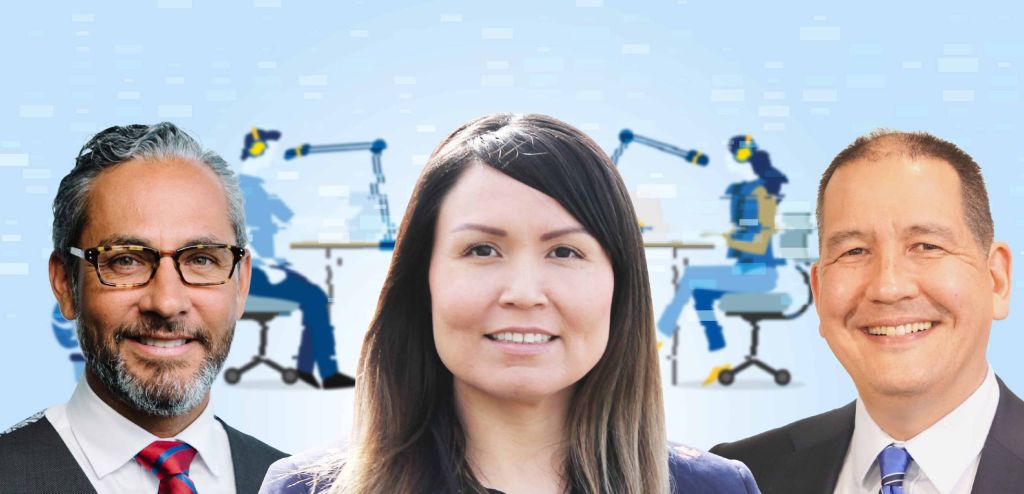
Amidst a backdrop of Russia’s invasion of Ukraine, rapidly rising inflation, ever-lingering COVID, and near constant political convulsions, this year’s COP27 took on an unprecedented weight. In this episode, let John Stackhouse walk you through the recently wrapped COP27 in Sharm el-Sheikh, Egypt. With his special guest co-host Naomi Powell, Managing Editor of RBC Economics and Thought Leadership, get John’s front-row seat perspective on the United Nations Climate Change Conference, also known as the Conference of the Parties (COP27). Hear from some of the world’s top leaders and thinkers, including talking to climate scientists Katharine Hayhoe and Johan Rockström; Elizabeth Nsimadala, the President of the Eastern Africa Farmers Federation; as well as Heather Chalmers, the president and CEO of GE Canada. From loss and damages to climate financing, John talks about the successes and failures of COP27, and where Canada stands out. Is the goal of halting global warming at 1.5*C still attainable? Listen in and find out. EPISODE NOTES John Stackhouse shares his takeaways from COP27, click here to read the piece called, “Reality Bites”. For more information about COP27, the United Nations Climate Change Conference, in Sharm el-Sheikh, Egypt click here. If you’d like to know more about some of the people John spoke with, read up on Katharine Hayhoe at the Nature Conservancy; Rick Smith, the president of the Canadian Climate Institute, or the call to action by Elizabeth Nsimala, the President of the Eastern Africa Farmers Federation. Disruptors recently took an in-depth look at how Canada can reduce emissions and waste in the agricultural sector, it’s a special, three-part series called, The Growing Challenge, listen here.
Speaker 1 [00:00:01] Hi. It’s John here. And today I’ve got a special co-host with me. Naomi Powell is our managing editor of economics and Thought Leadership, who leads many of our team’s major research projects. Hi, John. It’s a pleasure to be sitting in for Teresa today. It’s great to have you here on this special edition of Disruptors. Thanks. And you’ve had an exciting week. You just got back from COP 27, which is the United Nations Climate Change Conference this year. It was in Sharm el Sheikh, which is in Egypt’s remote Sinai Peninsula. Welcome back. You can’t imagine a more surreal, even bizarre place for a climate conference. I mean, Sharm el Sheikh is the ultimate in artificial places, is a beach resort the Israelis actually built during their occupation of the Sinai in the 1970s. Still a big attraction for beach goers from Europe, the Middle East and elsewhere. But for the last two weeks, 3000 people arrived for the major U.N. climate conference known as COP 27. So, John, after last year’s major conference in Glasgow, this cop was supposed to be a minor one. I thought it was meant to be this place where we could turn all those commitments countries made last year into action. Can you give us a sense of what the overall scene was like? The cop cycle tends to put a lot of weight on the big conferences every five years, like Paris and Glasgow, and people may remember Copenhagen. And then you have these smaller ones, although with 30,000 people who’s calling it small, that do a lot of the procedural work, which is actually really important to policies and collective action. That’s a real need. This is 2022 and the world changed a lot, starting with Russia’s invasion of Ukraine, record inflation, devastating droughts and floods around the world, and a looming energy crisis. I mean, this has all challenged a lot of assumptions about climate, about energy security and about public policy. Fascinating to watch. And it’s been fascinating over the last year to watch all of these plans that countries had kind of go off the rail as all these pressures sort of closed in. And it’ll be interesting to see where we get in the year ahead, but we can talk all about that now, I guess. Well, I certainly learned a ton in the last couple of weeks and also was fortunate to meet a lot of interesting people and thought it would be worthwhile capturing some of their voices, which we’re going to share on this special episode of Disruptors. And I’d love to start with someone who we’ve had on disruptors before. Katharine Hayhoe. She is the chief scientist for the Nature Conservancy. What inspired me at COP was all the thousands of faces of people from all around the world who are all here because they care about the same thing climate change, and they’re doing everything they can to fix it. I love that optimism, but did everyone walk away with the same sense of accomplishment? Let’s dig into the successes and the failures of COP 27. This is Disruptors. An RBC podcast. I’m John Stackhouse. And I’m Naomi Powell. On this episode, John, you get to be the guest. You had a front row seat in Sharm el Sheikh. So we’re doing a special episode on Canada’s Place at the Table in COP 27. A lot to discuss. So let’s jump right into it. Can you set the scene for us? What was it like? So the conference was built in an extended conference center that felt a lot like a military encampment. I felt like I was in the middle of the of the Green Zone in Baghdad at moments wandering between buildings, having no sense of where the geography was outside the conference. And part of that was for security reasons. The Egyptians are very sensitive to security. And you may remember the horrific terrorist attacks on Sharm el-Sheikh in 2003, which is still present in the minds of many Egyptians. So one has to understand their need for that kind of security. But within the protected zone of the conference, it was a logistics challenge. On day one, the Egyptians and of course, all the conference goers quickly discovered there wasn’t enough food and water, which made a lot of people kind of cranky at the beginning of COP 27. So, John, the Paris Agreement had a goal. It was to cap global temperature rise to 1.5 degrees Celsius. Is that still happening? Is that still alive or. Yeah, you may recall the great slogan of COP26 in Glasgow when this was really pushed by Boris Johnson, the British Prime Minister at the time, which was keep 1.5 alive. And that’s been really challenged by the energy crisis and other challenges, including inflation. No one likes to see this publicly, but it was striking how many conversations in the corridors with a range of delegates and observers focused on the challenges of 1.5 and the growing perception, perhaps reality, that 1.5 may not be alive. Some people are starting to say, you know, maybe we should be more realistic and focus on containing global temperature increases to, let’s say, no more than two degrees rather than being more stringent with 1.5. That debate is going to continue. The final document does still commit to the threshold of 1.5 degrees, but emissions are growing. I mean, the blunt reality is global emissions last year increased. 1% would have been higher if China hadn’t been in lockdown for much of the year. And the UN is projecting that if we don’t do more, we could see emissions grow 10% this this decade when they need to come down by 50%. So year by year, we have to come to grips with the fact that the math is not working out towards net zero and we’ve got to start to do things differently. I connected on this with Johan Rockström. He’s the director of the Potsdam Institute for Climate Research, a leading climate site who is very passionate about the commitment to 1.5. Speaker 2 [00:05:52] All the evidence that 1.5 degrees Celsius is not a goal. It’s not something you can compromise with. It’s a physical limits go beyond that, and we’re likely to cross tipping points that irreversibly make the planet less unless you’re above all future generations. So we’re providing the sciences across from the risk analysis all the way to the solutions space for support to accelerate the pathway towards a, you know, a safe and equitable and a planetary aligned climate transition. Speaker 1 [00:06:23] So, the U.S. obviously has a lot of power to push the drive toward 1.5. Joe Biden showed up in Sharm el Sheikh at least for a few hours. He gave a speech. And the U.S. quite bullish on the IRA, the Inflation Reduction Act. I’m curious to know, though, what reaction did the IRA get from the corporations and the policymakers that were there? Biden was not only bullish on the IRA, the Inflation Reduction Act. He really stressed how confident the US is in meeting that 50% reduction in commitment said flat out we will make this commitment. I think that meant a lot to the world who have watched the US with some concern and some hope over the decades make commitments and then pull away from them. And as the US goes, frankly, so will go the world’s prospects on climate change. And to see a confident us, to see a US government that’s saying we’re going to invest hundreds of billions of dollars in the technologies and the opportunities to get to net zero. I think that gave a lot of people confidence even when China didn’t really show up at this cop. Even when Russia, which is a serious player in all these conversations, is absent due to the war and may be absent for many more years. To see this kind of U.S. leadership actually does matter quite, quite a bit. On IRA, it’s also really created a lot of enthusiasm among investors who are seeing opportunities, whether it’s in carbon capture or hydrogen or renewable natural gas in the agriculture sector. Investors, Americans particularly, but investors from other continents are seeing pretty big opportunities right now in the US and then maybe looking at opportunities to to scale that globally. Now just trying to reconcile that with all of the pressures that countries are facing right now, including the U.S.. So, you know, how were high interest rates, high inflation and the need for really extraordinarily expensive climate investments all addressed, particularly with the developing countries that were present. There’s a number of things missing from COP, and one of the missing ingredients, frankly, is economists. Because you’re spot on, what’s happening in the real world with real money, with interest rates, is going to have significant impact on climate action. It already is interest rates at the levels there are and maybe going is deterring significantly investments in things like renewable energy in riskier markets in Africa, for instance, or the the Middle East, but also in more stable parts of the world. What’s happening in currency markets is also drawing a lot of capital back to the United States. So we’re seeing success, breeding success in the U.S. but that’s also bleeding. Possible successor opportunities in other parts of the world. That didn’t get a lot of attention at COP. And I thought that was unfortunate because we’re at a bit of a hinge point in in economic history. How can we adjust policy to address that, though, to address those factors like currency, like inflation? What governments are starting to do when you see the Canadian government starting to do this, is to put more capital on the table for the front end of the risk curve. So you’ve got major projects could be hydrogen or carbon capture that are going to require billions of dollars. And investors saying, yeah, in this kind of rate environment, in this kind of recessionary environment as well, maybe we’re even looking at stagflation. I’m not sure I want to put a billion or $10 billion down on a project that may not have the same returns as we could have forecasted even 12 or 24 months ago. In that kind of environment, having governments step in and say, okay, we’ll put the first billion down or we’ll cover, let’s say, the first the first series of losses. That gives enough comfort to investors to bring them off the sidelines, which is where a lot of capital is going, or to pull them back from less riskier opportunities, let’s say, in the US, where it is even more appealing with all this IRA money. This has become a much more competitive policy environment that makes certain governments nervous. Understandably so. But competition is what is presented to you often is not what you get to create. So we may be in a reactive period of policymaking when the countries, Canada included, need to read and react what’s going on in major economies. The U.S., which I keep citing, but also Western Europe and maybe to a degree is the East Asia. Yeah, it’s going to be interesting to see the different courses Europe in the U.S. take to this. In every conference, some issues get more buzz than others in this one and COP 27 where there’s some issues that have more weight than others compared to previous cops. Believe it or not, it’s been 27 cops. And this is the first one where agriculture has been front and center. There was an agriculture day, but more than that kind of notion of a dedicated day, there are serious policy conversations going on to determine better ways to get capital in the hands of farmers and food producers, to develop net zero ag practices or to scale net zero ag practices that are already out there. Here’s one of those farmers who I got to speak to at the conference. My name is Elizabeth for my daughters and my young farmer from Uganda and the president of the Eastern Africa Farmers Federation. This is our regional network of farmers organizations in the 22nd countries. We have a membership of 24 national farmers and my efficiency of presenting over 25 million smallholder farmers. So I’m here to represent the farmers voice in the different sessions where I will be speaking, but also to bring in this discussion. They are priorities for 27, which is our own increase, the funding for adaptation, but also loss and damage financing. This is one of the serendipity of a conference. I did not expect to meet Elizabeth and just bumped into her and got into what I found to be an inspiring conversation and it reminded me of the importance of small scale farmers. Because so much of what we talk about in agriculture, including Naomi, what you and I’ve been working on at RBC, tends to index towards large scale farming operations, even the notion of industrial farming. And we need to remind ourselves and Elizabeth in that clip reminds us that 70%. Of the world’s farmers are small scale farmers. And if we’re going to see net zero agriculture and we’re not going to see a net zero zero world without net zero agriculture, we’re going to rely on those millions and millions of small scale farmers who have the ingenuity. Many of them have the technology, they don’t have the scale, but in ways, their smallness can be their greatness. Yeah. And when there’s that many small farmers, I mean, they are fragmented across the agriculture sector, it means you have to shape specific approaches to how you help them lower emissions from their operations. But Elizabeth, the president of the Eastern Africa Farmers Federation, who was just in your last clip, she mentioned loss and damages. And I know that was a hotly anticipated negotiation going into COP. What was the outcome of it? Yeah, sadly, not much. Loss and damage was the great hope for the host country, Egypt, and for a lot of developing countries, for Africans particularly. These countries feel rightly so that they bear the brunt of the impact of climate change through no doing of their own and are least able to pardon the expression weather the storm. The classic example, which was front and center at COP is the floods this year in Pakistan. Pakistan claims it has suffered $30 billion of economic damage because of flooding that has been caused by early snowmelt in the mountains, which is caused by global warming that Pakistan has had very little to do with. So Pakistan showed up and said, hey, world, especially industrialized world, you put all the carbon into the atmosphere that’s causing the snowmelt to flood our plains. Maybe you’d like to consider paying for some of the damages. There was a pretty cold response to that, particularly from the Americans who understand the litigious nature of this discussion better than most. They don’t want unlimited liability. If Pakistan is going to claim 30 billion, what’s after that? What’s after that? And then how do you divide up responsibility? How do you assign responsibility? It’s really challenging. And the world’s going to have to spend a lot more time, I think, on this issue in the years ahead to to find more progress than we saw at Egypt, because there was certainly a respectful nod to the concerns. There were nice words. There’s commitments, of course, of money. And we know that only a fraction of that money will ever be paid up. The world is going to have to do better than that, unfortunately, and we’ll probably have to see more situations like we’ve seen in Pakistan to get us there. I’ll be interesting to see which of the economic powers sort of assumes leadership on that issue. We’re going to take a quick break. But coming up, more of our conversation with John Stackhouse and his rundown of COP 27. You’re listening to Disruptors, an RBC podcast. I’m Theresa Do. If you’re interested in all things Climate and COP 27, I’d like to tell you about the latest piece from RBC Economics and thought leadership called Reality Bites. This year’s COP 27 took on a whole new weight with troubling events like Russia’s invasion of Ukraine, devastating droughts and floods around the world, and a looming energy crisis as the backdrop. This truly was a wild year for the annual United Nations Climate Change Conference. Luckily, our own John Stackhouse was on the ground in Sharm el-Sheikh, Egypt, and has published his biggest takeaways. To read them visit RBC dot com slash thought leadership. Welcome back, John. You had a front row seat at the UN climate conference in Egypt and it sounds like Canada’s nuclear reactors were getting some attention from the delegates. Can you fill us in? Nuclear power, especially small nuclear power, is really popular these days and it’s gaining momentum. We’ve talked on this podcast about small modular nuclear reactors, and Canada is actually in the lead on this. We’re seeing important and interesting developments with Ontario Power Generation OPG, what it’s doing in terms of developing these so-called assemblers, we’ll see Saskatchewan probably trying to take on more of these. And what this means in turn is that Canada may become a nuclear provider again for the world. Heather Chalmers is the president and CEO of GE Canada, one of the big players in the nuclear business. And here’s what she had to say. What I’ve been so impressed with and I expected it coming in, but to see it demonstrated here is been remarkable. And that is Canada is leading in the energy transition, not just in terms of our pace, but we have an opportunity to share with the rest of the world some of our first of a kind technologies. And one of those examples that is very near and dear to us is small modular nuclear reactors. Well, that’s exciting. I mean, that’s a bright spot for us. And we’ve been talking about this a lot in the office lately. I think the potential for that technology is just fascinating. But we can’t forget that oil and gas remain major players for the moment. Did you hear anything from that sector or what was their reaction? Yeah, of course. There was a lot of talk about oil and gas, as there should be at at a climate conference. And it was more acute given the location both in Africa, but also kind of in the Middle East. And it was interesting to see the Saudis and the United Arab Emirates particularly really being ambitious on the stage at Sharm el-Sheikh, saying we are proud to be oil and gas producers and we think we can be net-zero oil and gas producers through things like carbon capture. And we’re going to spend billions of dollars on this to get it right and we’re going to continue to preserve oil, whether you like it or not. They were pretty blunt about that. The Saudis said we will be producing oil in the year 2100 and they’re very confident in that. This is a big challenge to a lot of people at court, but also to the whole court process, which is really designed to help engineer a decline over time of oil and gas production and consumption. So lots of tensions in the hallways over this, but lots of discussion as well about the opportunities that can come through technologies as well as the challenges of behavior change. Because none of this is going to happen until all of us are really come to grips with our own behaviors as consumers. Okay. So at the end of the day, at the end of the week, how would you say Canada performed on the global stage? How were we perceived? Canadians need to constantly remind ourselves that the world is growing faster than we are and the world is changing in many ways faster than we are as well. We still have incredible natural advantages. We are the energy and food producer to much of the world and we produce pretty much all types of energy and we do it with efficiency and sustainability. Of course, there may be exceptions, but we really are leaders in most aspects of energy production. The world respects that. The world is looking for more of that, but it’s also a divided world. And you really saw this I court unpack is going its own way. As I said, the Saudis are going to be very aggressive in their oil policy regardless of what the West thinks. Europe is becoming less influential with the rest of the world. America is still America, and that is perhaps part of Canada’s value to the world as being both an ally to America, but also an ally to many parts of the world and a connector with America. But I think we need to think about our place both in the world and in this divided world a little bit differently as we get deeper into the 2020s and get deeper into some of these challenges, how can we be a energy technology leader? How can we be an agtech leader harnessing what’s going on in the United States, but also using Canadian ideas and ingenuity to our own advantage? How do we sell more to the world? How do we help feed and fuel the world more sustainably, knowing it’s going to be a bigger world, going from 8 billion people to ten, maybe 11 billion, and it’s going to be a more divided world. Old alliances are going to require a bit more deft management and also thinking about our own transition and understanding that the world is watching us and the world is looking to us to lead by example, whether it’s in the energy transition, whether it’s in the agriculture transition, whether it’s in the built sector and housing sectors. These are areas where the world truly respects and admires Canada, where the world is going to buy whatever Canada develops, both in technology and processes. But you know what? There’s something that every Canadian knows is obvious but is truly special in the world. About Canada. That was reflected in the Canadian Pavilion. This is the first time the Canadian government has had a pavilion at COP in a number of years. That’s a shame because I think it’s really important for a country to to show its stuff to to the world. And a lot of other countries put on a real show and tell of technology’s real razzle dazzle. And the Canadian Pavilion, of course, reflected a bit of that classic Canadian modesty, but also became the venue of truly inclusive conversations that you would hear good debate and disagreement, respectful disagreement on some important challenges, but you’d also hear voices from all parts of society. Indigenous leaders were there, social activists were there, mayors were there talking about what they are doing, what their challenges are, but also where they’re finding success. And in many ways, that is Canada’s gift to the world, that we are an open, inclusive society, and we all like to talk about the inclusive and just transition. Well, you’re not going to have an inclusive or just transition if you don’t have all of society working on it together. And I thought that was really well reflected in the Canadian Pavilion. Next year’s COP 28, John, is being held in the UAE, which should be interesting. What do you think the biggest issues will be for that conference? Well, who knows where the world will be a year from now. But to think of a climate conference in Dubai in the year 2023 is fascinating. I spent a bit of time at the UAE Pavilion talking to Arab entrepreneurs as well as policymakers about what they’re looking for. And they are making huge bets on technology. It was eye opening to see how ambitious not just the UAE, but other Persian Gulf states are. And Saudi Arabia is on. Technologies like carbon capture, on technologies like solar, on hydrogen, looking to be world leaders and doing that at home first, but also exporting it to other parts of the Middle East, Asia, Africa, and who knows where they’ll take it from there. We’re going to see this tension between innovation and regulation on center stage. You’re going to have the host country and others saying we can innovate our way through this. We can engineer our way to net zero. And you’ve got a lot of other people saying, bring it on. We want all the innovation and technology you can create. But that alone is not going to get us anywhere near net zero in time. We also have to think about regulation and constraints. This is the war that’s going on in the bosom of the climate community and is going to rage perhaps in Dubai and really challenge the world to think about how we balance innovation and human ingenuity and the desire for progress and growth, and perhaps the need for constraint or at least management of certain parts of the economy that have become unsustainable. I think Rick Smith summed it up really well. Rick is the president of the Canadian Climate Institute. Here’s what he had to say. Speaker 2 [00:25:37] This cop was billed as the implementation cop, and obviously there’s a lot of work to do in that regard. But there’s been some really big announcements and some things happening in parallel to this meeting that that are going to propel implementation, be the announcement by the government of Cameron just a few days ago was a good step forward, formalizing a very significant methane commitment and there are working with our international colleagues. There are many other exciting announcements happening there, but haven’t got a lot of press but deserve to. We work with colleagues in South Africa, for instance, who are finalizing the details of the package, have directed aides to expedite the energy transition in South Africa. I think this cop is going to drive implementation forward. Speaker 1 [00:26:26] So what will be the main focus of the UN climate conference in five years time, do you think, John? In five years time we’re going to have a much clearer sense of whether we’ve turned the corner on the journey to net zero. I hope in five years we’re going to have some real success stories, not just episodic ones, but demonstrations across sectors of how to transition to. Net zero. We’re starting to see glimmers of this in sectors like aviation and steel. That’s really exciting to watch. And a few years from now, we may see those sectors a lot closer to net zero. That then becomes a model for other sectors. They want to get there but may not know the pathway to take and they can follow the lead that others are showing. That’s really exciting and encouraging to hear because I think the sense that there is that we’re running out of time. That’s the overall feeling of the ticking clock. And it sounds like there’s an awful lot of work still left to do. We are running out of time. And there was a very sobering clock in the middle of the conference that showed, you know, we are under seven years now to 2030. This is within eyesight and we know we have not done enough. So we have to be doing more today than we did yesterday and more tomorrow than we’re doing today. That’s just the hard thing about it. Climate change is borderless and it demands cooperation. Disruptors recently took an in-depth look at how Canada can reduce emissions and waste in the agricultural sector. It’s a special three part series called The Growing Challenge, and our other episodes can be found at our BBC.com. I thought leadership. Well, thank you for inviting me today to co-host John. I’m Naomi Powell. And I’m John Stackhouse. This is Disruptors, an RBC podcast. Talk to you soon. Disruptors, an RBC podcast is created by the RBC Thought Leadership Group and does not constitute a recommendation for any organization, product or service. It’s produced and recorded by JAR Audio. For more disruptors content, like or subscribe wherever you get your podcasts and visit rbc dot com, slash disruptors.
It’s an issue that’s estimated to cost Canada more than $21 billion per year—nevermind the environmental impacts. But how much thought have you really given to the problem of food waste and spoilage, and how it could be hampering our country’s effort to reduce emissions? Whenever wasted or spoiled food ends up buried in a landfill instead of decomposing while exposed to air, it generates methane—a potent greenhouse gas with 86 times the warming power of carbon dioxide. And it just so happens that Canada is one of the worst countries on the planet when it comes to wasted food. So what can be done about it? On this episode of Disruptors, an RBC podcast, co-hosts John Stackhouse and Trinh Theresa Do wrap up their special, three-part series called “The Growing Challenge”, with an in-depth examination of how both food waste and spoilage represent a huge and often overlooked obstacle to our nation’s sustainability efforts. They’ll also discuss new technologies and tactics helping food producers to address the issue—as well as how we as consumers all need to change our attitudes when it comes to things like best before dates, portion sizes, and so-called “rescued food.” In addition to Sonya Hoo, a familiar voice from earlier in the series, John and Theresa will also hear from Meeru Dhalwala, author, chef, and the co-owner of Vij’s and Rangoli restaurants in Vancouver; Randy Huffman, the Chief Food Safety and Sustainability Officer at Maple Leaf Foods; Kevin Groh, Senior Vice President of Corporate Affairs at Loblaw Companies Limited; as well as Jeremy Lang, the founder and Vice-President of Sustainability at Pela Earth, which makes a smart, countertop-based composting system called Lomi. Shownotes: To learn more about Meeru Dhalwala you can visit her Wikipedia page or follow her on Instagram at @meerudhalwala. Maple Leaf Foods has much more information about its sustainability goals on its website. Loblaw Companies Limited has details on its efforts to reduce waste in both the textiles and food industries. Click here to learn more about the Lomi smart composter, and here for information about Pela’s compostable phone cases. For more about BCG’s work on food systems and food security—follow this link. And for details on The Arrell Food Institute at the University of Guelph, please click here.
Speaker 1 [00:00:00] Hi. It’s John here. Speaker 2 [00:00:02] And it’s Theresa. Speaker 1 [00:00:03] Theresa? When I think back, way back to my childhood, there’s a saying I seem to remember hearing a lot, which was waste not want not. In fact, it seemed to be a daily message at the dinner table that scraps of food could be much better used elsewhere in the world if we kids didn’t appreciate them. Speaker 2 [00:00:22] Yeah. And I mean, the numbers are shocking, John. According to the Boston Consulting Group, about one third of the world’s food is lost or wasted every year. And the UN’s Food and Agriculture Organization estimates everything that’s lost or wasted is enough to feed one and a quarter billion hungry people each year. But before we go any further, it’s worth clarifying some terms. Food loss is something that happens at harvest or soon. After all, food waste happens after the food reaches retailers or consumers. And so if we eliminated both food loss and waste, so many hungry people would be fed, which is especially important given how many people are facing food insecurity. Speaker 1 [00:01:00] Plus, there’s a huge opportunity to reduce greenhouse gas emissions if we can reduce these totals because food loss and waste create 12 megatons of emissions every year across Canada, landfills are literally filling up with food. Metro Vancouver, to take just one example, estimates that up to 30% of the garbage sent to landfills is organic waste. Speaker 2 [00:01:21] Canada is among the worst countries on the planet when it comes to food waste. Not so fun. Fact Did you know that the average Canadian household throws out a staggering 79 kilograms per year? That’s compared to 59 kilos in the U.S., according to the UN’s Food Waste Index Report. But businesses have a part to play to. More than a quarter of all food waste comes from restaurants, while 13% comes from retailers. Speaker 1 [00:01:46] It’s a massive issue throughout the food system, but there are some elegant solutions emerging from the farmer’s field to the grocery store to our plates. And each of these solutions has the potential to reduce loss and waste and reduce harmful greenhouse gas emissions throughout the system. And that’s what’s on our table today. This is Disruptors, an RBC podcast. I’m John Stackhouse. Speaker 2 [00:02:17] And I am friend Theresa Do. Welcome to the final installment in a special three part series that we’re calling The Growing Challenge. And it we’re exploring how Canada can lead the world in clean, green agriculture using cutting edge technology, data systems and smart thinking to increase yields while reducing our environmental impact. Last week we talked about some of the technological solutions aimed at reducing emissions on Canada’s beef and dairy farms. But the issue of food waste and food loss is arguably an even bigger challenge to be solved. After all, the less we waste, the more resources we save, the fewer emissions we put into our atmosphere and the better able we are to feed a growing planet. In the first episode of this series, we introduced you to Sonja, who she’s a managing partner at Boston Consulting Group, who is investigating this vital question How can Canada produce more food while slashing GHG emissions in the process? As Sonja explains, the twin issues of food waste and food loss have to be central to that discussion. Food waste is something that actually happens all across the value chain, from everywhere, from production, all the way to the food that we waste at home. And that makes up about 10% or so of the agricultural emissions. Speaker 1 [00:03:36] That’s a significant number. But I also wanted to know how much food, waste and loss happens at each stage of the value chain, from producer to retailer to consumer. Speaker 2 [00:03:45] A good chunk of that comes from the on farm production. So what happens is farmers will actually grow food that is just not for whatever reason harvested or if it’s harvested, it may just not be brought to market. Then that happens for many reasons, including labor challenges. There may be fluctuations and variability in prices in the market, or there just may not be a market for the farmers to sell into. So it’s actually more cost effective for them to just leave the food there and there aren’t any penalties for doing so in terms of processing and manufacturing. Now mostly we’re pretty efficient at food processing, but there are byproducts of processing. So as we make food, things that come off that could potentially be leveraged because there’s still sort of food stock, but they may not be today. So that’s another source of waste. And then really the big chunk of waste. So, you know, close to 40% or so will be from sort of what we think of as restaurants, grocery stores, and then ultimately consumers at home. And that’s everything ranging from, you know, if you just think about the food that you’re leaving on your plate when you go out or when you’re at an event and there’s the buffet that set up, you know, not all of that food gets eaten. It gets thrown out to the food that just goes bad in our refrigerators because we bought too much or we didn’t get around to eating it. John This gets back to that saying you mentioned off the top waste not want not all that food we buy at the grocery store or in a restaurant that never gets eaten. And that 40% number that Sonia mentioned, it’s seared into the minds of many of those who work with food day in and day out. Like our next guest. Hi, Meeru Dalwala. I’m the co-owner and chef of Veggies Restaurant here in Vancouver as well. I am the founder of my Banbury Organic Baby Foods Meeru, along with her ex-husband Vikram, which runs one of Canada’s most acclaimed Indian restaurants. Mira is a child of immigrants, and her upbringing has shaped her entire attitude towards food waste. So Mom and Dad grew up in refugee camps in Old Delhi because of the war of partition, and so it was a little bit more direct for me growing up. We weren’t allowed to waste food. We could we could do a lot of other things. I remember I shoplifted once at the age of ten and I got in trouble for shoplifting. It was candy bars because we weren’t allowed to eat candy bars, but I got in less trouble for shoplifting. Then I would get in trouble for not finishing my dinner. This is super relatable as a child of refugees myself, not wanting to waste food is related to living with a scarcity mindset. You don’t waste food because you can’t afford to, and if you do, it means you’re depriving your family or your future self of nutrition, which risks your ability to survive another day. So I can very much understand why Mira takes the issue of food waste so seriously, as do many of the people she works with. We had a restaurant in Seattle called Shana Restaurant from December 2012, all the way through to 2015. And half of my kitchen staff I hired, they were refugees from Ethiopia and Eritrea, and the other half were new immigrants from India, all women on opening night. From my point of view, it was a fantastic evening. And then at around 12:30 a.m. I found my Ethiopian and Eritrean staff by the Compost and they were pulling out all this meat, all this meat going to the trash. And I said, It’s the compost. And they said, No, compost is trash. I don’t see any goats eating this right. We don’t see any cows eating this. They were tearfully indignant. Then I looked in it to. Well, there’s a lot of lamb popsicles in there. It was uneaten. I can’t even just jump in here. LAMB Popsicles are one of Mira and breadcrumbs, signature dishes, fresh cut racks of lamb with vinaigrette, cream sauce. That sounds so good. Honestly, finding those in a compost bean would seem like some kind of environmental food crime. And that’s when I looked at that and I thought, how must this look to people coming from? And we all know about the history of famine in Ethiopia and Eritrea. And I that’s when I thought, oh, this is just I’m so embarrassed at all levels. But at that point, I was more morally embarrassed for is now it’s not just about pointing your finger now. It’s just a logical climate change issue as well. Speaker 1 [00:08:09] That’s a profound story, Teresa. And being confronted with our own waste by people who have seen famine up close. It’s a real wake up call. Speaker 2 [00:08:17] Very true. So Muro says that she is very committed to reducing food waste and also to solving foods, climate challenges in terms of emissions. She thinks that part of the problem lies in the fact that consumers have trouble connecting the dots between food waste and climate change. It’s an out of sight, out of mind situation. Maybe it’s because we don’t see the visual of it getting wasted. Maybe because right now we’re not feeling the impact of food waste in terms of climate change. Maybe we just need it, for lack of a better phrase, thrown in our face. The obviousness of we’re thinking about how do we cut down our carbon footprint? But maybe food is so cheap that we’re not thinking about the fact that when you buy that steak or you’re buying that chicken in the store, a lot of fossil fuels have already gone into putting it there in the supermarket. The plastic wrap on the chicken is there, the raising of the chicken, the fertilizer, the feed, the pollution going into the river, transporting it. Then we’re purchasing that chicken. It sits in our full fridge and then we realize, Oh, the best before date was two days ago. Then we’re worried about getting food sick and then we actually toss the chicken. Speaker 1 [00:09:31] So maybe there are some ways to address that in the grocery store. Things like labeling the detail, the carbon footprint of that package of chicken breasts to use mirrors. Example, if you gave an indication of how far that chicken has traveled from farmer to grocer, it might help build awareness right at the point of sale. But how does that awareness then translate into the restaurant environment? How do you reduce waste there when the order of the day is giving customers what they want? Here’s Meru again. Speaker 2 [00:09:59] We restauranteurs. The smaller we are, the more efficient we tend to be with our money is tighter, right? The smaller you are, the less staff you have, the tighter you have to be. We’re pretty consistent at veggies, so that really helps the restaurant. When you are consistent, when you know, okay, we’re going to do approximately within $500 or within $1,000. We’re going to do this much business on a particular night. It’s a lot easier for us at the restaurant. We can choose what we want to purchase and get deliveries and things done. So on the back side of the kitchen, we have minimal, minimal food waste at the restaurants. Our food waste comes from the customer point of view. Now, that’s a hard one because in the past 15 years, maybe even 20 years, the U.S. and Canada, we’re competing with these big corporations, with all you can eat for 699. And people are expecting this bang for their buck when they go to the restaurant. And especially for us during tourist season in the summertime, there is this preconceived notion that Indian food is like an all you can eat buffet. That really resonates with me, John. Every time I travel, especially to the U.S., but really all across North America, I can’t help but notice how big portions have become. Speaker 1 [00:11:14] For some reason, many consumers have come to value quantity over quality. When it comes to dining out, it’s something Miro thinks about a lot. Speaker 2 [00:11:22] I have been working a lot in the past couple of years of trying to figure out how do I do it? That the customer is paying what the customer should pay for the food. But the food isn’t cheap enough subliminally to that customer that they have no problem leaving an entire lamb popsicle on their plate or asking for more naan and more rice and then just leaving that rice and not on the plate. We actually look at our compost every single night to determine, just to have a look at it and just say, okay, this is what customers today wasted. Speaker 1 [00:11:54] Have you tried scolding your customers the way your parents did? Speaker 2 [00:11:57] Well, Vikram is pretty good at that. Finish your plate. But customers don’t mind being teased about, you know, what they’re wearing. But morally, it’s hard to tease the customer. Speaker 1 [00:12:07] So instead of teasing or scolding customers, Mira and Vikram try to educate them about food waste for some of their charity fundraising dinners, for example. Mira uses ingredients from a nonprofit in Vancouver, the Food Starch Foundation. It collects so-called rescue food from local grocery stores and. Speaker 2 [00:12:23] At the very end when I announced that you just ate a meal prepared from rescued food and even rescued food. I don’t like that word because it has like some charitable component to it. You get very high quality food that grocery stores deemed not worthy to sell anymore because of this best before date or because it didn’t look the way a consumer wants it to look. And thankfully, I got it. I was able to host a fundraiser. You were able to experience what this food is. I mean, it’s great to see the look on their faces. Speaker 1 [00:12:59] I’ll bet they’re a little surprised, but also impressed. Emmy RU hopes it causes people to really think about their habits. Speaker 2 [00:13:05] We need to change our eating when we go to restaurants and we need to change our purchasing. When we go to the grocery stores, we need to become a little bit smarter and wiser about how we purchase food and our fears of getting sick. As Mira says, we need to change how we eat and go to restaurants, and we need to change how we shop when we go to grocery stores. But of course, there’s another critical player in this revolution, and that’s the producer who supplies those restaurants and stocks, those store shelves. Speaker 3 [00:13:35] I’m Randy Huffman and the chief food safety and sustainability officer at Maple Leaf Foods. Speaker 1 [00:13:40] Maple Leaf Foods is one of Canada’s largest and oldest food producers. Dating way back to 1927 and as a food producer. Maple Leaf knows full well that its activities have a significant carbon footprint. But Randy Huffman told us that Maple Leaf is also aiming to become, quote, the most sustainable protein company on earth. And a key ingredient in that plan is cutting its own food waste in half. Speaker 3 [00:14:03] Back in about 20 1415, we began to set long term environmental footprint goals focused on how our operations impact our utility usage, such as natural gas, electricity and water. But we also recognized the importance of food loss back in 2014, and we set a goal to reduce our impact, to reduce the amount of food loss and waste from our manufacturing system by 50% by 2025. That was a goal, we said, based on a baseline in 2016. Since 2016, we’ve accomplished a 36% reduction in food loss and waste in our system. So we’re on track to meet our target of a 50% reduction by 2025. We’ve got work to do, but we feel confident we’ll hit that. Speaker 1 [00:14:49] Of course, targets are great, but implementing those changes on a tight timeline is another matter. I asked Randy how he’s planning to achieve this audacious net zero goal, and specifically what role food waste plays in the effort. Speaker 3 [00:15:03] The products that we produce have a very defined shelf life, and depending on the category, it can be from, you know, a week or two of salable shelf life to several months. But in all cases there’s an end to the life of that product. So probably the most meaningful approaches that we can take to ensure that the product maintains its quality and maintains its quality characteristics and consumer acceptability throughout the shelf life have to do with improving our hygienic conditions in our facilities. So improving the microbiological status of foods that we produce. And we’ve made dramatic strides in that. Second, we packaging the technologies and the ways that we packaged foods today compared to five, ten, 20 years ago, is is dramatically improved. And so packaging can play a role in improving the quality of the product through the consumer’s use of that product. Speaker 2 [00:15:59] Essentially, he’s saying that quality foods, cleaner facilities and better packaging make food last longer. That all checks out because the longer food lasts, the less likely it is to get thrown out. But there must be some waste that occurs in other areas of Maple Leafs production process, right? Speaker 1 [00:16:15] There is. That’s why it’s often called shrinkage in the retail world. When something falls off a conveyor belt and onto the floor, for instance, it gets deemed unfit for human consumption. It has to be thrown out. But as Randy says, through regular food and waste audits at its plants, Maple Leaf has been able to tighten its production processes and reduce some of that shrinkage. Speaker 3 [00:16:35] Those audits continue every year, and they identify best practices or engineering changes that we can make to our equipment that reduce the amount of loss that occurs in the system that Maple Leaf Foods were big believers in. You manage what you measure. That that concept and principle helps us strive for improvements. One example that comes to mind is very simple mechanical approaches to preventing product from falling off of a conveyor. Let’s say once we started measuring this, it became more important to our teams. And then we began to address, well, how can we create that guarding on that conveyor to be more effective and not have that inch gap where food can fall through? Speaker 2 [00:17:21] One thing I thought was interesting in our conversation with Randy was how he highlighted generational changes in the reasons why food gets wasted. He says, For one thing, we’re much more conscientious these days about spoilage. Speaker 3 [00:17:33] In the past, food spoilage was a much larger contributor to waste, and my parents grew up in the Depression era. My dad on a dairy farm. And now when it comes to assessing whether or not deli meat is safe to consume, my mom, she would say, never eat slippery me how we think about freshness and shelf life and quality of food products today. I know many consumers are driven by what’s on the label, the use by date. In fact, our food systems have become so efficient at producing food that it has a long shelf life and it has technology over the course of history. Recent history has led to dramatic improvements in the life of the foods that we consume. Yet we still have a major problem. Speaker 1 [00:18:17] It’s an interesting observation, Teresa. In the past, food got wasted due to things like poor refrigeration or production processes. But back then, consumers valued food, especially during economic crises like the Great Depression, when there was so much scarcity. Canadians waste more than 50 million tons of food. Every year. This suggests that the source of the problem lies at least partly in the attitudes of consumers. Speaker 3 [00:18:40] I think prior generations, our parents generations were much more cognizant of the value of food and were less tolerant of approach we have today where, you know, there’s just not as much appreciation for the value of food and what goes into getting it to a consumer’s home. I think back in those days, people were much more aware of that and reducing food loss in the home. Speaker 2 [00:19:03] It’s true, although I do have to wonder about the impact inflation is having. Food may be relatively cheap compared to historical highs, but it’s getting more expensive by the day. Data released by Statistics Canada this fall suggests the price of food purchased from stores is now rising at its fastest pace since 1981, up more than 11% year over year. You have to think that maybe those increases will force consumers to be smarter about what they buy and don’t buy. And to that point, John, who better to ask than somebody from Canada’s top grocery chain? Stick around for that conversation and more right after this short break. You’re listening to Disruptors an RBC podcast. I’m Theresa Do. I’d like to share with you our latest Proof Point report from RBC Economics and thought leadership that dives into Canada’s provincial finances. All provinces from coast to coast have recently recorded surprisingly high revenues, thanks in part to elevated commodity prices and soaring inflation. But how long will this revenue windfall last? We predict that the looming economic downturn and higher interest rates will soon tip the scale for provincial governments. To learn more, visit RBC E-commerce Thought Leadership. Welcome back to the third and final episode in our special series on the future of Canadian Agriculture, The Growing Challenge. Today, we’re looking at the issue of food waste from several different perspectives, from the role played by consumers to producers to restaurateurs and retailers. We just heard from Randy Huffman of Maple Leaf Foods, who told us about how Canada’s leading food producer is reducing waste and loss throughout its production system, thanks to data driven decision making and cutting edge technology. But remember that stat Sonja, who from BCG shared with us that 40% of waste comes from a further down the food chain from restaurants, grocery stores and ultimately consumers at home. While this means that grocery stores in particular have a vital role to play in helping to move the needle. Speaker 3 [00:21:12] My name is Kevin Groh. I head up an area called Corporate Affairs for Loblaw Companies Ltd.. And Corporate Affairs is really the company’s relationship and communication with stakeholders right across the spectrum. So from the people we work with, to the folks in our stores, to suppliers, governments, communities, and that’s an increasingly tightly connected activity to the things we’re doing around the environment, fighting climate change and also priorities around advancing social equity. Speaker 1 [00:21:43] Kevin says grocery stores are in a unique position to gauge changing consumer choices about climate change and sustainability. Everything from how we shop, whether it’s in-store or online to what we buy organic vegan, gluten free meat or dairy to how those items are sourced are all part of the food shopping equation. As the Loblaw Group of companies moves to become a net zero operation. Kevin says they’re looking at the many ways they can reduce waste in stores and throughout the supply chain. Speaker 3 [00:22:12] As we look at our company purpose. We talk about helping Canadians live life well. And it’s really evident how you might do that if you’re Loblaw and you operate the largest chain of both corporately owned and independent grocery stores across Canada and also the Shoppers Drug Mart chain. So we came up with five crisp commitments. One is to fight climate change and the other is to advance social equity. And beneath those are really specific goals and activities around. On the climate side, bringing our carbon footprint to zero, getting to net zero greenhouse gas emissions position and then food waste are. Our goal is really simple, which is we want to send zero food waste to landfill by 2030 and all of those things we believe link back to helping Canadians live life well. The interesting thing is many of them intersect. So if you look at carbon, for instance, we want to have a net zero carbon footprint within. That is certainly going to be consideration of food waste and the negative impact that food waste going to landfill has on the environment. Similarly, on some of the commitments we’ve made around social interests, namely the health and wellness of families, there is a very direct connection between food waste and that category of social equity, which is think it’s morally offensive that businesses or people are throwing out food that can be otherwise consumed, particularly when we have levels of food insecurity like we do in Canada. Speaker 2 [00:23:41] That last point. Food insecurity is a really important one, John. When we talked with Sonja from BCG, she told us a shocking fact. Nearly 16% of households in Canada were food insecure in 2021. That means that nearly one in six Canadians doesn’t have access to enough safe and nutritious food to meet their daily needs. And the soaring cost of food isn’t helping. But Kevin says a food waste for grocers is also a sign of a business that’s not running particularly well. Speaker 3 [00:24:12] I guess if you look at food waste, fundamentally, you could almost say that that the existence of food waste is a business failure for a grocer. So if you talk to ten grocers about the idea of food waste, most of them will start with the statement, something like, you know, we’re in the business of selling food, not throwing it out. Many years ago, we met internally and actually met with others in the industry to wrestle the challenge of food waste and the fact that, you know, it’s not only morally objectionable, but from a business perspective, the less food waste we create, the better our business is running. And in those conversations, we took a baseline of our food waste from 2016 and said that we would cut it in half by 2025. And we came out of the gates really, really strong. And within a matter of a couple of years, I think we had cut our food waste by about 75% in our corporate stores. Those are the ones we effectively own and operate that aren’t independently run. And it was a really great achievement. And it it sort of gave us the ambition of saying, you know what, we’re going to up the goal and we’re going to say by 2030, we will be sending no food waste to landfill. Speaker 1 [00:25:19] And that’s where innovation comes into play. Loblaw has partnered with a wide variety of startups delivering tech solutions. To the food waste challenge and to research. There are innovations that provide benefits to the environment and substantial savings to consumers. Speaker 3 [00:25:33] One of the innovations we’ve been looking at and have actually tested with great success is Flash Foods, and that’s an app based program that actually gives people access to food in our store at discounts as great as 50%. And the selection of those items really has to do with an algorithm that assesses whether we have ordered too much of something and the likelihood that that product will sell by its best before date. And as items sort of approach their best before date, but are still very safe and healthy to eat, they’re made available at deep discounts. And we found that it’s an interesting microcosm of the bigger challenge, which is we don’t want to create food waste. Ideally, the things on our shelves we’d like to sell and not throw away. And people are very inspired by discounts. Speaker 2 [00:26:22] I get that. I mean, who doesn’t appreciate a good deal? Right. Speaker 3 [00:26:26] And I think when you look at the issues behind food waste, whether it’s the negative business implication of throwing out food or the negative social implication of throwing out food, flush foods has been a bit of a sweet spot solution that checks a lot of those boxes. Speaker 1 [00:26:42] Flashfood was introduced in more than 500 Loblaw stores, resulting in the elimination of more than 5 million kilos of potential food waste in 2020. So some pretty significant savings there, but the benefits are also being seen up and down Loblaws supply chain. Speaker 2 [00:26:58] Kevin told us the company is working with growers to help market imperfect produce to consumers. You’ll remember hearing about that concept of rescued food from Marion’s Alala so it’s a similar idea at Loblaw. The company is taking fruits and veggies that might not fetch a full price and giving them a new lease on life. Speaker 3 [00:27:16] We’ve actually packaged it up to say, Yeah, this potato looks a little strange, but it’s perfectly edible and healthy and we’ve packaged that under the no name naturally imperfect line. So there’s a there’s an effort there to just think slightly differently, both at the at the brand level, but also at the consumer level to capture what otherwise might become waste or in another part of the country. We’ve been partnering with a group called Loop Resources to literally collect our food waste and take it and turn it into animal feed for local farms. So there are there are ways to address the challenge and where food waste is inevitable, we’re working to make sure that it’s not inevitably the landfill. The other areas that we’ve worked on include Zoo Share, which is a partnership with the Toronto Zoo to take our food waste and their anim on manure, combine it into a biogas that is renewable energy fed directly into the grid. Speaker 1 [00:28:11] Theresa We’re hearing this again and again about biogas and the opportunities throughout the food system to turn waste into energy. Speaker 2 [00:28:19] It really gets back to that idea of a circular economy, John, where surplus food or waste from farms, grocers and wholesalers is finding new purpose while helping to reduce harmful emissions. And that commitment to a circular economy is something that consumers can also tackle in their own homes. You don’t have to wait for your favorite retailer or restaurant to take that action, as our next guest proves. Speaker 3 [00:28:41] Hi, I’m Jeremy Lang. I’m the founder of Pila and we are working on creating a waste free future. So we do it by creating everyday products or everyday waste, and our goal is to eliminate £10 billion of waste. And we started with plastic waste and now we’re working on food waste to help keep food waste out of the landfill and get it back to the soil where it belongs. Speaker 2 [00:29:00] Sheila produces a smart countertop, composter called Lomi. It holds about four liters of waste and takes between three and 15 hours to break it down, depending on the type of material that’s compared to the weeks or months it takes. Conventional composter. Jeremy says the need for his product was obvious because our landfills just aren’t meant to handle the millions of tons of organic waste they get every year. Speaker 3 [00:29:23] When plants and animals die, they’re supposed to go back to the earth. When we send them to a landfill, they biodegrade anaerobic with no air and they create methane, which is way worse than CO2. Food waste rotting in landfill creates roughly seven or 8% of all greenhouse gas emissions. So it’s a big problem to solve. So anything that we can do to help nature get that food waste, keep it out of the landfill and put it back into the soil so it helps to create healthy topsoil, which helps to grow healthy plants. And it’s like nature’s fertilizer, the end product. You can sprinkle in your garden and you can sprinkle on your lawn. You can avoid the compost facility altogether and go directly into the soil. We’re saving emissions by preventing that greenhouse gas emission, by preventing and are avoiding the landfill, avoiding that food waste from rotting landfill, and by creating healthy topsoil, which helps to sequester carbon from the atmosphere. Speaker 1 [00:30:14] It sounds like a great consumer oriented innovation. Theresa And according to Jeremy, more than 100,000 households are now using Lumi to reduce their food waste. Speaker 2 [00:30:23] That’s quite impressive. John, I can’t believe we’ve reached the end of this series. We’ve covered so much ground, and yet there’s still so much more to say. When I think about that big number that more than a third of the world’s food is lost or wasted every year, it really strikes a chord with me. Reducing waste seems like low hanging fruit, to use another food pun in our battle to get more food into the hands of those who need it and to keep our greenhouse gas emissions in check. Speaker 1 [00:30:54] But before we wrap up, Teresa, I’d love to hear your thoughts on everything we’ve learned in the series. Speaker 2 [00:30:58] There’s a lot to digest here, John, but what stands out to me the most is how incredibly high tech agriculture is, which of course, is evidence everybody working in the space and not that much to those outside of it, like I was until I started doing research on it. And we were only able to touch a little bit on this in a previous episode. But the future of food is unreal. Lab grown meats, cheeses, even chocolate one day could be available at a restaurant or bodega near you. Not to mention the vertical farms that are already offering fresher local microgreens at the grocery store. It makes me feel like we can really transform how we produce and consume food to be way more climate conscious and meaningfully reduce our emissions. What about you? Speaker 1 [00:31:43] I keep thinking about change, and if we’re going to tackle climate change, we all have to think about how to change the way we produce food, the way we transport food, the way we consume food, and how we can better preserve food. Fortunately, there are technologies emerging in all sorts of fascinating ways. I think about how the past decade of innovation or a couple of decades really has been rooted in software and how much innovation in the decade ahead is going to be based on hardware, especially in the ag and food sector, where we’re going to need new machines, tools, devices to transform and change all that we do with food. And that’s what Canadians for generations have been great at. So for Canada, it’s game on. Speaker 2 [00:32:28] And just to cap off with the focus of today’s episode, I think about food waste or rather not wasting food a lot in my daily life. It’s fascinating to me that food waste is both one of the easiest aspects of emissions to address because it’s directly under our control and also one of the hardest, because it’s about changing our behavior and our attitudes, which are very sticky. Speaker 1 [00:32:49] Absolutely. We love on this podcast to talk about technology, but technology doesn’t matter if we don’t think a lot harder about all of our own behaviors. Speaker 2 [00:32:58] So we’d like to offer a huge thanks to all our guests for sharing their insights with us. We hope you’ve enjoyed listening to the series as much as we’ve enjoyed putting it together. And if you’d like to revisit some of our past episodes or you just want to keep the conversation going, visit RBC dot com slash thought leadership. Until next time. I’m Theresa Do. Speaker 1 [00:33:18] And I’m John Stackhouse. This is Disruptors, an RBC podcast. Talk to you soon. Speaker 2 [00:33:27] Disruptors, an RBC podcast is created by the RBC Thought Leadership Group and does not constitute a recommendation for any organization, product or service. It’s produced and recorded by Jar Audio. For more disruptors content, like or subscribe wherever you get your podcasts and visit rbc dot com, slash disruptors.
. Jennifer Marron produces “Disruptors, an RBC podcast”. Prior to joining RBC, Jennifer spent five years as Community Manager at MaRS Discovery District and cultivated a large network of industry leaders, entrepreneurs and partners to support the Canadian startup ecosystem. Her writing has appeared in The National Post, Financial Post, Techvibes, IT Business, CWTA Magazine and Procter & Gamble’s magazine, Rouge. Follow her on Twitter @J_Marron.
When people are asked to name the most innovative industries in North America, Canada’s beef and dairy sectors probably aren’t the first ones to come to mind. But it turns out the agrifood business in our country has been undergoing a rapid and dramatic evolution for a number of years now—and it’s going to need to keep on innovating if it’s going to meet one of the most pressing challenges of our time; climate change. Because while the beef and dairy industries contribute more than $40 billion to the economy, they’re also a key source of one of the most potent greenhouse gases; methane. So which new technologies, data systems, and processes will be critical if Canada is going to meet the needs of a growing population while simultaneously reducing emissions? That’s the central question at the heart of this second episode in a special, three-part series, “The Growing Challenge”, this fall on Disruptors, an RBC podcast. Join co-hosts John Stackhouse and Trinh Theresa Do as they share first-hand insights from their own experiences, and speak with guests working up and down the beef and dairy supply chain, like Dr. Calvin Booker, a veterinarian and General Manager for Services and Research at Telus Agriculture and Consumer Goods; Alison Sunstrum, the CEO of CNSRV-X Inc and General Partner of The51 Food and AgTech Fund; and John van Logtenstein, the vice-president of Dairy Lane Systems and DLS Biogas, and Kristjan Hebert, managing partner of Hebert Grain Ventures. Together, they discuss the skills, talent, technology, and innovation that are needed to maximize production while minimizing our environmental impact—and make Canada a world leader in sustainable agriculture without compromising on its Net Zero goals. Shownotes: You can learn more about Telus Agriculture and Consumer Goods and its commitment to a sustainable value chain here. CNSRV-X is working on advanced technology solutions for agriculture and carbon markets—read all about it on their website. Follow this link to explore the work of The51 Food and Agtech fund, and these two to read up on the people and processes at Dairy Lane Systems and DLS Biogas. And Kristjan Hebert has his own website, as does his company, Hebert Grain Ventures.
Speaker 1 [00:00:00] Hi. It’s John here. Speaker 2 [00:00:02] And it’s Theresa. Speaker 1 [00:00:03] Theresa, I wonder if you could close your eyes for a moment and picture a farm. For a lot of people listening, the scene probably hasn’t changed too much over the years or decades. There’s a red barn, black and white cow, a tractor, even wheat waving in the wind. Speaker 2 [00:00:22] It’s an iconic Canadian image, but when you zoom in on that image these days, it’s changing fast. Speaker 1 [00:00:28] I know you spent a lot of time over the last number of months visiting farms and ag facilities as part of our research into emerging Agtech. So take us there. Speaker 2 [00:00:39] I visited a dairy farm outside of London, Ontario, where milk production has gone fully digital, with an automated system controlling flows from one step to the next. It was really high tech, and this place was also installing an anaerobic digester, which is this massive facility that turns manure. And there’s a lot of manure into biogas. Another place I visited was a vertical farm in Guangzhou, where I saw stacks on stacks and stacks of imagined seedlings that are tagged with radio frequency, ideas that are growing under LED lights and controlled air flows. There was automated robotic machinery everywhere I looked, and the farmers, they weren’t wearing overalls, but lab coats. It was all super eye opening. John And I’m sure you felt the same way when you had a chance to tour some facilities in B.C. and Alberta earlier this year. Speaker 1 [00:01:28] Yeah, some of the best high tech operations in the country are in agriculture. In fact, the best blockchain conversations I get exposed to tend to be with farmers and ag producers. They are racing ahead in the data economy. I was reminded of this on a visit earlier this year to Lethbridge in southern Alberta, where there are massive feedlots largely serving the US market and big operations like McDonald’s. And the farm operators there explained to me how data and blockchain is helping them better market their beef in the US and elsewhere. And in many ways that’s the future of agriculture. Speaker 2 [00:02:07] As we mentioned on the last episode, meat and dairy production between both burps and manure account for a large part of Canada’s agriculture emissions. So this is a big area of focus. Speaker 1 [00:02:17] There’s also huge financial stakes. Dairy production alone contributes almost $20 billion to Canada’s GDP, and beef production accounts for nearly $22 billion. These are really important strategic industries, especially at a time when countries around the world are knocking on Canada’s door, looking to us to help feed their growing populations. Speaker 2 [00:02:39] And so if we’re going to tackle this challenge in a serious way, both in Canada and around the world, a critical puzzle that we need to solve is how to maximize agriculture’s potential as a climate solution, and specifically how to make the meat and dairy sectors climate friendlier, as we’ve both seen firsthand on innovation is going to be a huge driver of that. Speaker 1 [00:02:59] Absolutely. We’ve heard this from farmers and techies around the country. Agtech is already playing a huge role in boosting productivity while reducing emissions from the meat and dairy industry. There are a number of fascinating tech revolutions underway, which is exactly where we’re going to go today. This is Disruptors an RBC podcast. I’m John Stackhouse. Speaker 2 [00:03:29] And I’m Theresa Do. This is the second in a special three part series on Disrupters that we’re calling The Growing Challenge. We’re exploring how Canada, using cutting edge technology, data, systems and smart thinking, can help feed a growing world and how we can do it sustainably. Last week we talked about what will it take for Canada to assume that leadership role? And we heard from some of the farmers who are already using technology to produce more food, more sustainably. Green farmer Kristjan Heibert told us how technology used on his farm supports both his production goals and Canada’s climate targets. Speaker 3 [00:04:13] I got weather stations with four foot soil probes that are reporting to my phone every 15 minutes now of how the water is moving through the soil. All the roots are moving through the soil. Kind of what? The yield algorithm is off of that and then correlating all the stations together, just the speed of which we can collect data and use AI to start to learn more and more than we currently know. I think the changes you’re going to see in the next decade will make what happened in the last decade small. Speaker 1 [00:04:37] So there’s clearly innovation in grain farming, and the changes on Canada’s dairy and beef farms are no less dramatic. Productivity is up, way up. If you look at a typical dairy farm, each cow produces more than two and a half times as much milk as it did in the 1960s. Speaker 2 [00:04:53] And a lot of that is thanks to the work of animal health experts who have mined the data to help transform how we raise and feed livestock. To get into this, I first want to introduce Calvin Booker, who’s witnessed Canada’s barnyard evolution firsthand. Speaker 3 [00:05:10] I’m Calvin Booker. I’m a veterinarian and work at Tulsa Agriculture and Consumer Goods, where I’m the general manager on the Animal Health Team in charge of services and research. I grew up on a farm in Saskatchewan. Our farm was located about 35 miles southeast of Saskatoon, and we had both purebred simmental cattle and a thousand or 1500 acres of grain land. Speaker 1 [00:05:33] Calvin was in the Forage Club for 11 years. He knew early on that he wanted to work with animals, but in a more scientific way, which is what drove him to attend veterinary school and then grad school. And he took a particular interest in how technology and data systems can be used to improve animal health and boost sustainability. Speaker 3 [00:05:52] When I was going to vet school, it was lots of talk about herd health programs and how veterinarians could work very closely with producers and provide consultative information and data insights and analysis that would help them make better decisions. But there weren’t that many people doing it in practice in any of the animal production species. There were some innovators in each of the species in the feedlot industry. Dr. Keith Jim was one of those innovators. Speaker 2 [00:06:18] So, John, as you know, a key Jim is the founder of Feedlot Health, the company Calvin joined in 1982, which was bought by Tell US Agriculture in 2020. Tell us realized the potential of this data driven approach, which helps calf grower and feedlot clients across North America to collect animal data. Because ultimately access to data has the potential to do three main things in Canada’s meat and dairy industry boost overall animal health, drive product efficiencies, and promote sustainable outcomes like emissions reduction and monitoring. Speaker 1 [00:06:50] Right. And for anyone who might be wondering what’s so important about feedlots, why not just keep the cows in fields? Calvin has an answer. Speaker 3 [00:06:58] In Canada, because we’re in a very temperate climate where we have winter. The majority of the beef cows calve in the first five or six months of the year and in the fall of the year we’ve got winter coming again. And so most of those calves get weaned because they’re no longer be out grazing on grasslands and need to be fed, stored feeds. So we’ve got a whole bunch of our production system that’s stacked up at once, but yet we want to have beef coming through the production system and available to go into stores for consumers 365 days a year. So we spend the rest of the time spreading that production cycle out so that we’ve got animals that are ready to come to slaughter throughout the year. I think the emphasis on the feedlot side comes because as we put animals together in bigger groups of animals and put them into these fattening operations, it gives us more opportunities to use technology. It gives us greater control over what happens. Speaker 2 [00:07:52] By the way, John, we should note that there has been a lot of discussion about whether field raised cows are better for the planet. Speaker 1 [00:07:58] Not such a straightforward question. As it turns out, it’s complicated. Speaker 2 [00:08:02] Several past studies have actually found lower greenhouse gas emissions associated with the feedlot system. And one reason is that grass fed cows gain weight more slowly so they produce more methane, mostly in the form of burps over their longer lifespans. But then again, there are other dimensions to consider soil health, carbon and landscape health, for instance. Pro pastoralists argue that grazing cattle can help restore grasslands and soil sequestering massive amounts of CO2 in the process. But how well this works really depends on the number of cows, the size of the fields and the conditions. For instance, if it’s too wet, carbon uptake is impeded. Speaker 1 [00:08:40] One thing’s for sure the reality on the ground, and we learned this from Kalvin, is that Canada has a startling geographic concentration of feedlots. Over 70% of all feedlot production takes place in Alberta, most of it in southern Alberta. Speaker 2 [00:08:54] And these are big operations. Calvin says, Telus the smallest customers in Canada hold about 500 animals at a time, while the largest can hold about 70,000 animals at once. A lot of cows in one place means a lot of methane, which makes the role of data and tech all the more important. Farmers and veterinarians need tools to get a lens onto what’s really going on with animal health and emissions. Speaker 1 [00:09:18] Today, digital tools allow Telus Agriculture to connect with feedlots across Canada, the US and Mexico. This helps their team of vets and scientists understand what’s really happening inside those operations to make them more efficient and more sustainable. But as Calvin tells it, if you go back 30 years, it was a very different story. Speaker 3 [00:09:38] I remember the first computers that we put should side in feedlots in western Canada in 1985 because $13,000 per machine and they had 64 kilobytes of RAM. So if you had a big feedlot that had more than one handling facility, animals were in one computer or the other, but you certainly couldn’t get them to talk to one another. Any information or reports that we were going to generate at that time, we had to run it off that computer where the animals records were located. So it’s come a long way today. All the systems that we work with overnight sync with our office and update all the newest data to our servers in the cloud in our office. And as veterinarians or the animal scientists, nutritionists, we can access that data anywhere in the world to help producers, anywhere in the world make decisions and understand what’s happening in their operations. Speaker 1 [00:10:27] It sounds a bit like telehealth for cows. It’s kind of similar to the growing online health care options for humans. Speaker 2 [00:10:34] And you might be wondering what cow health has to do with emissions reduction. Well, for starters, more access to remote care means less jetting around and fewer greenhouse gases. It’s a better use of the time and precious resources needed to feed these cattle and operate these farms so it becomes a more sustainable operation all around. Speaker 1 [00:10:52] But, you know, where is this all going? What’s the end goal for the meat and dairy industries? Here’s Calvin again. Speaker 3 [00:10:59] As I look to the future, I think there’s all sorts of possibilities. Technology gives us a whole bunch of different options that we didn’t have before. The ability to have technical experts, whether those are veterinarians or nutritionists, and the animal scientists connected with producers of all sizes, not just large producers, but small producers, kind of on demand on a daily basis. That excites me because that allows the expertize to connect with the farmers and ranchers that are on the ground doing things and helping them make better decisions on a daily basis. That’s got to be more efficient and more sustainable in the long run than meeting with someone once or twice a year and set them up for the best of things, and then pat them on the back and saying, Well, good luck. We’ll talk to you in six months and see how it went. Going forward, I think we have a bright new future to be able to have better outcomes. Speaker 1 [00:11:49] You know, Theresa, the sort of tech optimism that Calvin Booker has is something you hear again and again the more you talk to people in Canadian agriculture. Sure, there are a lot of farmers toiling away in their fields, but more and more of them recognize that technology can make their jobs easier, more efficient and more sustainable, reducing greenhouse gas emissions and even opening up exciting new revenue streams in some of the least glamorous aspects of their operations. Speaker 2 [00:12:14] I assume you’re talking about biogas, and we do need to talk about it because methane capture is so critical to greenhouse gas reduction. There are some cool new technologies harnessing the power of anaerobic bacteria. These little digesters that are helping us solve the big climate issues in agriculture and their Canadian businesses are at the forefront of doing this. Speaker 3 [00:12:36] So I’m Jamil Lichtenstein from Dallas. Biogas. We’ve been involved in the biogas industry since 2010. I own the company with my brother and sister, and that’s been an exciting time in the industry. Speaker 1 [00:12:47] So while Calvin Booker and tell us are very much focused on the inputs for. Wired to feed cattle and keep them healthy. John van Liechtenstein has his eyes firmly focused on, well, the outputs. Manure, to be precise. He’s literally turning it into fuel. John’s parents bought what was originally a dairy milking equipment business back in 1990. But John and his two siblings transformed it with the creation of DHL’s Biogas. Speaker 3 [00:13:13] So we are doing manure management equipment. We’re actually starting to do a scraper. As I collected the manure, brought it to the back of the barn. Then we started to get involved, the pumps, to kind of move that manure around. We were already dealing with all the pumps and the material and everything, so we started doing biogas, which was kind of like a natural fit there. Speaker 2 [00:13:31] It’s really remarkable to see how some of these agricultural operations are reinventing themselves, John. So much innovation. And it’s worth noting the farms that Dairy Lane Systems works with are not the only ones investigating the whole biogas thing. According to RBC Economics, Canada currently has 279 biogas projects capturing methane from agricultural and community waste, and they now generate enough energy to replace nine large hydro dams. Speaker 1 [00:14:00] On the other hand, I read that only 13% of available biogas energy production is actually being tapped in Canada, at least so far. So there is definitely room to grow and that growth is starting to happen. Speaker 3 [00:14:12] I would say in the last two years there has been such an uptake in discussions around putting biogas plants on farms. We are constantly getting calls, probably one per week of somebody that’s asking us to at least help them explore the feasibility of putting a biogas plant on their facility. Speaker 1 [00:14:34] It’s exciting, and for some farms it’s a clear opportunity to develop an income stream that otherwise wouldn’t exist, especially in the supply managed world of Canadian dairy. Speaker 3 [00:14:44] We talk about that next generation coming on and some of these farms are not big enough to have two kids or three kids join the family farm and split that income three ways. Biogas represents another opportunity for them to grow and keep expanding their operations so they can bring and keep another family member on the operation. So I think there’s several factors, but I do think that part of it is definitely seeing if they can help with that GHG reduction target. Speaker 1 [00:15:10] I find this so interesting, his idea of essentially running a biogas power plant on farms, which is an entirely different line of business from traditional farming. And it brings up other questions like what’s the return on investment for something like this? And how long would it take for farms to realize benefits from adding this kind of tech to their operations? Speaker 2 [00:15:29] Right. Well, I know it takes a few years for a digester to be installed. They’re huge. And then for profitability to be realized. I’ve actually visited a farm that’s installing this, and the profitability equation is critical. If the economics don’t work or if, say, government subsidies disappear, farmers will not be incentivized to undertake this. Speaker 1 [00:15:49] It really speaks to the need to invest in Canadian farms and farming communities as they grapple with these kinds of changes. It’s to everyone’s benefit and the planets. If we can reduce greenhouse gas emissions in the process. Speaker 2 [00:16:01] Something to keep talking about and keep an eye on for sure. I also think our listeners would appreciate some clarification on the actual mechanics of this technology. Speaker 1 [00:16:11] Yeah, me as well. So I asked John about that. Here’s how he explained it. Speaker 3 [00:16:15] The way I describe it is it’s basically acting like a stomach. You have a concrete tank, or it could be a steel tank that’s inserted, let’s say, between the farm and their long term storage for their manure. And that manure ends up funneling in from the barn into that digester. In that concrete tank, it’s heated up to 38 degrees, which is roughly body temperature. It’s agitated to keep it homogenized and keep stuff from settling out while you’re heating it up. You have a dome over top of this concrete tank that collects the gas that’s generated and you extract that gas, you clean it, and you can either run it through an engine. And if you run through an engine, you’re running it straight, biogas, which is about 60% methane. Or you can clean it up with biogas, upgrader to around 98% methane, which scrubs some of the impurities and then brings it up to a natural gas quality. And then you inject it into the natural gas pipeline. Simple. Speaker 1 [00:17:16] Clear as something, right? I actually learned a lot about this from John. Once the gas is extracted. They take the leftover liquid, what he calls digestate. And that either goes into storage or gets applied to the land on your farm, or in some instances, remaining fibers from the liquid are separated out and turned into bedding for the farm’s animals. Speaker 2 [00:17:36] That is very cool. But the thing I still wonder about this is the cost of the digester technology. Based on my research, it makes enough sense for operations with 500 plus milking cows, but it’s pretty hard to stomach. So to speak, for those with less than 100 animals. Speaker 1 [00:17:54] That’s true. But John thinks there is a solution, a kind of co-op model for smaller dairy farmers who want to use the digester technology, which in Canada, where the average dairy farm has only about 85 milking cows. That means most farmers. Speaker 3 [00:18:08] Yes, it’s 100% a function of scale. There’s those fixed costs that don’t change enough with volume reductions or gas volume reductions that kind of make it more difficult to help the needs of the smaller or the average sized Canadian farm. I really think it comes down to community based digesters. So having six local farms bringing their manure in. But there’s economic challenges to that as well because trucking manure is not super appealing from an economic standpoint. Speaker 1 [00:18:40] Once again, it comes down to data management, transportation and funding infrastructure. John told us a lot of the technologies in the sector right now are focused on efficiency rather than reducing emissions per se. But he thinks there is an opportunity to shift the needle with the right incentives. Speaker 3 [00:18:57] I think for any of these things to really take off, there is a certain sector of the population that will always just do it because that’s what they believe in and they think that’s the right thing to do. But I think there has to be a financial penalty or a benefit to implementing that technology. In our sector, some milk pricing based on the technology that you have on your farm or like some variable different pricing, if you did something like that, you would not see how fast people would run to implement it. Right. And same with there was like a premium product and you could opt into producing that premium product. And there is an incentive to doing that. I think you’d see a lot of uptake. Speaker 1 [00:19:38] Again, you can hear John’s ingenuity and his optimism. Speaker 2 [00:19:42] One of the most fascinating things John told us was his family’s story. His parents emigrated from the Netherlands. Speaker 3 [00:19:48] My parents, they came over from Holland in the early eighties. They kind of originally were from farming backgrounds in Holland. Not that they were necessarily farmers, but they were always involved in the industry. They came over, got some jobs. My dad started working for a dairy equipment company in 1987. The guy was kind of ready to retire, so he kind of facilitated the transition of the business to my parents. Speaker 1 [00:20:14] The Dutch are famous for doing more with less. They’re perhaps some of the most productive and hardest working farmers in the Western world. Speaker 3 [00:20:21] A lot of it’s like that immigrant mentality. A lot of them don’t have established connections here, so they really put their efforts and their life into their work when they’re first establishing themselves. So you can definitely see the really hard work ethic when these immigrant families come over to Canada. They really have something to prove to establish themselves. Speaker 1 [00:20:41] We are, after all, a nation of immigrants which has made us stronger and more innovative over the years. Coming up, we’ll speak with an Alberta based tech innovator, someone passionate about the future of Canadian livestock who also takes inspiration from the old country. So stay right there. Speaker 2 [00:21:02] You’re listening to Disruptors an RBC podcast. I’m Theresa Do. I’d like to share with you our latest second share report from RBC Economics and thought leadership called “the next Green Revolution: How Canada can produce more food and fewer emissions.” Global food demand is set to soar as the population rises to 9.7 billion people in 2050. Meanwhile, climate change is slowing the agricultural productivity of many major producers. And geopolitical upheaval from Russia’s invasion of Ukraine has destabilized the world’s food systems. Rarely has speed in the world presented such a daunting challenge. So how can Canada lead the worldwide effort to confront it? To find out, visit RBC dot com Slash Next Green Revolution. Welcome back to part two of our special series on the future of Canadian Agriculture. The Growing Challenge We’re Taking into how Canada’s beef and dairy industries can help feed a growing world and do it more sustainably. A minute ago, we heard from John Van Logtenstein, the co-owner of Dairy Lane Systems, and DLS Biogas, who is helping dairy farmers turn manure into biogas. This keeps harmful emissions out of the atmosphere and creates a whole new revenue stream in the process. John also shared the story of his parents who started drilling. They were immigrants from the Netherlands. And according to our next guest, Canada has a lot to learn from the Dutch as we look to boost our agricultural productivity. Speaker 4 [00:22:35] Hi, I’m Alison Sunstrum, general partner of The 51 Food and AgTech Fund. I grew up in Saskatchewan, so everyone is connected to agriculture in Saskatchewan. But I started life as an accountant and very quickly found computers, technology, and was really fascinated by what they could do for agriculture. Speaker 2 [00:22:57] Alison thinks that Canada has the potential to be a world leader in agricultural production and produce more valuable agribusiness products. If it invests in cutting edge technologies. Speaker 4 [00:23:08] It should be easier to grow in Agtech Company in Canada because we definitely have access to primary production here. If we take a look at the number two exporter of agri business goods in the world is Holland. And Holland has a landmass the size of Bass National Park. So if we look at ourselves as the number five producer of agricultural products and goods, why can’t we convert those products into more valuable agribusiness products? Holland can do it. What are the limiting factors here? And I would say we have to just really addressing the fact that we are an agricultural nation, that we have much to learn from the Dutch experience, and we also have the potential to be a more sustainable producer of goods and agribusiness value goods in the world. Speaker 1 [00:24:01] Canadian Agtech companies have a lot to learn from Alison, too. She’s lent her expertise to many startups, serving as both a venture partner and investment adviser. She’s also founder and CEO of Conserve-X, a Canadian company researching and applying emerging technology in agriculture. And just over two decades ago, she invested in a Calgary based startup called Grow, Save and turn it into a global leader in the Agtech space. Speaker 4 [00:24:26] In 1999, I met an amazing engineer who was reimagining how you could monitor and work with animals. And I invested and joined the company. And in 1999, we were the first people who had used RFID to tag production livestock. Speaker 1 [00:24:47] Just to interject, for those who don’t know, RFID stands for Radio Frequency Identification, which allows digital data to be transmitted wirelessly, say, between an animal’s tag and a nearby reader. Speaker 4 [00:25:00] And over the next 20 years, we built our company measuring animals, monitoring animals and really looking at three characteristics How could we use technology to improve profitability on farm, to improve animal welfare? And we were already looking at how we could reduce the environmental impact of livestock production. And basically what we built is a high speed or high volume data acquisition and analytics platform that measured the R side, which identified animals and also measured multiple biometric and environmental sensors. And with that data we developed, along with researchers using our technology, we developed a way to determine through a genetic selection method how efficient animals and livestock were. And the end result, after 20 years of research, really was, we determined which animals were more efficient in their gain and conversion at sea. And that resulted in a couple of things that improved the cost of feed for livestock producers, but it also reduced manure and methane. Speaker 2 [00:26:15] This is so, so key. What Gro Save has done with data is essentially optimize animal welfare, including diet and digestion, and that’s optimized farm costs and beautifully reduced emissions from livestock. This is the kind of technology we need to scale to meet our net zero challenge, those that improve food production and minimize their impact on the environment. Speaker 1 [00:26:37] If every dairy or cattle operation ran with this kind of connected technology to reduce methane, we could go a long way to addressing our net zero goals. Speaker 2 [00:26:47] The real time monitoring and analysis is something that Alison, in presentations she’s given over the years, calls. The Internet of livestock things. But while this kind of connectivity sounds simple enough, the reality is that many parts of this country, especially rural Canada, don’t have access to the kind of high speed Internet that city folk take for granted. Speaker 4 [00:27:07] I think the Internet has shifted, and our ability to connect to technology has shifted. Our availability, number one, education on far from, but also number two, that we can really exploit and explode our opportunities on farm with every device and every sensor and everything we can connect to the Internet can reasonably occur. It seems odd in this day and age that so many parts of rural Canada are still not connected. And I think that’s where we’re going to explode. If we can get full connectivity across the country and we think about not just connecting people to the Internet, but also connecting sensors and things that really can measure where we can make management change. So from my perspective, the smart phone and the ability to connect sensors and then therefore through automation is what will really drive our productivity change and our sustainability change in Canada. Speaker 1 [00:28:10] Alison is also looking beyond sensors and automation and is enthusiastic about the potential of a slew of cutting edge technologies, including blockchain and artificial intelligence. That’s a lot of what she focuses on in her daily work with Conserve. Still, I was curious about the limits to all this tech innovation and wondering, Alison, how much gain is still out there to be had given all the progress that we’ve seen over the last couple of decades? Speaker 4 [00:28:39] I think that’s a great question, John, because if you look at how we’ve improved our productivity from the sixties until now, we’ve actually doubled food production. And with the increasing number of population, by 2060, we’re going to have at least another 2 billion more people on the planet. I think we have to double food production again. So if we look at the amazing strides that we made from the sixties to now, and if we look at where we have to go to earn the future, we have to really take a look at how we impacted the planet and how we’re going to have to do things a little bit differently. So I think we can do two times as much or we will have to, but we need to do so sustainably. Speaker 1 [00:29:26] What are the one or two things that you think are essential for Canada to get done in the next few years if we’re going to achieve net zero agriculture? Speaker 4 [00:29:36] I think that we have to start investing in net zero. And by that I mean that if our products reach net zero, we as consumers must buy them, we must demand them. And we also must ensure that farmers are not where we place the burden of our emission reduction. So as consumers, we have a responsibility, but as a government and as policymakers, I think that we have a responsibility to really backstop our farmers in a way that they can become net zero producers. Speaker 2 [00:30:13] So, John, I feel like through these conversations, I’ve learned a lot about the technologies that could improve production and transform farming operations across Canada. We just heard from Alison Sunstrum, who obviously sees the potential for Agtech. She’s investing in a big way in a variety of technologies, from blockchain to A.I. that she thinks will revolutionize the sector and make us a world leader in sustainable agriculture. And she talks about how we need to support the farmers who are working towards net zero with our buying power, our wallets. Speaker 1 [00:30:44] We also heard from Calvin Booker about how tell us agriculture is using technology to monitor feedlots and provide virtual health care that reduces the amount of physical travel for vets and helps us gather more data to study the connection between animal health, productivity and sustainability. Speaker 2 [00:31:01] John Van Logtenstein explained how his new biogas business is helping to reduce emissions on dairy farms while creating a new revenue stream for farmers. Speaker 1 [00:31:09] And Theresa, I’m trying back to something that grain farmer Christian Heber told us in our last episode about where he sees technology going in his operation. Speaker 3 [00:31:18] I always joke that within a decade or two, I think I could run my farm from three or four computer screens anywhere in the world because we’ll literally have a technology dashboard that’s pulling in all the data. I need to make a decision. And I mean, lots of our equipment now can adjust itself on the fly. And operators are still really important. But at the same time, we can just do such a better job than we used to. Speaker 2 [00:31:36] Well, that’s automation taken to its natural conclusion in agriculture, I guess. Speaker 1 [00:31:41] The remote control farm. I love it. Speaker 2 But don’t forget about the low tech practices like cover cropping or other regenerative farming techniques that have stood the test of time or in the case of livestock, simply changing up their diet. There’s research out there, John, that suggests adding seaweed, of all things, to the diet of dairy cows to reduce emissions by up to 82%. Speaker 1 [00:33:23] And maybe we should lean into things like cellular agriculture, which Evan Fraser from the University of Guelph mentioned in the last episode that involves producing agricultural products from cell cultures, including meat and dairy products, basically lab grown food. The sci-fi possibilities are endless. Speaker 2 [00:33:44] Sadly, we are out of time for today. Big thanks to our guests and thanks to you for listening. Please join us next time for the third and final episode of The Growing Challenge. We’re going to look at the important role that consumers, producers, grocers and restaurants play in reducing waste in the food system. A big source of emissions across Canada. Until then, I’m Theresa Do. Speaker 1 [00:34:07] And I’m John Stackhouse. This is Disruptors, an RBC podcast. Talk to you soon. Speaker 4 [00:34:16] Disruptors, an RBC Podcast is created by the RBC Thought Leadership Group and does not constitute a recommendation for any organization, product or service. It’s produced and recorded by JAR Audio. For more disruptors content, like or subscribe wherever you get your podcasts and visit RBC dot com, slash disruptors.
Extreme weather and geopolitical turmoil have placed the world’s food systems under tremendous stress. At the same time, climate change is slowing agricultural productivity among major producing nations, there’s a growing need for more food: globally, over 800 million people are food insecure — meaning that they don’t have access to enough safe and nutritious food to meet their daily needs. In Canada, one-in-six people are food insecure. As a top agricultural exporter, Canada has both a responsibility and an opportunity to help. But agriculture is also one of the biggest contributors to our carbon footprint: by one estimate, 10% of Canada’s emissions are from crop and livestock production. How can Canada feed a growing population while simultaneously slashing emissions? That’s the problem we’ll tackle in a special three-part series on Disruptors, an RBC podcast, called, “The Growing Challenge”. In it, co-hosts John Stackhouse and Trinh Theresa Do speak with some of the top innovators and big-picture thinkers who are helping Canadian agriculture meet this grand challenge. In our first episode, John and Theresa speak with Sonya Hoo, a managing partner at BCG who studies the Canadian food and agricultural sector, Evan Fraser, director of the Arrell Food Institute at the University of Guelph and author of the new book, “Dinner on Mars: The Technologies That Will Feed the Red Planet and Transform Agriculture on Earth”, Kristjan Hebert, managing partner of Hebert Grain Ventures (HGV), a large grain and oilseed operation in southeast Saskatchewan, and Murad Al-Katib, president and CEO of AGT Food and Ingredients, a global value-added pulses, staple foods and ingredient company. By one account, humanity must produce more food over the next four decades than we have in the last 8,000 years of agriculture combined. Can we make it happen — while simultaneously lowering our greenhouse gas emissions? Tune in over the next few weeks to find out! Show notes: To learn more about BCG’s work on food systems and food security — follow this link, and to learn more about their Centre for Canada’s Future, click here. The Arrell Food Institute at the University of Guelph has a mission to “bring people together to conduct research, train the next generation of food leaders and shape social, industrial and governmental decisions”; to read some of their work, click here. And to check out director Evan Fraser’s new book—which he co-wrote with author Lenore Newman—follow this link. Farmer Kristjan Hebert has his own website, if you’d like to find out the latest on what he’s up to. Kristjan also appeared recently on The Farm CPA Podcast; you can listen to his interview here. To learn more about Murad Al-Katib’s business, AGT Food and Ingredients, follow this link. Murad is also chair of the federal government’s Economic Strategy Table for agri-food. To read more about their work, click here
Speaker 1 [00:00:02] Hi. It’s John here. Speaker 2 [00:00:03] And it’s Theresa. Speaker 1 [00:00:04] Theresa? If I were to ask you to name one of the top challenges facing the world today, one of them would have to be climate change, right? Speaker 2 [00:00:11] Oh, without a doubt. Mother Nature is sending us some serious warning signs, John. Speaker 1 [00:00:17] Pretty hard to ignore wherever you are on the planet. But how often do you sit down to dinner and consider the climate impact of the actual food on your plate? Speaker 2 [00:00:27] Yeah, that’s a good point. Probably not often enough. I think sometimes it’s hard to remember what’s good or not good for the environment amidst the day to day stresses of life. But I know that beef is by far the most carbon intensive food to produce, followed by seafood, pork, chicken. And I also know that plant based foods are the least carbon intensive things like tofu, beans and nuts. Speaker 1 [00:00:50] And let’s not forget that a lot of the stuff we grow or produce doesn’t even make it to our stomachs. It expires or goes bad or gets left on the table and thrown out. Yeah. Speaker 2 [00:01:00] I really hate food. Waste the silent shame of our kitchens. The fact is that the food we produce and the food we consume comprises 10% of our country’s total greenhouse gas emissions. And to reach our larger carbon reduction goals, we’re up against a ticking clock. Speaker 1 [00:01:16] The other consideration, Theresa, is that we’re going to need to produce a lot more food in the coming years. Just think about the conflict in Ukraine. It’s laid bare, how fragile the world’s food systems can be. Or remember back to the depths of COVID and lockdowns how precarious food supplies became. That will be a growing challenge, as we say in the title of this podcast series. As the global population grows and that means more mouths to feed, which comes with added costs, both financial and environmental. Speaker 2 [00:01:45] Yeah, and it’s a huge challenge, John, one that we’ve been spending a lot of time thinking about lately here at RBC. Speaker 1 [00:01:51] At this moment, Canada has a unique opportunity. We have a huge supply of arable land and water. Our farmers already produce $75 billion worth of food each year. We’re top exporters of wheat, canola and beef. And we’re also a land overflowing with innovation. Speaker 2 [00:02:09] RBC Economics predicts that Canada will need to spend about $2 trillion in the next three decades to transition to a net zero economy. So, yes, on the one hand, we need to feed more people almost 10 billion by 2050. But at the same time, we have to reduce our current emissions levels while also producing more food in order to meet our net zero goals for the sector. So how do we do it? Speaker 1 [00:02:33] That’s the $10 billion question. Or maybe you’d like to call it the 10 billion person question that we’re going to try to tackle in the coming weeks. This is Disruptors and our VC podcast. I’m John Stackhouse. Speaker 2 [00:02:51] And I’m Trinh Theresa Do. It’s my pleasure to welcome you to the first in a special series we’re calling “The Growing Challenge”. Over the next three episodes, we’re going to explore how Canada can lead the world in clean, green agriculture using cutting edge technology, data systems and smart thinking to increase yields while reducing the environmental impact. In other words, more food with fewer emissions in line with our nation’s net zero goals. Speaker 1 [00:03:23] Here at RBC, we’ve embarked on a signature research project in partnership with Barclays Center for Canada’s Future and the Aral Food Institute at the University of Guelph. Sonja, who is a managing director and partner in BCG, is Washington, D.C. office and a global expert on agriculture. She says the magnitude of the challenge cannot be understated. Speaker 2 [00:03:46] Agriculture accounts for over 10% of emissions in Canada, and at the same time we expect global demand for food to increase by 26% by 2050. And to be honest, Canada is in a great position to address that demand. But at the same time, it needs to do so in a way that isn’t going to also increase the emissions, given the challenge that we have in the world. Speaker 1 [00:04:14] We’ll hear more from Sonja a bit later in the series. Canadians right across the country have an opportunity to be leaders in food innovation and help people working up and down the supply chain improve their efficiency. To do that, we need to attract a new generation of farmers, innovators and scientists to the field or fields. And one of the people leading the charge, Ogwell, is this man. Speaker 3 [00:04:37] My name’s Evan Fraser. I’m director of Arrell Food Institute at the University of Guelph. Speaker 1 [00:04:42] Evan is one of Canada’s top social scientists working on food and sustainability. I started out by asking him our central question How can Canada help feed the world sustainably? Speaker 3 [00:04:52] I think the answer to that question is good policy and technological innovation, and I think those two things are the reasons that I remain optimistic. So we know we have to increase production. Some people think we need to increase production by 70% by 2050. And The Economist ran an article a few years ago on this topic, and the stand out pull quote from that article was that the farmers of this planet need to produce more food over the next generation than all farmers have ever in the last 10,000 years cumulatively. The scale of the production challenge is huge, and at the same time we have to not only take greenhouse gas emissions out of agriculture, we actually have to turn the arrow around and make agriculture absorb greenhouse gases. So we’re not trying to reduce emissions in agriculture. We’re trying to make agriculture a net sink for greenhouse gases. Those are formidable challenges. At the same time, of course, water is scarce in many parts of the world and likely to become scarcer. At the same time, weather patterns are less stable and less predictable, and at the same time, soil erosion is real and major parts of the world are experiencing a degradation. Speaker 1 [00:05:53] So against that backdrop, I asked Evan where the opportunities for improvement lie. Speaker 3 [00:05:58] First of all, we have a leaky food system. We produce enough calories right now for everybody to eat. If you use the United statistics and you take all the world’s food and you divide it by all the world’s people, there’s about 2700 calories produced per person per day, which is actually more than enough. Second, we waste a lot of food. About a third of the world’s food is wasted. So we’ve got gargantuan rooms for efficiency gains in the current system. Speaker 2 [00:06:20] By the way, we’re going to talk a lot about food waste in the third episode of the series. But like Evan, we’re also focused on the technological solutions. Speaker 3 [00:06:28] We have only just started to apply digital technologies to agriculture. So the same tech that produced the Internet, the same tech that transforms medicine in the last ten years, the same technologies that that allowed us to go from no idea about coronavirus to four or five or six vaccines in 18 months. Those same technologies are only now being applied to food production, distribution, food processing. And so not only do we have a system that’s actually quite leaky or inefficient to begin with in terms of waste and surplus calories and things like that. We’ve also got an area where we haven’t done a lot of technological innovation. Much of the world’s farming community still uses sometimes 19th century and certainly 20th century technologies, let alone 21st century technologies. So I think there’s some very, very big vistas of productivity to be gained by artificial intelligence and satellites and genomics. And we can get into very specific, granular examples of cool technologies. But I think overall, agriculture is ripe for a wave of innovation to come crashing down on it. Waves of innovation can be highly disruptive, and they can dislocate rural communities and they can disenfranchize people so that they’re not all good. But I think the potential to boost production while shrinking environmental impact with technology is very real. Speaker 1 [00:07:48] Evan has spent a ton of time thinking about out there tech solutions to the world’s food problems. In fact, he just co-wrote a book called Dinner on Mars The Technologies That Will Feed the Red Planet and Transform Agriculture on Earth. He thinks growing food on Mars is a good thought experiment for us here on Earth. Speaker 2 [00:08:06] And it makes sense, right? Because resources are scarce on Mars, which means you have to make the most of what you have. In other words, you have to perfects the idea of a circular economy where waste from one section feeds into another. What he’s basically saying, I think, is that we could actually survive on Mars, at least when it comes to growing food. Speaker 1 [00:08:25] But I pressed him to explain how this Martian thought experiment could be applied here on Earth. I wanted to know how close we are really to replicating a system like this. Speaker 3 [00:08:34] We don’t have all the technologies, but let’s just take something like cellular agriculture, the ability to produce livestock proteins from laboratory settings. We’re close. We’re really close on a number of key areas. I think properly designed. A lot of those bioreactors that produce those, those livestock proteins, ultimately they’ll be fed on wasted organics. So you think of all the spent grains from a brewery, for instance? Well, those should go into bioreactors to produce higher value proteins. Or you take the Canadian prairies and we start thinking about Canada’s role in this fractured global food system. The Canadian prairies are unbelievably efficient at producing peas and plant based proteins. But once you take that pea and you fractionated out the water and the. Starches and the proteins, and you used the proteins as a food substance. You’ve got a lot of starches. Well, those starches could go into a fermentation bioreactor, reproduce other kinds of protein. And so I think starting with the idea of the circular economies of Mars and moving forward, we actually start imagining a vision for our country’s agri food future and our position on the global stage. Speaker 2 [00:09:39] Of course, a lot of farmers are already laser focused on building the tools we need to eat far more sustainably today, right here on planet Earth, and we’ll need their expertize. We know that Canada will need to grow more food without adding substantially more farmland. If we want to reach net zero. For many farmers, faced with expensive real estate, labor shortages and other existential challenges. Doing more with less is not a recent imperative. For some, it’s actually the animating focus that’s driven their farms for generations. Speaker 4 [00:10:15] I am a Kristjan Hebert. I farm at Moose in Saskatchewan, right in the southeast corner of the province. Most of it’s kind of the halfway point between Brandon, Manitoba and Regina, Saskatchewan. It’s only about 30 miles past the Manitoba border, and agriculture is really large in this area. So we spent about 3500 people, but within a 80 kilometer radius, two trains with about 70,000. Speaker 1 [00:10:37] Kristjan, you’ve got a really big farm. Can you describe it for us? Speaker 4 [00:10:41] We currently operate around 30,000 acres and obviously for for listeners that don’t know and acres about eight feet wide and a mile long. So a few football fields in our terms and we grow wheat, barley, canola peas, oats and sometimes some hybrid. RYAN As far as a few people may know, we do a fair bit with data and technology, and that really helps drive our farm operation. Speaker 2 [00:11:03] 30,000 acres. It’s a lot of work to keep a farm like that going. Speaker 1 [00:11:06] Kristjan is a third generation farmer working the same soil where his grandfather put down stakes in the early 1960s. But the challenges he faces are new acute labor shortages and difficulty attracting specialized talent to small town Canada because new farming techniques require different kinds of skills. Speaker 2 [00:11:25] Meanwhile, there’s also growing volatility in interest rates and foreign exchange rates and rising prices for a variety of inputs and equipment. And of course, farms like Christians across western Canada have faced more and more extreme weather in recent years. Droughts, floods and more droughts. Speaker 1 [00:11:43] Exactly. So given all this, I asked him what role sustainability played in his farm operations. As you’ll hear, it’s pretty integral. Speaker 4 [00:11:51] I’ve got a picture that hangs on my wall that says our you know, our legacy statement is is our sustainability statement. And that’s that the financial statements, the land, the community and the industry should be handed, you know, generation to generation in a better state. But all four of those need to improve each generation, not just one, when it comes to the land. I mean, it’s everything to us. It’s our asset. It’s like somebody’s home. You don’t let your home deteriorate generation to generation. It’s one thing that helps build family wealth, and that’s really our land. But not only is it like our home, it’s our engine. It generates everything on the farm. So, I mean, in today’s world, if you were to come to our farm, I could show you we’re taking soil tests every four acres on our farm. And I like to compare that to no different than a human taking a blood test to see what they need from their doctor to be healthy. Speaker 2 [00:12:35] I love that analogy of a soil test being like a blood test, a health check for the land, for sure. Speaker 1 [00:12:41] Everything, everything starts with the soil. But according to Kristjan, the key is to pay attention to what the soil is telling you. That’s your biggest data source. You need to learn from it. Speaker 4 [00:12:52] So we take soil tests to see exactly what nutrition our crops are going to require that year to hit the yield targets to allow us to produce the grain we need to feed the world so that we add the nutrition we need, which is in today’s world is called fertilizer. Fertilizer is really just food or calories that goes into a human body. A crop is no different. We give it food and nutrition to allow it to reach its full potential by the end of the growing year, which is only 100 or 120 days. Next step is we use a lot of data to determine which weeds, etc. and pasture in the crop and we remove them with our herbicide in order to to allow it to be healthy. And then lastly, we get to harvest and we collect all the data too on our yield data. We take all of this that we’ve collected all year, our soil test data, the nutrition we put down in the harvest data to create next year’s map to do a better job again. Speaker 1 [00:13:41] Christian said that the ability to collect data from farms has really improved in the last decade or so. Before that, he says, farmers had to rely more on gut feel and hunches for how to get better. Speaker 4 [00:13:52] And farmers did. An amazing job of that was with things like Zero Tail, etc. But as data is able to be collected, we can make a lot more changes in season and annually than we could in the past. And of course, the land is something I’m going to take care of. And my kids could come up to the Harvest crew right now and grab a handful of any grain I grow and throw it directly in their mouth and eat it and it would be safe and nutritious and I’d be happy with that. Speaker 2 [00:14:15] He mentioned zero till there, John. Basically a way of farming that causes less soil erosion. Speaker 1 [00:14:21] Right. And we’re going to explain more on that in a minute. Speaker 2 [00:14:24] What jumps out to me is how much passion he puts into what he grows and the precision with which he does it. Speaker 1 [00:14:29] Absolutely. And that reliance on data is core to how Kristjan Hebert and Hebert Green Ventures has achieved more sustainable results. But sustainability, as he explained to us, is nothing new to the family business. They’ve been on that path for decades, practicing no till farming and using technology such as air seeders which allow crops to be seeded and fertilized without disturbing the soil. Speaker 4 [00:14:53] Zero tilled came in because of erosion, working the fields in dry land. Farming was really tough on the fields you literally deteriorated your land. So we’ve been doing Zero Tillage since, I think it was the early nineties. The dad bought the first drill. I mean, I’d have been ten years old at the time, so we’ve done zero till forever. But then you look at little pieces like sectional control. We run 80 foot air sinas and he. Section shuts off as it starts to overlap. Where ten, 20 years ago it didn’t. You’d overlap half that air seeder on the way down. Whether you’re going around a slower a curve or turning around, it used to be 13% of your field would be overlapped. Now it’s down close to 1%. You know, 99% of our field gets exactly what it should for nutrition. So that was a huge move forward. I look at nitrogen inhibitors. I mean, that was just once again, we did testing to find out if any of our nitrogen was gassing off. And at times we did find there was conditions that allowed it. So we started using nitrogen inhibitors a number of years ago, but for two reasons. One, it’s better for the climate. The other thing is I don’t want my fertilizer to gas off my crop needs that like that. That’s supper for my crop. So if I only seed my crop two meals a day, it’s not going to be as healthy as if it gets three. So, I mean, the goals of the crop and of the climate are actually extremely intertwined and, and on the same page. And those things both hit my financial statements. And then I think lastly, we just use the ability to collect data alive and all the equipment. And, you know, I got weather stations with four foot soil probes that are reporting to my phone every 15 minutes now of how the water is moving through the soil. All the roots are moving through the soil, kind of what the yield algorithm is off of that and then correlating all the stations together, just the speed of which we can collect data and use AI to start to learn more and more than we currently know. I think the changes you’re going to see in the next decade will make what happened in the last decade small. Speaker 2 [00:16:39] So, John, it seems like anyone who’s lived and farmed on the prairies over the past decade or two has likely already seen some pretty profound changes in terms of emissions and technology with more to come. Speaker 1 [00:16:53] And if there’s one thing I learned from talking with Christian, it’s the farmers like him have been innovating for decades and will continue to innovate. Speaker 2 [00:17:04] John, I want to introduce another person now, someone else who’s had a front row seat to all this change. Meet Murad Al-Katib. Speaker 5 [00:17:12] We were community leaders. That’s how we grew up and agriculture in our community. I grew up in a time where the country elevators were closing and it was the race for the concrete elevators, you know, the terminals that would be built and those communities that secured those would survive their schools, their hospitals, you know, the communities on Main Street with Thrive, those that didn’t may not survive. Speaker 2 [00:17:33] Murad’s family moved from Turkey to rural Saskatchewan in the 1960s, ultimately settling in DAVIDSON In 1975, his father was a family doctor and his mother served as councilor for the regional municipality of Willmar. Speaker 5 [00:17:46] I had to go to my father and tell him that after five generations of doctors, I would disappoint him and go to business school. And I remember him saying, you know, son, is that an honorable profession, you know, going into business? And, you know, again, he supported my development. And, you know, 21 years ago, I founded the company. And it’s been a crazy ride to a couple of billion dollars in revenue and building something that I think has made a bit of a difference in western Canada. Speaker 2 [00:18:12] So Murad is the founder and CEO of AGT Food and Ingredients. Based in Regina, they’ve got over 2000 full time employees, so it’s one of the largest suppliers of value add pulses, staple foods and food ingredients in the world mirrored by his lentils, peas, beans and chickpeas from farmers in Canada, the U.S., Turkey and beyond processes them and then shipped the final products to customers in more than 120 countries around the globe. I asked him to talk about what motivated him to enter this famously volatile industry and how he thinks Canada can rise to the challenge of growing and exporting more food, more value added food while still cutting emissions. Speaker 5 [00:18:53] I think it’s all about technology and innovation. I mean, try, you know, implementing digital agriculture on one acre farms in India. We have farm families now with, you know, corporate entities, just farm families themselves that are producing 2 to 300000 acres of production sensors and data collection are going to allow us to do a lot more with a lot less. And I’ll give you a great example. The drought of 2021 was a historically bad drought in western Canada as a result of that drought. You know, nitrogen fertilizer wasn’t utilized like the nitrogen in the soil wasn’t taken by the crops because of the drought. In 2022, we had regions of Saskatchewan where there were enough nitrogen stores in the soil to grow a complete crop without the application of nitrogen fertilizer. In my days growing up in Davidson, we didn’t know that, right? People were farming by gut. Today we’re farming with data. Data is going to be the key to emission reduction. We’re going to have yield gains. We’re going to be using the same amount of nitrogen or last nitrogen, and we’re going to be growing more yield. Speaker 1 [00:19:58] Interesting to hear him echo Kristjan there on the importance of data. Speaker 2 [00:20:02] Yeah, he’s super happy. We’re now able to use data to monitor things like the nitrogen levels in the soil. He’s also excited about advances in irrigation technology. Speaker 5 [00:20:11] The Lake Diefenbaker Irrigation Project in Saskatchewan, which is again, another generational project that we’re going to see freshwater resources brought into irrigation, you know, development that could be 5 million acres of irrigation that doesn’t exist today. The government’s talking about emission reduction, GHG footprint, water use, efficiency. All these things are achievable with technology and innovation and our farmers have the ability to do that. That’s how I think Canada is going to be one that will step outside the crowd and be very relevant to the new consumer that’s going to demand this profile from the food industry. Speaker 2 [00:20:51] Coming up, we’ll hear more from Iraq on how Canada can lead the world in building a sustainable agricultural advantage. So stay right there. You’re listening to Disruptors and RBC podcast. I’m Theresa Do. I’d like to share a bit about our latest report from RBC Economics and Thought Leadership. It’s called The Price of Power. And in it, we outline the scale of the challenge facing our policymakers over the next three decades to reach a net zero electricity grid by 2035. Is Canada ready to meet a 50% surge in electricity consumption over the next decade? It’s a tall order, even unlikely at our current pace of decision making. If we get it wrong, Canada could suffer Europe’s fate of a hobbled, energy insecure grid that leaves consumers with soaring bills. To learn more, visit our BBC.com thought leadership. Welcome back. Today, we’re talking about how Canada’s farmers and agricultural innovators can lead and feed the world in an age of climate disruption. We just heard from Murad Al-Katib, the CEO of AGT Foods, a leading exporter of Canadian agricultural goods. Canadian farmers already punch above their weight as exporters. We’re a global leader in the production of wheat, barley and canola. A Canadian invention, by the way. But Murad thinks that looking forward, Canada still has so much more potential. Speaker 5 [00:22:24] You know, I see when a baby is hungry, they cry. And when a 19 year old man is hungry and unemployed, they protest. And what we’re going to see in the world is, I think over the next decade, a resurgence of Canadian geopolitical importance. We’re going to see Canada as a big part of the solution in a Russia, Ukraine, you know, post-conflict, we hope a post-conflict soon. But, you know, Canada is going to be an important part of filling that gap, you know, as infrastructures are rebuilt and food systems in those regions start to recover. So, you know, I’ve kind of seen that, you know, a renaissance of food. Speaker 1 [00:22:57] A renaissance of food. Sounds promising. Speaker 2 [00:23:00] Agreed. And I wanted to know more about that. What does that Renaissance look like? Exactly. Speaker 5 [00:23:05] Governments are again thinking of buffer stocks. They’re thinking of food policy again. That’s important to recognize that we have in Canada the two scarcest resources in the world, land and water. And then I want to probably throw in that early adopters of technology, the farmers. You know, that is, for us, a recipe for success if we get it right in terms of the governmental policy and, you know, the the trends we’re seeing in plant based protein, renewable fuels, I see today the canola transformation that we saw was let’s grow canola and make oil. And canola oil will become one of the most important oils in North America and in the world. Well, now, you know, the renewable fuel side is going to take the canola fields of western Canada and make them synonymous with the Saudi Arabian oil fields. But they just renew annually. Every time we harvest the new crop, pulses are going to go through a similar renaissance where, you know, milling of pulses into protein starch, fiber fractions and flour are going to provide very nutritious protein ingredients to a growing population in the world that’s demanding clean, sustainable ingredients for the development of the food sector. Speaker 1 [00:24:20] Clean, sustainable ingredients to feed the world. I love that vision. But to achieve that field of dreams, Canada needs to put some serious thought into how we will get agricultural products to markets efficiently. Speaker 2 [00:24:32] Right. And so Murad says that means a serious rethink of our transportation infrastructure. Speaker 5 [00:24:39] Our railways need to be relocated from the centers of cities around this country to allow us to reserve the lands to develop the trade infrastructure required for ten, 20, 30 and 40 years from now. We are a trading nation that is blessed with a productive capacity that’s only going to increase our average crop size was, you know, call it 55 million. You know, I think that 70 to 75 million tonnes is going to be more the norm in the future. And that’s again because of the use of technology and agronomy, new varieties, better farm management practices and data. So, you know, we’ve got to get serious about recognizing that potash demand is going to continue to rise. The demand for forestry products is rising. Agricultural production is going through the roof. And we have two national railways that have to share certain infrastructure through mountains and other areas. We’ve got to get serious about developing it, and we’ve got to get serious about a multi-modal strategy in this country. It can’t just be the Port of Vancouver all in the same period. We got to use the Great Lakes better. We’ve got to use Prince Rupert better. We’ve got to use containers as a surge capacity to get our products to market. And as we start out valuing, it’s not all going to be bulk vessels and bulk railcars anymore. We’re going to need intermodal and containers to get food products and ingredients to the world. We have one advantage a neighbor to the south called the United States, which is providing us with containers that come in full of consumer goods for them, which gives Canada an opportunity to fill them up and send them back to Asia to meet the growing middle class spending demand. So these are part of the infrastructure challenges that have to be solved. Speaker 1 [00:26:19] And from what we’ve heard today, Theresa, it’s about transportation, it’s about data. It’s about sustainable practices with the soil and water. It’s about technology and learning lessons from Mars. A common refrain from farmers we talk to is that there’s no one size fits all strategy to boost productivity, while cutting emissions will require a tailored approach, one that fits both the individual farm and its location. Here’s Kristjan Hebert again. Speaker 4 [00:26:45] The biggest thing I’ve learned is that we need to have a global theory and regional strategies. And what I mean by that is the global theory can absolutely be GHG emissions reduction. But what regional theories and global theories one would be, we probably need to stand up to some countries around the world that are willing to do anything about it before we focus on completely changing our 1%. You know, Russia and China might be two. That government should make sure everybody’s on board. Speaker 2 [00:27:12] Christian is driving at the fact that Russia and China have been slow to adopt globally accepted climate treaties, and he feels they should be held more accountable. But he also knows there’s a lot more work to be done here. At home to make farming more sustainable. And the nature of that work is going to vary depending on where you’re standing. Speaker 4 [00:27:30] A few years to scratch when I got eight feet of frost and three feet of snow from November till March. So I’m not going to get as much of a bang for my bark on our climate positive practices of cover cropping as south west Ontario. And I’m definitely not going to compare to Brazil. In Brazil, a cover crop is an absolute must wear zero. In western Canada, it’s an absolute. We almost have to do it. It’s so much better for our soil. And so that’s what I mean, is that we need a global theory of a reduction, but we need to understand that it’s going to be regional strategies and the data and science behind each of those regional strategies so that we don’t use one paint, brush and paint everybody into having to use certain management practices that might actually make no sense in their region. Speaker 1 [00:28:10] Christian feels more attention needs to be paid to the sustainability of regional economies which are struggling due to urbanization and what he calls the brain drag into the cities. He’s been very outspoken on this issue, speaking to media and governments right across the country. Speaker 4 [00:28:26] The one group of people that gives me anxiety is the current agriculture ministers and policymakers, because policy is the only thing that could bankrupt my farm. And so I look them in the face and said, You guys are worried about GHG emissions and all these buzzwords of sustainability, which don’t get me wrong. We’ve cared about sustainability and environment forever in agriculture. If we wreck our land or only screwing our own generation like our kids. But I said, the one thing you haven’t talked about is the sustainability of rural economies. Because if you can’t hire people on a farm and we can’t convince people to live in small towns of 500 or a thousand or 3000 people, there is going to be nobody here to partake and get the sustainable practices you want done. So until we challenge that and quit what I call the brain drag into the cities, well, we’re going to have a problem in agriculture and small business in general in rural areas for a long time. And yet the majority of Canadian GDP comes from natural resources, which are in the middle of cities. Speaker 2 [00:29:21] So listening to that, Christian clearly feels there needs to be some more incentivization for workers to move to farming communities. Speaker 1 [00:29:29] And not just any workers, but people can deliver on the newest farming techniques. So just before we wind up, I want to bring Evan Fraser back for a minute. He’s the director of the Arrow Food Institute, who we heard from earlier, the guy from the University of Guelph doing experiments about growing food on Mars. Evan says we need to encourage the next generation to think differently about what a career in agriculture can look like. Speaker 3 [00:29:53] While ag and food is a huge growth industry, the jobs in agriculture are not spending your life spent pulling weeds out of a strawberry patch anymore. They’re high tech jobs. They’re knowledge economy jobs. They’re jobs that involve lab coats just as often as they involve tractors. So, yes, we need people to go into the sector. We desperately do. And I’m now speaking as an educator and a University of Guelph employee who trains the next generation. We really need to get young people energized by the sector, but we need to remind people that this is part of the knowledge economy. This is just as cool as aerospace. In fact, I know a lot of kids that trained as aerospace engineers and have found better work working for greenhouses, applying their skills of robotics and sensor and artificial intelligence to make greenhouses more efficient because frankly, greenhouses employ more people than aerospace does. So I think there’s a sales job that we’ve got this impression that ag and ag employment is in a rural environment with a red barn and a straw hat and a pitchfork. And we’ve got those sort of impressions for historic reasons. But to any young people that might be listening to this conversation, I would say two things. One, there are jobs in agriculture. There is good jobs in agriculture, their knowledge, economy, jobs. And two, you can actually participate in this workforce, in this sector of the economy, and also be contributing to a huge moral mission, which is to sustainably feed the world’s growing population without wrecking the planet. Speaker 2 [00:31:22] Fascinating conversations, John, and certainly a lot to chew on. Speaker 1 [00:31:27] Oh, no, not food jokes. Speaker 2 [00:31:30] If Canada hopes to cut 85% of emissions from the agricultural supply chain by 2050, it’s becoming clearer that certain things will need to be done. We have to take advantage of available and emerging technology and mobilize finance and policy to support growers. Speaker 1 [00:31:46] To do this will need to invest in emissions reducing technologies that address the critical drivers of our agricultural emissions. We need to do better with fertilizer production and use methane in manure and from cattle digestion, all of which we’re going to get into in the next episode. Speaker 2 [00:32:02] And don’t forget regenerative agriculture practices like the No till farming use by Christian, which can help transform farming into a carbon sink rather than a source of carbon emissions, which, by the way, is also an important reframe. Agriculture and growers are an essential part of the climate solution and need to be viewed as such. Speaker 1 [00:32:21] Exactly. Getting the right people in place with the right skills to get the job done. I think about what Evan had to say about the extraordinary shifts going on in farm technology and the skills required to work a farm or in fact, work through the food supply chain. Often think of my own grandfather, who was a potato farmer in New Brunswick, and how he would see farming today. With all the technology, artificial intelligence sensors in every field, drones and data systems that every farmer has to be advanced with is really making it one of the most exciting fields for anyone to aspire to. Speaker 2 [00:32:58] And then with Murad, he talks about getting out of the commodity cycle into the ingredient and food cycle. How do we upscale? How do we capture value, and how do we leave that value in our communities? Speaker 1 [00:33:08] And how do we convince people to live in small towns of 500 or a thousand people? I think back to what Christian had to say about the glue of communities. Even in this digital work from anywhere world, we all want places where we can gather, whether it’s a coffee shop or a community center or a hockey rink. Small towns thrive when they have that community infrastructure, and we need to appreciate that an agriculture economy is only going to thrive when there is that community infrastructure right across the country. Speaker 2 [00:33:40] Well, that’s all for now. Thanks to our guests, Kristjan Hebert, Murad Al-Katib and Evan Fraser. Join us next time for part two of The Growing Challenge, when we’ll look at the important role that dairy and beef producers play in feeding the world while helping to reduce Canada’s greenhouse gas emissions in the process. Until then, I’m Theresa Do. Speaker 1 [00:34:00] And I’m John Stackhouse. This is Disruptors, an RBC podcast. Talk to you soon. Speaker 2 [00:34:09] Disruptors, an RBC podcast is created by the RBC Thought Leadership Group and does not constitute a recommendation for any organization, product or service. It’s produced and recorded by JAR audio. For more disruptors content, like or subscribe wherever you get your podcasts and visit rbc dot com slash disruptors.
.
Did you know that 10% of Canada’s greenhouse gas emissions can be traced back to the very food we eat? Introducing a special, three-part series called, “The Growing Challenge”. In it, Disruptors hosts John Stackhouse and Trihn Theresa Do will tackle a critical question for the 2020’s—how can Canada help feed the world’s growing population, while simultaneously slashing our carbon emissions to meet our nation’s Net Zero goals? We visited farms and production facilities across the country, and spoke with an array of experts working up and down the food supply chain, including farmers, academics, scientists, and restaurateurs. We’ll take you from the field, to the processing facility, to the dinner table, to learn how we can harness new technologies and processes to improve efficiency, cut emissions, and reduce food waste. Solving this challenge could be Canada’s moonshot—and a defining moment for our country. “The Growing Challenge,” a special miniseries on agriculture, is coming soon to Disruptors.
Speaker 1: How can Canada feed an increasingly hungry world while also lowering emissions? Hi, it’s John here. Coming soon. My co-host, Teresa Do and I are going to tackle that critical question in a special three part series called, “The Growing Challenge”. We’ve assembled an array of experts from all over Canada and up and down the nation’s food supply chain, including farmers, academics, scientists and restaurateurs, as well as leaders at innovative companies like Conserve-X, TELUS Agriculture and DLS Biogas. We’ll take you from the field, to the plant, to the table as we explore how harnessing new technologies and processes will help achieve our net zero goals as we increase production. With 345 million people facing food insecurity worldwide, Canada has both a responsibility to help alleviate the global food crisis and an opportunity to expand our presence in global markets. Solving this challenge could be Canada’s moonshot for the 2020s and a defining moment for our country. So listen to, “The Growing Challenge”, coming soon on Disruptors.
Despite the economic storm clouds on the horizon, there is little doubt that Canada’s labour market is in desperate need of talent — and will be for many years to come. In this special LIVE episode of Disruptors, an RBC podcast, host John Stackhouse speaks with tech entrepreneur Martin Basiri about immigrant and employment — specifically, how Canada can build a pathway to citizenship for immigrants, and how companies can do a better job of attracting and retaining this global talent. Basiri is the co-founder and CEO of Kitchener, Ontario’s ApplyBoard. ApplyBoard has an AI-enabled software platform that lets students from around the world quickly identify and apply for university or college programs across North America, the U.K. and Australia. Basiri’s tech platform improves global access to education by streamlining the study abroad search and application process for students all over the world. For any listener looking for work — or looking for workers — this is an episode you won’t want to miss! Shownotes: To learn more about The Business + Higher Education Roundtable (BHER) — the non-partisan, not-for-profit organization that hosted this discussion — follow this link. ApplyBoard uses an AI recruitment platform to connect international students with post-secondary institutions. To learn more, follow this link. And to read about Martin Basiri’s fundraising success (totaling approx. $600 million), check out these two articles.
Speaker 1 [00:00:01] Hi. It’s John here. If you had to do a word cloud for 2022, I suspect talent and labor would somehow pop large. Everyone knows there are labor shortages out there, and every organization across Canada seems to be hunting for talent. And there are few avenues as promising for that as Canada’s international education system. I recently had the chance to sit down with Martin Basiri to talk about these things and more as part of the Business Higher Education Roundtable. That’s a group of business and post-secondary education leaders who are trying to build greater connections between employers and educators right across the country. Martin is co-founder and CEO of Kitchener, Ontario’s ApplyBoard. If you haven’t heard of a play board, it’s a great Canadian success story. It has an AI enabled software platform that lets students from around the world quickly identify and apply for university or college programs across North America, the UK and Australia. In seven years, Martin, who moved to Canada as a student from Iran, has grown apply board to more than 1500 employees and attracted more than $600 million in venture capital. In this special live edition of Disruptors. We tackle how Canada compares to other countries in building a pathway to citizenship for immigrants and especially those who come here as students, and how companies can do a better job of attracting and retaining this global talent. Martin is part of that story, so please have a listen. Martin, it’s great to be with you, as always. You helped us at RBC produce a report that was published a few weeks ago called Course Correction, that looked at the state of international students in Canada, not only from the perspective of the education system, but from the economy. I don’t think it’s widely known that about 20% of permanent residents now come through our school system, and that’s about double what it was a decade ago. This is 170,000 new Canadians a year are coming out of our post-secondary system. That’s extraordinary. It indexes even higher for STEM courses. So when we hear there’s demand for all sorts of STEM skills, it immediately points to the need for international students. You’re part of that story. Maybe you can just quickly kick us off with a sense of how you came to Canada as an international student. Speaker 2 [00:02:24] Yeah. Thank you very much for having me here, everyone. This is my pleasure. I came to this beautiful country about 12 years ago. I grew up in a I don’t call it poor, but lower middle class family in Iran, where my parents were educator. And I wanted to just code and build software and hardware, and it wasn’t that much opportunity there. And I was building as much and University of Waterloo, like Vivek is here today. It gave me my life. It gave me a scholarship to come to Canada. And I only paid for my ticket. And, you know, I sold my car and I had $6,000 in my pocket. I came to this beautiful country and my aunt came to pick me up. And when we came out of Pearson and we were going north to Richmond Hill, I fell in love with Canada. I love everything and I have two younger brothers that I help by raising them was, Oh, I have to bring them here too. So right there I started like looking for ways how I bring them. Now, the problem is I don’t have money. They don’t have a scholarship. They didn’t think I had a lot of inventions or stuff in my high school and my bachelor, but they were in high school and so I found this way of bringing them to Canada. It was very creative, very cheap, and I convinced my parents to sell all of the retirement homes, whatever they saved in the life, with the hope that, oh yeah, don’t worry, they’re going to find jobs here and I’ll, I’ll support them anyway. When they came to Canada, it took about a year and now everyone wanted to know, how did we do that? And they became customers. And coming from not having money, it was the best thing. We were like, okay, sure, I’ll charge you and I help you as well to pay for their tuition fee. And so I’ve done it a little bit. Then I graduated, went to us just for paperwork because I wanted to start a company. But as international students, when you graduate, you can’t start a company that you’re you have to work for someone else. And I was like, if I have to work for someone else instead of I stay in Canada, let’s go to us. It’s a, you know, so I went there. Then naturally I went back to entrepreneurship. Now I’m in U.S. is stuck. I can’t come to Canada. My brothers in Canada, no, they graduated from college. They can’t come to us. So we’re like, okay, what do we do? Events back to helping other students get started, apply work. And this time we were like, whatever we were doing, manually coded, recoded, and we put all of the admission information of universities and colleges in one algorithm, and it does something like a, like a book income. So it just comes out. For example, I’m from Nigeria, this is my credential and it is how much money I have. I want to study business, maybe Saskatchewan, maybe for example, Windsor. It shows exactly what the university or college, what program they offer. But the deadline was a payment, everything. And they can apply to all of them with one application right now is also does it for US universities, Australian universities and UK universities. And it started working. Then the University of Waterloo again came to our rescue, helped us out. We gave us free office at Velocity. We’re very thankful for that and we stayed there 2015 for about a year. Then we became 20 people. They kick us off. So go graduates, go find your own office and then then apply. We’re like, we went and we it took four years to get to the point that we can raise institutional money. It was so hard. And then after that, life got a little easier for our money point of view, but harder from a responsibility point of view. So right now we help, I think, 425,000 students. So far, of course, not all of them are getting Visa for Canada, US, UK and Australia. We vote for about 90% of universities and colleges. So I think almost everyone except one university here we work with and is a very hard problem. Very challenging. Which is good because it’s always like some problem to solve. Speaker 1 [00:06:41] Is amazing story and congratulations on on your success although I think you’re just getting going. Remarkable. You’ve built in seven years. We wanted to have this conversation not only just to hear your story, but you’ve got a great window on what’s going on in the world and where international students are coming from, where they’re going, and what some of the challenges are in between as we come into a new school year in the fall. Now, what are you seeing out there in the world? Speaker 2 [00:07:09] So let’s look at Canada as a as a company. So we are only as good as our people. Our fertility rate is 1.47 means we are not replacing our population. We are in huge deficit for about 50 years and it’s just getting worse is not coming back up. So if you rely on immigration, normally we bring people in their thirties as a skilled immigrant, a better ways to bring people for international students when they come. And they they’re normally in their twenties. They adopted a country of ours. And by the way, they’re more likely to have children because they come at that earlier stage, which is good, because we want as a country to be sustainable. We don’t want to always rely on one generation immigrants. We want bring them earlier to be sustainable. So it’s an amazing fact. And also international students and work people who we bring with work, they’re double more productive to economy than a normal immigrant. So perfect. International student is what we have to like work. But what we need to do, we need to make our government, our job market and our universities all align. So we have to see what do we need in terms of different areas in labor market in, for example, 2030 and after then work backward universities teach those ones and government incentivized do the right incentivize. So what we see government done, beautiful government of Canada done beautiful. They came with this idea of what if we give every single international students postgraduate work permit three years. You started two year of college or two year of university. They give it to you, boom. And that’s why Canada became almost the first thing it was at the same time that in UK conservatives came. So Theresa may thank the UK numbers Australia. It was Indian government to start having tension with Australian governments. So the students start coming and then of a boom. It started from when Donald Trump got elected because everyone now we are the only country that everyone come. And Canada, we went to that beautiful growth. And then what happened is gentlemen from UK, which by the way is working with apply for right now George Johnson is a younger brother of Boris Johnson said oh let’s copy Canada so they have now for year for graduate or fair mate and UK start booming but what a what a very big difference. And then so UK it started going up from 2019. They achieved their 11 year target of 600,000 international students from 237,000 in less than three years during pandemic years. So to give you like she was talking about the time of visa right now an average visa has taken four months in Canada. The diversity of markets, six months. Think about if you want to show up in fall semester, you need to have your visa already for 1st of March university. Sometimes don’t even open their acceptance till then. How can you already applied? So what does it mean? Means uncertainty of visa, uncertainty of time. So what is happening right now? UK and Australia is cooking all of the best talents. So the top talents are not coming to Canada. So we should expect to see more suffering happening in U15. Speaker 1 [00:10:37] So we’re still getting the numbers in aggregate, but the quality is is changing. Speaker 2 [00:10:41] Quality changing and you will see more of a more shift. So right now, colleges are about 50% body of the all international students, universities are only 25%. You will see more of that going to the colleges. So more and more, we see universities come down, colleges go up, and the total, the quality also go down. Even though Canada is the cheapest among just four countries, we are the cheapest. We have the safest. But it is funny because we have this metric in Norway, all the universities, the colleges want diversity. And in India we have this pin drop area that they’re historically very tied with Canada and they always want to come together. And it’s unbelievable. Even from Punjab area, the top of the funnel is weakening. Even Panjab students who are, of course, in friends, family, everyone here in Canada, they don’t want to come here anymore. Why not? Because first four months wait for a visa, which means you already have loan or where your money is taught for months and months. Second, even the minister himself or the most expert Irctc members sit down here and you give them the best students they can say if these are students, get visa or not complete is objective. There is no rule. We sent to exact same students. Sisters. One girl. Grade 11, one grade 12. Going to the exact same high school, same. That same high school from Iran. One of them in four days got the visa. One of them is seven months, got rejection. Speaker 1 [00:12:17] Photos and to Canada. Speaker 2 [00:12:18] Yeah. So what does it mean? Is like one of them went to one office or the other one went to another officer. So when is unpredictable then? The visa rates are either 48% or if you are a top talent visa rate of your case, 99%. Visa rate of Canada is 48%. Why would you put your life and everything one year, one and half year of your life to maybe you come over there? And this is a stat that shocked everybody. 80% of the visas in UK are done under five days. 80%. We are average four months right now and the other 20%, you may say, okay, so the other 20%, how long does it take is an average 16 days. So they’re the this to this is 16 days. Speaker 1 [00:13:08] Or is this four months? Speaker 2 [00:13:09] So Australia now came they gave the visa fee their first. Even Western Australia government is incentivize recruiters in other countries they pay them commission to send them as students and they have the cheapest. UK is about 50% on average more expensive. Australia is about 70% more expensive. So people are going to more expensive destinations. And unfortunately what was our mode which took us. It got copied and they just made it better. You committed for years. Now Australia can with six years postgraduate work permit and said oh if you study a stem that I need or health care I give you six years. So now you are a student. You are comfortable as you can go anywhere in the world, no longer bored. You can go to UAE, you can go to a Singapore visa. The UAE right now is under 30 days there, like zero income tax. Come here. Why should you come to Canada, if you may, after a year and a half, you may at 48% get a visa. Speaker 1 [00:14:18] One of the challenges we may not appreciate in this country is that the past decade of international student flows is not going to be what the next decade looks like. We in Canada relied heavily on Chinese students and that worked very well. There was a system and culture that worked exceedingly well for a lot of Canadian schools, as well as the students gone, as you say now we’re heavily reliant on India as a primary source of students. That’s starting to face challenges. Do you want to share some insights into what you’re seeing from the Indian market? Speaker 2 [00:14:48] Yeah. And 23rd of September, the foreign minister, the foreign affairs minister of India issued an official notice that Canada is now no longer safe and they see hate and crime is exactly what happened 11 years ago. 50% of our total international students coming from India, we are too reliant on one country. And on top of that, 66% of colleges and universities and if you look at trends, is not like diversity to get better, diversity get worse. Two out of three students that go into our colleges can vanish and it it vanished in Australia. So here’s a difference between international students and something like banks or a SAS product. SAS product, you get someone, you have them for years to keep using your software. International students, you can be the top today every year you need to find newest do this next year all can go so our entire sector not only we didn’t build diversity right now UK if you relax there are international students and three years of pandemic when we went down and we still don’t know if we should give them online or offline, they went from 37,000 217,000 international students from India. As you guys know, China since 2017. Then Canada and China, they have tension is just on decline. You 15 going to hurt to the most because they’re especially non undergrad they rely on the Chinese students they priced it up so much that only Chinese and Korean, Japanese, all three of them vanished. The only other students that they were going was Saudi Arabia. That what happens with Saudi Arabia, that sector 90% vanished. 90% of US students vanished overnight. Speaker 1 [00:16:40] Many of these challenges are solvable. Let’s start with the the visa challenge, because in some ways this is what apply board solved for a similar challenge. It’s technology and and matching systems. What can we do quickly to reduce the visa stress? Speaker 2 [00:16:57] Put the responsibility on universities, colleges and the sector same way that works in UK and say that work in Australia. So what they do they say. University so right now so let’s say I’m a university I can give anyone a letter of acceptance. I don’t bear any responsibility. If they get my acceptance, they come and they don’t show up. In fact, majority of universities don’t even report to government if their student showed up or not. I don’t bear any responsibility for their students. Have money or not. Nothing because the government don’t ask them. Of course, no one take responsibility for something that they are not asked for. But let’s look at the UK and Australia. Universities are responsible to check so many things like financial interview with students, integrity of students, everything and government become like a randomly check a student and they say University, be careful, you should not have more than 10% rejection. You need to tell me every single semester if the students attending your school or not. Can you believe we have 330,000 students we bring to the country? No. University? No. How many students got their visa? How many students got visa with their acceptance? Nor the government know how many of this the students are actually studying. So the solution is what Minister Champagne said on the when we met said Don’t come to government with your problem, come, come to government. The solution is us. You and universities go to government said this is the solution. Please use it and let us take some of that burden from you because government right now they’re saying the reason that you have delay is there are so much of checks they have to do their fraud and we don’t have enough labor in place to do that. So that’s phase one just to solve to the problem. Speaker 1 [00:18:44] So let’s let the schools take responsibility for the students. Speaker 2 [00:18:47] Not only as schools, as schools, banks and private companies and all the middlemen, whoever is doing the test companies, the test of language like a tougher party. And it’s those companies that they administer this test. They have to take responsibility. Everyone makes them responsible. And it very simple, like, for example and by the way, we have all the technology for it in Canada. It’s funny like apply, but we are a Canadian company and we are like a product of this. We have the technology universities have the manpower universities already checking the transcript of the students why someone else should exactly do the same job, you know. Speaker 1 [00:19:25] So it sounds simple. Why? Why isn’t it happening? Speaker 2 [00:19:29] Maybe one is like, first, that shift of mindset of come to government, the solution of the problem. I think we as a sector, we are always like raising the problems we never got together of say, hey, let’s ten of us solve something and go. And it has worked before like we have done is here see I can they provided pilots that now is permanent. Right. So we know it’s possible. I think one of them is on us that we have to get united together and go. The other thing is on government, I think our government is our government is and they do have to like be more accessible to the sector to listen to them and provide things like during the pandemic, we see how much their delays cost. Our data shows that on average, around 30% of us students who are supposed to start fall semester, they didn’t get their visa. And I’m pretty sure all of you guys are have that problem 30%. And the funny is majority of universities and colleges try to say mandated I only going to do in-class not going to do it online and by September 1st 30% of us do the law show of what should we do okay online again and they have problem with the academy teachers and everything else. Speaker 1 [00:20:49] We’ve got just a couple of minutes left to if we can resolve these challenges and pain points. What are the bigger issues that Canada needs to think about in the decade ahead in terms of maintaining our leading position when it comes to international students? Speaker 2 [00:21:03] Yes, we need to align what business at the end of this story. As in Canada, we want top talent and as universities we want our alumni to be fine. Very successful drives right now. Great that we bring a lot of STEM students, but that’s not enough. Like we bring 52% of our students are studying business. They’re only 20% of the jobs are business. That sounds right. We need to create way more software developers and way less project management. I can’t call head of nursing of Ontario, but you guys can’t. We need to push them so you can have. Nursing student hundred 10,000 health care need right now in Canada 12% of job can you if we don’t have nurses, we’re going to die. If you go to a hospital, I go to a hospital. We’re going to solve this. And not only that. Also, we need to like push on blue collar workers. Now, you remember they’re talking about we don’t have truck drivers. We don’t have people like do piping hatchback has a huge shortage in things and colleges are perfectly established to to create trades. But trades, we are very behind. And I think Canada can be the leader on that. That’s second. Third. We should do what worked. We should be takes like for example if you go right now computer science you 15. We should give them six years postgraduate work permit. Why should we give them same advantage if they got a two year college of study, for example, business or their studies four or five years for computer science that we know the society need or nursing so we can incentivize them for Canada need. The good news is the three database that we’ve done that the study we know exactly with a very good accuracy what Canada needs in 2030 every year. So we know what is the need of Manitoba in 2030. These are the jobs so we can work backward. The schools in Manitoba teach this and then alumni become more successful. Speaker 1 [00:23:14] All of these challenges come down to information flows between students, educators, governments, employers. What’s just as we wrap up. What are the one or a couple of things that Canada can do to elevate our game in terms of sharing information and using technologies like you’re developing? Speaker 2 [00:23:33] I think our brand is everything we’ve seen on us. How brand is matter. So does it matter? You are the you could be the biggest economy in the world. If you feel if people feel unsafe or unwelcome, they don’t come. And we took advantage of during these years, all these talented people came to Canada. It was because us was unsafe or unwelcomed. The biggest asset of Canada is our brand for safety. So right now, when India last week said, oh, Canada is not safe for Indian students, very valid response. There was a couple of videos. They’re sending visuals right away. React to the students. The market can shift overnight. We should react. Is that. No, they’re welcome. And in fact, we want them here. They’re going to be CEOs of companies. They’re going to be the head of ITC of the companies. They’re going to be the nurses. They’re going to be successful people. We need to as a sector and this is not on government. I think it’s on us. Every of us have to take responsibility. And one other thing, if I add at the end of the story. What applied to exist for and what the universities and colleges exist for. We are all here to serve as students, to educate the board, and I think we have to understand international students is extremely lucrative business. But at the end of the story, it’s a business for educating the world. So if you have a greater responsibility to making sure every single of those students are successful in their lives. Speaker 1 [00:24:57] It’s a competitive in an increasingly competitive world, especially in in education. And Canada needs to be more ambitious. That’s one of the messages you’re saying and you. Martin, reflect that ambition. You’re a great Canadian story. But when Martin saw the ads, just to give you a sense of his ambition, when he saw the RBC boardroom, he said, I’m going to have a board table bigger than that, apply board. Speaker 2 [00:25:21] So you. Speaker 1 [00:25:24] May have a buyer. Speaker 2 [00:25:25] Hundred thousand to get through the fair. Speaker 1 [00:25:28] But that kind of ambition is great to see so alive and well in the country. Martin, thanks for being part of the conversation. Speaker 2 [00:25:36] Thank you for having me. Thank you. Thank you so much. Speaker 1 [00:25:43] That was Martin Basiri, co-founder and CEO of ApplyBoard. Thanks to Martin for sharing his inspiring story with our listeners. Stay tuned for our upcoming special three part series called The Growing Challenge. In it, we explore how Canada can lead the world in food production using cutting edge technologies, data systems and smart thinking to help feed a growing and divided world and do so sustainably. You won’t want to miss it. Until then, I’m John Stackhouse, and this is Disruptors, an RBC podcast. Talk to you soon. Speaker 3 [00:26:17] Disruptors, an RBC podcast is created by the RBC Thought Leadership Group and does not constitute a recommendation for any organization, product or service. It’s produced and recorded by JAR Audio. For more disruptors content, like or subscribe wherever you get your podcasts and visit rbc dot com, slash disruptors.
Inspiration is something that fuels every entrepreneur’s journey — and few stories are as inspiring as John Ruffolo’s. In this special LIVE episode of Disruptors, an RBC podcast, host John Stackhouse speaks with Canadian tech investing legend John Ruffolo at the ELEVATE Festival in downtown Toronto — the largest gathering of creative thought leaders in Canada. Ruffolo is the founder and managing partner of Maverix Private Equity and previously founded OMERS Ventures, where he made several winning bets on Canadian tech powerhouses, including Hootsuite, Wattpad and Shopify. The two talk about Ruffolo’s amazing investing journey, as well as his inspiring “road to recovery” from a near-deadly cycling accident in 2020. It’s an insight-filled conversation that will resonate with Canadian entrepreneurs everywhere — a story about resilience, bold risks and hard work. Show notes: To learn more about John Ruffolo and Mavrix Private Equity, follow this link. Ruffolo is also the co-founder and current vice-chair of the Council of Canadian Innovators. You can find out more about their work here.
Speaker 1 [00:00:01] Hi. It’s John here. Today we’ve got a special live edition of Disruptors to share with you. It’s a conversation I had with the investing legend, John Ruffolo. I met with John recently at the Elevate Festival in downtown Toronto, the largest gathering of creative thought leaders in Canada. John, as you may know, is the former founding CEO of OMERS Ventures and made a bunch of early winning bets on Canadian tech powerhouses. Hootsuite, Wattpad and Shopify were all part of his portfolio. But more recently, John has been fighting his way back from a near deadly cycling accident, which left him paralyzed from the waist down. We talk about John’s road to recovery. His new firm, Mavericks Private Equity, as well as what Canadian entrepreneurs can learn about resilience from his inspiring life story. Have a listen. John, it is so amazing to be with you in person for a bunch of reasons that we’re going to talk about today. But thank you for your for your inspiration. It’s great to have you. Great to be in person. Speaker 2 [00:01:02] Thank you. Speaker 1 [00:01:02] John. We’re going to talk today about resilience, resilience as an individual, resilience for entrepreneurs. How do you be a resilient entrepreneur and resilience for an economy? If you don’t know the John Ruffolo story this year, you’ll probably cringe from me saying this, John, in many ways, the godfather of what we have today in tech, if you believe Toronto is a global tech center, which it is, John, deserves a huge amount of credit for that. When he started OMERS Ventures a little over a decade ago, people really didn’t know what you would do with it. But Shopify, Wipeout, Wave, Hootsuite are all or became the companies they became in part because of John’s investment, but also his mentorship of entrepreneurs. So I want John for you to share some of the insights you’ve had about resilience through the past decade. But let’s start with your own personal story. You were in a horrific accident. Yes. And I hope you can share a bit of that with the audience today. Take us back to that that moment, if you don’t mind. Speaker 2 [00:02:04] Sure. Thank you, John. Thank you, everyone. Yeah. So almost two years to the day, right in the peak of the pandemic. And at the time, I was trying to fundraise for our new firm, Mavericks Private Equity. And we’re now getting into the glimmers of the pandemic. The world’s not going to. And in our lead, investors had said, okay, you know what? Let’s start the closing process in October. And so now we’re starting to gear up and I’m excited and I’m a big cyclist. And every Wednesday, when I would stay at home, I would take a nice, long ride out. I live in the East End and go out to north of the city. And on this particular gorgeous day, I was run over from behind by a tractor trailer going at 80 to 90 kilometers an hour. And just I hit me with such massive force that it took me clean off of the stem of the bike. My bike was unrecognizable, but not only did it obliterate my my vertebrae and obviously damage my my spinal cord, but the force of the impact gave me another damage in that it just broke the rest of the bones of my body. And the worse was probably like my pelvis was split into six pieces, a bunch of my organs were damaged and I was losing 50% of the blood in my body. Speaker 1 [00:03:37] And I said, I’ve read that a doctor said to you, you’ve got one in a million chance. Speaker 2 [00:03:41] Yes. Speaker 1 [00:03:42] What’s what made you the one, two? Speaker 2 [00:03:45] Well, when he said that I was asleep in a coma, but he said that as being nice. So two of my partners called and this was the CEO of Sunnybrook and is a friend. And they just said, Can you tell us what is your friend’s going to die in 48 hours? And they were in shock and they said, What do you mean, die? And the response was, okay, maybe he’s got one in a million chance of survival. And part of the problem that I’m facing right now is that no one knows what sort of expectations there are for me because no one survived that sort of trauma on their body. And so right now, even today, as I continue to make great progress, there is no one to really understand what’s really happening. And the only thing that I do attribute it to is really mind over matter. And this is the whole resilience comment. I know that sounds kind of hokey, but I literally was constantly dreaming of walking and knew what was going to happen. And you know, one sort of funny story wasn’t funny then, but so here I am, miraculously don’t die. And it was 36 hours that they finally decided to do surgery on me. Surgery would have killed me immediately. I get through it. I get out of the coma. They removed the intubation. Six days later and I finally wake up in a hotel room and it’s like, Wow, you’re alive. Oh, by the way, you’ll never walk again. And I was with my wife at the time, and my jaw dropped again as I was like. And then the doctor left the room and almost simultaneously I said, Go yourself. And you know, no one’s going to tell me that I’m not going to walk. And yet I’m thinking about my dad. I’m not going to walk again. And but it was that me trying to convince myself and, you know, my walking’s pretty strong right now. And the one thing I did do 11 months later, I did go back to Sunnybrook in the exact same intensive care ward, had a walker, and I walked right down the hall. And what I said to the doctor who was there and they’re all crying. And I said, Don’t you ever tell anybody they’re not going to walk because you don’t know. And don’t take away hope from someone. And it’s all about hope. Speaker 1 [00:06:30] Resilience is about hope. Speaker 2 [00:06:31] It’s about hope. Unidentified [00:06:32] You know? And. Speaker 1 [00:06:36] So it is mind over matter, but there’s a lot of hard work and a lot of sweat that connects mind to matter. And John said to me off stage, a year from now, he’s going to walk onto the stage. So that’s that’s mind over matter. I will. And tell us a bit about the sweat, literally, that you’re putting into this, because your daily regimen is, you know, worthy of of an Olympic competitor. Speaker 2 [00:07:01] Yeah, it’s it’s it’s grueling. One of my teammates, Vivian O’Leary, is here and she like she manages my calendar. I basically have two full time jobs. And part of this is the unfortunate thing. It really is a product of privilege. I actually think it’s wrong fundamentally. I have a team of approximately ten doctors, four physios, a masseuse, a chiro, a physical trainer, a neurosurgeon, and a physical interest, and a Pilates ten. I pay for all ten. But what I’ve learned is there’s a bit of a fiction here in terms of our health care system, in that we have a very good acute health care system. They saved my life, no question. But when I went to hospital for four months, a physio again, Vivian will tell you the story. I literally broke out there. There are, I’m sure, posters of never have this guy come back because I called out everything. And where I found the unfairness is you shouldn’t have to have money to recover. This is part of our society is what we pay our taxes for. And so I will do that. And if you see me funding a lot of start ups that are in the disability post-acute space, that’s why I’m doing that, because I just think it’s unfair. So just to give you a sense to the I’ll just give you today. So from 1030 to 12, my physio comes in with another physio assistant. I’m walking with two poles now up to about 400 feet is the maximum I could do practicing the walking in it. You know, they’re there in case I kill myself and took 15 minutes for lunch. Had another at a business call on the by the way, I did 3 hours of work before they came. My driver came to bring me here. After I’m going, driving and bring me right back home. I have my missus physio ready for another 90 minutes and then once I’m done that I am cycling quite a bit again and I go back on to my peloton. I’ll do that for 45 minutes, have a little bit of dinner, and then do another three or four hour shift. So it is a killer to do that, but and yet say, why would I? Other than being stupid and a glutton for punishment, it’s if I didn’t do that, I’m not sure my mind would be in the right frame of mind in order to help the physical recovery of my body. Speaker 1 [00:09:44] So I remember hearing me resilience. It involves a team. It’s not a solo. It’s not a sport. It’s a lot of work. What if, John, what have you learned about yourself through this? Speaker 2 [00:09:57] Well, I learned that I was kind of foolish. And then let me explain why. So people have asked, what is it? When you look back at a career of making successful investments, what was the streak? And the string was finding that founder with resilience. And, you know, I could explain to you what I really mean very specifically, but it was resilience that was the single string. And it was easy for me to parrot that and explain and saying, you know, I pointing to these folks. Little did I know that I had to actually prove that to myself. And it’s one thing to build a business. And during when we were fundraising for mavericks, you know, with the pandemic, I ran over by a vehicle. Like, it’s like, okay, God, okay, I get it here. You’re testing me. That was enough now. And but I really realized what resilience really meant. And two things for me. One personal, one business personally. So and I didn’t realize this at the time when I was lying on the ground. So I was dying and I probably had 60 minutes to live and they got me to the hospital in 25 minutes, but 2 minutes post-impact. I woke up not knowing that I’m. I think and my sense is in the ground, it’s just shredded at this point and just in in bad shape. And I wake up and I say, oh, my God, I’m paralyzed. You know it, by the way, you just it’s a feeling of nothingness below your waist. And I felt that I had a choice. I really did. To live or die at that moment. And the two things that came to mind was my kids. My son would have been 14, my daughter 11. And I thought, oh, they’re too young not to be fatherless. So I started with my left forearm trying to get up, not knowing that everything’s broken all the way down my body. And so I couldn’t physically get up. I was trying and I remember this one woman witness. She said, Don’t get up, you’re in bad shape. And then they took up my phone, added my kit and phoned my wife had to even give my password, for God’s sakes, because they couldn’t do the face thing on there. And I’m like. And I and my wife’s like, What’s going on? Go, come and get me. It’s really bad. So. So the personal resilience on your family and the power of that is there’s nothing comparable. But at the same time, you know, when we were building Mavericks, it was really like, we’re not doing it to make more money. I don’t need to make any more money. But it was really about the future of this country and really building the scale up. And I really felt I could have I did that for a reason. And I remember when I’m in the hospital, so it’s about six weeks in and I’m lying on my back. I can’t actually even move. I couldn’t I couldn’t get up because all of the I, I broke all of my ribs in in multiple places. And I had what’s called the flail. My ribs actually stuck out. It was really gross. And so I couldn’t move and I’m bored out of my mind. And I started calling up the investors. And the first one gets this long pause and I go, Hey, how’s it going by? Say, John, like you’re basically you’re alive. And I go like, yeah. And I just yeah, I just following up, you know, we talked about October and there was a long pause. It was like with a bear you had said, oh, I’m, I’m, I’m, I’m at this trial. Rehab rehabs called lenders and now I’m the lenders. Because are you on your back in the medical. Yes, because why are you calling me? And I just said, like, what am I going to do? And this is what Canadians this is Canada for you and how we’re so relationship driven. This the response was universally, hey, why don’t you take care of yourself and when you get out of hospital will close the deal. They did it three months later from a hospital. That’s Cam. That’s Canada for you. So. Speaker 1 [00:14:49] John, I want to shift a bit to learn more about mavericks. Tell us what the mission is, what the ambition is, and what you’re hoping to do with it in the next in the next short while. Speaker 2 [00:14:58] Yeah. So, you know, it’s interesting, you know, for those of you who have followed a lot of our thought leadership, we were very concerned that the interest rate environment was going to trigger a massive resetting of valuations. And, you know, one of my colleagues, Peter Hodge, if you follow him, was even actually modeling out what the impact would be in anybody who was paying attention would have realized a very small move in interest rates was disproportionately going to impact valuations. So we were expecting a massive correction and we have a lot of great companies that have gone through the start up system and there was not going to be any capital available to them, really front end and a risk base capital. And we wanted to build a fund that would cut checks that were very significant, at least from a Canadian perspective and, you know, required checks. We cut on average, 50, $75 million in U.S. dollar checks, which was kind of the whole in the market place. And it was really designed to not only capture technology companies, but traditional businesses that were enabling the technologies. And it was to fill a hole. And the asset class is called technically a growth private equity asset class as distinguished from late stage venture. And no one really captured that asset class in Canada. So we thought that was the hole. And, you know, we closed the fund last year, but we did wait an entire year despite us screening a thousand deals. We just knew that the market was going to implode. And so now we’re so excited that, you know, yes, there is a valuation correction, but that’s not a business correction. Another could be a business correction if we fall into a deep recession. And, you know, that’s a bit of a different story. But we’re really looking for these great founders who want to build. And this is the key. You want to build a Canadian based business that you want to stay here. You want to grow it very, very big. You know, like a Shopify. You can hire employees all around the world. But this is what’s missing for this country. And this is what I believe. And our team believes it is the path for the future prosperity of our country. Speaker 1 [00:17:31] We’re out. Please. Thank you. It’s been a really volatile year. Do you think we’re at or near the bottom? Speaker 2 [00:17:41] No. So. We are in the falling knife stage. So it goes through a few stages. And by the way, because I’m an old guy, this is the fourth time I seen it. It repeats itself all the time. John, you’ve been through a few of these as well. And so we go through the shock stage where people think that it will just revert back and then they start to realize, oh, it won’t end. Remember, the aberration was 2019 to 2021. We’re not in the aberration. We’re in the normal period. That’s the problem that people have to really understand that. So it’s really acknowledging that. Okay, I see where we are then it’s the falling knife stage and that’s where we’re in right now, where there’s lots of uncertainty. And the companies are starting to figure out, oh, there’s not an endless money supply. You know, their business models maybe where, where, where we’re terribly unproductive, etc.. And so you’re going to see I save for one more quarter. Right now, not a lot of activity. But remember, there is a historical amount of dry powder out there. I do believe in Q4 we’re going to start to see people choosing companies that have got their business models correct. So I think there’ll be capital for that. There’ll be a lot of acquisitions. You’re going to see privatizations in the in the in the public markets. But 2023, I think, is going to still be a period of volatility. And the second shoe is a recession. And while I personally believe I actually think we’re in one right now and in a little bit as a self-fulfilling prophecy, but I don’t know how deep it’s going to be. And if it’s deep, then there’s still further room to go down because the demand for a lot of the products or services are going to decrease. So the real message and if anyone wants to see, we kind of list of the kind of the top ten rules that you really should do right now. But the real message is watch your cash. Don’t change your strategy of panic. Businesses will still grow. And some of the greatest businesses that I’ve seen strengthen themselves during these recessionary times because they were getting kind of fat in the first place. So you’re going to see a lot of this stuff. And if you’re looking for talent, there is going to be talent going to be going to, you know, the perceived winners. So and they’re going to get stronger. So, you know, the real key is trying to figure out how to get through. And I’m going to guess around the next 18 months and getting through on the other side, leaner, meaner. But I am more excited now than I was when this happened. You know, whether it was 2008 and certainly in 2002, in 2002, they weren’t even businesses and we created eight years of a horrible wasteland. I don’t think we’re in that situation today. Speaker 1 [00:20:51] You’ve had the fortune, good fortune of dealing with a few generations of entrepreneurs. Now, how are entrepreneurs today of this generation different? Speaker 2 [00:21:03] I think that compared to 20 years ago, where the first question was how much money I’m going to make, you know, by virtue of the exit, etc.. I don’t see that very often anymore. And now I see far more passion based investors. I don’t know if he’s here today, but when we were sitting out there and in the speaker’s area is a gentleman here that talked about his young kid having a medical condition and now building the business based on that. And it’s a medical based business that’s passion. And this guy, he’s going to do everything he can to build this business. This guy is going to rocks are going to fall on you. Hopefully you don’t get hit by a tractor trailer, but 99% of the time, those massive obstacles come crashing on you in. This gentleman is going to do everything in his power because he wasn’t focused in on the money, but the money might come. That is a massive generational change that I just and thrilled about when a particularly when I’m speaking to younger individuals. Speaker 1 [00:22:15] We’re unfortunately out of time. But I wonder, John, if I can wrap up with a question back to the original point about resilience and what entrepreneurs and founders need to see in themselves and building themselves to be resilient through these challenging times. Speaker 2 [00:22:32] So a few things. You said it earlier. It took an entire community to get me where I am right now. And it’s not only my doctors, it’s my team at Mavericks, my cycling team, etc. It takes a community. Well, I just so happen to surround myself with folks that are positive and give me hope and telling me, you know, you’re going to crush it, even though I know they know. Hold that this guy is in bad, bad shape. It’s the same thing with you in here. Surround yourself with folks that give you hope and you know when you’re going out and getting advice to folks from folks and seek as much as you can, you know, don’t surround yourself with sycophants either, making sure that you’re really asking people, how can I fix things, etc.? But at the end of the day, it is that hope no. One. Don’t let anyone take it away from you and you’ll just be surprised what you can achieve when you maintain that hope. Speaker 1 [00:23:40] Don’t let anyone take away your hope. What a what a great message for us all. John, thank. Speaker 2 [00:23:44] You so much. Thank you. Speaker 1 [00:23:49] That was John Ruffolo, managing partner of Toronto based private equity firm Maverix Private Equity. Thanks to John for sharing his inspiring story with our listeners. I’m John Stackhouse, and this is Disruptors, an RBC podcast. Talk to you soon. Speaker 3 [00:24:07] Disruptors, an RBC podcast is created by the RBC Thought Leadership Group and does not constitute a recommendation for any organization, product or service. It’s produced and recorded by Jar Audio. For more disruptors content, like or subscribe wherever you get your podcasts, and visit rbc dot com slash disruptors.
Despite economic turmoil in 2022, Canada continues to experience a very tight labour market. And in many professions — from healthcare to engineering — jobs continue to go unfilled. The answer to this challenge, according to many: Strengthen the pathways from classrooms to citizenship, and leverage the growing presence of international students — now totalling some 600,000 — to meet Canada’s pressing labour needs. In this episode of Disruptors, an RBC podcast, hosts John Stackhouse and Trinh Theresa Do speak with two women leading the charge to foster and retain top international talent. In the first half of the show, they speak to Larissa Bezo — the president and CEO of the Canadian Bureau for International Education (CBIE). The CBIE is a national, non-profit organization helping Canadian education institutions achieve their internationalization goals. And in the second half, they chat with Pat Chaisang, a former international student from Thailand (now based in Vancouver) who has launched Isempower: a job-search platform for international students hoping to secure meaningful work in Canada. Show notes: To learn more about the work of the Canadian Bureau of International Education — and its advocacy for international students — check out its website. Isempower describes itself as “Canada’s first job search platform for international students.” To find out more, follow this link. In the episode, Theresa and John reference a new report from RBC Economics and Thought Leadership called “Course Correction: How International Students Can Help Solve Canada’s Labour Crisis.” You can read it here.
Speaker 1 [00:00:01] Hi. It’s John here. Speaker 2 [00:00:02] And it’s Theresa. Speaker 1 [00:00:03] Theresa! It’s been a moment since we were in front of these microphones. How was your summer? Speaker 2 [00:00:09] Oh, my summer felt too short, as always. But my friends and I traveled to Colombia for the first time. A beautiful country. And I got to try fresh chocolate, fresh coffee on the very farm where they were planted and harvested. And that’s one of the best parts of traveling for me, the joy of experiencing and learning new things in new countries. How was your summer, John? Speaker 1 [00:00:30] It was fantastic. Maybe not as exotic as Colombia, but we got to the Maritimes and P.E.I., which is one of our favorite places in Canada, certainly, and extraordinary seafood, as always in abundance and traveling through Atlantic Canada. It was also amazing to see what isn’t in abundance, which is people. Canada, as we all know, has all sorts of challenges in the labour force, and it’s only getting more acute as we come out of the pandemic. And no matter where you go in this country, it’s fascinating to see the role that students and international students are playing in filling that void. There are now, believe it or not, 600,000 roughly international students in Canada at all levels of study. It’s a really important part of our country’s progress economically and socially and will likely continue through the 2020s. Speaker 2 [00:01:22] And we have a new report hot off the presses that aims to tackle those very issues. It’s called Course Correction How International Students Can Help Solve Canada’s Labour Crisis. And there are some pretty telling numbers in there about what they mean for our education system and our economy. For instance, a little under one fifth of all new permanent residents have had prior Canadian study experience. And critically, John, international students are 30% more likely than domestic students to study engineering and more than twice as likely to study in math and computer science. These are the top two areas of projected labour shortages in Canada, but we’re seeing increasing competition for this talent. The number of international students per year is set to be more than 7 million globally by 2030. So advance and emerging economies around the world are eyeing new ways to educate and keep this top talent. But the challenge for Canada, I think, is how do we create clear pathways to citizenship and employment for our most promising students? Speaker 1 [00:02:24] Absolutely. And over the next three years, Canada is set to welcome more than 1.3 million new immigrants. Immigration already accounts for almost 100% of labour force growth. We’re going to have to look at not only ways of attracting international students, but keeping them here and getting them on that pathway from classroom to citizenship and probably finding new ways of doing that. Can we find the resolve and the ingenuity to fully integrate today’s students into the labour market of tomorrow? This is Disruptors an RBC podcast. I’m John Stackhouse. Speaker 2 [00:03:04] And I’m from Theresa Do. On this episode, we’re looking at Canada’s international education system and how we can build a talent pipeline to meet the needs of a rapidly changing economy. After the break, we’ll hear from a Vancouver based entrepreneur who came to Canada as an international student. She was born in Thailand and is now helping other students find permanent work here. Speaker 1 [00:03:30] But first, we’ll introduce you to a woman who works with governments, colleges and universities to achieve Canada’s international education goals. Larissa Bezo is president and CEO of the Canadian Bureau for International Education. That’s an Ottawa based nonprofit working to make Canada a world leader in international education through advocacy, capacity building and partnerships. Larissa, welcome to Disruptors. Speaker 3 [00:03:52] Thanks, John. Speaker 1 [00:03:53] I wonder if we can start first with your organization and give us a bit of background on what specifically you do. Speaker 3 [00:04:00] So as you mentioned, CBE is a national association. Canada’s education institutions right across the spectrum from K-12 school boards, across the post-secondary space. Those institutions are CBUS members. And in a space where we have a federation and constitutional authority around education is provincial jurisdiction. There’s a need for actors such as CBC to help represent Canada in that global arena. So CBC is, in fact, that association that helps broker relationships and certainly supports mobility, including inbound student mobility for Canada. Speaker 1 [00:04:32] And as we said in the intro, the arena is growing quite significantly. Probably not. A lot of Canadians appreciate that international student enrollment in Canadian post-secondary institutions more than doubled between 2010 and 2020. And since 2016, that growth has been entirely driven by international students. I wonder, Larissa, how risky it is to rely so heavily on that trend. Speaker 3 [00:04:57] You know, you’re right to point out we’ve seen exponential growth. Our previous federal international education strategy set a target by 2015, which we surpassed several years in advance. We saw almost 285% growth pre-pandemic over the last decade. And since the pandemic, if to take into account the contraction that we saw over that two year period, we’re still seeing 135% growth overall in terms of the inbound number of students across all levels of study. And all indications as we look at the end of 2021 numbers is, is that we’re certainly positioned for strong recovery. I think the challenge becomes how we shore up that pipeline in innovative ways and how we, in fact, focus on the pathway post-graduation if we’re really serious about trying to innovate and harness that global talent pipeline. There’s some collaboration and innovation that we need to see to actually ensure that there’s stickiness and that there’s connection into our communities to actually convert those students and learners post-graduation into active community members and contributors to the labour market. Speaker 2 [00:06:00] I’d like to go back to the impact of the pandemic that you just briefly mentioned, Larissa. So let’s talk about that contraction a little bit. We know that the number of study visas that were issued dropped 25% in the first six months of 2020. How would you describe the situation now for international students in Canada? Speaker 3 [00:06:18] So the situation was such with borders being closed, with mobility really grinding to a halt, that we had to innovate around how we continue to support the learning of of our international students. We saw tremendous temporary policy flexibilities come from the Canadian government, which were very, very welcome. That helped to position as well. We allowed flexibilities in terms of how time was counted towards the post-graduate work permits, many other innovations. We saw exceptions for international students when mobility became possible to ensure that we continue to be able to shore up that pathway. The CBC administered a survey of over 40,000 international students last November, December. It’s a longitudinal survey we’ve been running since 2012. But the survey results really, really underscored how well Canada, in fact, navigated that pandemic. Students very much gave Canada high marks and high ratings in terms of managing that period. And, you know, putting that pathway into perspective over the medium to long term. And the demand is still strong. Canada’s reputation is very strong based on those surveys results, and it continues to be. And so the question then becomes how do we, in fact, enhance those pathways? Because what’s happening globally has been to Canada’s advantage in in recent years, pre-pandemic, but many are beginning to up their game, whether that be in the U.K., whether that’s what’s happening south of the border, whether that’s what we’re seeing happen in Australia, New Zealand, they’re aggressively reinvigorating their campaigns, clearing pathways to really focus in on harnessing that global talent pipeline. And there’s considerable work for Canada to do to course, correct us, as you’ve pointed out, to ensure that we’re really mobilizing the potential, those students for Canada and for our future prosperity. Speaker 1 [00:08:02] What would be the most significant thing Canada could do in this moment to course correct? Speaker 3 [00:08:06] There’s two or three things I would point to. One at. Very clear that we have a disconnect between labour market forecasting and international student recruitment. And I think as a country, we need to better connect the dots between labour market forecasting and that recruitment and work systematically to remove barriers that stand in the way. I think the other piece is, and we saw this very predominantly coming out of the survey when it comes to post-graduation, it’s not simply about offering our international students a job. International students that are considering staying in Canada are interested in community, and the one area where students are least connected is to the communities. They have strong connections to those on campus. They have strong connections to Canadian students, but when it comes to community, they feel disconnected. And when they’re making decisions in plans post-graduation, we need them, you know, from the very early stages to be connected to community. And that requires the engagement of municipal governments, provincial governments, other stakeholders within those communities to be able to not only provide important supports to connect those students, but I think also there’s considerably more that we can do in the way of policy innovation around connecting students to opportunities both within community and labour market at a much earlier stage in their learning journeys. Speaker 2 [00:09:21] I’m really curious and interested in what you mean by communities because that’s in some respects unique to each individual. How do we scale something like that? Speaker 3 [00:09:31] Well, I think one of the pieces for students at a much earlier stage in in that immigration process, once an individual formally joins a part of the permanent residency pathway, they have access to all kinds of settlement and other support services. International students at this point in time, with one or two notable provincial exceptions, do not have access to those kinds of wraparound supports, initiatives that seek to kind of connect them to the different aspects of community, whether that be, you know, social involvement, whether that be through health and other types of supports, whether that be through volunteer opportunities making and extending those types of support services available to students from our perspective. I think there is a there’s a case to be made in terms of a return on investment, a relatively small investment of resources to begin to help them put roots down into the communities. Because we see when that happens at an early stage and we have seen some piloting of initiatives, you look to Atlantic Canada, for example, the study and state program that’s been around for several years now that has an impact mentorship, for example, where you’re building relationships across sectors to be able to start to forge relationships and to support the successful transition of those students. The earlier we have those interventions and the greater our ability to scale up those interventions right across the country, the greater success we’re going to have in terms of really harnessing this global talent pipeline for Canada. Speaker 1 [00:11:01] When you look around the world and particularly at the countries that would be our biggest competitors like the United States, for that international talent, what do you think Canada needs to be obsessed with most to keep or advance our position. Speaker 3 [00:11:15] Make much more explicit what we have on offer the quality of the education system. You know, our reputation as a safe and stable country, a tolerant country, it will continue to make us a destination of choice. But what distinguishes us and what do we have to offer? And I think it’s very clear, certainly from our international student survey, that students are looking for the whole experience. And for those who have a desire to pursue PR, they’re really looking for a community to embrace them, a place to make plans for their future children, a place where they can see themselves. And so part of the challenge that I think we face is we’re not very good at being explicit about what Canada has to offer. It’s there, but we’re very passive about it. You know, you look at the kind of money that some of our competitor countries pour into branding and making that branding explicit. Now’s the time to to put Canada on the map in a much more explicit way. We have to demonstrate ways in which, you know, we offer something unique. And the fact that we’re seen as inclusive and that we’re seen as moving ahead in a way that is sensitive and focused on sustainable approaches both to the planet and for our people, I think is a unique and defining quality, and we need to find a way to harness that. Speaker 2 [00:12:32] I have a bit more of a directed question related to businesses and the importance of ensuring that we can support employers in being able to find this talent, especially in the face of looming labour shortages. But how can businesses de-risk that move? Many employers, the ones that our team has spoken with, have mentioned that it’s just frankly, a little bit riskier going for an international student than a necessarily domestic student with the proper experience for a particular role. So how would you tackle that challenge? Speaker 3 [00:13:04] Here, I think we need to see more collaboration at the community and, you know, at the provincial kind of. Municipal level. I mean, we know one of the barriers and we see this from the student surveys, as I mentioned early in our conversation, is businesses struggle. There’s a pause, you know, before they take on a student because they have to work through the barrage of additional layers. It’s not just, you know, the employment, kind of the labour standards pieces. It’s all of the immigration overlays that have an impact on their ability to take on international students. And we need to clear that pathway. We have regulated international student advisors ratios whose job it is to advise students and who operate within a professional framework under the new college that was established by RCC to be able to advise students, you know, on not only their study, but their post-graduation plans. We need to find ways to be able to connect businesses to those to those ratios who can, in fact, provide that advice. We have ratios in our education institutions. Many employers that we engage with aren’t even aware that these are resources that are present within their communities. Speaker 1 [00:14:06] I suspect when history looks back at the first couple of decades of the century for Canada, one of the quiet successes will be what we’ve done with international students and our ability to attract over time, millions of international students from every corner of the world. But it’s interesting to hear you speak La Raza and realize that we got here. I’ll quit accidentally, but certainly there was no grand strategy that set us on this path. And maybe we have a moment to say, let’s build out our strategy so that as we attract millions more of the world’s best and brightest to continue to build Canada in the decades ahead, that we’re doing it a little more thoughtfully and strategically for the betterment not only of those students, but for all of Canada. Larissa, thank you for your leadership in getting us on that pathway, but also for being here on disruptors. Speaker 3 [00:14:54] Thanks, John. Thanks, Theresa. Speaker 1 [00:14:58] Coming up after the break, we’ll talk with a former international student who’s blazing a path for those following in her footsteps. So stay right there. Speaker 2 [00:15:09] You are listening to Disruptors and RBC Podcast. I’m Theresa Do. I’d like to let you know about a new with the report from RBC Economics. It’s called Proof Point, and it provides original, timely economic insights from RBC’s economics and thought leadership team. Find out why future supply chain snarls won’t be enough to bring inflation down. Or learn why immigration and shrinking household sizes will help protect against a full blown housing crash. To learn more, visit RBC dot com slash thought leadership. Speaker 1 [00:15:47] Those spots are long. I’m Nathan. Oh, and I was a lawyer, so she handled my application process. I give everything to her, and I bet, as I said, if you get an all English translations, I’ll make the weeks. But the hardest part was waiting because my other friends also came to Canada seven weeks before I applied. So it was just seven weeks of waiting, but for me it was like more than three months without delay and just got an email for biometric with the first confirmation to give you biometrics. And a second they called from the medical, which took a long time because after everything’s going to phone the check for that so that without knowing what’s going to happen next was really hard for me, to be honest, because you never know what is going to be right. Speaker 2 [00:16:28] That was Sanjay Suresh Kumar, an international student from Sri Lanka who is studying at Ontario’s Sheridan College. Today. We’re talking about the promise and perils facing Canada’s international education system and how it can better deliver the workforce Canada will need in the decades to come. Our next guest knows firsthand some of the unique challenges of being an international student. Patches Lang is the founder and CEO of ICE and Power. It’s a Vancouver based job search platform and talent marketplace dedicated to helping international students build meaningful careers in Canada. Pat, welcome to Disruptors. Thank you so much for having me. So I’d love to start with your story, Pat. You moved to B.C. from Thailand in 2013, graduated from Simon Fraser University in 2018, and then launched Ice and Power a couple of years later. Why did you decide on Canada over, say, Australia or New Zealand when you made the decision to study abroad? That’s a common question that everybody asked me, like, why Canada? And my answer is Never been that exciting. I actually have a younger sister who came a year before for high school, and I just try to follow her. I know that Canada is safer than the states and that it is friendlier to immigrants. So that’s kind of the two main reasons that I chose Canada over other countries. Speaker 1 [00:17:48] You did more than just choose Canada for education or for family reasons. You’ve chosen to build a future and build a business. And I wonder if you can explain a bit more to us about ice and power and how your platform works. You build it as Canada’s first talent recruitment platform designed for international students. So matching available jobs with candidates, that’s clearly a need. But how is ice and power making a difference? Speaker 2 [00:18:12] So a bit of my story. I came here pretty young, so actually when I first came here, I didn’t really speak any English. I learned English back in Thailand, but mostly grandmas and reading and writing. But speaking is mostly picking up here. Job searching has been extremely hard. Living in a different country has already been very difficult, though I remember getting rejected from the minimum wage job. I wanted to work at a Thai restaurant and I got rejected because I didn’t know how to sell myself or I didn’t even have a resumé back then. Initially I thought it’s just about, oh, maybe international student just like myself, couldn’t write a good enough resumes and we don’t know how to start out. And that’s actually how I started this company. But now that I’ve been in it for the past couple of years now, I realize that it’s a lot more systemic. First of all, international students, of course, I think we don’t really have the right support system. Only everybody is so different. So if you are students come here for MBA versus if you’re someone who come here for bachelor’s degree like myself. So our needs are very different and the resources that are out there are very cookie cutter is like, hey, this is how you format your resumé, this is how you talk to an employer and this is where you find jobs. But there’s so much more unique stuff that you really had to go over, like the immigration process, the language, the cultural barriers that I mentioned earlier. There’s so many international students choosing Canada because of the friendly, friendlier immigration process. But the system that is in place today is really not scalable enough. I would say so. University rely heavily on international student tuition. Some of them even have, you know, over 90% in the national students. But if you add what type of career support do they have, they would say, well, they have maybe one or two career services professionals supporting thousands of international students, and each one of us needs a very different. What are some of those services that Ice and Power offers? Because you mentioned some of the challenges include the fact that existing solutions are very cookie cutter, whereas the experience of each individual is quite unique. So what is the personalization of each student our job candidate entail? We realize that from the get go. I myself came here as an international student. My finding team members also came here as international students, but very different journey. So we went back and we asked How south? What do we want as an international talent and B, walk it backwards. So one of the things that we offer our students creates an account with us. They will be able to tell us a bit more about who they are. So whether or not you are looking for a full time opportunity, if you have in the national experience what type of opportunities you’re looking for or where you’re located. So we add very detailed information. With that detailed information, we are able to personalize and automate resources that really match their needs and deliver to them when they need it. Because let’s be honest, in the national story, in the first year, all you care about is making new friends and integrate and settling down. If you’re only your fourth year of university, your needs are like, I needed to get a job right now and I need to figure out my work permit right now. And those type of resources are delivered to them right when they need it. And really speaking to them. Speaker 1 [00:21:47] I’m curious what Canadian employers need to learn about international students, but also from international students that may be able to bring a unique experience to the table. Speaker 2 [00:21:56] One of the things that I found surprising over the past couple of years is that a lot of employers still think that in the national stage in require sponsorship. Employers are coming to me and say, hey, I want to hire diverse candidates and I want to support newcomers and I want to hire immigrants. But there are three key areas said. They said to me, these might be a little bit of my hesitation. So first, there’s still language barriers. Second, it’s the work authorization. They don’t really know how long the student class in the country or if they need sponsorship or they can they apply for a job by themselves. And third is soft skills. Those are the three things that employers are saying to me. Now, if you can prove this, this would be a valuable key facts. I can help back up their decision of hiring international students. I think what employers need to know is that international students, they are brave enough to come to a different country and study in their second language, work in their second language. They have in the national experience much often in companies that is very big and very well-known because they need that experience in order to even back up their study application. And they are resilient. They have grit and moving to a different country. It is not easy. Some of them pay tuition by themselves, you know, and I don’t know if you know, but we pay three times the tuition that domestic candidates pay. Most people take a loan to be able to do so. They don’t take it themselves. Their family would. So there’s a lot of pressure on their students and there’s not a lot of support system for them right now. You mentioned that tuition is much higher for international students than it is for domestic students. In addition to them, in many cases, those with a study permit are also limited to the number of hours they can work off campus. And that makes it difficult to get the work experience that Canadian employers are looking for. How can Canada, in your view, make it easier for international students who want to live and work here while they continue their studies? Yeah, that’s a hot topic right now. I honestly think, you know, 20 hours a week is it’s really not enough for students to support themselves. A lot of international students want to build a good career here in Canada. And if they can only work 20 hours a week, a lot of jobs that are available at that stage are usually minimum wage job. So you work at restaurants or retail, those kind of experience, although it could be transferable to corporate jobs, but it’s not a corporate or professional job. Getting a co-op or an internship opportunity was very helpful. But I also could only work 20 hours a week as a full time student, and I was finding a part time job that is professional. So I created my own kind of part time job, did a lot of networking, reaching out to marketing agency. I reach out to companies I was not even hiring at the time, but created the opportunity for myself and that that’s really helped me get the first professional job, which then helped me again land a good solid internship. And then I love for a start to get a good, solid, full time job. Speaker 1 [00:25:19] I’m wondering as we turn to close, if you can share some advice to anyone, especially those listening to us from far flung places today, what they should be thinking about when they think about studying in Canada. Speaker 2 [00:25:31] I think, number one is that as a newcomer or as an international talent or candidate, nothing is going to be easy. You know, you really have to fight unfairly because how can you do it? Things that other people don’t do. A lot of Canadians and local candidates might have a lot more Canadian experience than you. So it’s always going to be competitive. So how can you be creative in the way that you find your own ways and finding your own ways doesn’t come naturally? You have to go out and talk to people. You have to go out and network and ask for help. Speaker 1 [00:26:04] Maybe that’s a great message to wrap up on. Be the disruptor. Thank you so much for being on RBC Disruptors. Speaker 2 [00:26:09] Thank you so much for having me. Speaker 1 [00:26:13] Teresa. It’s really interesting to hear what Pat had to say about being an international student, and it got me thinking about some of my own experience living and working abroad, going back a bit in time, but getting to live and work in different parts of Asia and Africa where there was always interest in Canada. It’s a great destination for people from pretty much every part of the world, but it’s really only in recent years where huge numbers of people have seen Canada as an education destination or just an immigration destination. That’s pretty terrific for us as a country to have that point of entry or gateway, not just for people to come and learn here, but to hopefully to set down roots. And we’re seeing that in big numbers and in all the fields, whether it’s health care or engineering or finance or the sciences, all the fields where we need more people. But as we heard from Larissa as well, the competition is getting greater and greater. And Canada’s got to keep an eye on what other countries are doing, because what we did to get here probably isn’t going to be all that we need to do to move ahead. Speaker 2 [00:27:17] I’m reflecting on the conversation a bit more broadly, and I really appreciated what Larissa said about community. You heard from Pat. The reason why she came to Canada is because her sister was here, right? It’s these informal ties that bind us. It’s these human relationships. We need to think about how we build that. And we sustain these mentorship programs, these communities that are beyond the learning and beyond the working that newcomers seek when they arrive here. And so these are the systems and pathways that we need to build as a country. And if we don’t end up doing that, then we’re just paying lip service to our brand as a multicultural, open, tolerant society. But we have the opportunity we have the opportunity to bring in to retain people with these new skills and different ways of thinking. And that’s buttressed by training in our schools and institutions to help us build the future we need and stay true to the country that we aim to be. That is all for now. Thank you. To our guests, Larisa Bezo and Pat Chaisang. Stay tuned in the weeks ahead. We’re working on a special series about Canada’s agricultural revolution and how technology and some smart thinking could help feed a growing world and do it sustainably. Until then, I’m Theresa Do. Speaker 1 [00:28:34] And I’m John Stackhouse. This is Disruptors, an RBC podcast. Talk to you soon. Speaker 2 [00:28:42] Disruptors, an RBC Podcast is created by the RBC Thought Leadership Group and does not constitute a recommendation for any organization, product or service. It’s produced and recorded by JAR Audio. For more disruptors content like or subscribe wherever you get your podcasts and visit rbc dot com slash disruptors.
From the invasion of Russia to soaring inflation, the rising cost of energy has forced many countries to delay or scale back their climate ambitions. Suddenly, many are also looking to Canada — and its abundance of energy — for desperately needed supply. But in the wake of yet another summer of record heat and forest fires, the need to balance climate and energy security has never been more apparent. That sort of balance — a more holistic approach to energy development — is something that Canada’s Indigenous leaders have been stressing for decades. In this special “Best Of” episode of Disruptors, an RBC podcast, Trinh Theresa Do revisits three conversations she and her co-host, John Stackhouse, have had over the past season with some of Canada’s most thought-provoking Indigenous leaders. First up, we hear from JP Gladu, a Suncor Energy board member and executive director of the Indigenous Resource Network. And in the second half, it’s Mark Podlasly, director of economic policy at the First Nations Major Projects Coalition, and Crystal Smith, chief councilor of the Haisla Nation and chair of the First Nations LNG Alliance — each bringing their experience and wisdom to bear in this vital discussion about Canada’s energy future. Notes: JP Gladu has taken his extensive experience in corporate Canada to build his own consultancy, Mokwateh. To learn more about what Mokwateh does, check out his website. The First Nations Major Projects Coalition is a collective of First Nations united to promote shared interests and gain ownership in the major developments in their territories. You can find out more here. To learn more about the Haisla Nation and their history, follow this link. During the episode, Crystal mentions the vital oolichan fishery; to understand more, click here.
Speaker 1 [00:00:01] Hey, it’s Theresa. You know, it’s probably fair to say that the past few months have not been kind to Mother Earth. The climate change summit in Glasgow last fall was pivotal. More than 100 countries reaffirmed their commitment to take action on greenhouse gas emissions. But since then, the world has been hit by a series of shocks from the invasion of Russia to soaring inflation. The rising cost of energy has forced many countries to delay or scale back their climate ambitions, and many are looking to Canada and its abundance of energy for desperately needed supply. But we’re steeped in yet another summer of record heat and forest fires. Once again, this proves that the need for meaningful climate action has never been more important. Add to that the very real and complex challenges of balancing energy and climate security that need for balance and to embrace a more holistic approach to energy development is something that Canada’s indigenous leaders have been stressing for decades. In this special best of episode of Disruptors, we revisit three conversations John and I had over the past season with some of Canada’s most thought provoking indigenous leaders. Each plays a pivotal role in Canada’s energy future. After the break, you’ll hear John’s discussions with Mark Podlasly of the First Nations Major Projects Coalition and also with Crystal Smith, chief of the House, the First Nation. Both of them are trying to build strategies and secure buy in for an Indigenous led energy transition. But first, my interview from last fall with JP Gladu. JP is a board member of Suncor Energy, which has committed itself to becoming a net zero emitter by 2050. He’s also a principal at equity consultancy and a former CEO of the Canadian Council for Aboriginal Business. JP Welcome to Disruptors. Speaker 2 [00:01:56] It’s really nice to be here. Thank you. Speaker 1 [00:01:57] From 2012 to late last year, you served as President and CEO of the Canadian Council for Aboriginal Business, whose mission is to promote, strengthen and enhance a prosperous Indigenous economy. When you look back, how did the canopy address sustainable prosperity during your leadership? Speaker 2 [00:02:17] What I feel most proud about is the growth of its programs and its presence and research. You and I both know if you don’t have great data, it’s hard to change policy. It’s hard to change thinking and to keep as a leader, a world leader in developing research by indigenous people for indigenous people to influence outcomes. I want to talk a little bit, if it’s all right, sir. One of the my roles since then, I’m the chair of the Boreal Leadership Champions, and that is a group of companies and indigenous leaders from oil, gas, mining, forestry, energy. We’re all trying to find a place and we’re developing some thought leadership with all these companies around responsible development, around Indigenous protected conservation, because we need those natural services to be able to live a stronger future, an environment to hand down to our kids. Speaker 1 [00:03:11] Can you describe that connection between indigenous led conservation and economic reconciliation and how that might also apply to energy production? Speaker 2 [00:03:19] For a long time we’ve been shut out of the Canadian economy. We had the fur trade which sustained our communities, and then we were told our communities were told that harvesting furs was not appropriate anymore. So, okay, well, we don’t want to live in poverty. We don’t want government handouts. So what’s next? Well, we’ll look to the mining so that a lot of our communities are in the north. So we’ll look to the extraction sectors to generate revenue, to generate income, to generate an economy. When we talk about economic reconciliation. It means that we’re generating wealth and we’re managing that wealth and we’re empowering our communities. We know that we can actually find a better balance between extraction and indigenous protected conservation areas and sustainable development and more trees. Because our natural service ecosystems provide billions, trillions of dollars that we don’t even think about when it comes to clean air, clean water. You know, think of all the health impacts that occur if you don’t have a clean environment. But we also, as an indigenous community, are having these tough conversations around, well, we’re going to transition, it’s going to take time. So oil and gas is going to be a part of our economy for years to come. That doesn’t mean that we shouldn’t be putting time and effort and resources and research into actually improving that technology. So there’s a balance to be struck, and we’re not going to find that balance without the indigenous voice. We need to be at the table every step of the way from any kind of development to any kind of protected area and developing economies around those protected areas. Speaker 1 [00:04:52] On more practical level. To what extent might there be concern among indigenous communities, especially those who partner with big oil and gas, about developing these resources, which knowing that oil demand will not wane for a while, eventually it will wane to some degree. So knowing that that long term demand will wane along with perhaps the value of these properties, what concerns are there around that? Speaker 2 [00:05:14] Well, I think the biggest concerns are, again, that question of balance, balance of generating economies. So we’re not poor all the time and not government handouts, but also making sure that we’ve got areas that we can rely on for our traditional activities in the clean water and the clean air. I mean, I just had my daughter visiting me for my reserve the last five days of me remote sensing and I’m on a lake. And let me let me paint this picture for you. I live on Lake Michigan. Our whole lake is protected and it’s the biggest lake in Ontario, surrounded by the Ontario borders. Beautiful. I hunt on it. I fish. I caught a beautiful speckled trout, my fly rod. This weekend I release her because she is a female and she was spawning. But, you know, we’re the guardians of the land and put us in that place so that we can continue to protect her. But we also have a lithium mine site, just not because of road access to our reserves. We have two hydro developments that we’re partners and we have a sawmill. We have old railway bed that goes to our community and we have the natural gas line that cuts across our community as well that my grandfather, one of my grandfathers, helped build. We’ve got all the resource activities there and so we’re trying to find that balance to make sure that the land that needs to be protected is protected and that we are the ones that are also becoming the equity partners and the decision makers in the way that resource projects get developed and that we also benefit from it. Speaker 1 [00:06:34] If I can pivot just slightly so I know you wear a lot of hats and among the many hats that. Where you sit in the Suncor board. Suncor is transforming itself into a more sustainable energy producer and is targeting 2050 as the year they become net zero. What do you think about that target and what are the biggest challenges still to overcome on that journey? Speaker 2 [00:06:56] Yeah, it’s a lofty goal. I mean, but the thing is that not only Suncor, we’ve got Imperial Central, Meg Cenovus, 90% of the oilsands producers are all committed to this. So you have more partners committing to technology, more partners committing to reducing GHG is getting better at water use, getting better at Indigenous consultation, engagement and empowerment. Strength in numbers. So I think because of that commitment with all of these companies, it is achievable. Speaker 1 [00:07:30] And there’s still an open question on energy production at its most basic, whether it’s better to find ways to reduce the carbon emissions in traditional extraction or to shift focus to develop more renewable energy sources. And of course, it’s not just an or question. Speaker 2 [00:07:47] It’s and it’s. Speaker 1 [00:07:48] And so what would you say is the best path for the right mix to meet our future energy needs? Speaker 2 [00:07:53] I think you said it’s the mix. I don’t know if anybody has a crystal ball on this because there’s so much uncertainty. We’re investing in hydrogen, we’re investing in carbon capture. We’re we have to spend more time investing in our natural capital of trees. I think it’s one of the best carbon eating machines that I know as a forester. So, so you know, companies like Suncor are investing the time and resources in those types of technologies, but we cannot rely just on one. It’s like a balanced portfolio. When I look at my RRSP or my investment accounts, I’m distributed across, I’ve got some risky investments and some of these investments that we’re exploring the technology, there’s risk, but the payoff could be amazing. Speaker 1 [00:08:36] You often talk about a just transition. Can you elaborate more on what you mean by that? Speaker 2 [00:08:42] Absolutely. I want to fill up this morning. You know, I live in the north. I’m a hunter and I’m 2 hours from Thunder Bay, so I have a truck. And it’s always interesting when we think about environmentalism, it’s always easier to be an environmentalist. When you ask everybody else to do the hard work, it really is. It’s it’s baffling sometimes. DiCaprio comes up to the oil sands and chastises the oil sands for for oil and gas development. When he flies around the world, is that a billion whatever boats and helicopters and they come on like, let’s be real here. But so we’re just trying so I’ll get off my soapbox. But the just transition is. Yes, yes. I mean, I sit on an oil and gas company. I also chair the boiler of champions around conservation. I took my daughter hunting and a clean environment. We need both. And the just transition is the fact that we’ve got two sides here and we’re trying to build a bridge and to meet that bridge to make sure that we can travel in a clean environment and a sustainable economy. The renewables, the batteries, the infrastructure for it, for battery cars, the wind, the solar. We just don’t have the capacity to meet world demand for energy. So oil and gas is going to be here for quite a while yet. And we’ve got to make sure that we hold corporations accountable to their targets. We need to make sure that we have a little bit more balance in the way that we develop our resource sector. It’s not perfect. It’s getting better. We see the goalposts and we’re trying to navigate between those posts and we’ve got Indigenous inclusion, that is, it’s got to get better, but it’s definitely 100% better than it was even ten years ago. But that transition is going to take time. Speaker 1 [00:10:32] Coming up after the break, we’ll revisit a conversation John had with two B.C. indigenous leaders who are reshaping the way we approach energy development in Canada. So stay right there. You’re listening to Disruptors and RBC podcast. I’m Theresa Doerr. I would like you to know about a new weekly report from RBC Economics. It’s called Proof Point, and it provides original, timely economic insights from RBC Economics and Thought Leadership Team. Find out why businesses will continue to be challenged by labor shortages even after the economy’s next recession. Or learn how this country could help feed the world amid the food crisis and what it means for our carbon emissions targets. To explore more, visit our BBC.com thought leadership. Welcome back. On today’s episode where resurfacing some of the most insightful conversations we’ve had here on disruptors with indigenous leaders on the question of Canada’s energy transition. Earlier this spring, John spoke with two B.C. leaders with a keen sense of how to build a more inclusive and sustainable energy partnership. First up, here’s John in conversation with Mark. But lastly. Speaker 3 [00:11:48] Mark put lastly is Director of Economic Policy and initiatives at the First Nations Major Projects Coalition, which is a national collective of more than 65 Indigenous nations seeking ownership of major projects such as pipelines and electric infrastructure. He’s also director of governance at the First Nations Financial Management Board, which is leading the development of an indigenous response to the United Nations Declaration on the Rights of Indigenous Peoples. Mark, welcome to Disruptors. Speaker 2 [00:12:17] Well, thank you. I’m very pleased to be here, John. Speaker 3 [00:12:19] I wonder, Mark, if we can start with some reflections on the impact of climate change, because you’re part of a nation and a community in South Central B.C. that has not only been devastated by climate change, but also captured the world’s attention. Maybe you can share a bit of what you’ve you’ve learned from that experience. Speaker 2 [00:12:41] Well, we are from the carbon, which is in central interior, British Columbia, South Central B.C. and we had both of the big climate events of British Columbia hit us within six months. The first was the fire at Lytton. Lytton as one of our communities in our nation where the temperature went to almost 50 degrees Celsius, hottest temperature in Canadian history, and then the place burned to the ground the next day. And then last winter, we had the atmospheric river come through and it hit Merritt, which is also one of our nations communities. And the rivers just washed everything out. There were 38 washouts in both directions up to my community, washed away the reserve where my mother was born. It’s gone completely. And Highway eight still isn’t rebuilt. So it’s it’s been a horrific year climate wise for us. Speaker 3 [00:13:23] And people around the world watched in horror and some said this is why we need to get off fossil fuels immediately or as quickly as possible. And yet many of the communities that were devastated by this are also investing in projects that will continue to ensure that oil and gas get to people in Canada and around the world. How do you balance what some see as a contradiction and others just see as a as a challenge between those two points of view? Speaker 2 [00:13:53] I think what’s important to remember is that this is an energy transition. There is a point where we are going to have to stop using a lot of these fossil fuels, but in order for us to do that instantly is going to cause enormous pain. We just don’t have the renewables and in the amount we need to do an instant switch. So I think right now it’s a question of smart decisions about which petroleum based assets we will develop and use. The references you’ve made to a lot of First Nations, particularly in B.C., around LNG, LNG as a cleaner fuel than oil. And that is where a lot of first nations are putting their effort right now. So it’s a transition. It’s not going to be instant. Speaker 3 [00:14:31] What Indigenous perspectives do we need to be more mindful of in terms of finding this balance? Speaker 2 [00:14:37] I think to look at this is that indigenous people right now are very invested. Some indigenous people are very invested in the petroleum and the energy sector and there’s a lot of interest right now in developing sources of energy that are cleaner. And I think that’s where indigenous people, at least from the Coalition, are willing and happy to proceed. The question we have is we don’t want to be caught off guard in the development of new energy systems like we were in the past, where they are coming from our lands and our resources and we are not benefiting from that. So there’s a lot of hard questions to be asked about what’s our energy mix going to be. And then for Canadian society about what’s the role of indigenous people on whom our lands are are basically tied to these energy, either in clean energy and hydroelectricity or solar or wind or in petroleum and natural gas. There’s some tough questions that have to be worked out. Speaker 3 [00:15:27] Tell us a bit about the the Major Projects Coalition, how it came about and what it’s trying to achieve. Speaker 2 [00:15:32] The major projects coalitions started about six or seven years ago when 16/1 nations in northern British Columbia had an opportunity to acquire equity in a pipeline project. They then went out to try and source that equity and found that it was too expensive. The cost of capital because First Nations, the way we organized under the Indian Act, we don’t own our land, we don’t own our assets. They’re held in trust by the government. And trying to actually raise money on assets that you don’t own is a fruitless exercise. There’s just banks wouldn’t do it. So if we could get capital, it would be at the cost of credit card type rates. And it’s just just not economic. So the 16/1 nations said, you know what, this is could happen to us again, so we’re going to be ready the next time. So they formed the coalition as a service organization, 2/1 nations, to improve their technical ability to access capital and technical skills and finding people who could assist them prepare for the next deals that would come around. And it’s happened. You’re starting to see it now from those 16 we have grown to 85. The coalition does not market itself. It is all by word of mouth. And these are first nations who are being approached by proponents of major projects looking for commercial partners. And we provide this service to those communities to ask the right questions about going into those projects. Speaker 3 [00:16:48] What sort of projects are you looking at or communities looking at? Speaker 2 [00:16:52] There are energy projects, a lot of clean energy projects now, either in hydroelectricity or partial ownership of transmission lines. And those include the gambit of geothermal. Hydrogen is now coming up as more and more communities are being approached. Transmission lines, pipelines have come up in discussion. There’s railway discussions now about everything from via rail project in Ontario and Quebec to other projects here in British Columbia and sometimes mining companies as well. Mining companies looking to access critical minerals for net zero batteries and car manufacturers. Those are all coming up. Speaker 3 [00:17:25] The climate transition is going to take a lot of capital. Our research at RBC estimates Canadians will need to invest or mobilize $2 trillion over the next 25 to 30 years. That’s roughly $80 billion a year or about four times what we’re investing in transition activities right now. How can we see more indigenous capital mobilize Mark and perhaps do so more quickly? Speaker 2 [00:17:51] Well, I’m glad you noted that there is indigenous capital in this country. My community has a revenue sharing deal with a mining company in our territory and when we started to set that up, we did some research to find out how much indigenous capital is there in Canada and we found just the back of the envelope calculations at that time, about $8 billion of assets under management by Indigenous people. And it’s not in one spot. It’s it’s different settlements from either land treaties from from negotiations with mining companies or energy companies. We figure now that somewhere between 13 and 18 billion my nation has a fund right now of about 50 million. And we have the ability and the fund to make direct placements into investments that that will grow that fund. Most of these nations do. So the capital is there. The question, though, is that how how can indigenous people directly invest in these projects? I think for a lot of the financial sector, they don’t see us as Indigenous investors. The idea of being an indigenous investor seems to be an oxymoron to some of these companies who come into territories and don’t think of Indigenous people in that sense. That has to change. Speaker 3 [00:18:54] Mark we’ve been exploring through this podcast series the incredible challenges that Canada is facing in terms of finding a balance between energy security, ensuring that we have affordable, accessible energy, and that we’re able to support other countries, especially our allies, with that while facing extraordinarily inflationary pressures and balance out with climate security and the race. And it really is a race to net zero. How do you think about these these challenges and many more from an indigenous perspective, which often suggests more time is needed if we’re to make the right decisions and we need to think generally. Rationally and not be in such a rush. How do you balance that need to really get things done in a hurry and not be wasteful in the process? Speaker 2 [00:19:40] I bring us back to the discussion of the atmospheric rivers and the fires and Lytton that happened last summer. You’re right, we have limited time now to save the climate and that affects all of us. It’s not just indigenous people versus the rest of the country or the federal government. By 2030, we’re supposed to have shifted most of our vehicle sales 50% anyway in this country over to electric vehicles. It takes more than eight years to build a mine. Never mind power stations. We as indigenous people are in this with everybody else. So there have to be, as you said, smart decisions made. And the only way smart decisions are going to be made is that there’s a wholesome, fully engaged discussion from the beginning about what we’re going to do. Speaker 1 [00:20:22] One woman with her finger on the pulse of her community’s needs is Crystal Smith, chief of the House The First Nation. Here’s part of John’s chat with Chief Smith. Speaker 3 [00:20:35] Crystal Smith is the elected chief of the Hyslop people, centered on Kitimat village along BC’s northern coast. In November 2019, she was named chair of the First Nations LNG Alliance, a group committed to encouraging First Nations development of what was then a nascent liquid natural gas industry and providing employment and other sustainable benefits for BC’s Indigenous people. She Smith, welcome to Disruptors. Speaker 4 [00:21:00] Thank you for having me. Speaker 3 [00:21:01] I wondering if you can share a bit of the Hyslop story because it’s not a well understood story, unfortunately, across Canada. Tell us a bit about what what the community has built over the last decade. Speaker 4 [00:21:13] One thing that I definitely think that is important for people to understand is that while we’re being a part of a new industry, that our nation isn’t new to industrial development. Overall, we’ve witnessed methanol plant, aluminum smelter, a pulp and paper mill be developed and built and operated in our territory for 20 to 50 years. And essentially we’ve sat on that on the sidelines, witnessed the destruction of our territory, our environment and our cultural resources to being active partners within a process where we had a seat at the table with LNG, Canada and Coastal Gaslink talking about what was important ties like what it means to be Heizer. Having our seat at the table gave us a huge responsibility in terms of being landlords of all of our resources and giving advice to developers and builders as to how to safely do it with minimal impacts to our environment. One of our elected leaders, Seeber Maitland, he was a chief councilor in the eighties, I believe termed the saying that we just wanted a share and a say. We wanted a share of the the wealth that was being generated. We wanted a share of the employment opportunities that were available. And we wanted to see as to how they were being built, how it was being developed. And today, I can proudly say that we’re we’re there as a part of LNG Canada, coastal gaslink and more so now as owners 51% owners of Cedar LNG with our partners. Speaker 3 [00:22:47] Pembina And in terms of development, what has been done differently because of that share and say. Speaker 4 [00:22:54] For an example one of our very important cultural resources to to our nation is that will again. And so the spawning time or the the time that they would come into the rivers is in between February and March. And there’s not too many other levels of government or any other entities that put a value on the ULA camp. But but it’s a huge staple of our HYSLOP identity. So in terms of the, say, LNG, Canada was doing some dredging and within that process of doing the the permit application, we worked out the issues prior to that permit being applied for so that as opposed to the permit going into the regulators and then coming back to us for four questions, it actually went along with our support when being filed and that involved no dredging during February and March when the other can could possibly arrive. Speaker 3 [00:23:55] One of the big ideas we’re trying to explore is this challenge that Canada now faces of needing to produce more resources both for Canadians and for the world, and do that more sustainably. We have very ambitious climate targets, among other environmental goals. And at the same time, to pursue reconciliation in more and more meaningful ways. How do we do that, especially in the short timeframe that many people believe we have to reach goals like net zero? Speaker 4 [00:24:25] Well, for one, for the Cedar LNG. Even before ESG became a thing, our team actually sat in a room in Vancouver for, I want to say, a week to go over proposals for a partner. How much money the nation would make wasn’t a huge priority. The priority was what kind of technology will you use and will you use air cooled or water cooled? We stuck to what we wanted for our environment, and we chose a partner that aligned their visions and their desires with the nation. And actually, I remember throughout that process there was one RFP that came in and that the executives would not leave the topic. And they were very adamant that the project needed to make money. If the project didn’t make as much money as they envisioned, the nation wouldn’t make as much money as we desired. And I had looked at our team and I said, I don’t think this conversation needs to go any further. And and the room kind of looked at me stunned. Our team looked stunned. And I said, there’s no compromise. And what we’re saying is that we want minimal impacts. I’m not willing to stand up in front of our community and say we chose money over our environment. And so I looked at the rest of the elected leaders and said, are you willing to do that? And the answer was no when the conversation ended. Speaker 3 [00:25:47] You’ve said that the Coastal Gaslink project, which will transport natural gas from northeastern B.C. to Kitimat, promises. I think you use the word transformational benefits for the Haisla Nation. Can you explain what you mean by transformational? Speaker 4 [00:26:01] You know, we think about what we’ve been able to do and being a part of a process where, you know, coastal Gaslink and LNG Canada took the time to understand and get to know who we are and why certain circumstances remain the same. And it was because of our past history with the industrial development and having proponents come in and, and learn who you are and what you want to accomplish and align themselves of of saying this is where we can help with that vision. Here is where we can help with that goal and being partners within that process and providing resources that necessarily weren’t provided before. We have the lowest unemployment rate right now. If you want to work, you can work. There’s nobody that that doesn’t have an opportunity. So that’s on one level where I’m saying it’s it’s transformational. And with its own source revenue, are funds being generated by impact benefit agreements? We now have the ability to work on behalf of our people. Our chiefs and council and our staff have that ability to create programs that actually deliver what is required and what is needed. And we’re able to prioritize what is important. Our culture and language is is a huge example. I had a meeting last night at dinner meeting and I’ve got a twin identical twin sister and I was sharing how my day started yesterday. It’s my first day back after two weeks off of work, and she shared an audio recording of her speaking her language. I’m sorry. Speaker 3 [00:27:39] No. Take your time. Speaker 4 [00:27:41] We grew up with our grandparents, and when they didn’t want us to know what they were talking about, they would speak our language. And hearing her speak, it gives me hope that my grandchildren will be able to speak our language and will know exactly what it means to be high. So they will learn their culture, they will learn how to harvest food, they will learn their language. And that is so important. Speaker 3 [00:28:12] Thank you for sharing that. It’s inspiring, it’s beautiful. And also, I imagine quite challenging for as it is for any community with strong traditions around the world to preserve culture and tradition. I wonder if I can wrap up with one last question about economic reconciliation and what you think the rest of Canada needs to come to grips with. For communities like yours and leaders like you to navigate this journey. Speaker 4 [00:28:42] It’s a process that but we have to be a part of and that it’s putting a lot of responsibility and expectations on on proponents and other levels of government. But this process internally has been long, difficult. Huge learning curves. And in terms of what we’ve been a part of. So essentially give some time because it’s not an overnight process. An entity has its shareholders and its board of directors, our shareholders, our 1900 members, and that’s just specifically Haisla. And that’s who essentially gives us our mandate of a yes or a no. And again, not all of us are the same. Some of us will be a little bit quicker and have had a lot of practice in that process. But give time, get to know the community, get to know what their goals and what their visions are. Speaker 1 [00:29:32] This has been a special best of episode of Disruptors. Thanks again to our guests, Christopher Smith, Mark Pitt, lastly and JP Gladu. We hope you enjoyed this trip down memory lane. And a little note for our listeners. Disruptors will be taking a summer hiatus for the next few weeks. We look forward to having you join us again in the fall. Until then, I’m Theresa Do and this is Disruptors, an RBC podcast. Speaker 4 [00:29:59] Disruptors, an RBC Podcast is created by the RBC Thought Leadership Group and does not constitute a recommendation for any organization, product or service. It’s produced and recorded by JAR Audio. For more disruptors content like or subscribe wherever you get your podcasts and visit our rbc.com slash disruptors.
Carbon offsets could counterbalance some of the environmental damage of human activities, including that of short and long-haul flights. But do they actually deliver on this promise? In this edition of Disruptors: The 10-Minute Take, co-host Trinh Theresa Do casts a critical eye on the voluntary carbon market, specifically, carbon offsets. She’s joined by Suha Jethalal, President of Bullfrog Power, who explains how these credits work, and what consumers should think about when buying them. Episode Notes: To learn more about Bullfrog Power or their subsidiary less.ca, visit their website.
Speaker 1 [00:00:02] Hey, it’s Theresa. All of us contribute to the global climate crisis. Everything from the planes, trains and automobiles we travel on, the food we eat and the buildings where we work and live all produce greenhouse gas emissions. And I know you’ve heard a lot about how important it is to reduce GHG emitting activities and to change our lifestyles. But it can be hard, really hard, sometimes even really expensive. And there are just some activities perhaps based on where you live or your personal needs that can’t be realistically cut out of your life. But there is a way to help counterbalance some of our emissions and climate damage. Enter carbon offsets, make a purchase online, also draw emissions for that particular purchase, book a flight and offset the carbon generated from your seat and travel length on that flight. The list goes on. But are these voluntary offsets a viable solution or just greenwashing? This is disruptors, the ten minute take where we dove into the latest innovation, tech and economic buzz. This week’s take is on carbon offsets. What are they? How do they work and how do we know if they’re actually effective? To offer some insights, we’re joined by Suha Jethalal, the CEO of Bullfrog Power, a Canadian green energy retailer that offers electricity from renewable energy sources. And full disclosure, RBC is a Bullfrog Power customer. Suha, welcome to the 10 minute take. Speaker 2 [00:01:28] Thank you so much, Theresa. Speaker 1 [00:01:29] So according to your website last year, your customers have offset more than 67,000 tonnes of carbon. And this basically means that they participate in activities that generated 67,000 tonnes of carbon emissions and then paid for reducing that same amount elsewhere. And I personally paid for carbon offsets on my flights to through less taxes. So can you tell our audience how that works and what types of carbon emitting activities can be offset today? Speaker 2 [00:01:57] So carbon offsets allow individuals and organizations to mitigate the emissions from one activity like necessary air travel that you mentioned with another activity elsewhere that avoids the reduces the same amount of emissions from being released into the atmosphere. So essentially the money goes to paying for a reduction in greenhouse gases that has already occurred through another project potentially globally. You know, say you’re flying from Toronto to Vancouver, you’re emitting greenhouse gases into the atmosphere by taking that flight. And you may address your emissions by purchasing carbon offsets from, let’s say, a project in Uganda that circulates water filters to avoid the burning of wood to boil water for safer drinking. And there are many other projects you could choose to reduce the impact of that flight. Speaker 1 [00:02:51] Can you share more about some of these projects and which ones Bullfrog Power tends to invest in? Like, how do you decide which ones to look at? Speaker 2 [00:03:00] So Bullfrog Power offers green energy solutions. So green electricity, green natural gas, green fuel. RBC has been a leader in this space, a customer of ours for many years, and one of our goal for our companies is less emissions that offers these carbon offsets. Now Last is ranked as the highest quality offset provider by the David Suzuki Foundation and the Pembina Institute. Our offsets are transparent. They’re verified by a third party and certified. They’re truly additional and making a difference in the environment. They’re permanent and they’re recent. In addition, they’re serialized and tracked on internationally recognized registries, so they’re completely transparent. The types of projects that we focus on are all meeting the highest standard of certification. So Gold Standard, or they’re A-plus CSA certified projects that we know are meeting the Kyoto protocols, clean development mechanism criteria for quantification, and they are meeting the highest criteria determined by the U.N. Now it’s really important to choose high quality offsets because, you know, there is some murkiness in the offset markets where you may not necessarily know if it’s truly permanent and truly adding value. There needs to be more standardization in the offset market. So you know that the measurement of the impact of that offset is truly in addition to what would have happened without it, that there wasn’t funding already in place to make that project happen, that it’s truly incremental. Speaker 1 [00:04:41] Yes, I was I was just going to ask you about how we as consumers verify which projects are high quality and that we can trust to, you know, invest in. How would you advise people looking to offset their emissions and doing their due diligence for these sorts of projects? Speaker 2 [00:05:00] I think it would be really important to see that they meet the U.N. CDM protocol and that they are gold standard certified or meeting other similar high standard certifications. You can also trust less emissions offset projects because they’re all serialized and tracked on registry. So you know that there’s not going to be any double counting of these things, right? They’re all globally tracked. In addition, it would be important to think about the types of projects you look at. So, for example, forestry, reforestation is essential and critical and an important activity. But let’s say you choose a project that in two years is destroyed by forest fires. Or let’s say you choose to invest in a project where it’s protecting a part of a forest, and that’s actually leading to deforestation. In another part of the forest. So there is leakage. You need to investigate the types of projects you’re looking at and make sure that they’re going to be permanent. They’re going to be lasting. They’re going to be additional and truly adding value. And I think going to a provider that you can trust verifies all of that for you is a start. So we, for example, have a voluntary independent audit that we conduct with an international accounting firm to ensure that all of our projects are, in fact, certified to the highest standards and meet all the criteria that we lay out. So, Suha, what’s the Speaker 1 [00:06:37] Demand been for offsets? How has uptake changed over the last few years? Speaker 2 [00:06:43] So I think the demand has risen because people have become so aware of the climate impacts, because they truly do want to make a difference. And there are some areas where there really isn’t a greener or more viable solution. So air travel is one of those areas. If you look at air travel, gas, of course, we wish there was, you know, aviation, biofuel available or commercial electric flights available that we could take. But since those options aren’t viable, offsets are a good solution in the interim until those are available to us. And so we have seen with increased awareness of the climate problem, we’ve seen an uptick in the demand for offsets. And I use the example of air travel, but that was obviously impacted by COVID. But whenever anyone was taking necessary flights, I think, you know, many people were turning to offsets to reduce their emissions. And we’re seeing travel come back into play now. And our demand has been going up in the offset space. And actually many projections are showing that carbon offset demand will increase tenfold in the next decade. Speaker 1 [00:07:58] And out of curiosity, do you have any numbers on the proportion of air travelers who are starting to purchase more carbon offsets? Speaker 2 [00:08:06] It’s still less than 1%. Speaker 1 [00:08:08] Yeah, that’s wild. Speaker 2 [00:08:09] Yeah, we need to do better. And I think, you know, yes, it’s grown, but it’s going to need to grow exponentially at some point. Speaker 1 [00:08:16] I assume that the world will no longer have the capacity to offset more emissions, and instead we have to strictly focus on reducing carbon emissions. So how do you see something like carbon offsets evolving? And as we increasingly move towards a net zero world, what role will they play, if anything? Not just for corporations but perhaps for individuals? Speaker 2 [00:08:37] So I think offsets are a good interim solution where greener solutions and technologies don’t exist. I think the best thing we can do is change our behaviors and offsetting offers us this solution now. And we don’t always have the greenest technologies available, but it is not. Our path out of this climate crisis or our path out of the climate crisis is truly evolving our behaviors and our products so that they are green offsets. You know, there’s a lot of criticism around them just delaying the problem at hand. They’re offering a solution for polluters to keep polluting. But I still think offsets are a good choice in doing something over nothing. But we need to act fast in developing the greener technologies and solutions that will get us out of this climate crisis. Speaker 1 [00:09:31] That’s a really powerful note to end on her. Thank you so much for the nuance and for this conversation. Speaker 2 [00:09:36] Thank you so much, Teresa. Speaker 1 [00:09:39] As we heard, carbon offsets, carbon credits, they are an option of last resort after we’ve made every possible attempt to reduce our emissions by changing our behavior or switching to green powered alternatives, we’re not going to offset our way out of climate change. But it is a useful interim solution, as you said, and a way for consumers to be more mindful of our carbon footprint and for those GHG emitting moments and activities that are just not feasible to cut out of our lives yet. That’s it for this week’s ten minute take. Join us again next week for a special best of episode on Indigenous leadership in the clean energy transition. Until then, I’m Theresa Doe. Talk to you soon. Speaker 3 [00:10:21] Disruptors, the ten minute take is created by the RBC Thought Leadership Group and does not constitute a recommendation for any organization, product or service. It’s produced and recorded by JAR Audio. For more disruptors content, like or subscribe wherever you get your podcasts and visit rbc dot com, slash disruptors.