

 EN
EN 

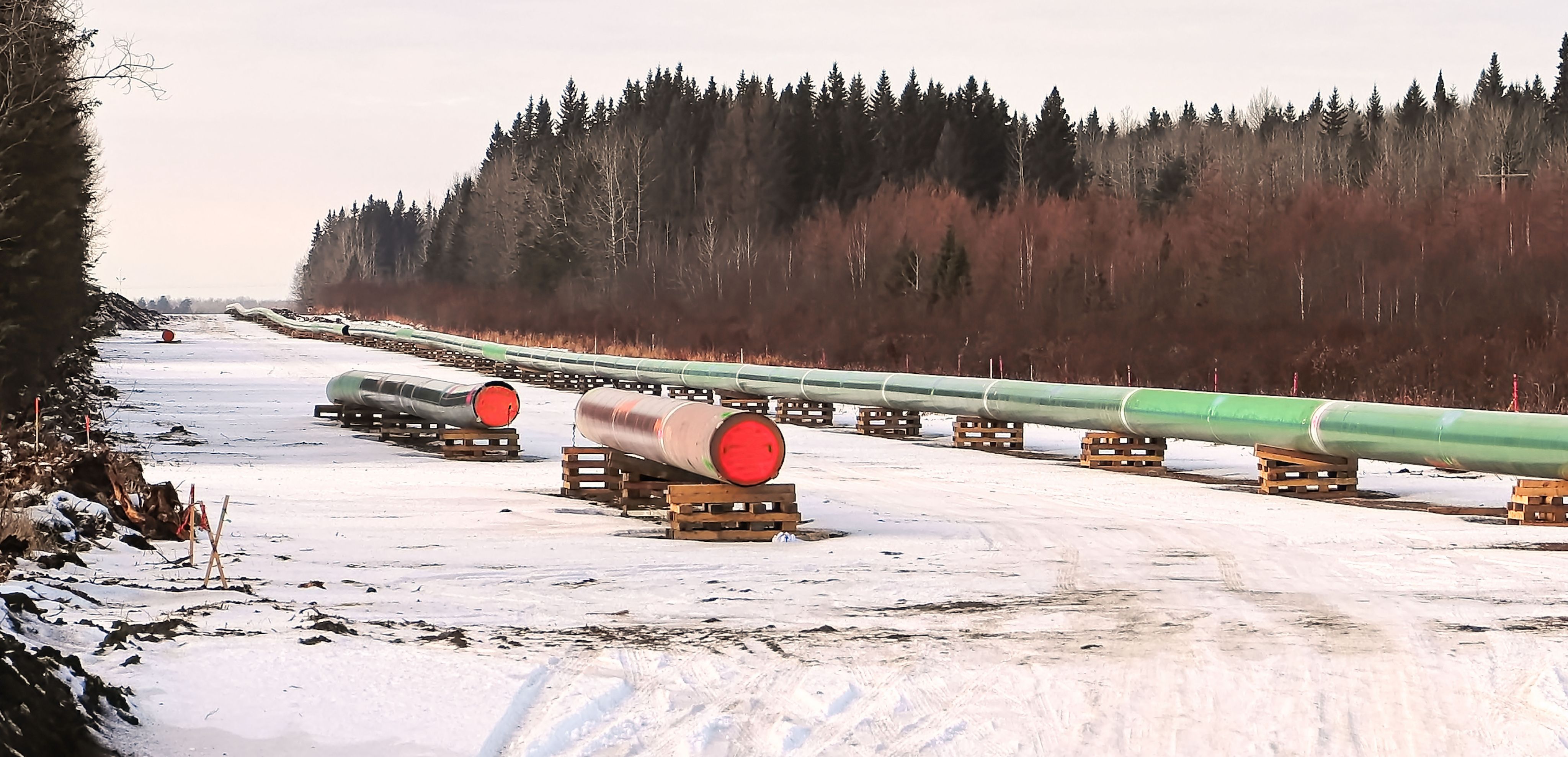
As debate continues over the costs of building Alberta’s proposed West Coast Oil Pipeline (WCOP), there is a question of how Canadian heavy crude can compete with the Persian Gulf and ever-rising Venezuelan grades that already serve the Asian market. There are several key elements that need to hold for the economics of the proposed pipeline to work—and none are guaranteed.
Canada’s transportation costs challenge
A Canadian barrel costs roughly twice what a Gulf barrel costs to land at the same refinery—the arithmetic of being 1,200 kilometres from tidewater. On delivered cost alone, any case for the pipeline must explain what offsets a gap that wide.
A Competitive Oil Market
Heavy sour crude delivered to Northeast Asia (C$/per barrel)
| WCS | Arab Heavy | Merey | |
|---|---|---|---|
| Delivered costs (C$/b) | (CA) | (Gulf) | (VZ) |
| Field to tidewater | $9-$11 | $2-$3 | $4-$6 |
| Freight to NE Asia | $4-$6 | $3-$4 | $4-$5 |
| Delivered, all-in cost | $13-$17 | $5-$7 | $8-$11 |
Notes: Persian Gulf and Venezuelan field-to-tidewater costs are RBC Thought Leadership estimates. Western Canadian Select (WCS) costs are modelled off Trans Mountain’s shipping costs to China from its Westridge Marine Terminal. Freight rates are mid-cycle estimates.
The tolls can be competitive—if the build stays on budget
The new pipeline does not need to follow the same path that unfolded for the Trans Mountain Expansion Project (TMX), i.e., cost overruns that were part passed onto shippers.
Pipeline Economics
West Coast Oil Pipeline (WCOP) vs. Trans Mountain (TMX) financial metrics
| WCOP | WCOP | TMX | |
|---|---|---|---|
| Pipeline Metrics (C$) | Low | High | Actual |
| Capacity, 000 bpd | 1,000 | 1,000 | 890 |
| Capital cost, $ billion | $35.2 | $43.7 | $35.3 |
| Capital cost, $ per bpd | $35,200 | $43,700 | $59,831 |
| Pipeline toll, $/b | TBD | TBD | $9-$11 |
| Freight to Asia, $/b | $2-$3 | $2-$3 | $4-$6 |
Notes: The TMX toll reflects the revised rates as disclosed in the July 7 submission to the Canada Energy Regulator ($9.20-$11.05 per barrel). The TMX capital cost per barrel is calculated based on expansion volumes only (590,000 bpd). Freight rates are mid-cycle (normalized). All dollar figures are quoted in Canadian dollars.
The West Coast Oil Pipeline’s transportation costs should hopefully be less expensive than TMX, given the use of a larger line along a ‘de-risked’ corridor, and loading supertankers (Very Large Crude Carriers) directly rather than the mid-sized Aframaxes. The challenge would be to keep the project on budget. The $35-$44 billion estimated price tag for the project excludes escalation and financing—key concerns from a competitiveness standpoint.
What must hold for the barrel to clear
Western Canadian Select (WCS) trades well under global benchmarks, much of it due to captivity (as it’s one and only market is the U.S.) rather than quality. While a cheaper price improves competitiveness (buyers get a similar barrel for less cost), it is less than ideal for producers and getting oil to tidewater lets the barrel escape this structural disadvantage. The Alberta government estimates WCOP could narrow the price gap between WCS and the U.S. benchmark West Texas Intermediate by up to US$3 per barrel. For reference, WCS has historically traded at a US$10-15 discount to WTI, but has at times gone in excess of US$20 per barrel.
Buyers are hoping Canadian crude is more reliable. Cheap Persian Gulf barrels carry a Strait of Hormuz risk, while Venezuelan barrels are dependent upon an extended economic reconstruction. Canada’s oil carries neither risk, with Asian buyers willing to pay for that security.
Producer commitments are less a question of Asian demand—TMX’s fill rate suggests the demand is clearly there, but cost overrun concerns need to be alleviated to ensure the West Coast project’s competitiveness.
Bottom Line
The trade case rests on several conditions: the project is built on time and on budget, with a discount that is more structural in nature rather than subject to periodic events, and a reliability premium outlast recent disruptions. If these conditions hold, the prize is significant: roughly $20 billion in incremental annual exports (based on 1 million barrels per day at 90% utilization, and a WCS price of $60 per barrel), along with a potential US$3-per-barrel tightening in a spread across future bitumen production of between 4.5 and 5 million barrels per day by 2035, worth about $5 billion annually. Whether Canada should make this bet with public money is a fiscal judgment, particularly given the country’s recent history with pipeline development, but one that seems increasingly likely with each passing day.
–By Shaz Merwat, Energy Policy Lead
500 Leaders | 2 Nations | 1 Day
RBC brought together more than 500 business, government and policy leaders last month for the U.S.-Canada Summit, in partnership with the Eurasia Group. Ministers, governors, ambassadors, economists, investors—and an astronaut—gathered in one room to talk about the future of the world’s most prosperous relationship.
The week that was
Donald Trump threatens to cut off trade to Spain
-
The U.S. President issued the threat over the European country’s refusal to increase defence spending to 5% of GDP by 2035. The U.S. administration is now preparing a list of Spanish goods to potentially embargo.
Canada tells the UAE it’s not ready for an inflow of cash
-
The federal government’s Major Projects Office told an official UAE delegation that it was too soon to inject billions of dollars into Canada, as projects are still in early stages. Prime Minister Mark Carney landed a $70 billion investment commitment from the UAE last year, but that capital has yet to be deployed.
Brussels launches probe into imports of Chinese duck
-
The European Commission has launched an anti-dumping investigation targeting Chinese Pekin duck, the breed used to make the iconic Peking duck dish. The latest dispute highlights growing trade tensions between the EU and China.
Global trade and economic groups warn of uncertainty
-
The heads of major global organizations—the International Energy Agency (IEA), International Monetary Fund (IMF), World Bank Group (WBG) and World Trade Organization (WTO)—met to discuss the impact of the war in the Middle East. While they noted that the global economy has been “broadly resilient,” they warned that uncertainty remains high and that the impacts of the war may linger.
U.S. trade deficit widens, as does Canada’s surplus
-
The U.S. trade deficit increased sharply in May, ballooning to a 14-month high despite tariffs on imports. Canada, meanwhile, saw its trade surplus widen to a four-year high in May, with exports of metals and energy increasing during the war in the Middle East.
This article is intended as general information only and is not to be relied upon as constituting legal, financial or other professional advice. The reader is solely liable for any use of the information contained in this document and Royal Bank of Canada (“RBC”) nor any of its affiliates nor any of their respective directors, officers, employees or agents shall be held responsible for any direct or indirect damages arising from the use of this document by the reader. A professional advisor should be consulted regarding your specific situation. Information presented is believed to be factual and up-to-date but we do not guarantee its accuracy and it should not be regarded as a complete analysis of the subjects discussed. All expressions of opinion reflect the judgment of the authors as of the date of publication and are subject to change. No endorsement of any third parties or their advice, opinions, information, products or services is expressly given or implied by Royal Bank of Canada or any of its affiliates.
This document may contain forward-looking statements within the meaning of certain securities laws, which are subject to RBC’s caution regarding forward-looking statements. ESG (including climate) metrics, data and other information contained on this website are or may be based on assumptions, estimates and judgements. For cautionary statements relating to the information on this website, refer to the “Caution regarding forward-looking statements” and the “Important notice regarding this document” sections in our latest climate report or sustainability report, available at: https://www.rbc.com/our-impact/sustainability-reporting/index.html. Except as required by law, none of RBC nor any of its affiliates undertake to update any information in this document.