

 EN
EN 


➔ Renewable projects can serve as a playbook for Indigenous participation in future developments
➔ How methane abatement could replace lost Middle East gas supplies
➔ Your backyard can help save the environment
Signals
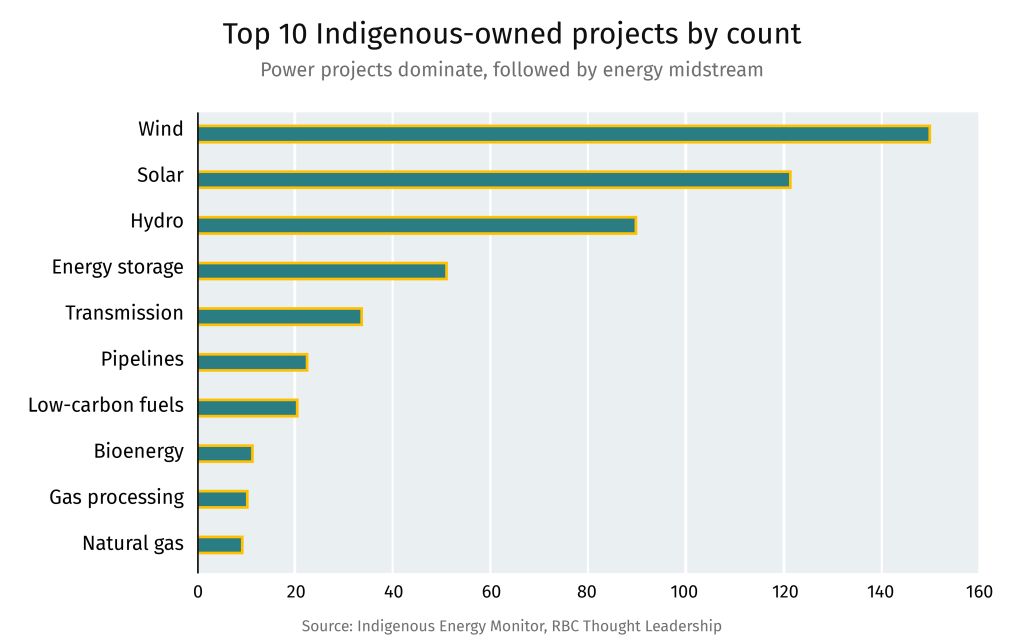
Power and utilities dominate Indigenous participation. That’s both its strength and its constraint, says Energy Policy Lead Shaz Merwat. Loan guarantee programs have been most active in western Canada, while northern communities, closest to the mineral deposits the energy transition requires, lack transaction readiness. Yet, the electrification trend offers substantial Indigenous investment opportunities nationwide. Read our Nations Building report that examines ways to boost First Nations participation as Canada embarks on a new project wave.
Methane mitigation could replace gas supplies stranded due to the Strait of Hormuz closure. That’s the stunning assessment from the International Energy Agency (IEA), which estimates that available methane abatement measures could free up to 200 billion cubic metres of natural gas—or double the supply volumes cut off due to the virtual closure of the Strait. Large quantities of produced gas are not being put to productive use, owing to methane leaks, and flaring and venting from oil and gas operations. The cost-effective, proven technologies could abate three-quarters of emissions from oil and gas and about half of coal emissions, according to the IEA. (Also read: What the Canada-Alberta methane deal means for businesses).
Nature conservation icon Sir David Attenborough is now eyeing his backyard for sustainability. After traversing the world’s wildest places, Attenborough’s new BBC series focuses on the often overlooked garden. It may have several low-hanging fruits, literally: home gardens can reduce carbon emissions, sequester carbon, and produce fresh food (pro tip: use rainwater to go truly green). Canadians already have a head start: About three in five Canadian households (59%) grew fruit, herbs, vegetables or flowers for personal use in a survey a few years ago.
How the Middle East conflict is accelerating renewable energy adoption
It’s early days, but the stalemate playing out over the Strait of Hormuz is forcing countries to renew their focus on electrifying their way out of fossil fuels. We have been here before as recently as 2022 when Russia launched a full-scale invasion of Ukraine, upending European energy ties to Russian oil and gas. Yet coal, oil and gas rebounded to near all-time highs.
Will it be different this time? Here are five ways the crisis has rekindled momentum for energy transition.
1. Global consensus is hardening. Santa Marta, Colombia, was the site last week of the First Conference on Transitioning away from Fossil Fuels, where 57 nations—including Canada—sought ways to move towards cleaner energy.While several lofty goals were expounded, a key takeaway was to launch a panel of experts who would provide scientific input on reducing fossil fuel dependence, high energy prices and extreme weather damage. It could be a breeding ground for new ideas.
2. AccelerateEU aims to shield Europe from energy price shocks. One idea is to accelerate the shift to “home green clean energy,” including an Electrification Action Plan to be released by the European Commission by the summer.
3. Knee-jerk consumer behaviour could alter long-term demand. Global EV sales jumped 66% in March compared to February, as some consumers baulked at the prices at the pump and switched to EVs. Several countries in Europe and Asia had record-breaking months. That could have long lasting consequences for fuel demand and what’s called” demand destruction.” In Canada, more than 12,600 zero-emission vehicles were sold in February, compared with nearly 8,700 the month before, recent Statistics Canada data shows. An AutoTrader survey of 17,000 Canadians found half of respondents would now consider buying an EV.
4. Chinese bureaucrats are now on the clean-energy case. The country is launching a campaign aimed at accelerating climate action by local authorities, in an effort to plateau CO2 emissions before 2030. At stake: rewards and career progress for local bureaucrats. Never underestimate the resourcefulness of a middle manager keen to get their performance bonus.
5. Most renewables are now competitive with fossil fuels. Even before the Iran war, the price competitiveness of solar and wind energy was the primary driver of power sector decarbonization, according to Ember Energy. In 2025, the average Levelized Cost of Energy (LCOE) for solar ($39/MWh) and onshore wind ($40/MWh) was 60% lower than that of combined cycle gas turbines (CCGT), which stood at $102/MWh. Offshore wind ($100/MWh) has also reached price parity CCGT. US$100+ oil prices only make the case for renewables more compelling. China’s export of photovoltaic solar panels, lithium-ion batteries and new-energy vehicles rose 70% in March year-on-year, Carbon Brief’s analysis of Chinese customs data shows.
The Climate Competitiveness Strategy update
Here’s what Lisa Ashton, Head of Research, gleaned from Ottawa’s latest Spring Economic Update:
Clean investment push continues. Expanded tax credits and incentives for carbon capture, clean electricity, and clean technologies aim to attract private capital and scale domestic innovation.
Proposed $5 billion in international climate investment. Flowing through Environment and Climate Change Canada, FinDev and Global Affairs Canada, the update proposes spending on climate initiatives and technology development in emerging economies around the world to advance global decarbonization. Carbon pricing framework is reinforced. Working to strengthen industrial carbon pricing benchmarks and ensuring consistent national standards remain central to competitiveness. Yet, key decisions are pending, namely performance standards. Another obstacle: the oil industry is pushing back on the carbon tax.
Funding of $3.5 billion towards scaling nature positive outcomes. Announced in the government’s Force of Nature strategy, the federal government will stimulate investments in nature, tying climate competitiveness to conservation goals (e.g., protecting 30% of lands and waters by 2030).
Integration with broader economic strategy. The proposed Sustainable Finance Conference and the development of the made-in Canada sustainable investment guidelines aim to connect public and private dollars in key economic sectors, linking sustainable investments to jobs, affordability, and global competitiveness.
The takeaway. Canada is doubling down on a market-driven, investment-led approach to climate policy. The country will need to advance key strategies and agreements including the energy MoU with Alberta to drive real outcomes through its renewed approach.
Conversations

-
Atthe First Nations Major Project Coalition’s 9th annual conference, John Stackhouse discussed how economic reconciliation and Indigenous equity are vital to ensure Canada’s big ambitions are fully realized.
-
Gregory Brew, a historian of international energy and U.S.-Iranian relations and a senior analyst at the Eurasia Group, on how America would pay dearly for its energy arrogance.
-
Subsidies and price floors are temporary tools, demand is what would sustain prices and investor confidence in critical minerals, writes Gracelin Baskaran, director, critical minerals security, at the Center for Strategic and International Studies.
Curated by Yadullah Hussain, Managing Editor, RBC Climate Action Institute.
Climate Crunch would not be possible without John Stackhouse, Jordan Brennan, John Intini, Farhad Panahov, Lisa Ashton, Shaz Merwat, Vivan Sorab, Caprice Biasoni, Lavanya Kaleeswaran and Joelle Schonberg .
Have a comment, commendation, or umm, criticism? Write to me here (yadullahhussain@rbc.com)
Climate Crunch Newsletter
This article is intended as general information only and is not to be relied upon as constituting legal, financial or other professional advice. The reader is solely liable for any use of the information contained in this document and Royal Bank of Canada (“RBC”) nor any of its affiliates nor any of their respective directors, officers, employees or agents shall be held responsible for any direct or indirect damages arising from the use of this document by the reader. A professional advisor should be consulted regarding your specific situation. Information presented is believed to be factual and up-to-date but we do not guarantee its accuracy and it should not be regarded as a complete analysis of the subjects discussed. All expressions of opinion reflect the judgment of the authors as of the date of publication and are subject to change. No endorsement of any third parties or their advice, opinions, information, products or services is expressly given or implied by Royal Bank of Canada or any of its affiliates.
This document may contain forward-looking statements within the meaning of certain securities laws, which are subject to RBC’s caution regarding forward-looking statements. ESG (including climate) metrics, data and other information contained on this website are or may be based on assumptions, estimates and judgements. For cautionary statements relating to the information on this website, refer to the “Caution regarding forward-looking statements” and the “Important notice regarding this document” sections in our latest climate report or sustainability report, available at: https://www.rbc.com/our-impact/sustainability-reporting/index.html. Except as required by law, none of RBC nor any of its affiliates undertake to update any information in this document.