

 EN
EN

Reducing emissions in our operations
Integrating climate considerations into our business and operations is one of the strategic priorities of RBC’s Climate Blueprint.
RBC is committed to reducing emissions associated with our operations. We are working toward longer-term reductions, focusing on reducing emissions from buildings we own or lease and sourcing 100% of our electricity from renewable energy largely through energy attribute certificates (EACs).legal disclaimer 1, legal disclaimer 2 To complement our efforts around reducing emissions, we purchase and retire independently verified carbon credits equivalent to our remaining reported operational emissions, which we believe also helps to support the global voluntary carbon market. RBC intends to work with suppliers to reduce emissions in our supply chain and these efforts are in the planning phase.

 Learn More



Buildings
RBC is focusing on reducing heating fuel emissions in both the buildings we own and those we lease
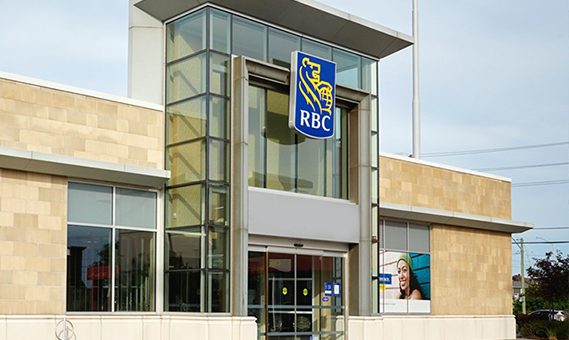
We are working towards retrofitting our Canadian branch network
In 2024, we announced plans to install heat pumps in our Canadian branch network where we are responsible for heating, ventilation and air conditioning (HVAC) by 2035. Over the next three years (2025-2027), RBC is investing $35 million into this effort.
We are working towards retrofitting our Canadian branch network
In 2024, we announced plans to install heat pumps in our Canadian branch network where we are responsible for heating, ventilation and air conditioning (HVAC) by 2035. Over the next three years (2025-2027), RBC is investing $35 million into this effort.
We are working with landlords to help support reducing emissions in the spaces we lease
In spaces we lease where we do not have control over the HVAC equipment, we are working with landlords to help reduce emissions through our Landlord Engagement Program. This involves identifying measures to reduce emissions when designing major renovations and new builds where RBC leases space, such as electrifying heating and cooling. We also continue to promote energy efficiency in our owned and leased buildings through measures such as smart building technologies (e.g., smart thermostats).
Started in 2023, our Landlord Engagement Program aims to incorporate climate-focused lease clauses within lease agreements for new leasing agreements and renewals of existing leasing agreements. These climate-focused lease clauses are designed to support RBC’s commitment to reducing emissions in its operations by asking landlords to commit to climate-focused actions and share relevant climate data with RBC. To help reduce its operational emissions in leased spaces, RBC is asking landlords to commit to achieving net-zero emissions in their operations of spaces leased by RBC by 2040. The sharing of relevant climate data from landlords helps RBC improve the accuracy of our reporting and management of our own utility consumption and emissions from our operations.
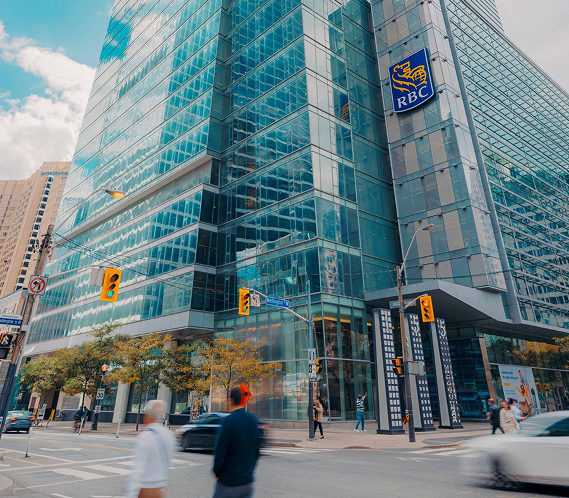

Landlords are a significant stakeholder in our journey to create a future we all want.”
– Jon Douglas,
Director of Global Climate & Sustainability
Some examples of clauses introduced by RBC for new leasing agreements and renewals of existing leasing agreements and the objectives of each, are as follows:
| Clause | Objective for the landlord |
|---|---|
| Commit to net-zero operational emissions | Achieve net-zero emissions in their operations of spaces leased by RBC by 2040 |
| Share information about utility consumption | Share energy, water and waste consumption in a reliable, quantifiable manner which helps RBC improve the accuracy of our reporting and management of our own utility consumption and emissions from our operations |
| Electrify heating, ventilation and air conditioning (HVAC) units | Replace fossil fueled heating, ventilation and air conditioning (HVAC) units with electric alternatives at the end of the useful life of the fossil fueled units |
Here are some landlords with whom we have worked on this initiative to date:legal disclaimer 3






RBC continues to investigate possible ways to optimize how our data centres can reduce emissions related to AI
RBC continues to explore ways to optimize the energy consumption of our data centres to limit emissions associated with increasing AI work. We are deploying advanced data centre cooling solutions that help improve, over time, the energy efficiency of our data centres. This includes the use of more efficient cooling techniques to optimize air cooling as more AI work is under development. RBC sources renewable electricity to address the energy consumption of our data centres and our leased co-location data centres.
Stratford Data Centre: RBC is currently building an on-premise solar farm at our Stratford Data Centre in Stratford, Ontario, with the aim of supplying part of the site’s annual energy needs from solar power and reducing CO2 emissions.

Renewable Electricity
We plan to continue to source 100% of our electricity from renewable energy.legal disclaimer 1
We plan to continue to source 100% of our electricity from renewable energy, with the aim of sourcing from the regions in which we operate.legal disclaimer 1 This helps to stimulate the market for renewable energy and supports the broader decarbonization of the electricity grids we rely on. As RBC continues to source energy attribute certificateslegal disclaimer 4 (EACs), we will look to support new projects that create additionalitylegal disclaimer 5 and provide social benefits.
RBC’s virtual Power Purchase Agreements (PPA)legal disclaimer 6
In 2020, RBC became the first Canadian bank to sign a long-term renewable energy virtual Power Purchase Agreement (vPPA). In 2022, we signed our second renewable energy vPPA. The renewable electricity generated by the wind and solar projects under our two vPPAs is a significant driver of our progress in reducing our emissions. The reason for our focus on vPPAs is that we believe vPPAs helps the energy seller secure financing and supports the growth of renewable energy.
Bahamas Solar Carport
This project transformed an open parking area into a solar carport, designed to generate solar energy to supply energy to RBC’s head office in the Bahamas while providing essential shade for vehicles. The solar carport features a 104 kW solar array comprising 259 high-efficiency solar panels. This system is capable of producing up to 163,500 kWh annually, with the aim of supplying approximately 15% of the site’s electricity consumption needs.

Carbon Credits
While RBC prioritizes emissions reductions in our operations, we also purchase and retire carbon creditslegal disclaimer 7 to compensate for our remaining reported operational emissionslegal disclaimer 2, legal disclaimer 8. Carbon credits are not counted for the purposes of measuring our reported annual operational emissions. We believe purchasing carbon credits that demonstrate key qualities, such as additionality and permanencelegal disclaimer 9, provides capital to support projects that contribute to climate action; for example, by helping scale new technologies or expand natural carbon sinks.
RBC purchases credits from third-party verified projects and technologies that help reduce emissions. The carbon credits are verified by third-party carbon credit registrieslegal disclaimer 10 such as Climate Action Reserve, Verra, and American Carbon Registry, as well as additional third-party validation or verification bodies, that fulfill the criteria of the carbon credit registries to demonstrate additionality and permanence. We conduct due diligence as part of our carbon credit procurement process. As part of this process, we take into account location, technology, vintage and additional community and/or environmental benefits and impacts.
Additionally, we are building out our carbon removal credits inventory to address our long term hard-to-abate emissions.legal disclaimer 11
Carbon removal with Deep Sky: In 2024, we were a founding buyer of 5,000 carbon removal credits over a period of ten years issued by Deep Sky, a Canadian carbon dioxide removal (CDR) company that is aiming to make CDR low cost, low energy intensity and scalable. To learn more, click here.
View Legal DisclaimersHide Legal Disclaimers
The information in this webpage is provided for information purposes only. This webpage may contain forward-looking statements within the meaning of certain securities laws. Information on this webpage is or may be based on assumptions, estimates and judgements. For cautionary statements relating to the information on this webpage, refer to the “Caution regarding forward-looking statements” and the “Important notice regarding this document” appendices in our latest Sustainability Report, available at www.rbc.com/sustainabilityreporting. Except as required by law, none of RBC nor any of its affiliates undertake to update any information in this webpage.
All references to websites are for your information only. The content of any websites referred to in this webpage, including via website link, and any other websites they refer to are not incorporated by reference in, and do not form part of, this webpage. This webpage is also not intended to make representations as to the sustainability-related initiatives of any third parties, whether named herein or otherwise, which may involve information and events that are beyond our control.