

 EN
EN 

Hitting the ground running
Janice Charette has at least two sets of marching orders: the one she received directly this week from Mark Carney, and the one she will receive indirectly next week from Donald Trump.
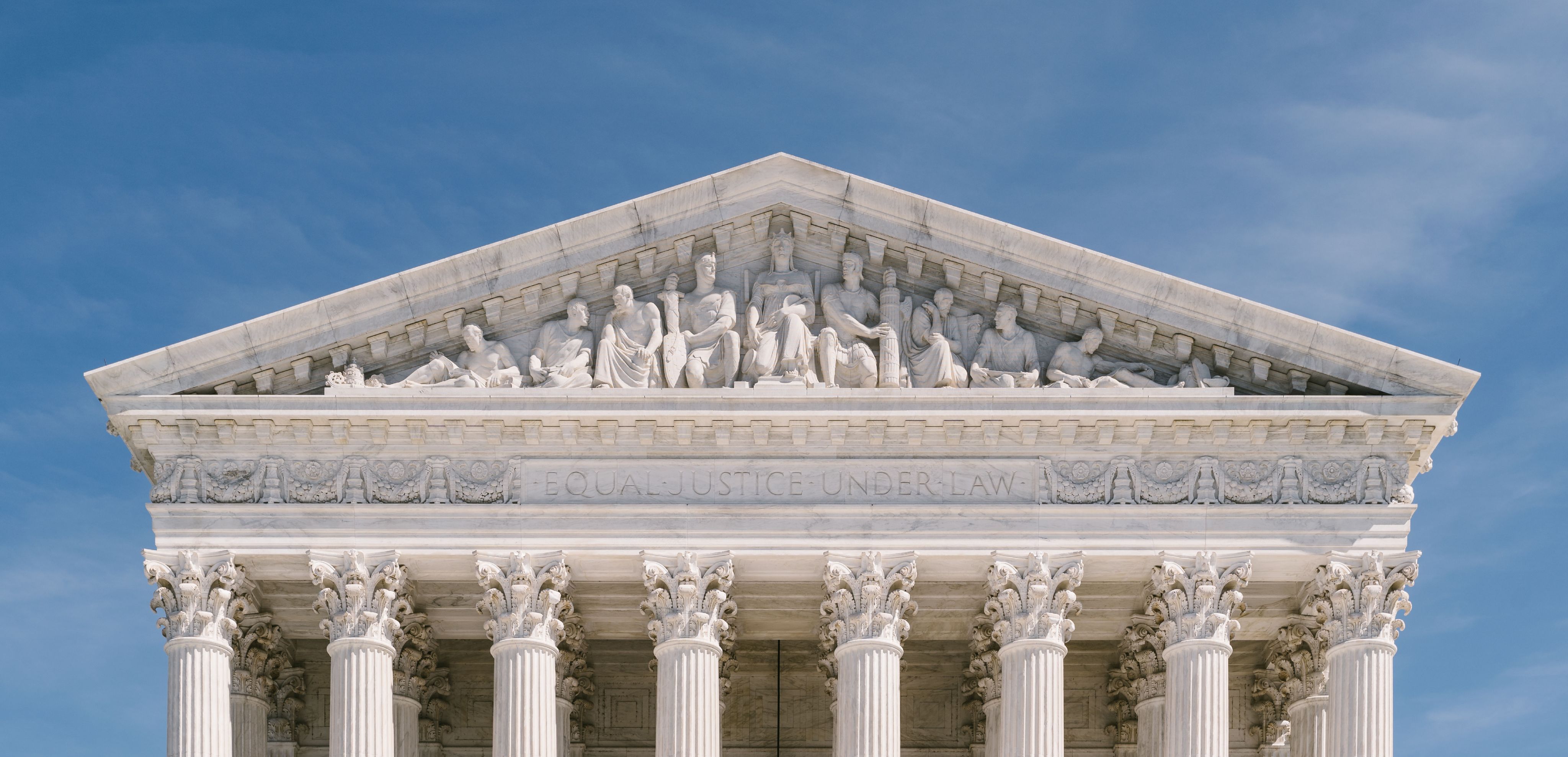
Trump’s unsurprising loss of the Supreme Court case on tariffs will only deepen the difference.
First to Carney:
-
The PM has an impressive depth of respect for his new chief trade negotiator, going back to their days in London but critically to her time last year overseeing his transition team.
-
As the country is learning, Carney works with concentric circles of trust and confidence. She’s one of a handful of people in the inner circle.
-
The PM is also known to value her deep knowledge of the Canadian government and businesses. She knows where to go for answers to the many questions and challenges the U.S. will throw at her.
-
Her first challenge will be to develop the framework for a marathon of trade talks.
-
That includes structuring technical conversations with a counterpart that’s neither interested nor prepared right now.
-
And it means building up a team for the fight. In Trump 1, the Trudeau team set up a war room that built a network of influencers, including in industry and state governments. Something similar is needed now, but perhaps more of a data room—an operation that can gather and disseminate current information on the impact of tariffs in both countries.
-
Her next challenge will be to align with the PM on the potential gives and red lines that any negotiator needs in their pocket.
-
One non-negotiable along the way: ensure the CUSMA exemption is maintained.
Now to Trump:
-
The President, who is also on a war footing with Iran, will spend the weekend also ramping up his next trade battle.
-
Many are expecting more Section 301 tariffs to replace the emergency powers tariffs that the Supreme Court struck down. Expect more non-tariff measures, too, and more threats
-
His key messaging may come in his State of the Union address Tuesday night, which is supposed to speak to affordability but will likely toggle between geopolitical conflicts and tariffs.
-
The setting, on Capitol Hill, won’t be lost on a President who will cajole Congress to support him on both war fronts.
-
Trump’s lead negotiator, Jamieson Greer, has told people privately he’s preparing for negotiations with both Canada and Mexico to run beyond the November midterms.
-
That flies in the face of many expectations for a replay of 2018, when the administration worked rapidly through the summer to complete what the President could present in the fall campaign as a BDE (best deal ever).
-
If that happens, a Democrat-led House would likely make any comprehensive deal with either country an improbability. Not only will the Dems want a different deal than Trump, Congress will be consumed—almost Watergate-like—with the Epstein files.
Charette has faced plenty of such challenges in her career, and is widely known for grace under fire.
Press play on the next big test.
– John Stackhouse
What the supreme court ruling means for Canada–and what’s next
A tariff backdoor just closed
-
The U.S. Supreme Court has effectively removed the International Emergency Economics Power Act (IEEPA) as a usable, fast-tariff instrument for any president: the ruling says IEEPA’s authority to regulate importation does not include the authority to impose tariffs absent explicit Congressional authorization.
-
That matters because IEEPA was the administration’s most flexible mechanism: it enabled broad, rapidly adjustable, country-wide duties (including “reciprocal” tariffs and fentanyl-related tariffs) that could be turned up or down quickly as negotiating pressure.
-
A large share of tariff collections tied to IEEPA is now legally exposed (and at minimum, frozen as a durable policy tool).
-
For Canada, the ruling does not touch the most biting tariffs: sectoral/national security tools (notably Section 232) remain the active battlefield for steel, aluminum, autos and other targeted categories.
-
RBC Economics hammers home that point in ‘Preserving CUSMA exemptions: Canada’s real priority amid U.S. IEEPA ruling.’“By our count, 89% of Canadian exports to the U.S. in December were not charged with tariffs because they’re compliant with rules of origin requirements in CUSMA. That leaves IEEPA measures only effective on less than 5% of exports to the U.S. In December (with the remainder accounted for by Section 232 tariffs), Canada faced an average effective U.S. tariff of 3.1%—the lowest of all major U.S. trade partners.
Canada: less blanket risk, key sectors remain exposed
-
The ruling weakens Washington’s negotiating power by removing the credibility of instantaneous escalation. Future tariffs must pass through investigations, evidentiary standards, and consultation.
-
Industries exposed to higher input costs, retailers sensitive to consumer prices, vulnerable agricultural exporters, and opposed politicians will have more opportunity to intervene before tariffs take effect.
-
The economic pain of 232 tariffs remains but the credibility of economy-wide escalation declines, improving predictability—a meaningful advantage for negotiations and investment decisions tied to North American supply chains.
-
Integration becomes a stronger argument. When tariffs require justification through formal investigations, deeply embedded cross-border supply chains become evidence against disruption.
Expect tariffs to persist, but with more politics attached
-
The administration will try to rebuild tariff leverage using other statutes, but those tools require more process, justification and time.
-
Canada can treat this as an opening to shape the record, not as an off-ramp from tariff risk. If the battlefield shifts toward investigations and consultations, Canada will need to make the case that tariffs are self-defeating for the U.S.
Coalition-building becomes more decisive
-
The most effective counterweight to new tariffs will often be U.S. stakeholders with skin in the game: downstream manufacturers, retailers, farmers, state governments, and industry associations that can credibly argue costs, shortages, and lost competitiveness.
-
Canada’s best outcomes will come from identifying where U.S. dependence is highest (inputs, components, energy-intensive processing, regional supply chains) and turning those into politically legible arguments.
What we’ll be watching closely going forward
1. Which alternative tools the Trump administration prioritizes, and whether it doubles down on using Section 232 tariffs.
2. Whether the White House seeks negotiated “wins” that substitute for tariffs: procurement commitments, investment announcements, or sectoral carve-outs.
3. How quickly and effectively U.S. industry groups and state actors coalesce around this momentum swing to further curtail White House trade power.
4. The legal and fiscal ramifications. The court did not decide whether revenues collected under IEEPA must be returned, leaving potentially US$175 billion subject to litigation. Pressure to issue large-scale repayments will be vehemently opposed but will reinforce opposition, potentially induce fiscal pressure, and complicate any attempts to rebuild a similar tariff regime.
— Thomas Ashcroft
This article is intended as general information only and is not to be relied upon as constituting legal, financial or other professional advice. The reader is solely liable for any use of the information contained in this document and Royal Bank of Canada (“RBC”) nor any of its affiliates nor any of their respective directors, officers, employees or agents shall be held responsible for any direct or indirect damages arising from the use of this document by the reader. A professional advisor should be consulted regarding your specific situation. Information presented is believed to be factual and up-to-date but we do not guarantee its accuracy and it should not be regarded as a complete analysis of the subjects discussed. All expressions of opinion reflect the judgment of the authors as of the date of publication and are subject to change. No endorsement of any third parties or their advice, opinions, information, products or services is expressly given or implied by Royal Bank of Canada or any of its affiliates.
This document may contain forward-looking statements within the meaning of certain securities laws, which are subject to RBC’s caution regarding forward-looking statements. ESG (including climate) metrics, data and other information contained on this website are or may be based on assumptions, estimates and judgements. For cautionary statements relating to the information on this website, refer to the “Caution regarding forward-looking statements” and the “Important notice regarding this document” sections in our latest climate report or sustainability report, available at: https://www.rbc.com/our-impact/sustainability-reporting/index.html. Except as required by law, none of RBC nor any of its affiliates undertake to update any information in this document.