

 EN
EN 

In this week’s edition: Lots of trade talk on the sidelines of the Asia Pacific Economic Cooperation summit and a generational investment in Canada’s competitiveness
Significant shifts ahead
By John Stackhouse
This week’s federal budget will aim to reorient Canada’s economy for a new global economic order, and that goes well beyond Donald Trump.
The Canadian economy has been out of step with global trading and investment patterns for some time. Trump just shone a light on it.
Consider trade itself. Global trade as a percentage of GDP reached a post-war peak of about 60%, coinciding with the Global Financial Crisis (itself an outcome of trade and investment imbalances). It’s since dropped to the mid-50s, and will likely come down a touch this year and next as the global economy slows.
This doesn’t mean an end to globalization. It does indicate a re-globalization that—cue the budget signals—will lead to significant capital shifts. And they will be perhaps more significant than anything we’ve seen in 25 years, since China entered the WTO and became the new magnetic pole for global capital.
This time, capital won’t flow to the lowest cost, mass producer. It will find the sources of strategic goods and resources, which would play well to the new Canadian pitch. Especially for energy, minerals, defence, space and food.
Those strategic exports will be especially valuable to some of Canada’s key trading partners like South Korea and Germany, as they seek to reduce reliance on the U.S. and China. Moreover, big exporters like the Koreans and Germans will need more secure energy supplies if they’re going to be ready for a world of more modest trade in manufactured goods.
I spoke about this new energy security paradigm last week at an IEA energy innovation forum, on the sidelines of the G7 energy ministers meeting in Toronto. You can read the full text here.
The week that was
-
Prime Minister Mark Carney’s meeting with China’s President Xi Jinping this past Friday didn’t yield any major results but it was the first formal meeting between a Canadian Prime Minister and the Chinese President since 2017. Carney, who described it as a “turning point” for the two countries, also accepted XI’s invitation to visit China.
-
Wanting more info on the state of Canada-U.S. relations, several Canadian Premiers are calling on Carney to host a First Ministers’ meeting. The last time the PM met with the premiers was August 6.
-
A couple of days after U.S. President Donald Trump vowed he wouldn’t talk with Carney for some time, the two were placed directly across from one another during an eight-person dinner hosted by South Korea’s President. The PMO wouldn’t confirm if trade talk was on the menu but did say the World Series was a topic of conversation.
-
On Friday, Trump doubled down on his promise to not engage Canada in trade talks; which differed from the message sent from his Energy Secretary Chris Wright, who, while at the G7 Energy and Environment Ministers’ meeting, said the goal is for the two countries to get back to the table and cooperate more closely on oil, gas and critical minerals.
-
While it didn’t lead to a finalized trade deal, the meeting between Donald Trump and China’s Xi Jinping resulted in agreements on a few key items–including export controls on rare earths and chips.
-
The truce came on same day China’s factory activity numbers revealed its longest decline in nine years.
Port to Prosperity
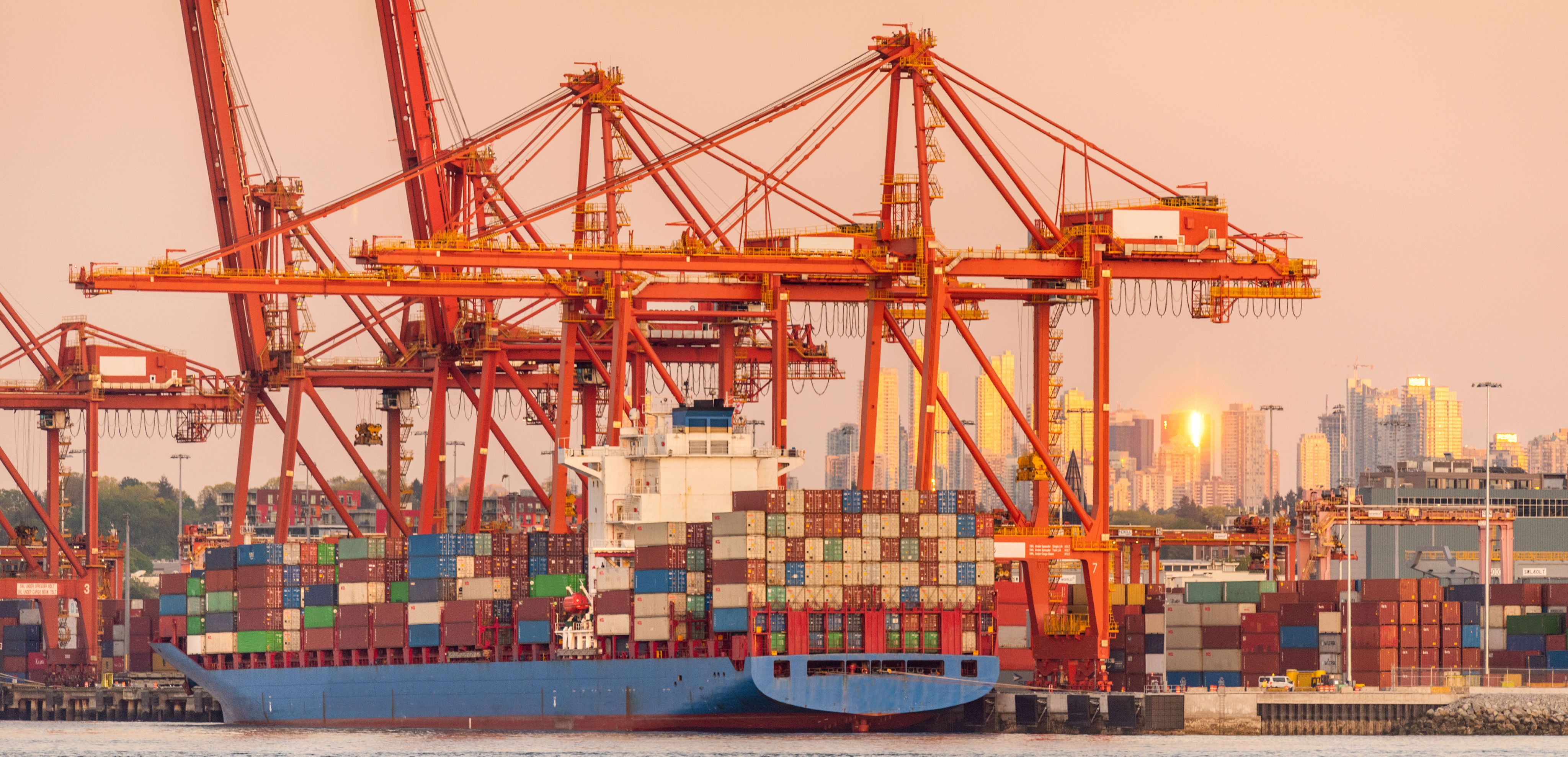
Canada’s prosperity depends heavily on how efficiently it can move goods to market—yet its largest ports have fallen behind the world’s best.
In the latest episode of Disruptors: The Canada Project, John Stackhouse spoke with Devan Fitch, Program Manager of the Roberts Bank Terminal 2. The long-planned project, at the mouth of Fraser River Delta, represents a generational investment in Canada’s competitiveness.
Here’s an excerpt from this week’s episode:
JS: Most Canadians probably take the Port of Vancouver for granted, even though if you look around, at least some of the stuff in your life passed through this port. Give us a sense, Devin, of the magnitude of the Port of Vancouver and what it means to the Canadian economy.
DF: If you take out of the equation all of the trade that we do with the U.S. and you think about the trade that we do with the rest of the world, $1 in every $3 of trade passes through the Port of Vancouver. That’s supporting businesses right across Canada. Consumers right across Canada. We happen to be located in Vancouver, but we are very much Canada’s port.
JS: As I understand it, the Port of Vancouver is the size, nearly, of the next five biggest ports in the country.
DF: That’s correct.
JS: And Roberts Bank will enable it to grow by another 30%. Is that correct?
DF: Yeah, somewhere between 20 and 30%.
JS: What does 30% bigger actually mean?
DF: In one fell swoop, it will increase capacity on the west coast of Canada by approximately one third. It will add 135 hectares of new waterfront trade enabling industrial land in one of the most industrial land constrained regions of North America. To give you a sense of scale of T2 – 12-million cubic metres of sand and 4-million cubic meters of manufactured rock. On the sand side, that’s about 2,500 Olympic sized swimming pools.
JS: Sounds enormous, but how does it compare to the world’s mega ports?
DF: It’s big for Canada. It is modest in size and scale compared to some of the largest ports around the world in Asia and Europe. But certainly a step function increase for Canada. It will provide capacity to move a $100 billion worth of trade goods every single year and support over 17,000 supply chain jobs across the nation.
JS: Give us a sense of how the port business is transforming and what opportunities there may be for Canada to move up in the competition leagues.
DF: Right now the world’s biggest container ships are about 24,000 twenty-foot equivalent units (TEUs). They’re applying their trade from Asia to Europe, and we see shipping lines cascading those large ships onto the North American routes as they age. We’re expecting as we move forward to see a significant increase in the size of ships, calling at the Port of Vancouver. Right now the average size is around 10,000 TEUs and we’re building Roberts Bank Terminal 2 to futureproof it to be able to accommodate ships as large as 24,000 TEUs.
Listen to the full episode here.
In this special season of Disruptors: The Canada Project, we’re crisscrossing the country and speaking to visionary leaders who are harnessing technology to take on Canada’s most-urgent challenges. Listen and subscribe wherever you get your podcasts.
Statistics Canada. Annual Survey of Manufactures and Logging, 2024.
Statistics Canada. Canadian International Merchandise Trade, 2025.
Statistics Canada. Industrial product price index, 2025.
Canada Tariff Finder, 2025.
Statistics Canada. Canadian International Merchandise Trade, 2025.
This article is intended as general information only and is not to be relied upon as constituting legal, financial or other professional advice. The reader is solely liable for any use of the information contained in this document and Royal Bank of Canada (“RBC”) nor any of its affiliates nor any of their respective directors, officers, employees or agents shall be held responsible for any direct or indirect damages arising from the use of this document by the reader. A professional advisor should be consulted regarding your specific situation. Information presented is believed to be factual and up-to-date but we do not guarantee its accuracy and it should not be regarded as a complete analysis of the subjects discussed. All expressions of opinion reflect the judgment of the authors as of the date of publication and are subject to change. No endorsement of any third parties or their advice, opinions, information, products or services is expressly given or implied by Royal Bank of Canada or any of its affiliates.
This document may contain forward-looking statements within the meaning of certain securities laws, which are subject to RBC’s caution regarding forward-looking statements. ESG (including climate) metrics, data and other information contained on this website are or may be based on assumptions, estimates and judgements. For cautionary statements relating to the information on this website, refer to the “Caution regarding forward-looking statements” and the “Important notice regarding this document” sections in our latest climate report or sustainability report, available at: https://www.rbc.com/our-impact/sustainability-reporting/index.html. Except as required by law, none of RBC nor any of its affiliates undertake to update any information in this document.