

 EN
EN 

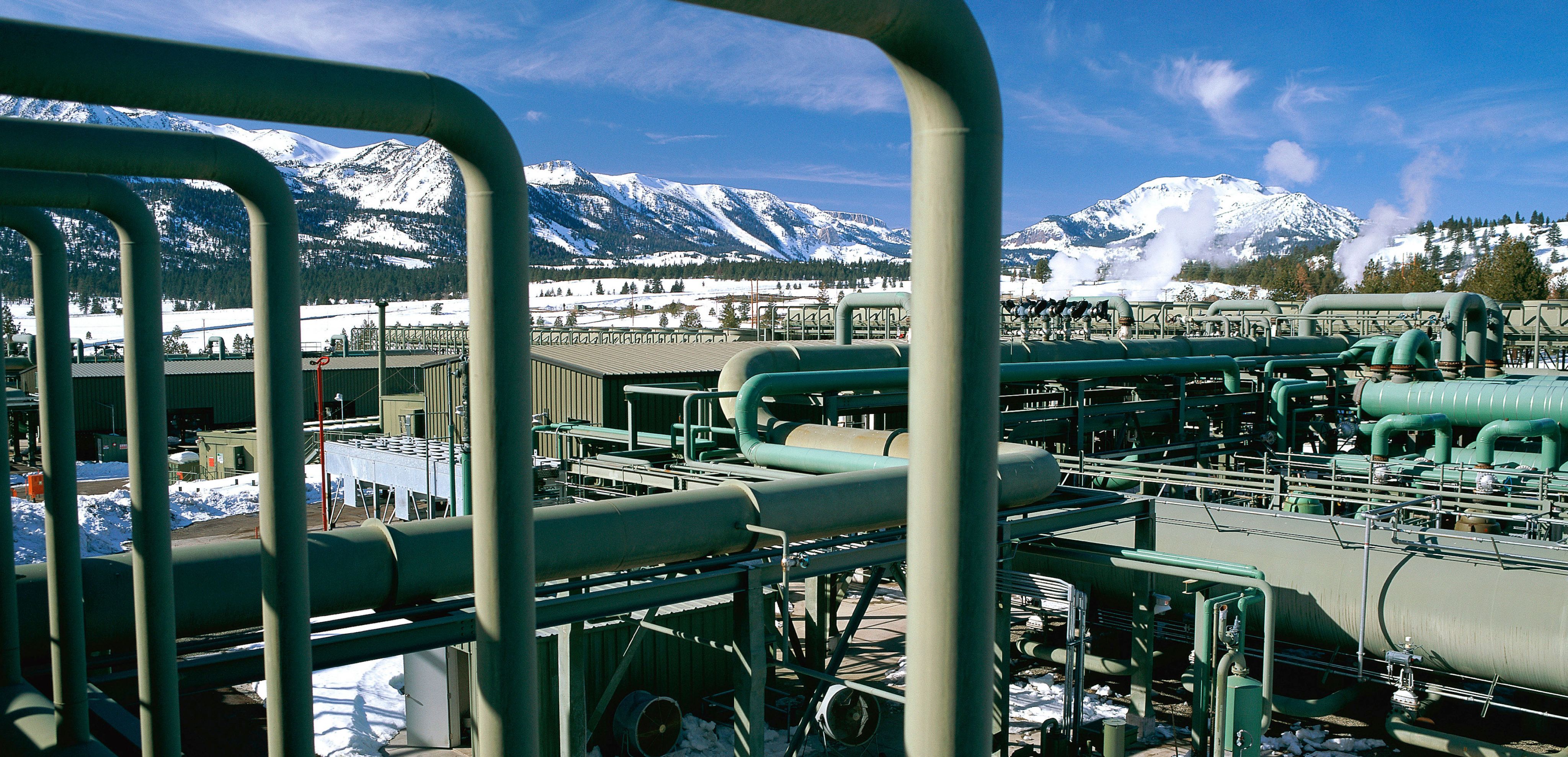
Investment in next-generation geothermal technologies is surging globally, driven by recent breakthroughs in drilling technology that are rapidly transforming the economics and viability of geothermal electricity generation. According to the International Energy Agency (IEA) and data from Underground Ventures, a geothermal-focused venture investor, financing for next-generation geothermal reached roughly CAD$3 billion in 2025.1 The U.S. and Indonesia lead the world in investment in geothermal power and heating projects.2
While Canada possesses world-class subsurface expertise, hot geothermal gradients spanning western and northwestern regions, and companies like Eavor, DEEP Earth Energy, and Tu Deh-Kah Geothermal, domestic deployment lags dramatically. Canada currently generates less than six megawatts (MW) of geothermal power, representing 0.004% of the country’s installed capacity.3
According to the IEA, global investment in geothermal energy could reach CAD$3 trillion by 20504 as nations seek reliable, zero-emission baseload power to complement intermittent renewables. Advanced technologies are key to scaling geothermal, which has traditionally been confined to specific areas with the right geology. Two technologies stand out: (1) Enhanced geothermal systems (EGS), which borrow shale drilling technology, create new fractures in hot underground rocks, inject fluids and use the steam to generate geothermal power;5 (2) Closed Loop Geothermal (CLG) systems also deploys advanced drilling and injects liquid through underground pipes to generate electricity.6 7
Recent innovations are dramatically reducing costs. Improved drilling techniques borrowed from oil and gas, including polycrystalline diamond compact drill bits and real-time fibre optic monitoring, are cutting well costs by up to 12-26% compared to earlier estimates.8 Companies like Houston-based Fervo Energy have demonstrated sustained 8-10 MW output from single production wells at their Cape Station project in Utah, validating the commercial viability of EGS.9 New techno-economic analysis shows that in high-gradient regions like British Columbia’s Mount Meager or the Northwest Territories’ Liard Basin, levelized costs of energy for EGS could fall to CAD$45-53/MWh with continued innovation, competitive with combined-cycle gas and cheaper than new nuclear.10
Considerations for Canada as it looks to compete in the global geothermal race:
The opportunity could be significant.
Recent research on Baker Lake, Nunavut, reveals that previously dismissed regions of the Canadian Shield may hold viable deep geothermal resources. At a measured gradient of 28°C/km, significantly higher than earlier national estimates, modelling indicates a 90% likelihood that a four-kilometre deep system could meet the community’s heating demand, with potential for electricity generation at 7-8 kilometre depth.11
Saskatchewan is already leveraging its oil and gas expertise.
Saskatoon-based DEEP Earth Energy has partnered with oilfield services company SLB to develop Canada’s first commercial-scale geothermal power facility near Estevan, near the Saskatchewan-North-Dakota border. Phase 1 involves drilling two wells, with Phase 2 potentially scaling to 18 wells producing 30 MW.12 This project leverages the Western Canadian Sedimentary Basin’s hot sedimentary aquifers and demonstrates that Canada’s oil and gas infrastructure, rigs, drilling expertise, and supply chains, can be applied to geothermal development.
Yet regulatory fragmentation threatens to stall momentum.
Only Alberta, British Columbia, and Nova Scotia have geothermal-specific legislation. There is no national strategy, no coordinated R&D agenda, and insufficient financial de-risking tools to accelerate early-stage projects. A national regulatory template that provinces could rapidly adapt to their own specific needs alongside government-backed initiatives like the Alberta Drilling Accelerator (ADA) could help to catalyse geothermal in Canada by reducing drilling costs, developing high-temperature tools, and optimizing reservoir stimulation.
The window for Canadian leadership is closing.
The U.S. Department of Energy’s Enhanced Geothermal Shot targets electricity costs below CAD$61/MWh by 2035.13 with billions in funding. Tech giants including Google, Meta, and Microsoft are investing heavily in geothermal partnerships. China, Indonesia, and the Philippines are rapidly expanding deployment. If Canada does not act with coordinated policy, regulatory harmonization, and strategic R&D investment, it risks squandering subsurface expertise and geological endowment that offer natural advantages.
Vivan Sorab is Clean Technology Lead at RBC Thought Leadership
Schulz, R., Lyons, M., Ugur, D., Bennett, S., Turich, C. (2026): Investment in next-generation geothermal is surging. Policies are key to further growth, International Energy Agency: https://www.iea.org/commentaries/investment-in-next-generation-geothermal-is-surging-policies-are-key-to-further-growth
McCarthy, D. (2025): Chart: Geothermal energy is attracting more and more investment. Canary Media. https://www.canarymedia.com/articles/geothermal/chart-global-investment-clean-energy
Brasnett, G., Eyre, M., & Massie, P. (2025). The Deep Heat Advantage: A techno-economic analysis of enhanced geothermal systems in western and northwestern Canada. Cascade Institute. https://cascadeinstitute.org/wp-content/uploads/2025/10/The-Deep-Heat-Advantage-FINAL.pdf
International Energy Agency: The Future of Geothermal Energy: https://iea.blob.core.windows.net/assets/cbe6ad3a-eb3e-463f-8b2a-5d1fa4ce39bf/TheFutureofGeothermal.pdf
Schulz, R., Lyons, M., Ugur, D., Bennett, S., Turich, C. (2026): Investment in next-generation geothermal is surging. Policies are key to further growth, International Energy Agency: https://www.iea.org/commentaries/investment-in-next-generation-geothermal-is-surging-policies-are-key-to-further-growth
Akindipe, D., Witter, E. (2025). 2025 Geothermal Drilling Cost Curves Update, Stanford Geothermal Workshop: https://pangea.stanford.edu/ERE/db/IGAstandard/record_detail.php?id=37947#:~:text=drilling%2C%20rate%20of%20penetration%2C%20polycrystalline%20diamond%20compact%2C%20drilling%20cost%2C%20geothermal%20well&text=wells%2C%20the%20estimated%20cost%20reduction%20is%20between%2018%25%20and%2026%25.
Jeffreys, F. (2025). Fervo Energy’s Cape Station: A landmark next generation geothermal development: https://www.seequent.com/fervo-energys-cape-station-a-landmark-next-generation-geothermal-development/
Brasnett, G., Eyre, M., & Massie, P. (2025). The Deep Heat Advantage: A techno-economic analysis of enhanced geothermal systems in western and northwestern Canada. Cascade Institute. https://cascadeinstitute.org/wp-content/uploads/2025/10/The-Deep-Heat-Advantage-FINAL.pdf
Bacon, Y. (2026). Geothermal Potential in Baker Lake, Nunavut: Research to support enhanced geothermal systems in Northern remote communities. Cascade Institute https://cascadeinstitute.org/technical-paper/baker-lake/
Breer, M. (2025): DEEP Earth Energy Unveils Next-Gen Geothermal Plant Near Estevan. The Energy Mix. https://www.theenergymix.com/deep-earth-energy-unveils-next-gen-geothermal-plant-near-estevan/
Enhanced Geothermal Shot: Unlocking the Power of Geothermal Energy: https://www.energy.gov/sites/default/files/2022-09/EERE-ES-Enhancing-Geothermal-508-v2.pdf
This article is intended as general information only and is not to be relied upon as constituting legal, financial or other professional advice. The reader is solely liable for any use of the information contained in this document and Royal Bank of Canada (“RBC”) nor any of its affiliates nor any of their respective directors, officers, employees or agents shall be held responsible for any direct or indirect damages arising from the use of this document by the reader. A professional advisor should be consulted regarding your specific situation. Information presented is believed to be factual and up-to-date but we do not guarantee its accuracy and it should not be regarded as a complete analysis of the subjects discussed. All expressions of opinion reflect the judgment of the authors as of the date of publication and are subject to change. No endorsement of any third parties or their advice, opinions, information, products or services is expressly given or implied by Royal Bank of Canada or any of its affiliates.
This document may contain forward-looking statements within the meaning of certain securities laws, which are subject to RBC’s caution regarding forward-looking statements. ESG (including climate) metrics, data and other information contained on this website are or may be based on assumptions, estimates and judgements. For cautionary statements relating to the information on this website, refer to the “Caution regarding forward-looking statements” and the “Important notice regarding this document” sections in our latest climate report or sustainability report, available at: https://www.rbc.com/our-impact/sustainability-reporting/index.html. Except as required by law, none of RBC nor any of its affiliates undertake to update any information in this document.