Canada - EN
Too Long, Didn’t Read
- Water is worth an estimated $58 trillion a year to the global economy – equivalent to 60 percent of global GDP. Yet water security is at risk, with implications for food, infrastructure, and energy.
- AquaAction turns ideas into action for freshwater. With support from RBC Foundation since 2017, it’s helping municipalities and industries deploy proven water technologies that Canada’s communities and economy depend on.
- Today, RBC Foundation is supporting AquaAction with a grant of $2 million over three years to scale AquaEntrepreneur.
- AquaAction has funded and mentored more than 125 companies and helped create 900 jobs since 2015, giving water technology entrepreneurs the mentorship, networks and first customers they need.
- The result: more than 700 water solutions are now deployed across Canada, from leak detection to contamination monitoring to on-site water reuse.
Canada holds roughly 20 per cent of the world’s surface freshwater, and more than half of Canadians name it as the country’s most important natural resource – well ahead of forests and every other resource. But abundance isn’t the same as security. Aging pipes, contamination, increasing demands and a changing climate are all straining the systems Canadians rely on – and protecting freshwater today takes intention and active stewardship.
AquaAction is a Canadian nonprofit working to close that gap. Founded in 2015 and supported by RBC Foundation since 2017, it helps water technology entrepreneurs turn working prototypes into deployed solutions and connects them with the municipalities and industries that need them.
“Every great Canadian story begins with water,” says Soula Chronopoulos, President of AquaAction. “From the rivers that nourish us to the rinks where we play hockey to the waters that carried the early explorers, water connects us all.”
What are Canada’s biggest water challenges?
Nearly three-quarters of Canadians are very or somewhat concerned about the quality of Canada’s freshwater, and a similar portion don’t feel well informed about it.
“On paper, we look extraordinarily wealthy,” Chronopoulos says of Canada’s water reserves. “But abundance at a national scale can create a dangerous false sense of security.”
Access to clean, reliable water is not equal across the country. Many Indigenous and rural communities live with frequent boil-water advisories, and the water that remains is under growing pressure from pollution, overuse and climate variability.

“Climate change is making water less predictable in every direction,” Chronopoulos says. “More extreme floods, more severe droughts, longer wildfire seasons and storms that are overwhelming systems built for a different era. The infrastructure we have was not built for the climate we’re living in now, and certainly not for the one we are heading for.”
The stakes reach beyond environmental impact. WWF puts the annual economic value of water and freshwater ecosystems at $58 trillion, equivalent to 60 per cent of global GDP. “We’re talking about food security, infrastructure security, energy security,” says Chronopoulos.
Her conclusion is straightforward: “What we need is not more water. What we need is smarter stewardship of the water we have.”
What are smart water solutions – and why do they matter?
Smart water solutions are technologies that help a community get more from the water it already has. This means losing less due to waste, spotting contamination sooner and recycling what has already been used. As Chronopoulos describes them, they merge three things: physical systems, nature-based approaches and digital tools. The water-tech companies AquaAction has funded and mentored cover all three.
- Quebec’s Ecotime captures rainwater inside buildings and reuses it on site.
- Ozero protects lakes from invasive species before they take hold.
- Clean Nature uses artificial intelligence to keep road salt out of waterways.
- Motmot sends robots into aging pipes to find weak points before they fail.
- O’land Water Stations has brought refill stations to sporting events across Canada and the United States, including the FIFA World Cup, keeping more than two million plastic bottles out of circulation.
What these companies share is the link between water and energy.
“You can’t go green without going blue,” says Chronopoulos. “Every litre of water we pump, heat, treat, move or waste has an energy footprint. So when we reduce leaks and monitor systems more efficiently, we are reducing energy use and emissions at the same time. Water innovation is climate innovation.”
AquaAction helps water technology keep moving, from the lab into the community
Founded over a decade ago by the de Gaspé Beaubien Foundation, AquaAction exists because Canada’s water technologies tend to stall somewhere between a working prototype and a signed contract. “We’re Canada’s only dedicated freshwater innovation and commercialization platform, and that’s a heavy responsibility,” says Chronopoulos. “Knowing about a problem and solving it are two very different things. Water challenges are hard. We are a bridge between innovation and implementation.”
That bridge is built from four programs, each covering a different stretch of the distance between an idea and a working system.
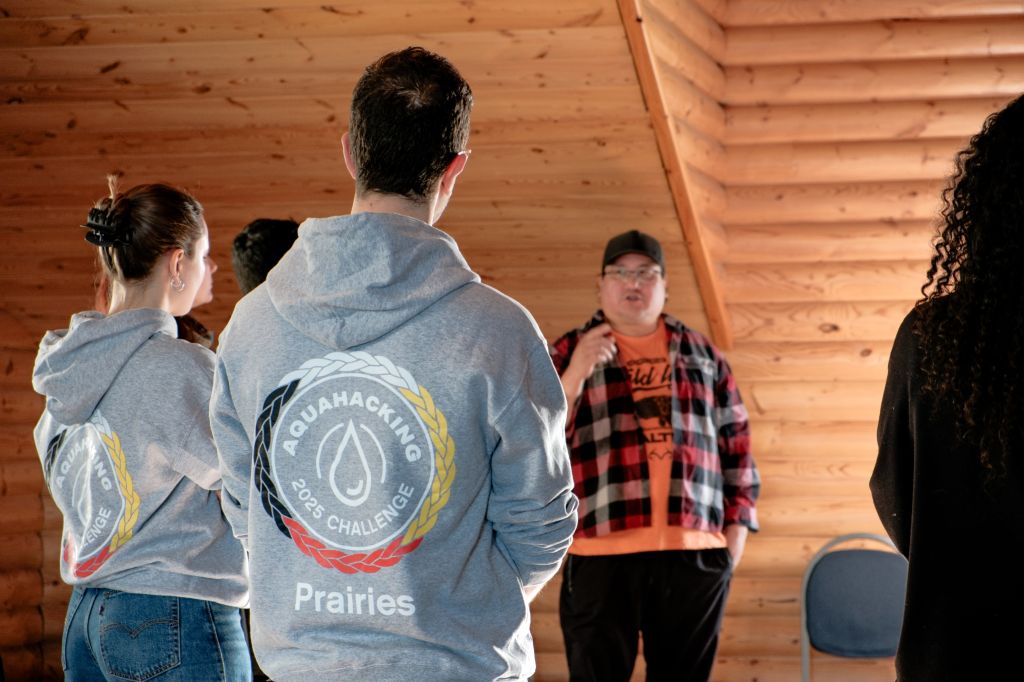
- AquaHacking starts with the problem, bringing students, researchers and young professionals together to build ventures around real freshwater challenges.
- AquaEntrepreneur helps founders build the skills to bring a technology to market, pairing coaching and mentorship with pilot design and direct introductions to municipal and industrial adopters.
- AquaNation keeps alumni in the community, advocating together and travelling on trade missions.
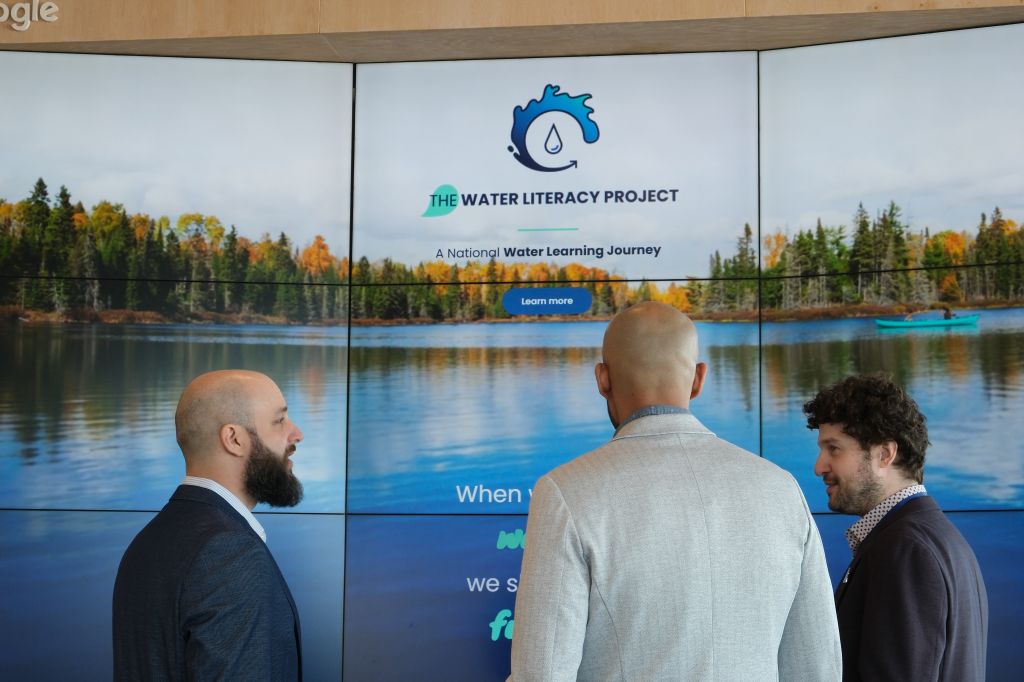
- Water Literacy Project int“Most innovation programs stop at the idea or the pilot. We stay in through the deployment, to the contract and beyond.”roduces children to water stewardship and the careers it can lead to.
As many entrepreneurs already know, a good idea is rarely the constraint – access to mentorship, networks and a first customer usually is. And in the water-tech sector specifically, building the technology can take years, while earning the trust to deploy can take years more.
“Most innovation programs stop at the idea or the pilot. We stay in through the deployment, to the contract and beyond.”
What impact has AquaAction had on Canada’s water sector?
Since 2015, AquaAction has helped build Canada’s water technology sector from the ground up:
- 125+ companies supported with funding, coaching and introductions to industry
- 900+ jobs created at those companies
- $130 million raised by them from investors and public funders
- 700+ deployments across the country, from pilots to restoration projects to industry-led initiatives
- 140,000 Olympic pools of water saved, and carbon equal to 85,000 trees
AquaEntrepreneur – the program RBC Foundation’s grant will scale – accounts for much of the recent momentum. Since 2022:
- $200 million in revenues generated by participating companies
- 550 pilots and $49 million in contracts signed with municipal and industrial clients
- 19x return on the Quebec government’s original investment
Why does long-term funding matter for water innovation?
RBC Foundation is supporting AquaAction with a grant of $2 million over three years to scale AquaEntrepreneur, giving municipalities, industries and public agencies the technical expertise, third-party validation and ready-to-implement guides they need to deploy smart water management systems with confidence. This support builds on $4.2 million invested by RBC Foundation to date and is a part of RBC, RBC Foundation and RBC Foundation USA’s overall commitment to providing $2 billion in community investment by 2035. As one of Canada’s largest corporate donors, RBC is working with thousands of charities and nonprofits across Canada and beyond to help strengthen our communities.
Working alongside Environment and Climate Change Canada and Groupe Hélios, AquaAction will complete 60 pilots and 30 full deployments in six cities, expected to save 120 billion litres of freshwater and avoid 12,000 tonnes of CO2 emissions.
“The first institutional client is everything,” says Chronopoulos. As soon as a company gets one credible reference – a municipality, a data centre, a major industry, a federal government contract – 50 more doors open.”
“RBC Foundation has understood something not every funder grasps: building a platform like this takes time. The patience they’ve shown us while we built out the process, the relationships, the whole ecosystem – that kind of patience is rare, and it is invaluable.”
As Chronopoulos puts it, a community is only as strong as the system it depends on, and there is no system more fundamental than water. “RBC Foundation support gave us something very specific, and it was the ability to move from ambition to action.”
To learn more, visit rbc.com/strongercommunities