

 EN
EN 

➔ F1’s race ahead in sustainable fuel initiative
➔ Arrell Food Institute’s Evan Fraser on what keeps him up at night
➔ What’s Canada’s next big climate policy moment?
Signals
Clean energy spending is set to nearly double that of fossil fuels for the first time. For every dollar going to oil, gas, and coal (US$1.2 trillion), nearly two are expected to flow to renewables, nuclear, grids, storage, efficiency, and electrification in 2026, estimates the International Energy Agency in its World Energy Investment 2026 report. The Middle East conflict is reshaping energy investment in real time, pushing energy security to the forefront, notes Clean Tech Lead Vivan Sorab. Global energy investment is on track to hit US$3.4 trillion this year, a 5% rise from 2025, with solar investments attracting US$1 billion a day on average. Nuclear is also back, with 78 GW under construction across 15 countries and annual investment above US$80 billion. However, not all signals are positive, with coal supply investment reaching US$180 billion, the highest since 2012.
Montreal recently hosted Formula 1 with a new generation of sustainable fuels, continuing its legacy of climate leadership (Montreal Protocol, 1987; Kunming-Montreal Global Biodiversity Framework, 2022), writes Senior Vice-President, Office of the CEO, John Stackhouse, who was at the high-but-sustainable-octane event. It was part of F1’s new fuels standard this season targeting net zero by 2030. The cars ran on 100% Advanced Sustainable Fuel, with Team Mercedes winning the Canadian Grand Prix using fuel developed by partner Petronas. The sustainability initiative extends beyond fuel: support crews travelled via cargo planes using sustainable aviation fuels, and cars feature enhanced efficiency designs. Montreal also recently hosted the FIA Sustainable Innovation Series exploring how AI and technology drive efficiency gains.
This is Canada’s hottest climate tech
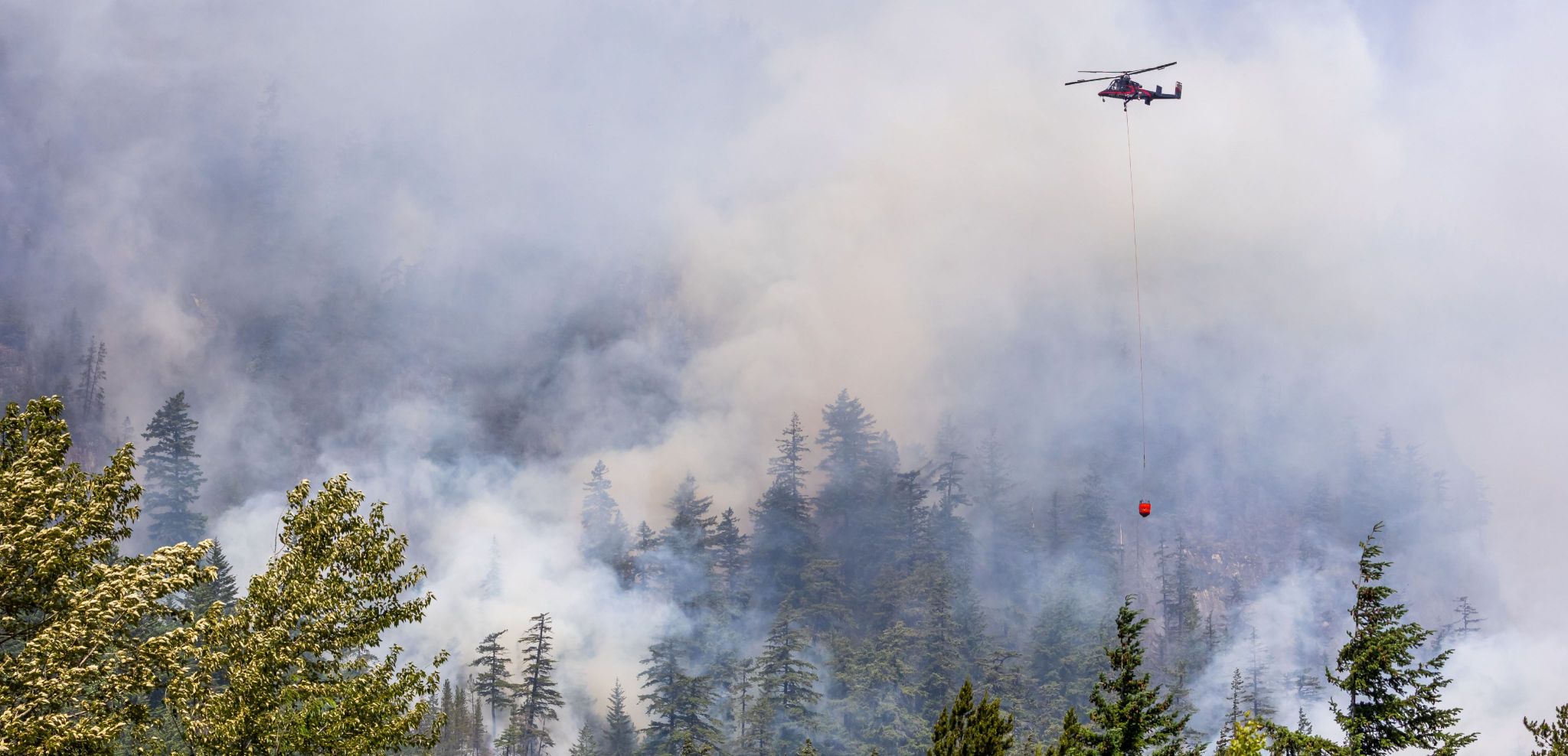
For Sarah Goodman, the wildfire crisis hits close to home. Almost everyone in British Columbia now knows someone who’s been evacuated from their home due to wildfires, said Vancouver-based Goodman, who leads NorthX, the B.C. firm that’s identified wildfire as a strategic sector to deploy “hard” climate solutions.
The firm, backed by federal and provincial governments and Shell, has invested $5.5 million in wildfire tech, including a fresh $2.2 million round in three promising startups. This year’s wildfire season is already ravaging parts of B.C. and Alberta, as temperatures recently hit 23.9 degrees in Vancouver—breaking a 128-year-old May record.
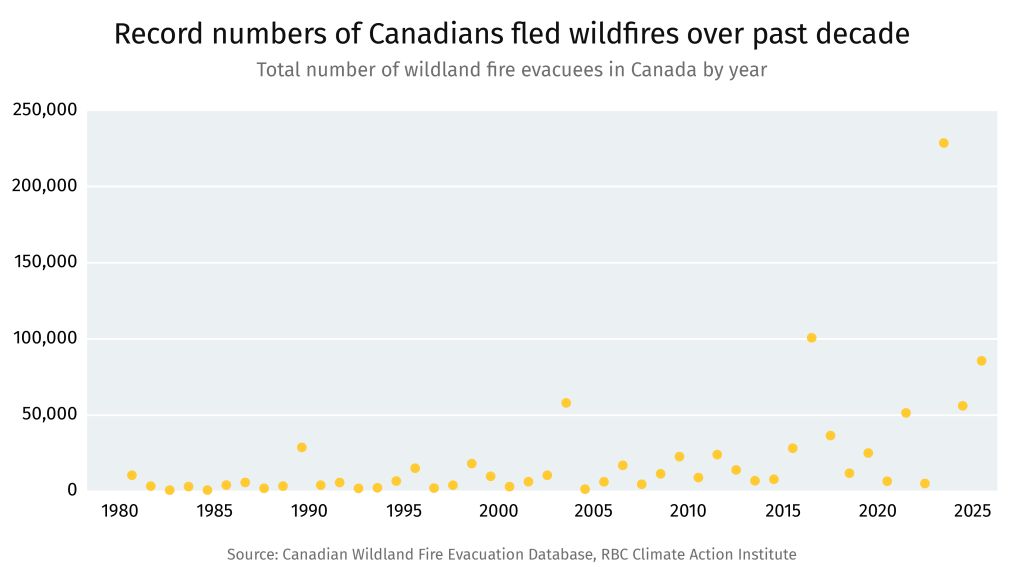
Wildfires both result from, and accelerate, climate change. Hotter weather turns forests into tinderboxes, sparking economic and environmental disasters:
-
Insured losses from wildfires in Canada soared 1,003% to reach $8.1 billion between 2016-2025, compared with $734 million the previous decade, according to CatIQ.
-
As much as 7% of Canada’s oil production was briefly shut during an Alberta wildfire last year, with major pipeline infrastructure perilously close to the flames.
-
2023 and 2025 were Canada’s two worst wildfire seasons ever. Wildfire carbon emissions in Canada in the first 10 months of 2025 hit 250 megatonnes (for context the nation’s GHG emissions were 661.5 MT in 2024), according to the European Commission’ Copernicus database.
-
If Canada’s forest wildfires were a country, they would have been the world’s eighth-largest emitter in 2023, according to 440megatonnes.ca. Yet wildfires from unmanaged forests are not counted in Canada’s official emissions.
-
“The rate of change in wildland fire severity and behaviour is accelerating faster than we can comfortably keep pace with,” says Stacey Sankey, Natural Resource Canada’s policy advisor and author of Blueprint for Wildland Fire Science in Canada (2019-2029).
Investment is ramping up to suppress, mitigate and manage wildfires—but as Goodman notes, “we are in the early stage of wildfire tech”:
-
In April, NorthX Climate Tech invested a combined $2.2 million in three B.C. startups in a new round: Crown.ai, Nova and Skyward Wildfire Technologies.
-
Crwn.Ai uses artificial intelligence to predict power line-caused ignitions;
-
Nova—another AI-powered tech—uses aerial data to identify potential hotpots;
-
and Skyward aims to tackle lightning—often sparking destructive fires.
-
-
“Wildfires behave differently in different geographies,” said Goodman, but there are opportunities to export Canadian tech. Nova, for example, operates in 200 jurisdictions globally.
-
The federal government is boosting wildfire funding by $70 million to $629.8 million through 2030. Some of the $290-billion defence budget could also serve dual purpose for aerial monitoring and wildfire suppression.
A blueprint for fighting wildfires
When it comes to wildfires, Stacey Sankey wrote the blueprint—literally. The Senior Policy Advisor at the Canadian Forest Service authored the Blueprint for Wildland Fire Science in Canada (2019-2029). The situation has improved significantly, but there is still meaningful work to be done, Stacey said. The interview is edited for brevity:
Q: Have the challenges you identified in the report improved or worsened since its publication?
A: Blueprint made 15 recommendations to guide science investments, attract new partnerships, and align national research efforts. Progress on the human resources gap has been real. A $5 million investment, through Natural Resources Canada (NRCan) and the National Science and Engineering Research Council (NSERC), created a Wildland Fire Research Network, anchored at the University of Alberta, developing 68 wildland fire professionals across master’s, PHD, and post-doctoral programs. As a part of this network, numerous universities have expanded their programs to include wildland fire related research and courses. The federal government has also invested heavily in training more community-based firefighters. That said, progress continues to be stretched by the scale of growth in wildland fire severity.
Q: Which of your recommendations have been implemented?
A: There has been substantial and concrete movement across the Blueprint’s core recommendations: on increasing research and innovation capacity, respecting Indigenous knowledge, expanding partnerships, and sharing governance and coordination.
NRCan has strengthened data, modelling and decision support systems, including modernization of the Canadian Wildland Fire Information System (CWFIS) and the Canadian Forest Fire Danger Rating System (CFFDRS). New target investments have advanced wildland fire risk assessment tools, while NSERC Network created a new generation of trained wildland fire expertise.
On Indigenous fire stewardship, implementation includes establishment of REDFire (Reciprocity, Ecology, and Diversity in Fire) Lab and Thunderbird Collective, which work to advance Indigenous leadership and knowledge in wildland fire management.
The federal government is supporting provinces and territories to procure specialized equipment, train firefighters, and secure aerial firefighting capacity. Canada also committed to international cooperation through the G7 Kananaskis Wildfire Charter and WildFireSat, a collaboration between NRCan, Environment and Climate Change Canada, and the Canadian Space Agency, which will be the world’s first government-owned satellite system for monitoring wildfires.
Q: What other challenges have emerged since the report was published?
A: The rate of change in wildland fire severity and behaviour is accelerating faster than we can comfortably keep pace with and firefighting resources continue to be stretched, keeping Canada reliant on international resources during extreme fire events. There also continues to be more work that can be done in advancing Indigenous wildfire stewardship.
The converging polycrisis of food, climate change and inflation
Sitting at the intersection of food, sustainability and climate change, Evan Fraser, Executive Director at the Arrell Food Institute at the University of Guelph, is worried a changing climate could trigger a global polycrisis. Still, he believes Canada can step up to be a source of food stability for the world.
Q: What’s one thing you wish more people understood about the relationship between climate change and our food system?
A: While we often talk about energy systems (heating, lights, power, gas) as a key lever through which we can address climate change, food is also a very big lever. Food systems produce around 30% of the world’s greenhouse gas emissions. But systems can become net-zero, or even “net-negative” (i.e. absorb more greenhouse gases than they emit), with a few big changes. The secret is to reduce fossil fuel use in food production and supply chains, apply inputs like fertilizer with precision, and build up the soil’s organic matter. The latter is where the “net-negative” opportunity lies. Soil organic matter is essentially carbon dioxide turned into plant material. If farmers adopt practices such as reducing soil disturbance, it allows soil organic matter to build up, pulling carbon dioxide from the atmosphere. Soil organic matter also acts like a sponge, trapping water when it is available and holding onto it when it is needed, making soil more resilient to extreme whether events.
Q: What climate and food-related issues are keeping you up at night?
A: What’s keeping me up at night isn’t climate change on its own, but the interaction of climate, geopolitical and economic changes. I worry these stressors are building to a cascade of crises that may overwhelm countries and households.
Since the U.S./Israel-Iran war started, and the Strait of Hormuz was blockaded, fertilizer prices have skyrocketed, forcing farmers all over the world—especially small-scale farmers in Africa and other places—to cut back. This will result in lower yields. At the same time, the U.S. Mid-West is experiencing severe drought, the Indian monsoon is set to be weak, and a major El Niño threatens the Southern Hemisphere’s next growing season.
I am worried we are facing a polycrisis. Over the next six to 12 months, several things may go wrong in the food system, triggering another rash of food inflation. One risky scenario is a repeat of widespread food riots of 2008-2011 that exploded in Haiti, Cameroon, and dozens of other countries. I am already seeing worrying signs that we could be heading back to this area in places like Kenya. A bad harvest this year due to climate change could accelerate the disturbances, leading to political volatility.
Q: What innovations in the food system are you most optimistic about? And what do you think Canada’s role is (or should be) in advancing the innovation?
A: Canada should set itself up to become the world’s most reliable and trusted exporter of food and agri-food exports not only as an economically valuable commodity to be traded but also a strategic lever. Through food exports, we can export geopolitical stability and resilience, and that is a role that Canada should lean into, especially in this extraordinarily turbulent moment.
To lead, we need major investment in agri-food research and training, focusing on innovations like drought and pest-tolerant seeds, AI decision-support tools for farmers, and smart tractors. These advances will help Canadian farmers navigate climate change and geopolitical disturbances. These innovations, combined with our farmers, geography and land and water resources, Canada is positioned to become one of the world’s most important breadbaskets this century.
Conversations
-
Rick Smith of the Canadian Climate Institute believe Canada’s next big climate policy moment will be the release of federal vehicle regulations to reach the equivalent of a 75% EV adoption rate by 2035.
-
Michael Liebreich on the Great Clean Energy Acceleration 2.0—a discontinuity in energy markets as profound as the oil shocks of the 1970s.
-
Jonathan Stern, Distinguished Research Fellow at the Oxford Institute for Energy Studies, asks in a report: are efforts to reduce flaring from oil and gas upstream operations a lost cause?
-
Celeste Saulo, secretary general of the World Meteorological Organization, warns why the El Niño weather phenomenon expected this summer is an “urgent climate warning.”
Curated by Yadullah Hussain, Managing Editor, RBC Climate Action Institute.
Climate Crunch would not be possible without John Stackhouse, Jordan Brennan, John Intini, Farhad Panahov, Lisa Ashton, Shaz Merwat, Vivan Sorab, Caprice Biasoni, Lavanya Kaleeswaran and Joelle Schonberg .
Have a comment, commendation, or umm, criticism? Write to me here (yadullahhussain@rbc.com)
Climate Crunch Newsletter
This article is intended as general information only and is not to be relied upon as constituting legal, financial or other professional advice. The reader is solely liable for any use of the information contained in this document and Royal Bank of Canada (“RBC”) nor any of its affiliates nor any of their respective directors, officers, employees or agents shall be held responsible for any direct or indirect damages arising from the use of this document by the reader. A professional advisor should be consulted regarding your specific situation. Information presented is believed to be factual and up-to-date but we do not guarantee its accuracy and it should not be regarded as a complete analysis of the subjects discussed. All expressions of opinion reflect the judgment of the authors as of the date of publication and are subject to change. No endorsement of any third parties or their advice, opinions, information, products or services is expressly given or implied by Royal Bank of Canada or any of its affiliates.
This document may contain forward-looking statements within the meaning of certain securities laws, which are subject to RBC’s caution regarding forward-looking statements. ESG (including climate) metrics, data and other information contained on this website are or may be based on assumptions, estimates and judgements. For cautionary statements relating to the information on this website, refer to the “Caution regarding forward-looking statements” and the “Important notice regarding this document” sections in our latest climate report or sustainability report, available at: https://www.rbc.com/our-impact/sustainability-reporting/index.html. Except as required by law, none of RBC nor any of its affiliates undertake to update any information in this document.