

 EN
EN 

Also in this edition: A Q&A with the former Chief Agriculture Negotiator for the Office of the United States Trade Representation
(Round)table talk
This week, RBC and Eurasia Group convened a roundtable in Washington, D.C., bringing together policymakers, business leaders, and trade experts as part of the lead-up to the Canada–U.S. Summit that we’ll co-host in Toronto in June.
The tone was cautiously optimistic, which is markedly different from the doomsday headlines and political noise that has become commonplace. Key players on both sides of the border remain focused on preserving and strengthening one of the most deeply integrated economic relationships in the world.
The discussion coalesced around several critical themes:
-
The upcoming CUSMA review, built into the agreement six years ago, was designed as a forum to air grievances, not dismantle the framework. That process alone won’t upend a trade relationship that sees Canada as the top trading partner for more than 30 U.S. states—a fact the Office of the United States Trade Representative is acutely aware.
-
Section 232 tariffs on aluminum, lumber, steel, and autos—imposed on national security grounds—lie outside the formal review process, and there will inevitably be high-stakes negotiations around changing the status quo.
-
Trump is also less likely, and less able, to unilaterally reimpose sweeping tariffs in 2026. Yet initiatives like Project Vault signal his intent to align allies with U.S. interests on critical minerals and advanced technologies. Trump will want to ensure Canada doesn’t stray too far from the U.S. orbit on those, particularly as the EU advances its own agenda on tech sovereignty and regulation.
-
For its part, Canada has distinct advantages to draw on: its supply of heavy rare-earth elements with irreplaceable magnetic and high-temperature properties, as well as its leading capabilities in quantum computing.
-
Meanwhile, China’s role in both markets remains a concern and will feature prominently in negotiations. For Washington, the priorities are to reduce the ability for Canada to serve as a backdoor for Chinese goods into the U.S. market and to decouple its critical minerals supply chain. Ottawa needs to manage that shift while maintaining a measure of economic flexibility.
-
Energy interdependence is key. The integrated Canada–U.S. energy system, bolted together by pipelines and grids, powers a landmass larger than Russia. Canada supplies more than 60% of U.S. crude oil imports, and industry leaders cautioned against viewing that relationship merely as leverage. With both countries ranking among the world’s top energy producers, the logic is compelling to expand joint infrastructure and strengthen North America’s competitive position globally.
Political leaders may argue and tinker with the details, but the machinery of integration continues, driven by habit, necessity, and sheer economic gravity.
-Thomas Ashcroft
The Trump Paradox
RBC’s John Stackhouse on how trade tensions may strengthen Canada’s position in an integrated market:
Trump’s extraordinary use of tariffs has braced Canadians for a more fundamental remaking of continental free trade, on less favourable terms for Canada and Mexico.
This has put Canada on a more ambivalent, but strategic and resolute course. It is not unusual for Canadian governments of both major political parties over the decades to oscillate between closer alignment with Washington and periodic assertions of autonomy. But this time, it is different in at least one big way: Canada is now investing heavily in industrial strategy and other sovereign economic policies.
As a result, there are at least three major restructurings underway:
-
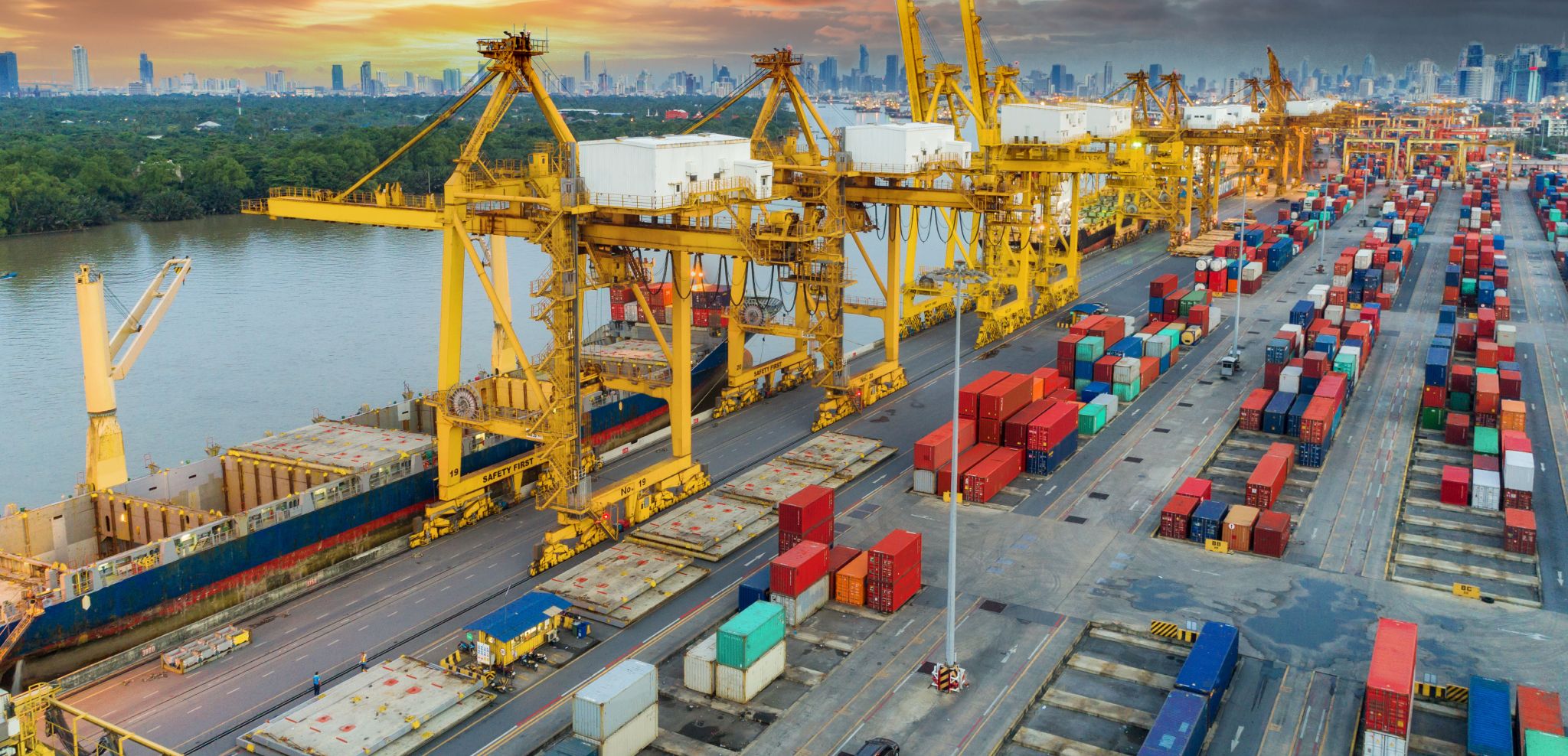
Expanding ports and export infrastructure to reach markets beyond the United States.
-
Building domestic defence, digital, and data capacity with a “Buy Canadian” approach to procurement and a willingness to increase collaboration with other European and Asian partners.
-
Rebuilding domestic industrial capacity while reorienting manufacturing toward higher-value, globally competitive activity.
Taken together, and if executed, this strategy would not imply a retreat from the U.S. market so much as a change in how Canada relates to it. Trade with the United States would remain large and central, but less one-sided: Canada would export more from a broader base of domestic capacity, rely less on U.S. inputs, and approach the relationship from a position of greater bargaining strength. The result would likely be steadier, more diversified cross-border trade.
Read the full commentary here.
Imports, inputs and irritants
Our Agriculture Lead Lisa Ashton sat down with Ambassador Darci Vetter, Former Chief Agriculture Negotiator for the Office of the United States Trade Representation, to unpack recent changes in the U.S. tariff approach and what the agriculture sector should be thinking of ahead of the CUSMA review. (This interview has been edited and condensed for brevity.)
Q: How might the Trump administration’s current focus on reciprocity and trade deficits impact agriculture and food trade, where supply chains are often multi-country and complex?
A: Farmers and food processors now have to factor multiple and changing tariff rates into their sourcing decisions. These calculations are further complicated by tariffs on steel, aluminum, auto parts, lumber and other products that are critical inputs.
It’s also not clear to me that the U.S. agricultural trade deficit is a good indicator of the health of the U.S. agricultural sector. If you look at the products that the U.S. exports versus those it imports, you are quite literally comparing apples and oranges. While there is merit in examining how U.S. farmers can better serve local and national markets—and no country wants to be overly dependent on food imports—imported agricultural and food products ensure consumers have access to a varied, affordable and healthy diet.
The USDA’s latest agricultural trade forecast is predicting a US$20 billion decrease in the agricultural trade deficit.1 While the forecast predicts a small increase in exports, a closer examination shows the majority of the changes are due to a decrease in prices for high-value imports like coffee, cocoa and spirits, rather than changes in policy.
Q: What should agriculture and food sectors be watching for in the CUSMA review?
A: The trilateral food and agricultural trade relationship among Canada, the U.S. and Mexico is one of the world’s most integrated agricultural trading relationships. In 2024, U.S. agricultural and seafood exports to Mexico and Canada totalled more than US$60 billion2. In the U.S., a broad group of agricultural associations have formed the Agricultural Coalition for USMCA to advocate for continuation of the agreement, recognizing its critical value for the sector.
Longstanding relationships are bound to have a few irritants. In his December testimony to Congress, U.S. Trade Representative Jamieson Greer listed a few issues in agriculture— including market access for U.S. dairy products that Canada committed to provide under CUSMA; addressing Canada’s exports of certain dairy products; and the impact of importing Mexican seasonal produce on U.S. growers.
Q: What other elements of the CUSMA review could impact the sector?
A: The U.S. is likely to prioritize tighter rules of origin and/or North American content requirements for autos, auto parts, steel and aluminum—affecting supply chains for these important inputs for agricultural production and food processing.
One of the most important elements of CUSMA was the Sanitary and Phytosanitary Measures Chapter. CUSMA added important obligations to help ensure food safety and animal and plant health. The SPS Chapter calls for coordination to ensure regulations are transparent, based on sound science and risk, and allow for key agricultural technologies. The USMCA SPS Committee provides a venue to coordinate positions and inform international standards. While unlikely to be changed in the review, they provide a clear example of the benefits of long-term regional approach to trade relationships.
https://www.fas.usda.gov/sites/default/files/2026-02/AES-135.pdf
https://agforusmca.com/file/9/AgCoalition_The-Economic-Impacts-of-USMCA_260209_v1.pdf
This article is intended as general information only and is not to be relied upon as constituting legal, financial or other professional advice. The reader is solely liable for any use of the information contained in this document and Royal Bank of Canada (“RBC”) nor any of its affiliates nor any of their respective directors, officers, employees or agents shall be held responsible for any direct or indirect damages arising from the use of this document by the reader. A professional advisor should be consulted regarding your specific situation. Information presented is believed to be factual and up-to-date but we do not guarantee its accuracy and it should not be regarded as a complete analysis of the subjects discussed. All expressions of opinion reflect the judgment of the authors as of the date of publication and are subject to change. No endorsement of any third parties or their advice, opinions, information, products or services is expressly given or implied by Royal Bank of Canada or any of its affiliates.
This document may contain forward-looking statements within the meaning of certain securities laws, which are subject to RBC’s caution regarding forward-looking statements. ESG (including climate) metrics, data and other information contained on this website are or may be based on assumptions, estimates and judgements. For cautionary statements relating to the information on this website, refer to the “Caution regarding forward-looking statements” and the “Important notice regarding this document” sections in our latest climate report or sustainability report, available at: https://www.rbc.com/our-impact/sustainability-reporting/index.html. Except as required by law, none of RBC nor any of its affiliates undertake to update any information in this document.