Too Long, Didn’t Read

  • Water is worth an estimated $58 trillion a year to the global economy – equivalent to 60 percent of global GDP.  Yet water security is at risk, with implications for food, infrastructure, and energy.
  • AquaAction turns ideas into action for freshwater. With support from RBC Foundation since 2017, it’s helping municipalities and industries deploy proven water technologies that Canada’s communities and economy depend on.
  • Today, RBC Foundation is supporting AquaAction with a grant of $2 million over three years to scale AquaEntrepreneur.
  • AquaAction has funded and mentored more than 125 companies and helped create 900 jobs since 2015, giving water technology entrepreneurs the mentorship, networks and first customers they need.
  • The result: more than 700 water solutions are now deployed across Canada, from leak detection to contamination monitoring to on-site water reuse.

Canada holds roughly 20 per cent of the world’s surface freshwater, and more than half of Canadians name it as the country’s most important natural resource – well ahead of forests and every other resource. But abundance isn’t the same as security. Aging pipes, contamination, increasing demands and a changing climate are all straining the systems Canadians rely on – and protecting freshwater today takes intention and active stewardship.

AquaAction is a Canadian nonprofit working to close that gap. Founded in 2015 and supported by RBC Foundation since 2017, it helps water technology entrepreneurs turn working prototypes into deployed solutions and connects them with the municipalities and industries that need them.

“Every great Canadian story begins with water,” says Soula Chronopoulos, President of AquaAction. “From the rivers that nourish us to the rinks where we play hockey to the waters that carried the early explorers, water connects us all.”

What are Canada’s biggest water challenges?

Nearly three-quarters of Canadians are very or somewhat concerned about the quality of Canada’s freshwater, and a similar portion don’t feel well informed about it.

“On paper, we look extraordinarily wealthy,” Chronopoulos says of Canada’s water reserves. “But abundance at a national scale can create a dangerous false sense of security.”

Access to clean, reliable water is not equal across the country. Many Indigenous and rural communities live with frequent boil-water advisories, and the water that remains is under growing pressure from pollution, overuse and climate variability.

Soula Chronopoulos, President, AquaAction.

“Climate change is making water less predictable in every direction,” Chronopoulos says. “More extreme floods, more severe droughts, longer wildfire seasons and storms that are overwhelming systems built for a different era. The infrastructure we have was not built for the climate we’re living in now, and certainly not for the one we are heading for.”

The stakes reach beyond environmental impact. WWF puts the annual economic value of water and freshwater ecosystems at $58 trillion, equivalent to 60 per cent of global GDP. “We’re talking about food security, infrastructure security, energy security,” says Chronopoulos.

Her conclusion is straightforward: “What we need is not more water. What we need is smarter stewardship of the water we have.”

What are smart water solutions – and why do they matter?

Smart water solutions are technologies that help a community get more from the water it already has. This means losing less due to waste, spotting contamination sooner and recycling what has already been used. As Chronopoulos describes them, they merge three things: physical systems, nature-based approaches and digital tools. The water-tech companies AquaAction has funded and mentored cover all three.

  • Quebec’s Ecotime captures rainwater inside buildings and reuses it on site.
  • Ozero protects lakes from invasive species before they take hold.
  • Clean Nature uses artificial intelligence to keep road salt out of waterways.
  • Motmot sends robots into aging pipes to find weak points before they fail.
  • O’land Water Stations has brought refill stations to sporting events across Canada and the United States, including the FIFA World Cup, keeping more than two million plastic bottles out of circulation.

What these companies share is the link between water and energy.

“You can’t go green without going blue,” says Chronopoulos. “Every litre of water we pump, heat, treat, move or waste has an energy footprint. So when we reduce leaks and monitor systems more efficiently, we are reducing energy use and emissions at the same time. Water innovation is climate innovation.”

AquaAction helps water technology keep moving, from the lab into the community

Founded over a decade ago by the de Gaspé Beaubien Foundation, AquaAction exists because Canada’s water technologies tend to stall somewhere between a working prototype and a signed contract. “We’re Canada’s only dedicated freshwater innovation and commercialization platform, and that’s a heavy responsibility,” says Chronopoulos. “Knowing about a problem and solving it are two very different things. Water challenges are hard. We are a bridge between innovation and implementation.”

That bridge is built from four programs, each covering a different stretch of the distance between an idea and a working system.

  • AquaHacking starts with the problem, bringing students, researchers and young professionals together to build ventures around real freshwater challenges.
  • AquaEntrepreneur helps founders build the skills to bring a technology to market, pairing coaching and mentorship with pilot design and direct introductions to municipal and industrial adopters.
  • AquaNation keeps alumni in the community, advocating together and travelling on trade missions.
  • Water Literacy Project int“Most innovation programs stop at the idea or the pilot. We stay in through the deployment, to the contract and beyond.”roduces children to water stewardship and the careers it can lead to.
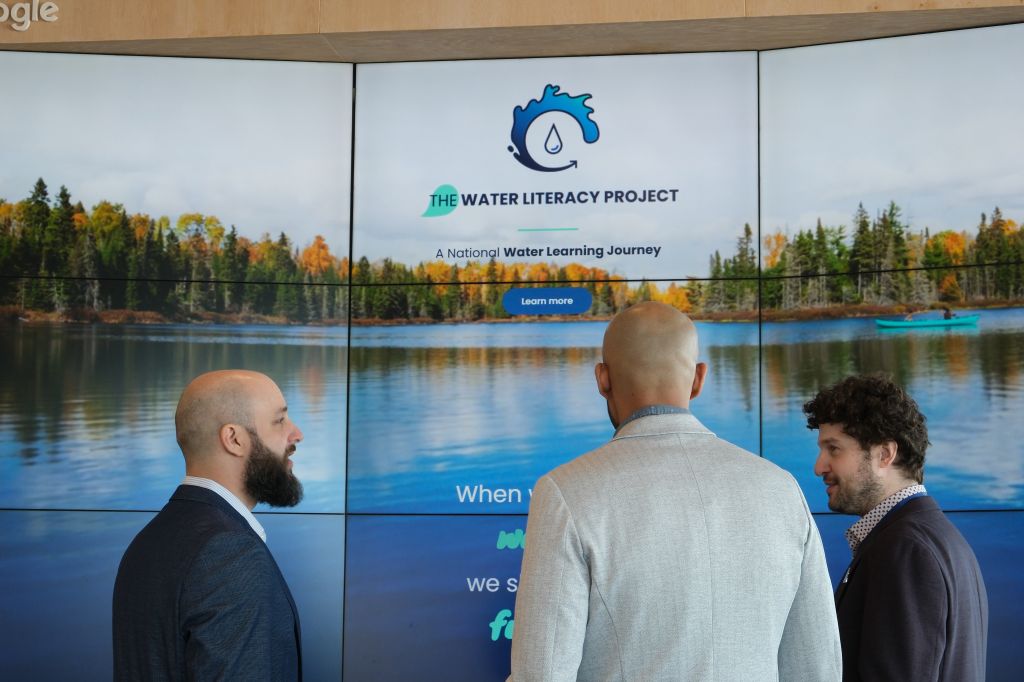
AquaAction is proud to partner with the Canadian Museum of Nature and Canadian Geographic in the Water Literacy Project: A national water learning journey.

As many entrepreneurs already know, a good idea is rarely the constraint – access to mentorship, networks and a first customer usually is. And in the water-tech sector specifically, building the technology can take years, while earning the trust to deploy can take years more.

“Most innovation programs stop at the idea or the pilot. We stay in through the deployment, to the contract and beyond.”

What impact has AquaAction had on Canada’s water sector?

Since 2015, AquaAction has helped build Canada’s water technology sector from the ground up:

  • 125+ companies supported with funding, coaching and introductions to industry
  • 900+ jobs created at those companies
  • $130 million raised by them from investors and public funders
  • 700+ deployments across the country, from pilots to restoration projects to industry-led initiatives
  • 140,000 Olympic pools of water saved, and carbon equal to 85,000 trees

AquaEntrepreneur – the program RBC Foundation’s grant will scale – accounts for much of the recent momentum. Since 2022:

  • $200 million in revenues generated by participating companies
  • 550 pilots and $49 million in contracts signed with municipal and industrial clients
  • 19x return on the Quebec government’s original investment
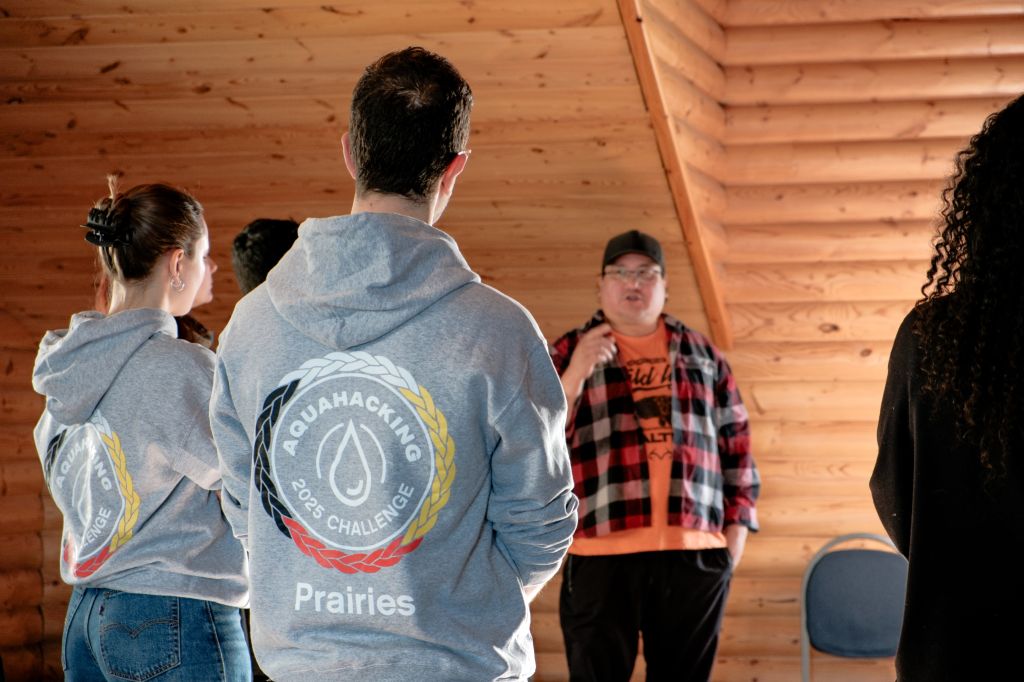
AquaHacking’s 2025 Prairies Challenge tackled critical regional water issues in collaboration with Indigenous-led organizations and communities.

Why does long-term funding matter for water innovation?

RBC Foundation is supporting AquaAction with a grant of $2 million over three years to scale AquaEntrepreneur, giving municipalities, industries and public agencies the technical expertise, third-party validation and ready-to-implement guides they need to deploy smart water management systems with confidence. This support builds on $4.2 million invested by RBC Foundation to date and is a part of RBC, RBC Foundation and RBC Foundation USA’s overall commitment to providing $2 billion in community investment by 2035. As one of Canada’s largest corporate donors, RBC is working with thousands of charities and not for profits across Canada and beyond to help strengthen our communities.

Working alongside Environment and Climate Change Canada and Groupe Hélios, AquaAction will complete 60 pilots and 30 full deployments in six cities, expected to save 120 billion litres of freshwater and avoid 12,000 tonnes of CO2 emissions.

“The first institutional client is everything,” says Chronopoulos. As soon as a company gets one credible reference – a municipality, a data centre, a major industry, a federal government contract – 50 more doors open.”

“RBC Foundation has understood something not every funder grasps: building a platform like this takes time. The patience they’ve shown us while we built out the process, the relationships, the whole ecosystem – that kind of patience is rare, and it is invaluable.”

As Chronopoulos puts it, a community is only as strong as the system it depends on, and there is no system more fundamental than water. “RBC Foundation support gave us something very specific, and it was the ability to move from ambition to action.”

To learn more, visit rbc.com/strongercommunities

Too Long, Didn’t Read

  • A vibrant arts community is an integral part of a strong community. That’s why, to date, RBC has committed more than $150 million to support artists and arts organizations worldwide – helping artists build the skills and opportunities needed for sustainable and successful careers.
  • The RBC Bronwen Wallace Award for Emerging Writers grants $10,000 annually to one writer each in fiction, poetry and creative nonfiction.
  • The Apprentice Programme at The National Ballet of Canada has helped train apprentices who are now Principal Dancers and performers worldwide.
  • The Shaw Festival is using an RBC Foundation Community Spaces Grant to build a geothermal well system as part of the rebuild of the Royal George Theatre with the goal to become North America’s first Zero Carbon Building Design certified performing arts venue.
Watch how RBC is supporting artists through skills development opportunities – hear straight from the artists.

For decades, RBC and RBC Foundation have been steadfast supporters of the arts, committing more than $150 million to artists and arts organizations worldwide. RBC’s legacy lies in equipping the next generation of creative talent with the tools, connections and opportunities they need to build lasting careers – while championing greater inclusivity and prosperity in communities across the country. One of the ways RBC brings that commitment to life is through the RBC Bronwen Wallace Award for Emerging Writers.

Championing the Next Generation of Writers

According to Calgary poet Renato Gandia, confidence is a critical part of any artist’s journey.

“For years, I wondered if stories like mine — migration, faith, family, queerness — had a place in Canadian literature,” said Gandia, who was one of three writers to win the 2026 RBC Bronwen Wallace Award for Emerging Writers.

“The RBC Bronwen Wallace Award answered that question. Recognition like this does something specific for emerging writers: it hands us confidence, visibility, proof that we belong on the page. This is why support from organizations like RBC matters. When they invest in organizations like Writers’ Trust, they’re not just funding prizes. They’re helping build a literary Canada that actually looks like the people living in it.”

The award, presented annually by Writers’ Trust Canada to writers who have not yet published their first book, grants $10,000 annually to one writer of fiction, one writer of poetry, and one of creative nonfiction.

The award also includes qualitative supports like networking and access to mentors.

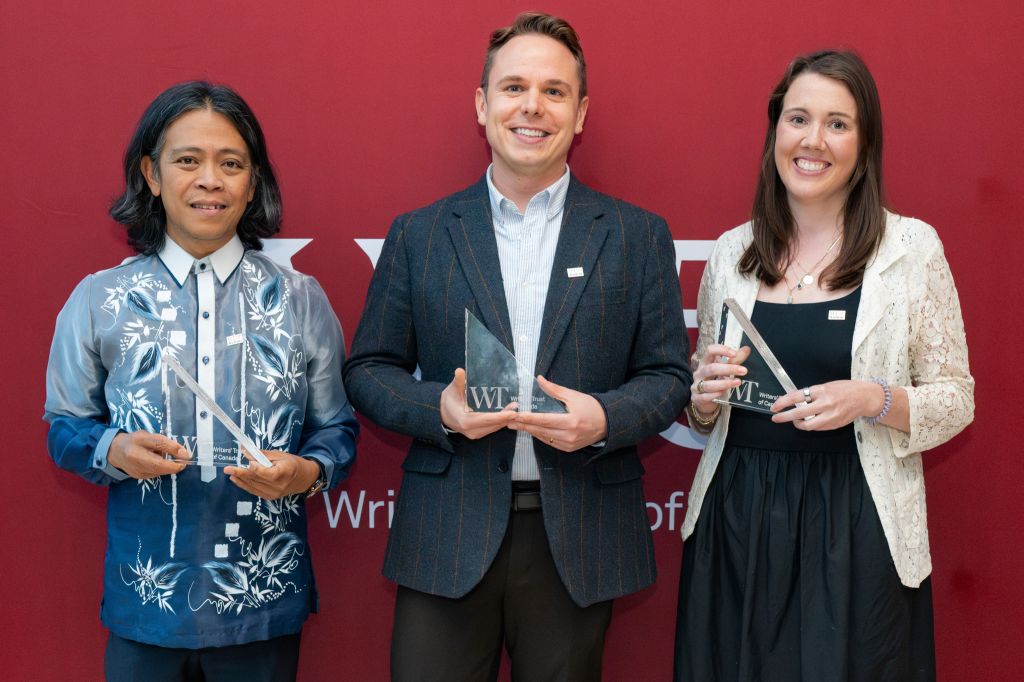
Three recipients of the 2026 RBC Bronwen Wallace Award for Emerging Writers — Renato Gandia, Graham Slaughter, and Julia Cottrelle — holding their awards.
2026 RBC Bronwen Wallace Award for Emerging Writers recipients L to R Renato Gandia (poetry), Graham Slaughter (creative nonfiction) and Julia Cottrelle (fiction)

“At RBC, we believe that a strong arts sector helps build stronger communities,” said Andrea Barrack, Senior Vice President, Sustainability & Impact, RBC. “For nearly two decades, we’ve stood alongside the Writers’ Trust of Canada to champion emerging writers through the RBC Bronwen Wallace Award. That long-term commitment has helped launch the careers of some of this country’s most exciting literary voices – writers who have gone on to publish acclaimed books, mentor the next generation, and enrich the cultural life of their communities.”

Apprentice Programme at The National Ballet of Canada

At The National Ballet of Canada, RBC’s support comes in the form of the Apprentice Programme. Several former Apprentices are now Principal Dancers with The National Ballet of Canada and many others dance with ballet companies worldwide.

“Through dedicated training, individualized mentorship and meaningful performance opportunities, The National Ballet of Canada’s Apprentice Programme provides emerging artists with the skills, experience and support needed to pursue a professional career,” said Greta Hodgkinson, the Arrell Family Apprentice Programme Director. “Over the course of the two-year programme, apprentices gain invaluable stage experience, receive artistic guidance and benefit from comprehensive professional development, equipping them to secure positions with the National Ballet or other prestigious companies around the world. Our dancers leave the programme with the skills, confidence and professional foundation to continue shaping their artistic voice and thrive in the next stage of their careers.”

Dancer Hannah Galway, during a rehearsal.
Hannah Galway in rehearsal for Silent Screen. Photo by Karolina Kuras.

Helping improve accessibility and environmental sustainability for arts venues across Canada

In addition to supporting the arts through skills development, RBC supports the community spaces where artists display their craft and art lovers gather to experience it.

The RBC Foundation Community Spaces Grant focuses on improving the accessibility and environmental sustainability of community buildings and public spaces. The Montreal Museum of Fine Arts (MMFA) is using a recent grant to ensure that all public restrooms at the museum are now equipped with automatic doors. In addition, new features like an accessible sink will enable those who rely on mobility aids to now fully participate in art therapy activities at the Museum’s popular Ruche d’art (Art Hive).

“RBC’s support enables the MMFA to make accessibility a concrete driver of participation, autonomy, and inclusion, so that everyone can fully enjoy the benefits of art,” said Mélanie Deveault, Director of Education, Community Engagement, and Visitor Experience; holder of the Ariane Riou and Réal Plourde Chair in Art and Education for the Community at the MMFA.

Museum educator Delphine Arnaud leading a guided tour of the Montreal Museum of Fine Arts' 19th-century European collection.
Museum educator Delphine Arnaud leads a guided tour of the Montreal Museum of fine Arts’ 19th-century European collection. The museum was made more accessible with support from RBC Foundation Photo © Mikaël Theimer

The RBC Foundation Community Spaces Grant is also helping ensure accessibility will be front and centre for music lovers in the newly expanded Francis Winspear Centre in Edmonton. In addition to hosting the Edmonton Symphony Orchestra, Winspear is the hub for local musicians, youth and community groups. The expansion is adding over 50,000 sq.ft. of new space, including a second performance hall (called the ‘Music Box’), classrooms and mixed-use immersive spaces.

“With the successful completion of the building exterior, a strong foundation is now in place for the next chapter of the Winspear Centre expansion,” said Alex Draper, Director of Philanthropy, Winspear Centre. “The next phase – completing the interior – is all about the details which, thanks to RBC Foundation’s support, will include a focus on accessibility. We can already imagine the moment the Music Box hosts its first performers and when these new spaces open their doors to welcome our community inside.”

Architectural rendering of the expanded Francis Winspear Centre for Music in Edmonton, Alberta.

At the Maritime Conservatory for Performing Arts in Halifax, an RBC Foundation Community Spaces Grant will support the installation of a new elevator.

“Our old manually operated elevator no longer meets accessibility and safety standards and has a heavy swinging door that wheelchair users, seniors, and parents with strollers struggle to open independently,” said Chloe Kline, Executive Director. “Replacing the elevator will remove a significant accessibility barrier for more than 35 per cent of our program participants and ensure that our students, clients, and audience members enjoy safe, independent, and dignified access to classrooms, therapy spaces and performance venues throughout the building.”

RBC’s support is also helping many arts venues become more environmentally sustainable.

The Shaw Festival (Niagara-on-the-Lake, Ontario), is using a grant to fund a geothermal well system, to help its Royal George theatre become North America’s first theatre to achieve Zero Carbon Building Design certification.

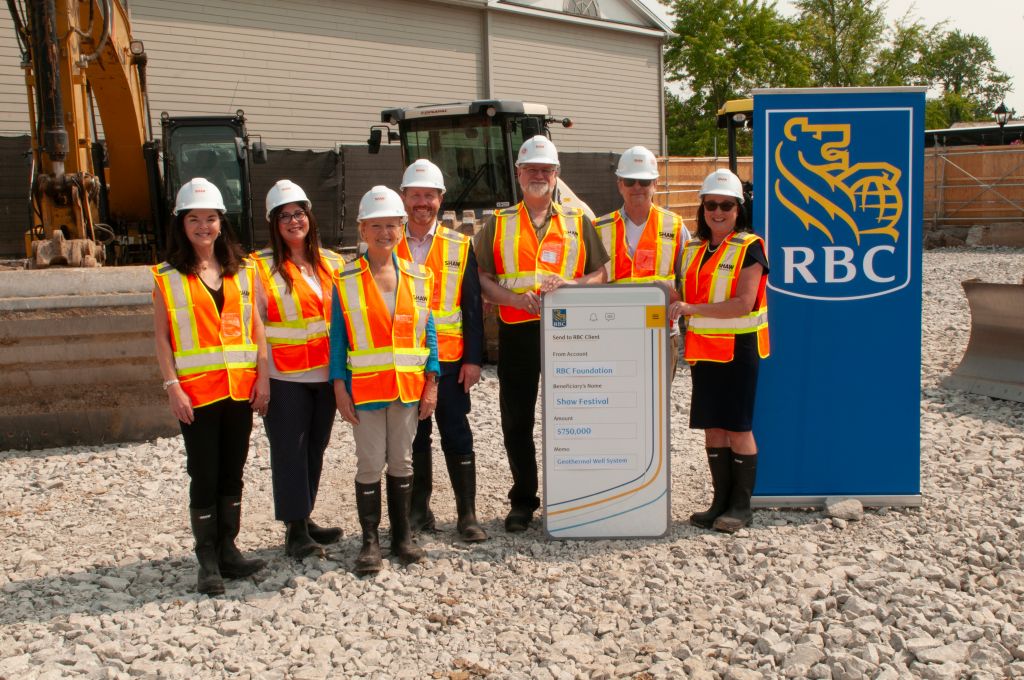
RBC and Shaw Festival employees, wearing construction safety gear, gather at the future site of the Shaw Festival's geothermal well system
A geothermal well, enabled by a donation from the RBC Foundation Community Spaces Grant, will help make the Shaw Festival’s rebuilt Royal George Theatre North America’s first zero carbon building design performing arts venue.

“The plans for our new Royal George Theatre honour its remarkable history while building for the future,” said Tim Jennings, Executive Director/CEO of the Shaw Festival. “Achieving North America’s first Zero Carbon Building Design certification for a theatre reflects our commitment to protecting the environment and ensuring this beloved cultural institution continues to inspire and connect audiences for generations. We are honoured to have RBC Foundation’s support to bring these plans to life.”

Keeping Canadian communities vibrant

From supporting skills development to improving arts infrastructure, RBC is strengthening communities by contributing to a future where Canadian communities and the arts can grow stronger together. This support is part of RBC, RBC Foundation and RBC Foundation USA’s overall commitment to providing $2 billion in community investment by 2035. As one of Canada’s largest corporate donors, RBC is working with thousands of charities and not for profits across Canada and beyond.

FAQ

The RBC Bronwen Wallace Award for Emerging Writers is presented annually by Writers’ Trust Canada to writers who have not yet published their first book. It grants $10,000 to one writer each of fiction, poetry, and creative nonfiction, plus networking and mentorship supports.

The Apprentice Programme at The National Ballet of Canada is a two-year programme that provides emerging dancers with dedicated training, individualized mentorship, and meaningful performance opportunities to help them pursue a professional career.

The RBC Foundation Community Spaces Grant is designed to fund retrofits, repairs or upgrades of existing public community buildings and spaces as well as construction of new public spaces that reduce environmental impacts of their operation and/or improve its building accessibility. Recent grants to arts organizations have funded automatic doors at the Montreal Museum of Fine Arts, the Francis Winspear Centre expansion in Edmonton, an accessible elevator at the Maritime Conservatory for Performing Arts in Halifax, and a geothermal well system at the Shaw Festival in Niagara-on-the-Lake.

RBC supports more than 2,000 charities and nonprofits across Canada, including arts organizations. This support is part of RBC’s broader commitment to invest $2 billion in community organizations by 2035, helping artists grow from emerging to established and keeping communities vibrant.

70-85% of jobs are never posted – they’re found through the people you know.1

Ten Thousand Coffees (10KC) puts that network within reach – smart-matching you with mentors, peers, and subject matter specialists through an online platform that can help you open doors and propel you forward, no matter where you’re starting from.

Having a strong, diverse network can help accelerate your career, give you access to other people’s hard-won knowledge, and help you navigate opportunities you couldn’t find on your own. Networking can be as simple as a real conversation and can help you:

  • Exchange ideas and open doors to opportunities you wouldn’t find on your own
  • Understand what career paths and opportunities actually exist
  • Build the communication and relationship skills that come from real practice

Most jobs are filled through networking rather than public postings — yet not everyone starts out with equal access to the people, advice, or opportunities that make that possible.

Ten Thousand Coffees, supported by RBC, exists to help you close that gap.

10KC matches you with a mentor or peer based on your goals, and gives you simple, step-by-step guidance on how to make the most of the conversation. From there, 10KC will:

Connect with students and alumni across Canada for meaningful conversations: the kind that turn into interview tips that land the job, introductions that open doors, and a network that keeps paying off long after graduation.

Mentees, this is for you if you’re a student or recent job seeking graduate (less than one year) ready to grow your network. Prepare for and launch your career, and develop the skills needed for professional success.

Mentors, this is for you if you’re you a professional and/or an alumni of a postsecondary institution, and want to give back to students and new grads. This is your opportunity to develop leadership skills and stay connected with the next generation.

Join your school’s hub or our open-access community.

Newcomer Connections

Landing Your Career in Canada

You bring real experience, real credentials, and real ambition – sometimes built halfway across the world. What’s standing between you and your next job usually isn’t skill, it’s a way in. Newcomer Connections pairs you with a mentor who’s already built their career in Canada and is ready to help you do the same – from decoding the hidden job market to walking into your next interview with confidence.

This community is designed to support newcomers to Canada build the skills and relationships they need to find meaningful work and prepare for the jobs of tomorrow. Support your development through a rich curriculum with curated discussion guides to get the most out of your mentorship journey.

Mentees, this is for you if you’ve settled in Canada within the last couple of years and are ready to grow your career, your network, and your sense of belonging.

Mentors, this is for you if you’re 5+ years settled in Canada, and want to give back to the newcomer community and develop leadership skills.

Not quite the right fit?

International students are encouraged to join the Students & Alumni program, and small business owners and entrepreneurs are encouraged to join Entrepreneur’s Edge. If one of those sounds like a better match, you’re welcome to join whichever program suits you best.

Entrepreneur’s Edge

Guidance to Grow Your Business

Building a business is one of the most rewarding challenges you will ever take on – and most often, there isn’t a straight road to get there. Informal connections with peers are proven to matter as much to a startup’s growth as access to financing or workspace.[8]

The Entrepreneur’s Edge is a structured mentoring and networking ecosystem designed to provide you with the mentorship, community, expert insights, and strategic guidance you need to propel your venture.

Mentees, this is for you if you’ve built a business plan and/or already launched your business in the last two years.

Note: If you’re still in the idea stage, come back once you’re actively launching or growing your business.

Mentors, this is for you if you have been in business for two or more years, previously owned a business, or work in a small business advisory capacity.

BIPOC Impact Mentoring

Mentorship to Overcome Systemic Barriers

You’ve got the ambition, the drive, and the talent — what’s too often missing is the mentor, the sponsor, or the introduction that turns potential into progress.

Impact Mentoring pairs BIPOC-identifying people with experienced professionals for six months of one-on-one mentorship, building the confidence, connections, and career clarity that too many doors have kept out of reach.

Mentees, this is for you if you’re a BIPOC-identifying student or early in your career and are ready to grow your career, your network, and your sense of belonging.

Mentors, this is for you if you’re a BIPOC-identifying or an ally professional, who wants to give back to the BIPOC community with your professional experience.

FAQ

By growing your network of professionals and being genuinely curious to learn from and support others, you learn a lot about yourself, different career paths, and job and learning opportunities — including the ones that never get posted publicly. Networking also builds skills you’ll use throughout your career: professional communication, job-search savvy, and interview readiness, among others.

10KC’s smart-matching connects you with a mentor or peer based on what actually matters — your career goals, industry, and job function — no cold outreach needed. From there, it’s structured 1:1 mentorship, ongoing networking introductions, and live group Office Hours led by subject matter experts on topics like resumes, interviews, and industry insights. It’s one platform, four programs — built for students and alumni, newcomers to Canada, BIPOC youth, and entrepreneurs — because everyone deserves a network that opens doors.

Ten Thousand Coffees logo

Program Impact to Date

130,000+

people reached

75%

participants felt more prepared

84%

felt they made a valuable addition to their network

11

provinces and territories served

Program Impact to Date

10,000

people reached

80%

completion rate

600

job placements

14

communities served

Program Impact to Date

10,000

people reached

80%

completion rate

600

job placements

14

communities served

Program Impact to Date

10,000

people reached

80%

completion rate

600

job placements

14

communities served

Program Impact to Date

10,000

people reached

80%

completion rate

600

job placements

14

communities served

Program Impact to Date

10,000

people reached

80%

completion rate

600

job placements

14

communities served

Too Long, Didn’t Read

Lorem ipsum dolor sit amet, consectetur adipiscing elit, sed do eiusmod tempor incididunt ut labore et dolore magna aliqua. Ut enim ad minim veniam, quis nostrud exercitation ullamco laboris nisi ut aliquip ex ea commodo consequat. Duis aute irure dolor in reprehenderit in voluptate velit esse cillum dolore eu fugiat nulla pariatur. Excepteur sint occaecat cupidatat non proident, sunt in culpa qui officia deserunt mollit anim id est laborum.